Widget Image
Follow PPD Social Media
Saturday, January 17, 2026
HomeStandard Blog Whole Post (Page 1010)

WASHINGTON — First order of business for the returning Congress: The No Bailout for Insurance Companies Act of 2014.

Make it one line long: “Sections 1341 and 1342 of the Affordable Care Act are hereby repealed.”

End of bill. End of bailout. End of story.

Why do we need it? On Dec. 18, the chairman of the Council of Economic Advisers was asked what was the administration’s Plan B if, because of adverse selection (enrolling too few young and healthies), the insurance companies face financial difficulty.

Jason Furman wouldn’t bite. “There’s a Plan A,” he replied. Enroll the young.

But of course there’s a Plan B. It’s a government bailout.

Administration officials can’t say it for political reasons. And they don’t have to say it because it’s already in the Affordable Care Act, buried deep.

First, Section 1341, the “reinsurance” fund collected from insurers and self-insuring employers at a nifty $63 a head. (Who do you think the cost is passed on to?) This yields about $20 billion over three years to cover losses.

Then there is Section 1342, the “risk corridor” provision that mandates a major taxpayer payout covering up to 80 percent of insurance-company losses.

Never heard of these? That’s the beauty of passing a bill of such monstrous length. You can insert a chicken soup recipe and no one will notice.

Nancy Pelosi was right: We’d have to pass the damn thing to know what’s in it. Well, now we have and now we know.

The whole scheme was risky enough to begin with — getting enough enrollees and making sure 40 percent are young and healthy. ObamaCare is already far behind its own enrollment estimates. But things have gotten worse. The administration has been changing the rules repeatedly — with every scrimmage-line audible raising costs and diminishing revenue.

First, it postponed the employer mandate. Then, it exempted from the individual mandate people whose policies were canceled (by ObamaCare). And for those who did join the exchanges, Health and Human Services Secretary Kathleen Sebelius is “strongly encouraging” insurers to — during the “transition” — cover doctors and drugs not included in their clients’ plans.

The insurers were stunned. Told to give free coverage. Deprived of their best customers. Forced to offer stripped-down “catastrophic” plans to over-30 clients (contrary to the law). These dictates, complained their spokesman, could “destabilize” the insurance market.

Translation: How are we going to survive this? Shrinking revenues and rising costs could bring on the “death spiral” — an unbalanced patient pool forcing huge premium increases (to restore revenue) that would further unbalance the patient pool as the young and healthy drop out.

End result? Insolvency — before which the insurance companies will pull out of ObamaCare.

Solution? A huge government bailout. It’s ObamaCare’s escape hatch. And — surprise, surprise — it’s already baked into the law.

Which is why the GOP needs to act. ObamaCare is a Rube Goldberg machine with hundreds of moving parts. Without viable insurance companies doing the work, it falls apart. No bailout, no ObamaCare.

Such a bill would be overwhelmingly popular because Americans hate fat-cat bailouts of any kind. Why should their tax dollars be spent not only saving giant insurers but also rescuing this unworkable, unbalanced, unstable, unpopular money-pit of a health care scheme?

The GOP House should pass it and send it to Harry Reid’s Democratic Senate. Democrats know it could be fatal for ObamaCare. The only alternative would be single-payer. And try selling that to the country after the spectacularly incompetent launch of — and subsequent widespread disaffection with — mere semi-nationalization.

Do you really think vulnerable Democrats up for re-election will vote for a bailout? And who better to slay ObamaCare than a Democratic Senate — liberalism repudiating its most important creation of the last 50 years.

Want to be even bolder? Attach the anti-bailout bill to the debt ceiling. That and nothing else. Dare the president to stand up and say: “I’m willing to let the country default in order to preserve a massive bailout for insurance companies.”

In the past, Republicans made unrealistic and unpopular debt-ceiling demands — and lost badly. They learned their lesson. Last year, Republicans presented one simple unassailable debt-ceiling demand — that the Senate pass its first budget in four years.

Who could argue with that? The Senate capitulated within two days.

Who can argue with no bailout? Let the Senate Democrats decide — support the bailout and lose the Senate. Or oppose the bailout and bury ObamaCare.

Happy New Year.

Charles Krauthammer’s email address is [email protected].

First order of business for the returning

WASHINGTON — It was naughty of Winston Churchill to say, if he really did, that “the best argument against democracy is a five-minute conversation with the average voter.” Nevertheless, many voters’ paucity of information about politics and government, although arguably rational, raises awkward questions about concepts central to democratic theory, including consent, representation, public opinion, electoral mandates and officials’ accountability.

In “Democracy and Political Ignorance: Why Smaller Government is Smarter” (Stanford University Press), Ilya Somin of George Mason University Law School argues that an individual’s ignorance of public affairs is rational because the likelihood of his or her vote being decisive in an election is vanishingly small. The small incentives to become informed include reducing one’s susceptibility to deceptions, misinformation and propaganda. And if remaining ignorant is rational individual behavior, it has likely destructive collective outcomes.

Somin says that in Cold War 1964, two years after the Cuban missile crisis, only 38 percent of Americans knew the Soviet Union was not a member of NATO. In 2003, about 70 percent were unaware of enactment of the prescription drug entitlement, then the largest welfare state expansion since Medicare (1965). In a 2006 Zogby poll, only 42 percent could name the three branches of the federal government. Voters cannot hold officials responsible if they do not know what government is doing, or which parts of government are doing what. Given that 20 percent think the sun revolves around the Earth, it is unsurprising that a majority are unable to locate major states such as New York on a map. Usually only 30 percent can name their two senators. The average American expends more time becoming informed about choosing a car than choosing a candidate. But, then, the consequences of the former choice are immediate and discernible.

Many people, says Somin, acquire political knowledge for the reason people acquire sports knowledge — because it interests them, not because it will alter the outcome of any contest. And with “confirmation bias,” many people use political information to reinforce their pre-existing views. Committed partisans are generally the most knowledgeable voters, independents the least. And the more political knowledge people have, the more apt they are to discuss politics with people who agree with, and reinforce, them.

The problem of ignorance is unlikely to be ameliorated by increasing voter knowledge because demand for information, not the supply of it, is the major constraint on political knowledge. Despite dramatic expansions of education and information sources, abundant evidence shows the scope of political ignorance is remarkably persistent over time. New information technologies have served primarily to increase the knowledge of the already well-informed, which increases the ability of some to engage in “rent-seeking” from the regulatory state, manipulating its power in order to transfer wealth to themselves. And if political knowledge is measured relative to government’s expanding scope, ignorance is increasing rapidly: There is so much more to be uninformed about.

A better ameliorative measure would be to reduce the risks of ignorance by reducing government’s consequences — its complexity, centralization and intrusiveness. In the 19th century, voters’ information burdens were much lighter because important federal issues — expansion of slavery, disposition of public lands, tariffs, banking, infrastructure spending — were much fewer.

Political ignorance helps explain Americans’ perpetual disappointment with politicians generally, and presidents especially, to whom voters unrealistically attribute abilities to control events. But the elections of 1932 and 1980 dramatically illustrated how voters primarily control politicians — by “retrospective voting,” refusing to re-elect them.

Some people vote because it gives them pleasure — the satisfaction of expressive behavior — and because they feel duty-bound to cast a ballot that, by itself, makes virtually no difference, but affirms a process that does. And although many people deplore the fact that U.S. parties have become more ideologically homogenous, they now confer more informative “brands” on their candidates.

Political ignorance, Somin argues, strengthens the case for judicial review by weakening the supposed “countermajoritarian difficulty” with it. If much of the electorate is unaware of the substance or even existence of policies adopted by the sprawling regulatory state, the policies’ democratic pedigrees are weak. Hence Somin’s suggestion that the extension of government’s reach “undercuts democracy more than it furthers it.”

An engaged judiciary that enforced the Framers’ idea of government’s “few and defined” enumerated powers (Madison, Federalist 45), leaving decisions to markets and civil society, would, Somin thinks, make the “will of the people” more meaningful by reducing voters’ knowledge burdens. Somin’s evidence and arguments usefully dilute the unwholesome democratic sentimentality and romanticism that encourage government’s pretensions, ambitions and failures.

George Will’s email address is [email protected].

In "Democracy and Political Ignorance: Why Smaller

The United States Supreme Court was asked by Utah’s Attorney General Sean Reyes to restore a state’s law banning gay marriage by an emergency stay of the lower court’s ruling that same-sex partners have a constitutional right to marry.

Justices are being asked to be expedient with assessing whether gays and lesbians should have the same rights as heterosexual couples under the Constitution. Utah’s request could become a high topic of interest nationwide setting the bar for future gay marriages in the United States.

Last year the court struck down in a five to four ruling that the federal Defense of Marriage Act which rules that legally married same-sex partners are entitled to equal benefits under the law. Furthermore, in a second five to four ruling followed procedural grounds to throw out an appeal encompassing California’s Proposition 8 —  legally discarding California’s ban on gay marriage without issuing a new constitutional right nationwide for both gay and lesbian couples.

Within the court’s procedure, justices examination of the Utah’s emergency order will need to weigh whether the state will succeed on the merits of the case. The question remains if the U.S supreme court are prepared to dive in further than they did the previous year.

Providing that all five justices concur Utah will most likely succeed in proving the constitutionality of its law limiting marriage to unions involving man and woman — an order will most likely be issued upon lower court’s ruling on a hold giving the state time to pursue its appeal.

If the court turns down the attorney general’s request, the decision could imply that a majority of the justices are prepared to uphold same-sex marriage as a constitutional right.

One of President Obama’s appointed U.S District Judge Robert Shelby ruled in favor of gay marriage. December twentieth he struck down a provision of the state’s constitution that defined marriage as a union between a man and a woman.

Justice Shelby refused the state’s request to hold his decision, which created a mad rush to the alter for same-sex partners within the last two weeks.

The 10th U.S. Circuit Court of Appeals in Denver refused to stay Shelby’s ruling, this prompted Utah’s Attorney general Sean Reyes to file his emergency appeal with Justice Sonia Sotomayor, the overseer of appeals from that region.

Justice Sonia Sotomayor will presumably ask for a response from the lawyers who challenge the state’s law and then defer the matter to the full court.

The United States Supreme Court was asked

obamacare-taxNew Year’s Day is the start of coverage for people who signed up on the exchanges — well, theoretically — but it also triggers the start of a new ObamaCare tax that insurers and experts say will increase premiums even more.

On January 1, the ObamaCare tax imposes an annual fee on health insurers, which is estimated to bring in $8 billion next year and roughly $100 billion over the next decade, making it one of the biggest under the law.

The same health insurance industry that supported ObamaCare, because they thought it would generate unprecedented profits, has been complaining about this particular ObamaCare tax for years.

In an environment that is getting more and more hostile to insurers — who are unpopular among constituencies on the left due to profits, and on the right among those who feel they sold out American markets and choice — insurers are attempting to raise support for a bill in Congress that would repeal the ObamaCare tax.

The bill is sponsored by Rep. Charles Boustany (R-LA), and has 229 co-sponsors, which is a slim to moderate majority in the House. Support for the bill is based upon the fact that the new ObamaCare tax will increase premiums on an already “un-affordable” range of options.

However, the White House says President Obama will oppose the bill or any movement to repeal the new ObamaCare tax, and for now the measure is in effect.

On Tuesday, America’s Health Insurance Plans President Karen Ignagni predicted that the ObamaCare tax will end up hitting consumers in the form of higher premiums.

“Taxing health insurance makes it more expensive and that undermines the goals of health care reform,” she said. Ignagni’s warning is echoed by the Congressional Budget Office report, which states that the costs will be passed off to the consumers, resulting in higher premiums and out-of-pocket expenses.

Some consumers, who are eligible for subsidies to offset the cost, will see their premiums rise next year adding to already higher costs associated with the Affordable Care Act, which many Republicans are now hammering as the “Un-Affordable Care Act,” in addition to ObamaCare.

For the bulk of Americans, however, who make too much to qualify for subsidies, they will see their health care costs rise dramatically. The impact hinges upon the state Americans live in, as well as the level of coverage purchased.

For many other Americans, insurance premiums were already rising, in large part due to insurance companies being required to cover high-risk patients and offer more benefits imposed by Essential Health Benefit Standards outlined in ObamaCare.

Aside from insurance premiums being increased under the law, insurers are also expected to raise rates this year and the next to offset the cost of the new ObamaCare tax, which was sold by President Obama as an insurance industry fee.

As far as the burden from the new ObamaCare tax alone, an industry-commissioned study conducted by consultant Oliver Wyman estimated that rates will rise in 2014 by up to 2.3 percent. By 2023, according to the study, insurance rates may be increasing up to 3.7 percent annually due to the new ObamaCare tax.

The Obama administration boasted an enrollment pick-up in December, and at last count, officials said more than 2 million people had signed up through the federal and state exchanges.

However, because the administration refused to release such numbers over the past few months, whether the young and healthy have enrolled in sufficient numbers is far from clear. A failure to see sufficient young and healthy enrollees will force premium increases.

Republicans on the House Energy and Commerce Committee predicted “rate shock” in 2014.

In addition to increased insurance premiums, Americans have a host of other changes to get used to, which we have assembled below:

Individual mandate: Uninsured Americans have until March 31, 2014 to get insured, because that’s the day open enrollment ends. After that date, the government will fine those who have failed to comply by purchasing insurance. All Americans are asking: How much? The annual “penalty” for 2014 is $95 per person (or $47.50 per child under 18) with up to a family maximum of $285 or 1 percent of the family’s income – whichever is greater.

Fees on insurers: Thanks to the new ObamaCare tax discussed above, the federal government will begin to impose fees on the insurance industry. Insurance companies have stated that when the ObamaCare tax is imposed, they will have little choice but to raise insurance premiums.

No limits on coverage: In 2014, insurers will be barred from imposing annual and lifetime limits on coverage.

Subsidies: In 2014, the federal government will provide tax credits and subsidies to individuals who qualify for them. The premium subsidies will be allotted to families with incomes at 133-400 percent of the federal poverty level, but many experts say they are not enough to stop insurance cost burdens from rising.

Co-payments: Employers will be required to limit the amount of co-payments and deductibles an employee will be asked to cough up for covered services to $6,350 per person, annually.

Medicaid expansion: As part of the law’s goal of getting millions more people insured, 2014 will mark a dramatic “over-expansion” of Medicaid. It will now cover people not currently eligible for Medicare under the age of 65 with incomes up to 138 percent of the federal poverty levels.

Wellness programs: This allows employers to offer workers rewards of up to 50 percent of the cost of coverage for participating in a wellness program and meeting certain health standards.

New Year's Day marks a new $8

According to the Committee to Protect Journalists, throughout the world there were a minimum of seventy journalists killed in 2013. Twenty-nine reporters were murdered during the civil war coverage in Syria, alone, and ten were slain in Iraq.

The twenty-nine that were killed within Syria includes citizen journalists that were reporting to document combat in their own backyard, broadcasters that were adjoined with media outlets affiliated with the opposition or the government, and a few correspondents from the foreign press.

There were six journalists that died in Egypt —   in August of 2013, when Egyptian security forces suppressed the outbreaks of violence and bloody confrontations amongst pro-Morsi, anti-Morsi demonstrators and security forces.

The CPJ’s Deputy Director Robert Mahoney stated: “The Middle East has become a killing field for journalists. While the number of journalists killed for their work has declined in some places, the civil war in Syria? And a renewal of sectarian attacks in Iraq have taken an agonizing toll. The international community must prevail on all governments and armed groups to respect the civilian status of reporters and to prosecute the killers of journalists.”

The CPJ New York base has been recording the deaths amongst reporters and broadcasters since 1992. The majority of the journalists that are murdered are those reporting news from their hometowns.

A plethora of killings happen among reporters that cover conflict zones, combat, and in several countries correspondents were reporting in volatile periods.

Bangladesh, Brazil, Colombia, India, Pakistan, Philippines, and Russia have killed commentators that cover political corruption, drug trafficking, police misconduct and what ever they deem to be sensitive material.

A pair of Radio France Internationale journalists were first abducted and then killed after meeting with a leader of the Tuareg separatists in Kidal, Mali.

Iraqi militants massacre five members from the news staff of Salaheddin TV in a suicide attack on the channel’s office in Tikrit.

The CPJ are still investigating the deaths of an additional 25 journalists, attempting to determine whether their deaths were due to their journalist activities.

A minimum of sixty-three journalists have died covering the Syrian conflict, sixty have been abducted and thirty are still missing.

Freedom of the Press is hard to come by, and when journalists cannot report events in their own backyard, it leaves the people vulnerable and uninformed. Thomas Jefferson said it best, “No government ought to be without censors; and where the press is free no one ever will.”

God Bless all those that have lost their lives fighting the good fight, never giving up on the hope that is within us all.

According to the Committee to Protect Journalists,

A NYT Benghazi report has been on the receiving end of much criticism for its fantastical, bought and paid-for vindication of both Hillary Clinton and the president. However, it could only be trumped by a follow-up column by Times editorial page editor Andrew Rosenthal, who mocked Republicans and claimed they “ran screaming to television studios” to tell a false story.

It might be assumed that Rosenthal was talking about the Obama administration, but he went on to argue that those trying to claim Al Qaeda was involved were doing so for strictly political reasons.

“For anyone wondering why it’s so important to Republicans that Al Qaeda orchestrated the attack — or how the Obama administration described the attack in its immediate aftermath — the answer is simple. The Republicans hope to tarnish Democratic candidates by making it seem as though Mr. Obama doesn’t take Al Qaeda seriously,” he wrote. “They also want to throw mud at former Secretary of State Hillary Clinton, who they fear will run for president in 2016.”

In fact, “for anyone wondering” what the NYT Benghazi report was all about, “the answer is simple.” It was to protect Hillary Clinton from Sean Smith’s mother — who lost her son in the Benghazi attack — who will no doubt be all over radio and TV ads in the 2016 presidential cycle, if she so chooses to run.

Smith’s mother said on a Mother’s Day special for “The Huckabee Show” on Fox News, “if Hillary thinks she is going to be president, she has another thing coming.” Sean Smith, a foreign service officer, and former Navy SEALs Tyrone Woods and Glen Doherty were also killed in the 2012 attack along with the late Ambassador Chris Stevens.

Andy Rosenthal is no stranger to our ‘Daily Dunce’ media bias award, yet there is always something he writes that boggles the mind. For instance, in Rosenthal’s integrity-lacking mind, does that apply to Democrats, as well?

California Democratic Rep. Adam Schiff told Fox News that the “intelligence indicates Al Qaeda was involved.” Schiff would know, as would the chairman of the House Intelligence Committee.

“I do believe they did. It is clear that they participated,” Rep. Mike Rogers said Monday on “The O’Reilly Factor” on the Fox News Channel. “I am shocked that a major newspaper in the United States would have the same talking points that the administration had the week of the attack.”

The NYT Benghazi report not only conflicts with the paper’s own past reports, but also conflicts with testimony from Greg Hicks, the deputy to ambassador Christopher Stevens, who was killed in the attack. Hicks said the video was “a non-event in Libya” at the time of the attack, and not a trigger for the attack, at all.

The only ally of the NYT, unsurprisingly, was the liberal-packed State Department, who under the leadership of Hillary Clinton screwed the entire terrorist pooch in the first place.

“Much of what’s in this in-depth investigation … tracks with what the [internal review board] found and with our understanding of the facts,” spokeswoman Marie Harf said Monday.

While Harf wasn’t willing to go so far as to say the report vindicated the department, she outrageously still defended the idea that a video played a role in the attack.

“It was clear to anyone watching what happened around the Muslim world on that day that the video clearly in places inspired protests and violent protests in some places,” she said. “What role that played in the attack, that’s obviously all part of the ongoing investigation, but we certainly always said from the beginning that this was complicated, there was a lot at play here, that the video clearly inspired anger and in some places violence.”

The pathetic excuse for journalism has brought people out of the woodwork who typically remain in the shadows. Sources told Fox News that the NYT Benghazi report was ‘completely false.”

On the issue of whether or not a video had anything to do with the attack, they vehemently disagree.

“Guys were coming into the compound, moving left, moving right…and using IMT (individual movement techniques). … That’s not a spontaneous attack,” one special operator said.

“One guy was shooting, one guy was running. There are guys watching the gates. … The bosses on the ground were pointing, commanding and coordinating — that is a direct action planned attack.”

The NYT Benghazi report also suggests that Libyan militia leader Ahmad Abu Khattallah is the sole mastermind behind the attack, if anyone was, and he had no tangible connection to Al Qaeda or any terrorist organization. The operators call that nonsense.

“There is direct evidence linking him before the attack and after the attack to terrorist groups. An opportunity came, and Khattallah conducted an assault on the consulate. To say that it wasn’t tied to Al Qaeda is completely false. There is literal evidence in many forms and shapes, directly linking him,” one source said.

Once again, Andy Rosenthal was willing to throw any integrity he may have had left into the New York City sewer systems. For his despicable willingness to trade his journalistic ethic as a favor for whichever powerful liberal is on the other end of the phone when he puts down his latte to pick it up, Andy Rosenthal is the PeoplesPunditDaily.com “Dunce of the Year.”

Times editorial page editor Andrew Rosenthal defended

top 10 news stories of 2013

Here’s a look back at the Top 10 News Stories Of 2013, which will not only continue to unravel during the new year and beyond, but also impact our lives for many years to come.

1. The ObamaCare Rollout And Liberalism’s “Lie Of The Year”

The disastrous rollout of ObamaCare in October of 2013 took number one on the PeoplesPunditDaily.com list of the Top 10 News Stories Of 2013. In fact, the biggest consideration for its top spot, is that the President’s signature health care law is likely to be the biggest story of 2014, as well.

What the media is missing, is that the failed launch of Healthcare.Gov is not what caused the president’s approval numbers to plummet, or what stopped the momentum Democrats had on the Generic Congressional Ballot following the government shutdown. It was the lie the law was sold on.

President Obama’s oft-stated lie, “If you like your plan, you can keep your plan, period. If you like your doctor you can keep your doctor. Nobody is talking about taking that away from you,” earned the PolitiFact “lie of the year” award. As it turns out, Republicans were right, the law was designed to throw people off of their health care plans to pay even higher costs to cover other people, and millions of Americans will lose their current coverage.

The administration has repeatedly, and unilaterally, delayed deadlines and mandates to try to boost enrollment in the ObamaCare exchanges, which are numbers we will all be watching in January. The Obama administration boasted a surge of enrollment in December, but a PeoplesPunditDaily.com study outlining state-by-state enrollment shows an over-expansion in Medicaid, which the entire program will begin to resemble.

The two biggest considerations going into 2014 regarding ObamaCare’s actual survival, will be if Americans are willing to accept Medicaid-like coverage for the same cost as their previous plans, and if the Obama administration can enroll enough Americans into the exchanges that it makes it politically untouchable in the future.

As far as the politics of ObamaCare, the law is deeply unpopular, and exactly how much damage has been done to liberalism, itself, is not yet known. But the revelations of Essential Health Benefit Standards and other aspects to the law’s design, have forced liberalism’s dirty little secret out in the open, which is that it is a “parentalism” ideology.

Liberalism, or progressivism, is based on a belief that a smarter, more sophisticated group of people know what is best for others. There is no hiding it now, but whether or not Republicans can effectively convey their own ideology is another question, altogether.

We will certainly know more about the answers to all of these questions in 2014.

2. IRS Scandal 

Most presidents pray with Pastor Billy Graham when they get elected, but President Obama audited him to get reelected. In May of 2013, the IRS scandal was revealed when officials admitted it had improperly targeted Tea Party and other conservative groups for audits who had requested tax-exempt status.

Democrats tried to calm the storm with the false claim that the IRS targeted “progressive” groups as well as conservatives. But rebuffing that ridiculous charge, the Treasury Department’s inspector general revealed that 292 – which is 100 percent – of Tea Party groups seeking special tax status were put under IRS review, while just 6 progressive groups were targeted.

The scandal appeared to be fading following the resignation of Lois Lerner, but a round of emails leaked by the Ways and Means to the Wall Street Journal, showed Lois Lerner and other Washington bureaucrats were involved in a huge partisan undertaking that was nearly impossible to execute on their own. But that was the end of the road for accountability, despite the worst aspect of the IRS scandal not even making it to a press room.

A research paper from Stan Vueger of AEI, Andreas Madestam of Stockholm University, Daniel Shoag and David Yanagizawa-Drott (both from the Harvard Kennedy School), took a look at how much impact the Tea Party had on voter turnout in the 2010 election. Their conclusions provide the most troubling element to this story, and everyone in the media ignored it.

According to the joint conservative-liberal scholarship paper: “The data show that had the Tea Party groups continued to grow at the pace seen in 2009 and 2010, and had their effect on the 2012 vote been similar to that seen in 2010, they would have brought the Republican Party as many as 5 – 8.5 million votes compared to Obama’s victory margin of 5 million.”

3. The NSA Spying Programs

Former government contractor Edward Snowden leaked information regarding the NSA spying programs, creating worldwide headlines and another big problem for President Obama. Federal prosecutors have officially charged Edward Snowden with espionage, but he has become somewhat of an international celebrity, mostly in the eyes of our enemies.

In a recent Washington Post interview, Edward Snowden declared mission “accomplished,” stating he had “already won” and achieved what he’d set out to do. Snowden claimed he was trying to improve the security agency by ending broad NSA surveillance, and start a national debate over privacy rights.

Snowden’s leaks revealed the National Security Agency was mining data from millions of U.S. phone calls and e-mails. The administration defended the programs, arguing that they were within the law and had helped authorities stop real terrorist threats. But critics said the programs violated the Constitution, and in December a federal judge agreed.

In 2014, the legal battles are expected to continue, with two recent federal judge rulings on the NSA collection of metadata from Americans’ phone calls contradicting each other, leading one legal adviser to Snowden to predict that the Supreme Court will ultimately have the final say on government spying. We agree.

4. Boston Marathon Bombing

On April 15, 2013, two homemade bombs were detonated at the finish line of the Boston Marathon, killing 3 people and injuring hundreds. The nation was glued to news covering the terrorist attack as it unfolded, and the intense manhunt in Boston that resulted in the death of bomber Tamerlan Tsarnaev and the wounding and arrest of his younger brother, Dzhokhar Tsarnaev.

Rolling Stone Magazine caught serious blowback from Boston residents, supported by citizens around the country, when they featured Dzhokhar Tsarnaev on the cover, depicting him in a Jim Morrison light.

We listed this after the NSA surveillance for a reason, because despite the NSA spying programs and a large number of obvious warnings from the Russians, the government missed these guys. It will no doubt go down as a monumental failure in the history books, as it was the first and only terrorist attack on U.S. soil since September 11, 2001. However, in the context of the NSA, we haven’t heard the last of this story.

5. Harry Reid Invokes Nuclear Option

In an unprecedented power grab, Senate Majority Leader Harry Reid and complacent Democrats invoked the nuclear option, ushering in textbook Democratic tyranny. The most significant changes to the Senate filibuster in a century now requires only 51 votes on procedural motions related to all administration nominees aside from Supreme Court justices.

Every Republican voted against the change, along with 3 Democrats. The move allowed several Obama nominees to move forward, but promises to make life in the Senate difficult in the next year.

Republicans and even some consistent Democrats warned that Harry Reid and President Obama have opened Pandora’s box. Harry Reid has been slowly but surely stripping minority rights and powers during his time as majority leader, even using budget reconciliation to pass ObamaCare. However, invoking the nuclear option on nominees is flat-out trampling on our idea of representative government.

Senator Mark Pryor (D-AR), 1 of 3 Democrats who opposed the move, said it could “permanently damage” the Senate.

“This institution was designed to protect — not stamp out — the voices of the minority,” he said.

The ramifications of this move will be felt for many, many years to come. It will ensure leftist judges are embedded in a court system that will enable big government regulations to increase the power of the federal government, and future president’s and majorities will build on its precedent.

All of this will occur to the detriment of our freedom.

6. The Effort To Defund ObamaCare And The Government Shutdown

On October 1, Congress missed the midnight deadline to pass a crucial spending bill, triggering the beginning of a partial government shutdown.

For 16 days, the federal government remained shut down, which furloughed hundreds of thousands of “non-essential” federal workers. President Obama made the unnecessary decision to close national parks and monuments, sinking his and congressional Republican poll numbers.

Polls showed Republicans took most of the blame, but their numbers precipitated only after intra-party fighting began to show a divide within the party. Millions of Americans signed a petition to defund ObamaCare, which was headed up by Sens. Ted Cruz (R-TX), Mike Lee (R-UT), and Marco Rubio (R-FL).

When Republican Senate leadership derailed the movement and began to blast Sen. Ted Cruz, who went on a 21-hour filibuster-like binge, Speaker John Boehner (R-OH) and other House members, revamped their strategy.

The Republican House bill, which the chamber backed on a 228-201 vote, would have delayed the law’s individual mandate while prohibiting lawmakers, their staff and top administration officials from getting government subsidies for their health care.

The Senate voted 54-46, completely along party lines to reject it.

The shutdown ended when the House of Representatives, in a vote of 285 to 144, passed a bill to fund the government through January 15, also increasing the nation’s borrowing limit through February 7.

The story you will never hear in the mainstream media, is how the Democrats’ refusal to negotiate with Republicans during the shutdown could have averted the ObamaCare disaster.

In December, hoping to avoid another shutdown, Sen. Patty Murray (D-WA) and House Budget chairman Paul Ryan (R-WI) agreed to a 2-year budget deal. It passed with bipartisan support.

7. War In Syria And Obama’s Amateur “Red Line” Moment

On August 31, President Obama asked Congress to authorize a military attack on Syria, after painting himself in a corner with his self-imposed “red line” regarding the use of chemical weapons by Syrian President Bashar al-Assad against rebel forces.

Polls showed a military action was unpopular, and a whip count from various reports showed the resolution headed for defeat. President Obama, while speaking in a joint press conference in Stockholm Sweden, denied that he even set a red line. Refusing to take the full burden, the president said, “first of all, I didn’t set a red line, the world did.”

Obama was rescued by Russian President Vladimir Putin, who completely outsmarted and out-strategized Obama on the international stage, which is what makes this story so important. Putin arranged a deal with Syria, a puppet state of the Russian power, promising to surrender its chemical weapons.

While the U.S. was able to back away from the resolution, Obama did not save face, weakening the U.S. in the process and emboldening other enemies.

8. Iran Deal: It Was Never Serious Or Realistic, 2014 Will Pay The Price

After revealing the first phone call in 30 years between Iran and the U.S., an Iran agreement was out hatched between Iran and 6 world powers on November 23. The first-stage agreement was aimed at curbing Iran’s nuclear program in return for sanctions relief.

Israeli Prime Minister Benjamin Netanyahu called the Iran deal a “historic mistake,” and admonished the world in remarks that were broadcast from the start of his weekly cabinet meeting on November 24.

Shortly following the initial reports of the Iran deal, Iran announced that they would adopt new enrichment technologies, fueling skepticism over their commitment. Also, the so-called moderate new president, gave a speech in which he declared victory, delivering several outrageous anti-American comments.

President Obama pushed lawmakers in Congress to support the Iran deal, but bipartisan skepticism in both the House and Senate favored tougher sanctions, leading to what is now a veto face off with President Obama and members of his own party.

Then, on December 8, a deal between Iran and Afghanistan, or a cooperation pact, was hatched out between President Hamid Karzai and Iranian President Hassan Rouhani in Tehran. The news came after Karzai backed away from a status of forces agreement that was already approved by the Afghan tribal council.

Iran is sure to fill headlines in 2014, but it was a series of amateur mistakes and decisions made by Obama in 2013 that will be to blame. In the final “Fox News Sunday” show panel, former Senator Joe Lieberman said that he expects bipartisan sanction legislation to pass in 2014. Lieberman also said it was likely that a strike by Israel and/or the U.S. in 2014 will end the Iran nuclear program.

Look for more brazen moves by U.S. enemies in 2014, such as the instance of China sending fighter jets on more patrols of its new air defense zone over disputed islands in the East China Sea.

9. The Obama Administration “Chilling” AP, Media And James Rosen

On May 15, before the House Judiciary Committee, Congressman Hank Johnson (D-GA) asked Attorney General Eric Holder, “We also have an old law that would allow for prosecution of anyone who published the classified information, isn’t that correct?”

Holder replied, “You’ve got a long way to go to try to prosecute people—the press for the publication of that material.  This has…not fared well in American history.”

Associated Press reporters, however, would disagree.

In May, the Associated Press reported that the Justice Department “secretly obtained two months of telephone records of reporters and editors for The Associated Press.” As it turned out, as many as 100 AP reporters may have been targeted. Then, it went from bad to worse for the Obama administration.

NBC News reported that Holder “signed off on a controversial search warrant that identified Fox News reporter James Rosen as a ‘possible co-conspirator’ in violations of the Espionage Act and authorized seizure of his private emails,” which were revealed during conversations with a law enforcement official.

The FBI targeted James Rosen’s phone records and private emails, because they alleged there was “probable cause to believe” Rosen was a “co-conspirator and/or aider and abettor…committing the criminal offense…” The scandal represented what we now know to be a general policy by the Obama administration to “chill” the media. In other words, to scare the daylights out of them, so that they will not report on anything that may damage them.

I do not think I have to elaborate on the danger of this, do I?

10. Supreme Court Strikes Down DOMA, But Abortion Bans Are The Future

The top court ruled on the Defense of Marriage Act in June in a landmark decision. In a 5 – 4 decision the Supreme Court ruled DOMA is unconstitutional as a deprivation of the equal liberty of persons that is protected by the Fifth Amendment.

The majority opinion – Justice Kennedy joined the liberal justices – said the Fifth Amendment allows gay federal employees who are legally married to have the same benefits as same-sex couples. Roberts dissents, joined by Scalia who is joined by Thomas – while Chief Justice Roberts joined in part.

To be sure, 2013 was a good year for the gay marriage movement legally, but as the media attempts to paint a picture of an ever-accepting shift in the American electorate on socially liberal issues, the data suggest the opposite. On abortion, gay marriage, and other important social issues, the shift has arrested and reversed.

PeoplesPunditDaily.com recently examined the rightward move back to socially conservative positions, as the number of socially liberal Americans falls to an all-time low on some surveys. However, whether or not they will be able to translate that sentiment into legal victories in 2014, is far from clear.

Final Note

We at PeoplesPunditDaily.com would like to wish all of our readers — and, frankly everyone else — a blessed New Year, and hope it brings you all new beginnings and fulfillment of dreams. When we started PeoplesPunditDaily.com this year, it was a collective effort between us, and we appreciate all of your loyalty in sharing our stories and getting us off of the ground so quickly.

We hope you will subscribe to our newsletter — People’s Pundit Daily Digest, if you haven’t already — to keep up with all the latest and greatest news and headlines in 2014. It will be a busy year electorally, and we ask you to please visit and share our 2014 Senate Map frequently, as we will be adding to it daily.

Happy New Year

Here’s a look back at the Top

west virginia senate race

West Virginia Sec. of State Natalie Tennant (left), and Rep. Shelley Moore Capito (right).

The West Virginia Senate race is the tenth article in a succession of articles offering expanded analysis on the ratings for the PeoplesPunditDaily.com 2014 Senate Map. The Mountain State hasn’t been represented by a Republican in the U.S. Senate since 1959, which is the longest Republican Senate shutout in the country.

Expanded analysis for our 2014 Senate Map Predictions will be updated frequently to reflect polling, as well as other developments. The West Virginia Senate race, which has been rated “Safe Republican” on our 2014 Senate Map since its first release, is slowly but surely becoming a lost race for the Democratic Party.

Worth noting, a Democrat hasn’t represented Kansas in the Senate since 1939, the longest shutout for the Democratic Party (read Kansas analysis here). Similarly, The Mountain State hasn’t been represented by a Republican in the U.S. Senate since 1959, which is the longest Republican Senate shutout in the country. But unlike Kansas, it very much looks as if that will change in 2015 in the West Virginia Senate race to replace Senator Jay Rockefeller, the heir to Standard Oil, is over.

Rep. Shelley Moore Capito, a 7-term congresswoman and the daughter of former Gov. Arch Moore, has an easy path to the seat and is the favorite for the Republican nomination, despite primary challenger and former Del. Pat McGeehan.

Democrats have now settled on a candidate, Secretary of State Natalie Tennant, the former co-anchor of “Good Morning, West Virginia” on Charleston television. Her husband, Erik Wells, is now a state senator, and Democrats were happy to have her running, that is, after more than a half-dozen prominent Democrats declined to run. West Virginia is a state that is very Republican at the presidential level, but remains true to their Democratic tradition at the state level.

However, the national Democratic Party is opposed to West Virginia voters on nearly every issue of national importance, such as guns, immigration and particularly environmental regulations. Tennant has managed to keep things interesting, or at least so it seems in the media, but she doesn’t seem to grasp the sheer anger you will find among the people in the state.

“I think he has not fairly looked at what’s taking place with West Virginia,” she told The New York Times. “A policy like that hurts jobs for the people of this state.”

Except, the people of West Virginia know he has “looked at what’s taking place with West Virginia,” and in fact, they know he has resolved to sacrifice their jobs for the greater green energy good.

Rep. Capito, who Republicans rightfully saw as their dream candidate, is still polling far ahead of her opponent, with political and demographic winds at her back. Former West Virginia Gov. Joe Manchin won his West Virginia Senate race against the Tea Party insurgency in 2010, and again in 2012, but Natalie Tennant is no Joe Manchin, and that is also true on each candidate’s stance on the issues.

While now-Senator Manchin won in 2010 by taking aim at the health care law and literally shooting cap-and-trade with a shotgun, Tennant dodged when asked whether she would have voted for ObamaCare. “If I were in office in 2010, I certainly would have brought West Virginia values to it,” Tennant said. She flatly refused to say whether she would have voted yes or no.

In fact, Tennant has a terrible tendency to dodge questions from voters and the media, which people have already caught on to, including questions on issues like gay marriage, late-term abortion, and other values voter issues that so many West Virginians feel are being increasingly threatened by the Democratic Party. In 2010, when Manchin beat John Raese for the late Senator Robert Byrd’s open seat, the Cook PVI was R+8, a testament to Manchin’s strengths as a candidate (considering Republicans had an 83 percent chance of success in states that were more Republican than D+2).

In 2014, however, the Cook PVI will be R+13, in a state Mitt Romney beat President Obama 62 – 36 percent. Obama is toxic in West Virginia, which is evident by Tennant’s ridiculous display following a New York fundraiser, during which Michelle Obama told the crowd to write “a big old fat check” to her. When asked by the local news media about the Sheraton ballroom event, Tennant plead that “what the first lady said is not an endorsement.” It didn’t go over well.

Past surveys measured President Obama’s approval rating in the state at an abysmal 23 – 28 percent in PPP and Crossroads, respectively. Gallup measured an average approval of 32 percent in the state during 2013, but in 2014 it has hovered around 25 percent. PPP found Capito leading Tennant 50 – 36, and the poll commissioned for Crossroads GPS was even more of a blowout. In both surveys, Tennant has a serious problem, which is to say that she cannot rely upon an increase of name recognition to improve her standing.

Incredibly, that polling was conducted prior to the disastrous ObamaCare rollout, and before people lost coverage they were promised they could keep. President Obama was shut out of all 55 counties in the 2012 election by Mitt Romney, making West Virginia the only state in the nation in which Obama didn’t win a single county.

Natalie Tennant appeared to have all of the tools to win the West Virginia Senate race, including the ability to win statewide by a significant margin. However, clearly she isn’t panning out to be the candidate Democrats needed to hold this seat, though I am not sure that one even exists at this point. Therefore, this race is rated “Safe Republican” for now, and there isn’t a single argument the Tennant campaign has made to suggest otherwise.

(Note: When factoring polling, demographics (including Cook PVI), presidential approval rating, candidate recruitment, among other variables in the PPD model, Capito has an 87 percent chance of victory in the West Virginia Senate race.)

View Polling Graphs Below Or Return To PPD 2014 Senate Map

Poll Date Sample Capito (R) Tennant (D) Spread
Rasmussen Reports 2/19 – 2/20 500 LV 49 35 Capito +14
PPP (D) 9/19 – 9/22 1110 RV 50 36 Capito +14
The West Virginia Poll 8/15 – 8/22 400 A 45 40 Capito +5


The West Virginia Senate race is the

In a recent Washington Post interview, Edward Snowden declared mission “accomplished,” stating he had “already won” and achieved what he’d set out to do. Snowden claimed he was trying to improve the security agency by ending broad NSA surveillance, but lawmakers Sunday offered a mixed reaction.

Appearing on “Fox News Sunday,” Congressman Mike Rogers (R-MI), the chairman of the House Intelligence Committee, said Edward Snowden did serious national security damage to the U.S. when he released a score of classified documents over the summer.

Rogers said his actions out the safety of troops in Afghanistan at risk, while providing China and Russia invaluable intelligence surrounding U.S. intelligence services and how they conduct intelligence.

“That’s who the messenger is,” Rogers told Chris Wallace, criticizing how Snowden appeared on British TV Christmas Day before heading back to Russia, after taking refuge in some of the hostile nations to the United States.

Federal prosecutors have officially charged Edward Snowden with espionage.

Lawmakers’ reactions to the appearance by Edward Snowden came just as two federal judge rulings on the NSA collection of metadata from Americans’ phone calls, which contradicted each other, leading one legal adviser to Snowden to predict that the Supreme Court will ultimately have the final say on government spying.

On December 16, a federal judge in Washington, D.C., stated the NSA phone record collection program “likely violates the Constitution.” However, in contradiction last week, a federal judge in New York ruled the NSA data collection program is legally within the bounds of the Constitution, particularly regarding Fourth Amendment rights to privacy.

The ACLU’s Ben Wizner immediately released a statement claiming they would appeal the decision, saying Sunday he also believes the issue will make its way through appeals courts and to the Supreme Court.

“It’s now a question for the Supreme Court to weigh in on,” Wizner said on “Meet The Press.”

Wizner revealed he talks frequently with Edward Snowden using encrypted channels. According to Wizner, Snowden hopes that he can one day return to the United States, which Wizner believes is possible, because the espionage charges are vague. Wizner claims they don’t distinguish between leaks to the press and the selling of state secrets to a foreign enemy.

For Edward Snowden to get his wish, a court would have to allow him to argue that he acted in the public’s interest, and according to Wizner, “he would face trial in that kind of system.”

“For now, he doesn’t believe and I don’t believe that the cost of his act of conscience should be a life behind bars,” Wizner said.

Congressman Adam Schiff (D-CA), a member of the House Intelligence Committee chaired by Rep. Mike Rogers (R-MI), conceded that Snowden has started an important, national public debate on the topic of weighing national security against privacy rights. However, unlike the approach taken by Edward Snowden, who ran to some of American’s most dangerous competitors, said he should have stayed in the U.S. to demonstrate the courage of his convictions.

Schiff, who also appeared on “Fox News Sunday” with Chris Wallace, he found it ironic that Snowden is forced to appear in “one of the foremost big brother states in the world, where he is living without any privacy, because there’s no right or expectation of privacy in Russia whatsoever. So I don’t find his message particularly moving or appealing.”

NSA whistleblower Thomas Drake and Edward Snowden’s legal advisor Jesselyn Radack, both appeared on “Face The Nation” Sunday to explain why they believe the NSA leaker wouldn’t get a fair hearing in the United States.

Edward Snowden recently declared mission "accomplished" in

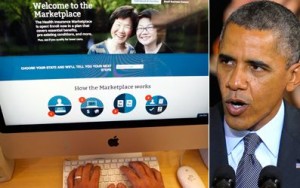
Constant pundit bombardment over 2014 ObamaCare predictions gets a bit overwhelming. But a few angles have yet to be explored in concert, which strike at the political heart of ObamaCare and will ultimately decide whether or not the law will survive in the future.

The law’s implementation has accomplished what no Republican candidate had been able to do, crater support for a law that was already deeply unpopular. Opposition to ObamaCare not only surged, but the intensity is firmly on the side of the right. And it is likely to get worse.

Americans who signed up for coverage on the exchanges may be in for an unpleasant surprise in 2014. Even if they have insurance, which is a serious concern due to inaccurate information transferred to insurers, but also they might have trouble getting the doctor to see them by mid-2014.

As Americans attempt to use their health coverage beginning January 1, experts are warning that ObamaCare will give them access to fewer doctors and hospitals. In fact, not only are experts warning the system will begin to resemble Medicaid in 2014 — the health care program for low-income Americans — but that Medicaid will offer less quality of coverage.

And Americans, much to their chagrin, will find out in 2014 that it was president’s and Democrats’ plan, all along. “Indeed, I think this will eventually be like Medicaid,” said Merrill Matthews, director of the Council for Affordable Health Insurance.

Matthews said the only way many insurers are going to be able to control costs is by “simply clamping down on the amount they are willing to pay,” and many doctors will start refusing to see patients. That will leave too many patients searching for too few doctors.

“About half of the physicians in many communities refuse to take Medicaid patients because the payment system is just too low,” said James Capretta, of the Ethics and Public Policy Center.

Doug Holtz-Eakin, former director of the Congressional Budget Office, says even some of the paid plans on the exchanges are designed with the same Medicaid-like flaws.

“If you look at something where you get a dollar by treating a private payer, you get about 70 cents out of Medicare for that same treatment, you get about 55 cents out of Medicaid for that,” adding, “you know, ObamCare started to look like Medicaid of the future, and in the Medicaid in the present, you can have the insurance but a doctor won’t see you.”

Even before ObamaCare passed, Medicaid already had this problem, and expanding that population while opening the door to lower payments for private insurance raises the need for rationing care.

“These networks are going to be jammed with people,” Robert Laszewski, president of Health Policy and Strategy Associates, said. “Far more than they’re treating now, and I don’t doubt that we’re going to have problems with access to these doctors. There just aren’t going to be enough of them.”

So, with the fundamental flaws of Medicaid already embedded in ObamaCare, the only question is whether the administration can sell it more effectively in 2014, or enroll enough poor Americans throughout the year that it seems inhumane to return to the “pre-health reform” era. As PeoplesPunditDaily.com previously reported, they are already well on their way to have Medicaid over-expansion enrollment.

“They have not done a very good job. That’s an understatement,” says Henry Aaron of the liberal-leaning Brookings Institution. “With time, I am sure they will get it right.”

But Aaron also outrageously characterized ObamaCare as a program that, “could become a positive for Democrats, an emblem of how limited government involvement in social areas can improve the lives of the American people.” I would question anyone who sees ObamaCare as an emblem of limited government involvement, particularly because it is involved so deeply in so many areas of Americans’ personal, deeply personal lives.

Douglas Holtz-Eakin, a health-policy expert who heads the center-right-leaning American Action Forum, said “the challenge will be filtering through what is pure election politics, what actually is a temporary start-up problem and what is a real policy flaw,” says Holtz-Eakin. “It’s going to be an interesting year. It is not going to be smooth.”

Aaron did concede challenges regarding how many people will enroll and how healthy or sick they are, likely premiums increases for 2015 that will be known in 2014, and knows it will be about “whether the politics of the situation give the administration the time they it need to fix this.”

However, in 2013 the administration repeatedly tried “to fix this” law through executive changes and delays, and if the administration cannot “fix” the fundamental problems written within the law’s design, it will “cast a very long, dark shadow over Democratic prospects in 2016,” he said.

“I think many Democrats assume that Social Security and Medicare and Medicaid as we know them are so entrenched in American life that they are untouchable. But Republicans have a plan to transform them.”

At the very least, despite his ill-placed optimism in government, Aaron admits the administration is not well positioned to “fix” whatever real policy flaws are hidden in plain site in ObamaCare before the election.

“As a betting person,” he said, “I think the right has the better prospects right now.”

And that is also my 2014 ObamaCare prediction in a nutshell. It will survive the year, but it will suffer fatal wounds. Of course, I could be wrong, and ObamaCare could survive indefinitely.

Sure, it survives if the American people “like Medicaid.”

Constant pundit bombardment over 2014 ObamaCare predictions

People's Pundit Daily
You have %%pigeonMeterAvailable%% free %%pigeonCopyPage%% remaining this month. Get unlimited access and support reader-funded, independent data journalism.

Start a 14-day free trial now. Pay later!

Start Trial