Widget Image
Follow PPD Social Media
Monday, January 12, 2026
HomeStandard Blog Whole Post (Page 767)

Bishop-TD-Jakes-Toni-Braxton

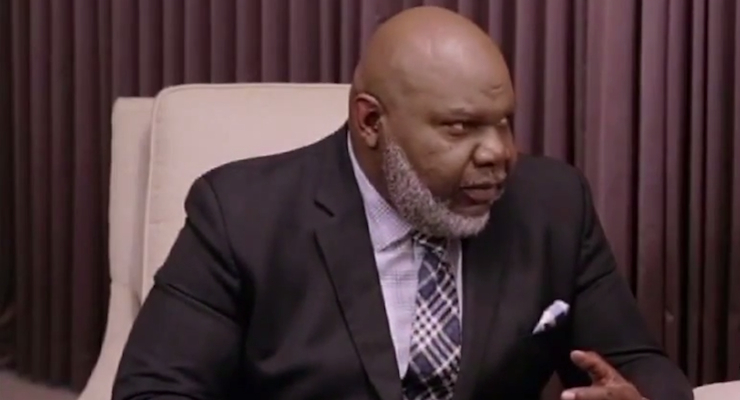
Bishop T.D. Jakes ripped singer Toni Braxton and her family for being “flat-out spoiled” and acting “disgraceful” for “millions of people of color” to see.

Bishop T.D. Jakes, lead preacher at The Potter’s House in Dallas, Texas, ripped Grammy-winning singer Toni Braxton, and her family for being “flat-out spoiled” and acting “disgraceful” for the “millions of people of color” who idolize them to see. Bishop Jakes, a popular megachurch pastor appeared as part of an intervention and spiritual counseling session that aired on WEtv’s “Braxton Family Values” on Thursday night.

[brid video=”11601″ player=”1929″ title=”Bishop T.D. Jakes Rips Toni Braxton and Family for Acting Disgraceful “]

“This [toxicity] is nauseating. If you were my daughters, I would go ballistic. They’d have to cut the cameras off,” Jakes told the women. “This is a disgrace to all of the millions of people of color who idolize you, who wish their family could get out and to get along enough to get a shot like you guys. And to see you climb all the way up here and talk to each other like this. It hurts us in places beyond your family.”

As Jakes continued to deliver to them an epic lecture on basic decent behavior, the Braxton family sat with their heads mostly in their lap appearing to be in a state of shock, shame or a combination of both.

“You’re spoiled. You’re flat-out spoiled,” the preacher said. “I deal with people who have real problems — people who are losing their limbs, who need a kidney transplant — and those families go through that with more dignity than you can go through who stood on stage?”

“To see you in these fancy shoes and these nice clothes, and act like this,” he said. “How can we teach our children to respect black women if black women don’t respect black women? This has got to stop.”

Bishop T.D. Jakes ripped singer Toni Braxton

Chattanooga-Shooting-Suspect

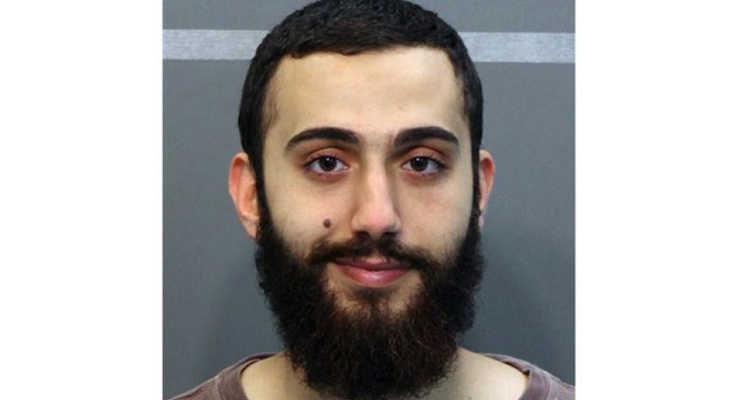
This April 2015 booking photo released by the Hamilton County Sheriff’s Office shows Mohammad Youssduf Adbulazeer after being detained for a driving offense. (Photo: AP/Hamilton County Sheriff)

Mohammad Youssef Abdulazeez, 24, a Kuwaiti-born Chattanooga resident who was killed by police during his shooting rampage Thursday, traveled to Jordan in 2014 and may have also visited Yemen, according to multiple reports.

Sources close to the investigation told the The Wall Street Journal authorities are trying to determine whether Abdulazeez had any contact with extremists during his seven-month stay in Jordan. Abdulazeez’s father was allegedly placed on a terror watch list, temporarily.

Meanwhile, multiple Muslim-American groups condemned the attack on Thursday and Friday, including The Ahmadiyya Muslim Community USA, one of the oldest muslim groups established in the 1920s.

“This is tragic and incomprehensible,” said Dr. Nasim Rehmatullah, National Vice President of Ahmadiyya Muslim Community USA, “While we do not yet know what motivated this man, we urge calm, defer to authorities to justly resolve this, and pray for the departed U.S. Marines.”

Abdulazeez first shot up a recruiting center before driving to the Navy Operational Support Center and Marine Corps Reserve Center and killing four Marines before he was shot by police chasing him from the recruiting center to the Support Center, where the killings took place.

In the first attack, a silver Mustang drove up to the Armed Forces Career Center in a strip mall on Lee’s Highway and opened up with a barrage of gunfire before speeding off, officials said. An unidentified police officer was shot in the ankle, but not seriously injured. Law enforcement officials said that counter-terrorism agents from the FBI’s Knoxville field office responded to the scene.

PPD has confirmed that one of the Marines who was killed was a “decorated war hero with two Purple Hearts,” and that the youngest victim was a 19 year-old Marine.

“The Ahmadiyya Muslim Community USA is proud of the many Muslim Americans who serve this country in the armed forces and dedicate their lives to protecting America,” Dr. Rehmatullah. “We pray for the speedy recovery of those wounded, and offer our deepest condolences to the families and friends of the victims.”

American muslim groups condemned the Chattanooga shooting,

United-Nations-General-Assembly

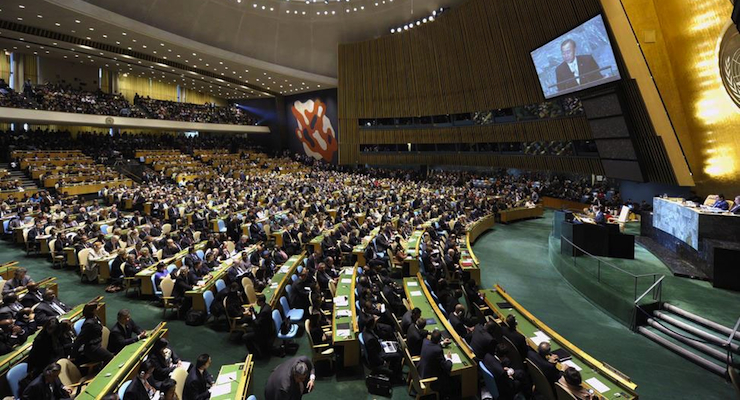
United Nations General Assembly.

What’s the best way to generate growth and prosperity for the developing world? Looking at the incredible economic rise of jurisdictions such as Hong Kong and Singapore, it’s easy to answer that question. Simply put in place the rule of law, accompanied by free markets and small government.

But that answer, while unquestionably accurate, would mean less power and control for politicians and bureaucrats. So you probably won’t be surprised to learn that when politicians and bureaucrats recently met to discuss this question, they decided that development could be best achieved with a policy of higher taxes and bigger government.

I’m not joking.

Reuters has a report on a new cartel-like agreement among governments to extract more money from the economy’s productive sector. Here are some key passages from the story.

Rich and poor countries agreed on Thursday to overhaul global finance for development, unlocking money for an ambitious agenda… The United Nations announced the deal on its website… Development experts estimate that it will cost over $3 trillion each year to finance the 17 new development goals… Central to the agreement is a framework for countries to generate more domestic tax revenues in order to finance their development agenda… Under the agreement, the UN Committee of Experts on International Cooperation in Tax Matters will be strengthened, the press release said.

Though there’s not total agreement within this crooks’ cartel. There’s a fight over which international bureaucracy will have the biggest role. Should it be the Organization for Economic Cooperation and Development, which is perceived as representing the interests of revenue-hungry politicians from the developed world?

Or should it be the United Nations, which is perceived as representing the interests of revenue-hungry politicians from the developing world?

Think of this battle as being somewhat akin to the fight between various socialist sects (Mensheviks, Trotskyites, Stalinists, etc) as the Soviet Union came to power.

Bloomberg has a story on this squabble.

Responsibility for tax standards should be moved to the UN from the Organization for Economic Co-operation and Development, a group of 34 rich countries, according to a position paper endorsed by 142 civil-society groups. …Tove Maria Ryding from the European Network on Debt and Development, [said] “Our global tax decision-making system is anything but democratic, excluding more than half of the world’s nations.”

I’m tempted to laugh about the notion that there’s anything remotely democratic about either the UN or OECD. Both international organizations are filled with unelected (and tax-free) bureaucrats.

But more importantly, it’s bad news for either organization to have any power over the global economy. Both bureaucracies want to replace tax competition with tax harmonization, precisely because of a desire to enable big expansion is the size and power of governments.

This greed for more revenue already has produced some bad policies, including an incredibly risky scheme to collect and share private financial information, as well as a global pact that could be the genesis of a world tax organization.

And there are more troubling developments.

Here are some excerpts from another Bloomberg report.

Step aside, Doctors Without Borders. …A team called Tax Inspectors Without Borders will be…established next week by the United Nations and the Organization for Economic Cooperation and Development. …Tax Inspectors Without Borders would take on projects or audits either by flying in to hold workshops…or embedding themselves full time in a tax agency for several months… “There is a lot of enthusiasm from developing countries” for this initiative, said John Christensen, the U.K.-based director of the nonprofit Tax Justice Network.

Gee, what a surprise. Politicians and bureaucrats have “a lot of enthusiasm” for policies that will increase their power and money.

But at the risk of repeating myself, the more serious point to make is that bigger government in the developing world is not a recipe for economic development.

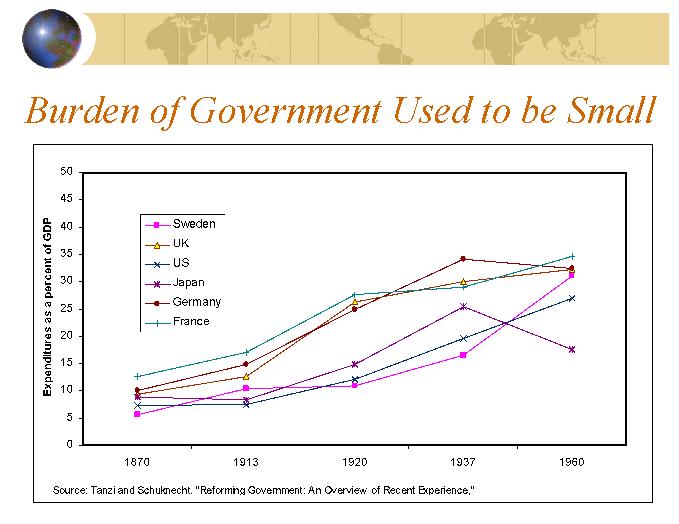
The western world became rich when government was very small. As noted above, Hong Kong and Singapore more recently became rich with small government.

historical-size-of-govt

But can anyone name a country that became rich with big government?

I’ve posed that question over and over again to my leftist friends and they never have a good answer.

If we want the third world to converge with rich nations, they need to follow the policies that enabled rich nations to become rich in the first place.

CATO economist and PPD contributor Dan Mitchell

Gap-consumer-sentiment-reuters

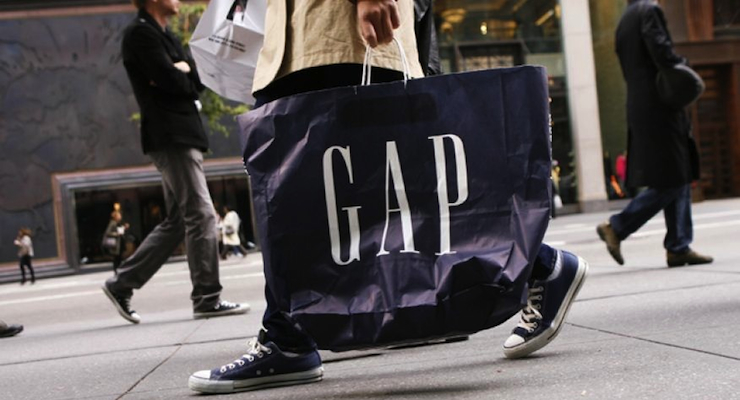
(A shopper leaves the Gap with a bag in New York City. (Photo: REUTERS)

Thomson Reuters and the University of Michigan said their gauge on consumer sentiment from fell in July to 93.3 from a June reading of 96.1. Wall Street expected the gauge to hold steady.

Data from the Conference Board, which will report its reading on consumer confidence, is due out on July 28.

Thomson Reuters and the University of Michigan

new-home-construction-housing-starts

(Photo: Reuters)

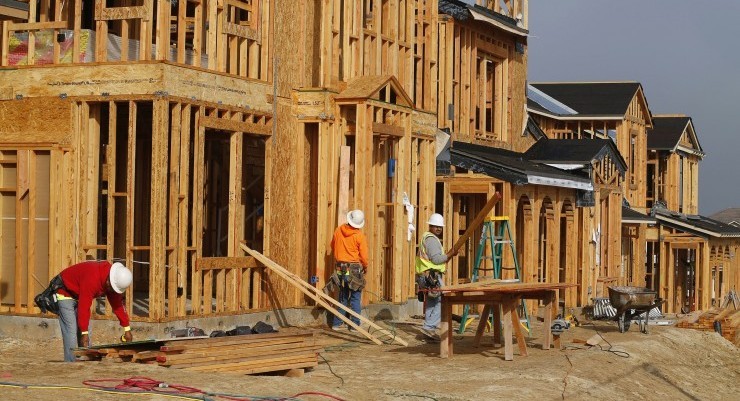
The Commerce Department said on Friday that housing starts surged to a near 8-year high in June to a seasonally adjusted annual pace of 1.17 million units. Groundbreaking increased 9.8 percent to a seasonally adjusted annual pace of 1.17 million units, according to the Commerce Department.

Further, May’s starts were revised up to a 1.07 million-unit rate from the initially reported 1.04 million-unit pace. Economists polled by Reuters had forecast housing starts increasing to a 1.11 million-unit pace last month.

Permits for future home construction increased 7.4 percent to a 1.34 million-unit rate, which the highest level since July 2007, and have been above a 1 million-unit pace since July.

The NAHB/Wells Fargo Housing Market index released on Thursday found homebuilders’ confidence remained sideways, but held at a more than 9-1/2-year high in July. Some economists argue that the housing market will offset the drag on the economy from a struggling manufacturing sector and high trade deficits.

Groundbreaking for single-family homes, which account for the largest share of the market, fell 0.9 percent to a 685,000 unit pace, which was fueled by a severe drop in the Northeast. However, single-family starts in the South, where most of the home building takes place, increased to their highest level since March 2008.

Starts for the volatile multifamily segment skyrocketed 29.4 percent to a 489,000 unit rate, while groundbreaking for buildings with five units or more increased to the highest level since November 1987. Single-family building permits rose 0.9 percent. Multi-family building permits soared 15.3 percent. Permits for buildings with five units or more increased to their highest level since January 1990.

The Commerce Department said on Friday that

consumer-Reuters

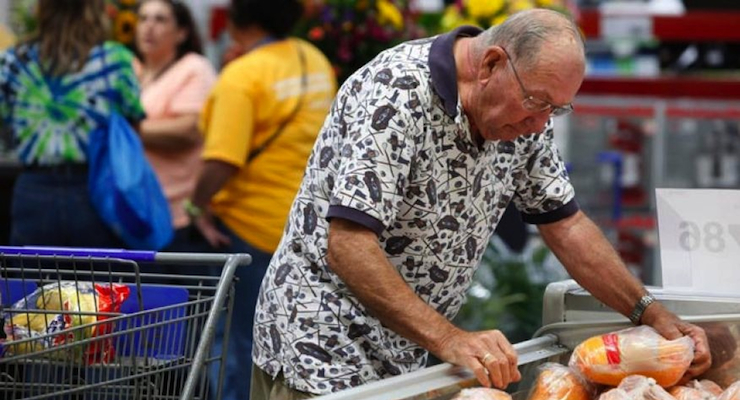
Consumer compares food prices at the supermarket. (Photo: Reuters)

The Labor Department said on Friday its Consumer Price Index (CPI) U.S. consumer prices rose for a fifth straight month in June, up from 0.4 in May. The increase was fueled by the cost of gasoline and other goods, increasing the likelihood of an interest rate hike this year.

The CPI rose 0.3 percent last month, while June’s reading pushed the year-on-year CPI rate into positive territory for the first time since December of 2015. A report on Wednesday showed producer prices rose in June for a second straight month.

In the 12 months through June, the CPI edged up 0.1 percent after being unchanged in May. Economists polled by Reuters had forecast the CPI rising 0.3 percent from May and gaining 0.1 percent from a year ago.

The so-called core CPI — which excludes out food and energy costs — ticked up 0.2 percent in June after rising 0.1 percent in May. In the 12 months through June, the core CPI rose 1.8 percent after May’s 1.7 percent increase.

Gasoline prices jumped 3.4 percent after skyrocketing 10.4 percent in May, while food prices rose 0.3 percent, the largest increase since September 2014. An outbreak of bird flu in some parts of the country causes a shortage of eggs, and prices surged 18.3 percent, which is the biggest gain since August 1973.

The index for rent increased 0.4 percent, which is the largest rise since August 2013. With the residential vacancy rate near a 22-year low as a firming labor market boosts household formation, shelter costs are likely to continue rising.

There were also increases in the cost of recreation, new motor vehicles, tobacco, airline fares and personal care. These offset declines in the prices for apparel, medical care, used cars and trucks and household furnishings.

The Federal Reserve set a 2 percent target rate for inflation relating to a rate hike, and Fed Chair Janet Yellen this week affirmed the U.S. central bank wanted to begin tightening monetary policy later this year after keeping its short-term interest rate near zero for more than six years.

The Labor Department said on Friday its

Biden-Obama-Iran

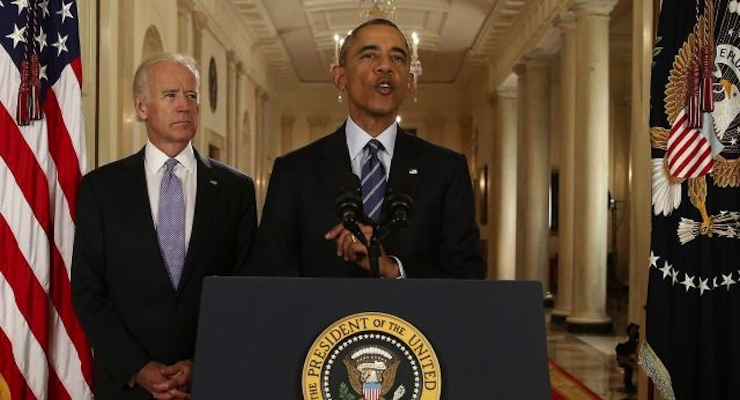
Barack Obama speaks with Vice President Joe Biden at his side as he delivers a statement about the nuclear deal reached between Iran and six major world powers, Washington, July 14, 2015. (Photo: Reuters)

Query: If President Obama’s nuke deal with Iran is so wonderful, why do the major parties in Israel oppose it? Why was Obama so excited about making a deal that, based on his previous positions, he would have opposed earlier?

This agreement is baffling on multiple grounds, even for Obama. What is the urgency for the United States to enter into such a lopsided deal with a rogue nation that doesn’t have a fraction of our negotiating leverage? Why can’t Obama deal with Iran’s leaders the way he deals with Republicans? Is he trying to validate conspiracy theorists convinced that he’s the Manchurian candidate?

Have you ever noticed that there is an inverse relationship between the wisdom of an Obama policy and his defensiveness concerning it? The media are abuzz over the alleged disrespect CBS News White House correspondent Major Garrett showed Obama during a news conference. But Garrett wasn’t the only person on whom Obama unloaded. He lashed out at Israeli Prime Minister Benjamin Netanyahu and members of Congress who oppose the deal.

Obama dared his critics to present a better alternative and, as usual, implied their opposition is not based on the facts but a matter of political posturing and pressure from lobbyists. “I am not betting on the Republican Party rallying behind this agreement,” he said. I pray he’s right about that.

What about Obama’s arrogant dismissal of his critics and claiming this is the best deal we could have made?

First, this assumes that a terrible deal is better than no deal at all, which is highly debatable.

Beyond that, let’s look at some of the problems with this agreement.

–It is not clear whether it will allow the International Atomic Energy Agency sufficient access to Parchin, the military site where Iran is believed to have carried out high-explosives work of a sort that could be used to detonate a nuclear bomb. Iran has consistently denied the IAEA access to the site. Experts say we won’t be able to properly assess Iran’s activities without comprehensive access to key scientists, sites and documentation. The Obama administration formerly made such access a condition to the deal, but no longer. Why not? And if Iran has nothing to hide, why would it play games and deny access to the IAEA?

–Obama’s team has made numerous concessions that will most likely impede the long-term ability of the IAEA to police the agreement. For instance, Iran could appeal an IAEA request to visit a questionable site, and a decision would take some 24 days, during which Iran could remove material and evidence of its activities in violation of the agreement. Compounding the problem is that the agreement gives the decisive vote on Iran’s compliance to the European Union, sort of like the way Justice Anthony Kennedy is often the key player in major Supreme Court decisions.

–The administration has had to backpedal from its initial claim that it would never approve of a deal unless it included “anytime/anywhere” inspections of Iranian military and nuclear sites. Now administration officials insist they never imposed such a condition, though a video recording exposes their earlier statements.

–In 2013, Obama said Iran doesn’t need to have an underground fortified facility, a heavy-water reactor or advanced centrifuges for its peaceful nuclear energy program, but this deal permits the country to have all of these. Just as Obama rewards immigrants who came here illegally for violating our laws, he is rewarding Iran for building these facilities in violation of the Nuclear Non-Proliferation Treaty.

–The deal legitimizes Iran as a nuclear state and will very likely cause a nuclear arms race in the Middle East, some evidence of which we’re already observing. Saudi Arabia is in negotiations to buy nuclear reactors from France, which could later be converted to weapons use in the future.

–All economic and financial sanctions against Iran will be removed. The deal will also lift sanctions on a general who helped terrorists target Americans.

–Iran’s nuclear infrastructure will be preserved, and it will continue nuclear enrichment on more advantageous terms than we have offered to our allies. Saudi Arabia has stated that it will demand similar terms for uranium enrichment.

–None of Iran’s nuclear sites will be closed, despite our earlier demands for that.

–Iran’s arms embargo will be lifted.

–Some $150 billion of Iran’s blocked revenues held in foreign banks will be unfrozen, and it will be free to use those funds to sponsor international terrorism, and the Obama administration has admitted as much.

–The deal may delay Iran’s quest for nuclear weapons capability, but it won’t stop it.

–Iran has made no pretense of its ongoing hatred for the United States and Israel, and its leadership continues to advocate “death to America.”

Obama could have used our disproportionate negotiating leverage to condition this deal on Iran’s release of four fraudulently held American hostages, but he lifted nary a finger to help them. Obama suggested he cares deeply about these Americans but didn’t want to conflate this issue with the all-important nuclear deal. Why not? The Iranians were certainly able to secure concessions that had even less to do with the deal.

Obama desperately wanted this deal, which is why he unilaterally forfeited our bargaining advantage and continued to walk back conditions he had earlier imposed. It is obvious that Iran was fully aware of Obama’s desperation and exploited it throughout the negotiations.

This deal is worse than a disgrace. It’s a national security nightmare.

David Limbaugh: If President Obama's nuke deal

Muhammad-Youssef-Abdulazeez

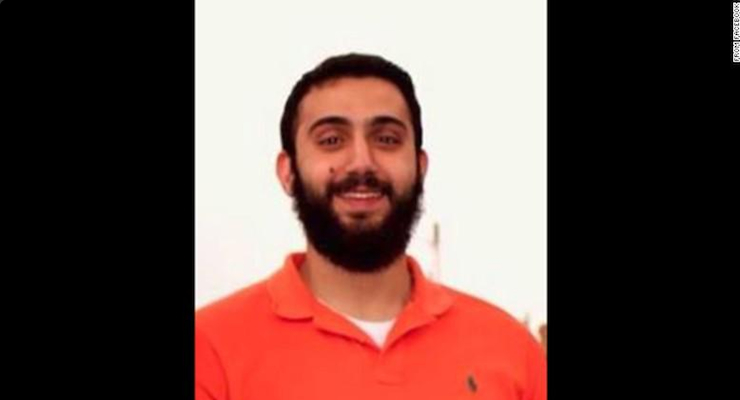
Muhammad Youssef Abdulazeez, 24, has been identified as the suspect behind two terror attacks at military facilities in Chattanooga, Tenn.

The suspect who shot and killed four Marines Thursday during two terror attacks at military facilities in Chattanooga, Tenn., has been identified as Muhammad Youssef Abdulazeez, a law enforcement source confirmed to PPD.

Abdulazeez, 24, who is believed to be from Hixson, Tenn., which is located just across the river from Chattanooga, was born in Kuwait. However, PPD was not able to confirm whether he was a U.S. or Kuwaiti citizen.

“We are treating this as an act of domestic terrorism,” said Bill Killian, U.S. Attorney for the Eastern District of Tennessee. Despite Killian’s statement, FBI Special Agent Ed Reinhold told reporters that it may have been a criminal act.

The law enforcement source said Abdulazeez, who is now dead, was apparently not on the FBI’s radar leading up to Thursday’s attacks. The circumstances of his death were not immediately disclosed.

Abdulazeez first shot up a recruiting center before driving to the Navy Operational Support Center and Marine Corps Reserve Center and killing four Marines before he was shot by police chasing him from the recruiting center to the Support Center, where the killings took place.

A well-placed source in Chattanooga told Fox News that one of the Marines who was killed was a “decorated war hero with two Purple Hearts,” though PPD could not confirm that information. It is confirmed that the youngest victim was a 19 year-old Marine.

Chattanooga-Mayor

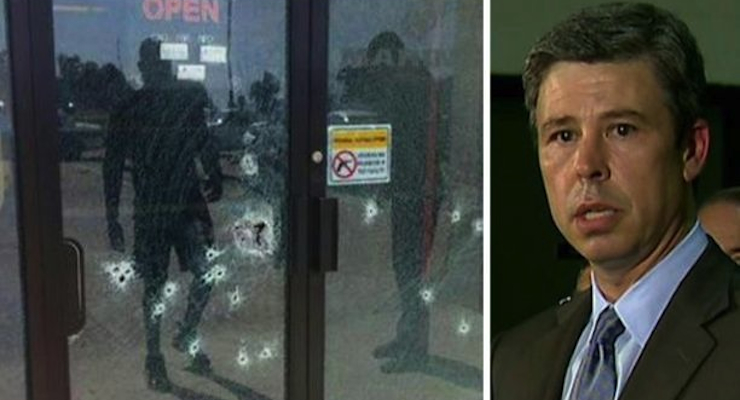
Chattanooga Mayor Andy Berke, left, following two attacks at military facilities in Chattanooga, Tenn.

The names of the Marines who were reportedly shot were not immediately released pending notification of their families, as is standard procedure.

Agent Reinhold said all the victims were killed at the Navy Operational Support Center and Marine Corps Reserve Center Chattanooga, which is located between Amnicola Highway and a pathway that runs through Tennessee RiverPark. The location is a popular park near the beautiful Tennessee River northeast of downtown Chattanooga.

The White House would only say that President Obama has been briefed by his national security team on the attack, but spokesman Eric Schultz said the president had no comment at this time.

In the first attack, a silver Mustang drove up to the Armed Forces Career Center in a strip mall on Lee’s Highway and opened up with a barrage of gunfire before speeding off, officials said. An unidentified police officer was shot in the ankle, but not seriously injured. Law enforcement officials said that counter-terrorism agents from the FBI’s Knoxville field office responded to the scene.

“This is a very, very terrible situation,” Andy Berke, the city’s mayor told reporters. “I’m very concerned about what’s going on. We need to figure out how to handle it.”

Sources say Kuwaiti-born Muhammad Youssef Abdulazeez was

homebuilder-sentiment

Breaking news and headlines on homebuilder sentiment as reported by the National Association of Homebuilders. Photo: Reuters

U.S. homebuilder sentiment stayed sideways in the month of July, but remains at its highest level in almost a decade, according to the NAHB/Wells Fargo Housing Market index. The National Association of Home Builders said on Thursday the NAHB/Wells Fargo Housing Market index stood at 60, which was the highest since November 2005, but unchanged from June’s upwardly adjusted level.

Last month was initially reported at 59. Economists polled by Reuters had predicted a July figure of 60. Readings above 50 indicate more builders view market conditions as favorable than poor. The index has not been below that level since June 2014.

“The fact that builder confidence has returned to levels not seen since 2005 shows that housing continues to improve at a steady pace,” said NAHB Chairman Tom Woods, a home builder from Blue Springs, Mo. “As we head into the second half of 2015, we should expect a continued recovery of the housing market.”

The single-family home sales component rose a point to 66, while the gauge of expectations for sales of single-family homes over the next six months rose two points to 71. The measure on prospective buyer traffic slipped to 43 from a five-month peak of 44 in June.

“This month’s reading is in line with recent data showing stronger sales in both the new and existing home markets as well as continued job growth,” said NAHB Chief Economist David Crowe. “However, builders still face a number of challenges, including shortages of lots and labor.”

Moreover, some analysts said rising home loan costs due to higher yields in the bond market could hamper housing demand.

U.S. 30-year mortgage rates averaged 4.23 percent last week, unchanged from the prior week and up from 4.04 percent from the end of 2014, the Mortgage Bankers Association said on Wednesday.

The median forecast from economists polled by Reuters had groundbreaking at an annualized rate of 1.110 million units last month, up from May’s 1.036 million annualized units. They projected building permits to dip to 1.150 million annualized units from an eight-year high of a 1.25 million-unit rate.

On Friday, the government will release its June data on domestic housing starts and permits at 8:30 a.m. (1230 GMT).

U.S. homebuilder sentiment stayed sideways in the

midwest-manufacturing-goods

Surveys gauging growth or contraction in Midwest manufacturing. (REUTERS)

The Philadelphia Federal Reserve said its Manufacturing Business Outlook Survey fell from 15.2 to 5.7 in July, with employment contracting to -0.4. This month’s reading, which covers factories in eastern Pennsylvania, southern New Jersey and Delaware, fell below the analyst expectation of 12.0 according to a Reuters poll.

Any reading above zero indicates expansion in the region’s manufacturing. The survey covers factories in eastern Pennsylvania, southern New Jersey and Delaware.

The gauge is seen as one of the first monthly indicators of the strength or weakness of the U.S. manufacturing sector ahead of the national report by the Institute for Supply Management. The reading on new orders slipped to 7.1 in July from the June reading of 15.2, while the prices paid subindex rose to 20.2 from 17.2 in June.

The six-month capex outlook slipped to 7.7 from 8.1 the previous month.

The Philadelphia Federal Reserve said its Manufacturing

People's Pundit Daily
You have %%pigeonMeterAvailable%% free %%pigeonCopyPage%% remaining this month. Get unlimited access and support reader-funded, independent data journalism.

Start a 14-day free trial now. Pay later!

Start Trial