Widget Image
Follow PPD Social Media
Friday, January 16, 2026
HomeStandard Blog Whole Post (Page 945)

In SEXED Episode 2, Planned Parenthood staffers give advice on “choking,” “whipping,” and “tying up” sexual partners to young, underage girls.

The pro-life group, Live Action, captured counselors for Planned Parenthood offering advice about “BDSM” — a practice in which sexual partners beat, lash, or otherwise inflict pain on each other — to girls who the staffers think are 15- and 16-year-olds.

The videos, “Sex-Ed Two: Planned Parenthood’s Dangerous Sex Advice for Kids,” are part of Live Action’s nationwide campaign to spread awareness of Planned Parenthood’s track record. The U.S. taxpayer gives more than $500 million annually to Planned Parenthood, including “sex education” and abortion funding through ObamaCare.

Progressives claim Planned Parenthood has been essential in protecting the rights of women, but the actual history is a lot less flattering. A woman named Margaret Sanger established organizations that became known as the Planned Parenthood Federation of America. Sanger was a racist who believed in eugenics, and the term “birth control,” which was coined by her, referred to limiting the number of “unintelligent breeding of negroes,” and reducing the overall reproduction of those deemed unfit, otherwise known as “negative eugenics.”

Even though Sanger supported negative eugenics, she argued that eugenics alone was not sufficient, and that birth control was essential to achieve her goals. Planned Parenthood, however, has moved into more cultural areas over the years, and has come under fire for a number of abuses and support for late-term abortion.

A Planned Parenthood facility in Denver already was under fire over accusations that clinic staff failed to report on the suspected sexual abuse of a 13-year-old girl by her stepfather.

In SEXED Episode 2, Planned Parenthood staffers

Mideast Israel Palestine Conflict

July 16, 2014: Palestinians carry their belongings as they flee their homes in the Zeitoun neighborhood of Gaza City, after Israel had airdropped leaflets warning people to leave the area. (AP Photo/Lefteris Pitarakis)

International pressure is building on the militant group Hamas to reverse its rejection of the Egyptian-proposed cease fire, a decision that has cost them political credibility and in blood. The cease fire would have gone into effect Tuesday morning, but instead Hamas announced its rejection of the proposal only moments after Israel announced that its Security Cabinet had accepted the proposal.

“I cannot condemn strongly enough the actions of Hamas in so brazenly firing rockets in multiple numbers in the face of a goodwill effort to operate a cease-fire,” U.S. Secretary of State John Kerry said Tuesday. Even U.S. allies across the pond, who recognize Palestine as a state, have condemned the decision.

“I hope the Hamas leadership now understand the best thing to do is to call a halt, have the negotiation, discussion, and sit down with everybody to work out a long-term, viable plan for Gaza,” former British Prime Minister and Middle East peace envoy Tony Blair told Sky News.

Still, Egyptian officials said they remain confident a truce deal is possible. President Abdel Fattah Al Sisi planned to host Palestinian President Mahmoud Abbas in Cairo on Wednesday, and Abbas, who formed a coalition government with the militant group to maintain power, has expressed support for the Egyptian proposal.

Meanwhile, Israel’s decision to accept the cease-fire has given Israeli Prime Minister Benjamin Netanyahu and his government the moral high ground, particularly after criticism Tuesday from Deputy Defense Minister Danny Danon showed Netanyahu went against many of his own, more-hawkish advisors by accepting the cease fire.

The prime minister downplayed Danon’s statements that suggested Netanyahu had made a mistake by accepting the deal, while other members of Netanyahu’s government, including Foreign Minister Avigdor Lieberman, support a ground invasion. Lieberman said a press conference that “the Israel Defense Forces must finish this operation in control of the entire Gaza Strip.”

The disagreement played out as news of an Israeli man delivering food to soldiers Tuesday at the border of the Gaza Strip was struck and killed by mortar fire, becoming the first Israeli death since the conflict began. Prime Minister Benjamin Netanyahu vowed to hit Hamas with “great force” for the attacks and rejecting the cease fire.

“Hamas chose to continue fighting and will pay the price for that decision,” he said in a televised address.

The Israeli military warned thousands of Palestinians living in the eastern and northern parts of Gaza to “evacuate immediately” and be out be by 8 a.m. Wednesday local time, or 1 a.m. ET. An Israeli military spokeswoman said residents of Beit Lahiya, which is a town of approximately 70,000 people located in northern Gaza, as well as the Zeitoun and Shijaiyah neighborhoods of Gaza City, had been warned by telephone. The Israeli newspaper Haaretz reported that 100,000 automated calls in total had been made to Gaza residents, but PPD could not confirm that number with the Israeli military.

The warnings were also sent by text message and by leaflets dropped from planes. The messages said that the area was the location of a large numbers of rockets that were already launched into Israel, and that warplanes plan to bomb these locations.

“Whoever disregards these instructions and fails to evacuate immediately, endangers their own lives, as well as those of their families,” the message said.

The latest violence began following the kidnapping and killing of three Israeli teenagers last month. Their bodies had been discovered in a shallow grave in the West Bank. Then, there was a subsequent kidnapping and killing of a Palestinian teenager in an apparent revenge attack. Israel launched an offensive on July 8, saying it was going to put an end to Hamas rocket fire “once and for all” out of Hamas-controlled Gaza Strip.

International pressure is building on the militant

common core oklahoma

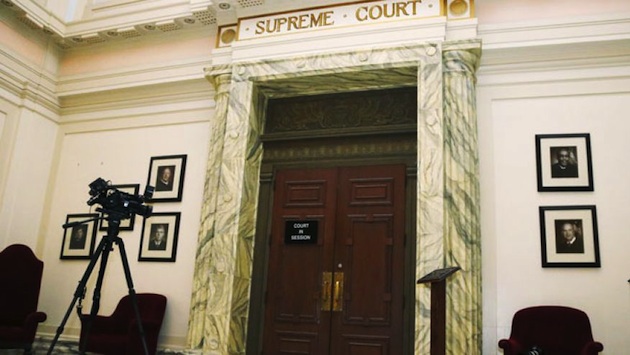
July 15, 2014: The Oklahoma Supreme Court meets for a hearing closed to cameras in Oklahoma City. (Photo: AP)

The Oklahoma Supreme Court ruled Tuesday that the state legislature has authority to repeal Common Core English and math standards in the state’s public schools. The ruling has emboldened opponents of the law in and out of state governments across the nation, and is the latest victory in the movement to dismantle the centralized education program in a battle most admit opponents of the law are winning.

Other states that have either repealed or formally withdrawn from Common Core standards, including Indiana and South Carolina. The bill repealing Common Core standards for English and math did not include standards for science and social studies. It also mandated the board to revert to educational standards in place before June 2010, but required them to develop new state educational standards by 2016.

It took the state’s highest court just over four hours to decide the ruling after attorneys presented oral arguments in a lawsuit that challenged the repeal, claiming lawmakers violated the state Board of Education’s constitutional authority over the “supervision of instruction in the public schools” when they repealed Common Core standards earlier this year.

But, in an 8-1 decision, the Oklahoma Supreme Court disagreed, ruling the state legislature’s action was not unconstitutional.

Attorney Robert McCampbell, who represents parents, teachers and four members of the seven-member Oklahoma Board of Education in the lawsuit, said he was “disappointed with the result” but respected the court’s decision. McCampbell said he was not surprised the court ruled so quickly. The case was argued just a month before public school students across the state are set to return to classrooms, and the standards were scheduled to go into effect in this upcoming year.

“We had asked for it to be placed on the expedited docket and they granted that request,” he said.

House Speaker Jeff Hickman, R-Fairview, was clearly happy with the decision.

“I look forward to the adoption of new standards for education in Oklahoma which will challenge our students and prepare them for the future,” Hickman said.

During oral arguments, McCampbell argued that the power of the state legislature was subservient to the Board of Education, essentially. He argued the repeal of Common Core was unconstitutional and represented and “unprecedented expansion” of its powers.

“Supervision of instruction is vested in the Board of Education,” McCampbell argued.

Solicitor General Patrick Wyrick argued that the state legislature, which in 2010 instructed the board to adopt Common Core instructional standards also adopted by more than 40 other states, has supreme authority to pass laws and that public school education standards are subject to legislative review.

“This court has always held that rule-making is a legislative function,” Wyrick said.

Gov. Mary Fallin signed into law legislation repealing the standards last month, but McCampbell said the Board of Education, not lawmakers, should decide what math problems are taught in public schools and whether the Gettysburg Address should be taught in the 10th grade or the 11th grade, he said.

“They are reaching into the classroom,” McCampbell said. “That’s supervision of instruction in the public schools.”

But parents and teachers who were present for the oral arguments expressed support for repeal of the Common Core standards, and, polling data across the nation, mirrors their expressions.

Nikki Fate, who attended the hearing with her 7- and 9-year-old daughters, said she believes Common Core standards are developmentally inappropriate.

“It is cognitive abuse on our children,” Fate said.

In April, PPD examined support for Common Core standards among parents with children in public schools and found those who reported they were familiar with the standards opposed them. The results led PPD to conclude that the more parents learned about the standards, the more opposed to Common Core they would become. Sure enough, the latest data show support has fallen even further, with no sign of a reversal in the trend.

The Oklahoma Supreme Court ruled Tuesday that

obama holder racism

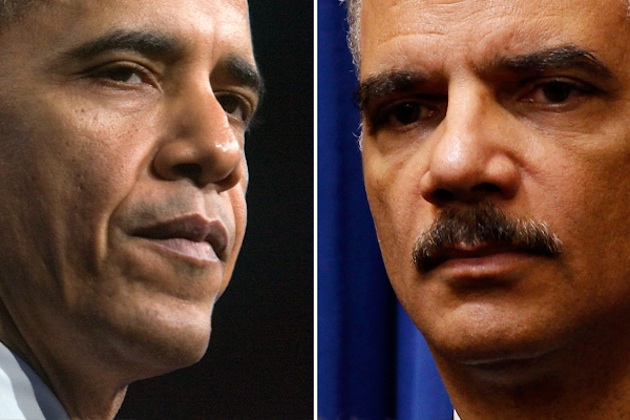
On ABC News this past weekend, Attorney General Eric Holder again claimed that those who are in opposition to his and President Obama’s agenda are largely racist. However, most voters disagree, and don’t believe racism plays a big role in the thinking of the opposition.

Holder, consequently, isn’t alone in his claims. When asked whether or not he stuck by his accusations, they conveniently left out the fact President Obama made the very same accusations at a National Action Network rally, which is race-bater Al Sharpton’s group.

Obviously, according to the poll, the number of Americans who disagree are not necessarily those who particularly identify with the opposition. In other words, even Democrats are calling bull, which was reflected in the Washington Post response that blasted Holder for whipping up racial animosity in a debate about ideology.

Obviously, there is a very small segment of the population that is motivated by hatred and racial animus, both white and black, but the people who oppose the president because of his skin color pale in comparison to those who oppose him because he believes in big government.

A new Rasmussen Reports national telephone survey finds that 61% of Likely U.S. Voters think people who oppose the president’s policies do so primarily because they believe his policies are bad, not because of racism.

The survey of 1,000 Likely Voters was conducted on July 11-12, 2014 by Rasmussen Reports. The margin of sampling error is +/- 3 percentage points with a 95% level of confidence.

https://www.youtube.com/watch?v=0AAy5Nt8FQA

On ABC News this past weekend, Attorney

arkansas senate race

Incumbent Democratic Senator Mark Pryor (left) and Republican Rep. Tom Cotton (right) will face off in the Arkansas Senate race in November.

Republican Rep. Tom Cotton is now pulling away from incumbent Democratic Sen. Mark Pryor in a series of recent polls on the Arkansas Senate race. Pryor was widely seen as the most vulnerable Democratic senator up for reelection up until a month ago, when Democratic strategists and one notable election pundit suggested he was running stronger than previously expected.

However, we pushed back on that assessment, as PPD’s 2014 Senate Map Predictions model has always favored Cotton in the Arkansas Senate race. Now, polling is beginning to catch up to both the fundamentals of the state and the political reality facing Pryor this election cycle.

Since May 27, Pryor has trailed Cotton in every public poll by at least 4 points, including one pollster notorious for favoring Democratic candidates since they badly polled contests in the 2012 election. Rasmussen Reports, Magellan Strategies and Impact Management Group, all found a 4-point margin, and two of them each found an identical 47 – 43 spread.

While Democratic strategists have pushed back on some of these findings, claiming they are nothing more than partisan polls that can’t be trusted, Rasmussen Reports has leaned toward Democratic candidates by more than 3 points nearly 70 percent of the time in elections contested this cycle so far.

Worth noting, as we’ve previously examined, Rasmussen has found results even more favorable to President Obama juxtaposed to other public pollsters tracking the president’s approval  rating.

Human Events and Gravis Marketing conducted the most recent survey of likely voters in the Arkansas Senate race, and found Tom Cotton leading Mark Pryor by 7 points, 51 – 44 percent. President Obama’s approval rating in the state was an abysmal 32 percent, and the results indicate Republican groups are succeeding in their efforts to tie Pryor to the president and a deeply unpopular health care law that the incumbent did support against the wishes of his constituencies.

”The poll is very good news for the Republicans. Arkansas is a must win state for the Republicans if they are to take back the US Senate,” said Doug Kaplan, President Of Gravis Marketing. “Press Obama has a 32 percent job approval rating and it appears he could hurt moderate Democrats in the midterm elections.”

Aside from the clear drag Obama has become on Pryor, the fundamentals of the race are unquestionably against him, and not by some small degree. Arkansas is simply not the same state that it was when his father was elected, or even when Senator Mark Pryor was first elected for that matter.

In 2010, when incumbent Democrat Blanche Lincoln was defeated by a 21-point margin by now-Senator John Boozman, the Partisan Voting Index (PVI) in Arkansas was R+9. To be sure, Sen. Mark Pryor is not Blanche Lincoln, who made the top 10 for worst performances in Senate race history. But the actual vote results in the state were 14 points more Republican than the country as a whole in 2010, and again in 2012. Unfortunately for Pryor, in 2014, the Partisan Voting Index is a mirrored R+14, up from R+9 in 2010.

In an effort to make a more apples to apples comparison, we previously analyzed Pryor’s past performances and compared the results to previous Democrats who went down in defeat. While it is certainly worth a read, the simple and shortened conclusion is that Pryor’s challenge is compounded by the fact he must outperform Democratic candidates in Arkansas’s 4th Congressional District, which you may have guessed already happens to be represented by Rep. Tom Cotton.

The Arkansas Senate race is currently “Leans Republican” on PPD’s 2014 Senate Map Predictions model. Let’s see how long it takes for that certain notable pundit to move it back.

(Note: A previous version of the polling table showed the RCP average. However, the table below reflects the PPD average, which includes the Human Events poll, and PPD’s philosophy on polling averages. Or, the fact you will miss trends if you average data months old, as other aggregators do.)

Poll Date Sample MoE Cotton (R) Pryor (D) Spread
PPD Average 5/27 – 7/8 48.5 44 Cotton +4.5
Talk Business 7/22 – 7/25 1780 LV 3.0 44 42 Cotton +2
CBS News/NYT/YouGov 7/5 – 7/24 LV 3.0 50 46 Cotton +4
Human Events/Gravis Marketing 7/7 – 7/8 987 LV 3.0 50 44 Cotton +7
Magellan Strategies (R) 6/4 – 6/5 755 LV 3.6 49 45 Cotton +4
Rasmussen Reports 5/27 – 5/28 750 LV 4.0 47 43 Cotton +4
PPP (D) 4/25 – 4/27 840 RV 3.4 42 43 Pryor +1
NBC News/Marist 4/30 – 5/4 876 RV 3.3 40 51 Pryor +11
Magellan Strategies (R) 4/14 – 4/15 857 LV 3.4 46 43 Cotton +3
NY Times/Kaiser 4/8 – 4/15 857 RV 4.0 36 46 Pryor +10
Talk Business Poll* 4/3 – 4/4 1068 LV 3.0 43 46 Pryor +3
Opinion Research Associates 4/1 – 4/8 400 RV 5.0 38 48 Pryor +10
CEA/Hickman Analytics (D) 2/17 – 2/20 400 LV 4.9 46 46 Tie
Impact Management Group (R) 2/10 – 2/10 1202 RV 2.8 46 42 Cotton +4
Rasmussen Reports 2/4 – 2/5 500 LV 4.5 45 40 Cotton +5
The Arkansas Poll 10/10 – 10/17 LV 37 36 Cotton +1
Impact Management Group (R) 10/24 – 10/24 911 RV 3.2 42 41 Cotton +1
Talk Business Poll 10/8 – 10/8 603 LV 4.0 41 42 Pryor +1
WFB/The Polling Company (R) 8/6 – 8/7 600 RV 4.0 43 45 Pryor +2
Harper (R) 8/4 – 8/5 587 LV 4.0 43 41 Cotton +2

Republican Rep. Tom Cotton is now pulling

netanyahu and abbas

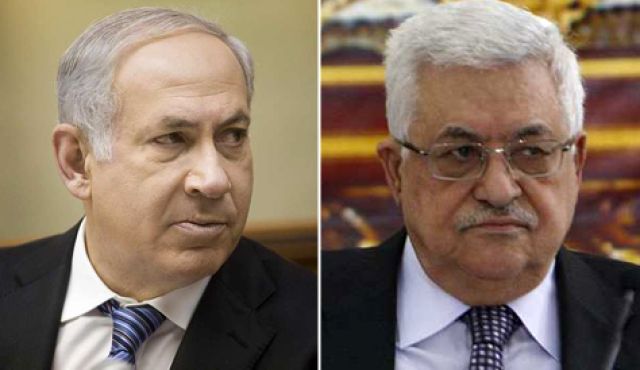
Israeli Prime Minister Benjamin Netanyahu (left) and Palestinian leader Mahmoud Abbas (right). AP

A cease fire proposed by Egypt’s Foreign Ministry was accepted by the Israel’s Security Cabinet that would have ended the week-long conflict. However, less than half an hour later, a senior Hamas official said the group rejected the proposal, claiming that Cairo had not consulted them.

“We did not receive any official draft of this Egyptian proposal,” Sami Abu Zuhri said, adding that the plan, as is, was “not acceptable.”

Israeli Prime Minister Benjamin Netanyahu had warned Hamas and the international community earlier that he was prepared to “intensify” the country’s military campaign against the Islamic militant group Hamas in the Gaza Strip if the group rejected the terms.

“If Hamas rejects the Egyptian proposal and the rocket fire from Gaza does not cease, and that appears to be the case, we are prepared to continue and intensify our operation,” Netanyahu said in a statement.

But both the terror group’s words and actions suggest a return to a cease fire was never truly in the cards.

Early Tuesday, Hamas said Egypt’s proposal “wasn’t worth the ink it was written with,” and the Israeli military confirmed that 24 rockets have been fired at Israeli territory from Gaza since the start of the proposed cease-fire. Three people were injured Tuesday when three rockets were fired at the southern city of Eilat, though the military says previous rocket attacks on the city have come from radical Islamic militants in the neighboring Sinai Peninsula, not Gaza.

As for why the militant group rejected the cease fire, a Hamas spokesman said they wanted an easing a the border blockade in Gaza enforced by Israel and Egypt, and also to be recognized by Egypt as a partner. Similar terms regarding the blockade were part of the truce to end violence back in 2012, but were quickly ignored by Egypt and Israel after Hamas resumed the violence.

Thanks to the Iron Dome, a joint U.S.-funded, Israeli designed missile defense system, there have been no Israelis killed in the conflict to date. However, several have been wounded by rocket shrapnel, including two sisters, ages 11 and 13, who were in serious condition Monday. The Health Ministry in Gaza claimed that 185 people have been killed since the conflict began, and more than 1,000 people have been wounded. It is not clear how many casualties were civilians and how many were Hamas militants.

For the first time, Hamas launched an unmanned drone into Israeli airspace that was quickly shot down, but event demonstrated an increased willingness by Iran, who has made great strides in drone technology after President Obama failed to retrieve a down craft in what was known as the Iran–U.S. RQ-170 incident. On December 4, 2011, an American Lockheed Martin RQ-170 Sentinel unmanned aerial vehicle (UAV) was captured by Iranian forces near the city of Kashmar in northeastern Iran.

Meanwhile, Secretary of State John Kerry decided not to travel to the region on his way back to Washington from Vienna, where talks regarding Iran’s nuclear program are quickly failing. A State Department spokesman refused to say whether Kerry would reconsider his decision now that the cease-fire was rejected by Hamas.

The latest violence began following the kidnappings and killings of three Israeli teenagers last month. Their bodies had been discovered in a shallow grave in the West Bank. Then, there was a subsequent kidnapping and killing of a Palestinian teenager in an apparent revenge attack. Israel launched an offensive on July 8, saying it was going to put an end to Hamas rocket fire “once and for all” out of Hamas-controlled Gaza Strip.

It has been grossly under-reported that Hamas was in dire financial straits prior to the outbreak of fighting, because a tight crack down of the blockade by Egypt had stopped cash and weapons from coming into the strip through hundreds of smuggling tunnels under the Gaza-Egypt border. The conditions led many to believe the three kidnapped teenagers were to be ransomed by Hamas, but later killed when it became clear Israeli military raids would be the strategic response by the Israeli government. While both Israeli and U.S. officials have said there was a substantial amount of evidence to show Hamas was responsible, PPD has yet to see evidence of a ransom, though the financial incentive was real and strong.

Israeli officials said the objective of the campaign is to restore quiet, which has absorbed hundreds of rocket strikes, and Prime Minister Netanyahu said Sunday they are prepared to continue the campaign until the objective is achieved. Officials have also said that any cease-fire would have to include guarantees of an extended period of calm. Hamas officials, on the other hand, say they will not accept “calm for calm.”

Hamas rejected cease fire deal by Egypt's

rand paul vs rick perry

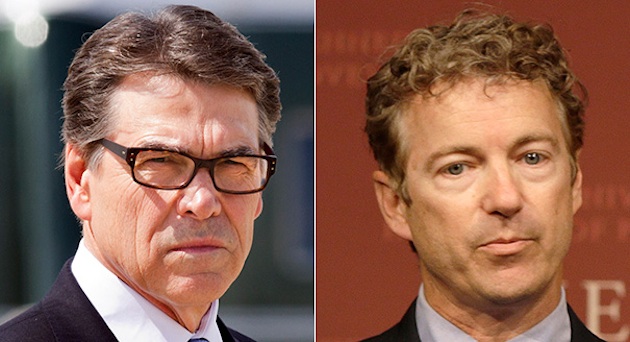
Texas Gov. Rick Perry (left) and Kentucky Sen. Rand Paul (right), took aim at each other in op-eds over Iraq. (Photo: AP)

The liberal media is getting a kick out of the Paul vs Perry feud playing out in two left-leaning if not leftist publications, the Washington Post and Politico. Just when Texas Gov. Rick Perry was enjoying fairly wide-spread praise for his handling of the border crisis, he decided to take a shot at the man many believe to be the front-runner for the 2016 Republican presidential nomination.

On July 11, Perry penned an op-ed in The Washington Post criticizing Paul among other “noninterventionists of today” for being “curiously blind” to the threat from the Islamic State currently seizing vast amounts of territory in Iraq, adding that President Reagan would disagree with Paul for “drawing his own red line along the water’s edge.”

“Paul is an articulate advocate for his views, which are shared by many on the left and some on the right,” Perry wrote. “But in today’s world, with today’s threats, we still cannot ‘take blind shelter across the sea, rushing to respond only after freedom is lost.’ That was President Reagan’s warning,” he added.

“Sen. Paul would be wise to heed it.”

Every potential or hopeful Republican presidential nominee invokes the party standard-bearer, President Ronald Reagan. And why wouldn’t they. It’s been more than 30 years since Reagan smoked another liberal president who was a foreign policy failure, President Jimmy Carter, and yet Americans consistently rate the Gipper the best president in the modern era. That’s quite a feat considering convention political wisdom argues Republican candidates are doomed by demographics and can’t put together a winning coalition.

Nevertheless, while this little feud makes for a great headline, it might be worthwhile for the Republican Party going forward to debate who is actually staying true to the Great Communicator. It is difficult to speculate as to what exactly Reagan would have done in response to the ISIS offensive in Iraq, and one might make the argument that it is impossible to know for sure. That would be a fair position to take, but we can get some idea because we know what he did do in response to foreign policy crisis when in office, and some of those closest to him remain in the public eye today.

In one respect, both Perry and Paul make claims that are at least somewhat valid, but only one is closer to the historical record.

“Reagan led proudly from the front, not from behind, and when he drew a ‘red line,’ the world knew exactly what that meant,” Perry wrote. That’s certainly true, but as Paul wrote in Politico, many Republicans of today “get it so wrong regarding Ronald Reagan’s doctrine of ‘peace through strength.’ Strength does not always mean war.”

In fact, “Ronald Reagan never wanted to be a war president, and there were no wars on Reagan’s watch. None. The Gipper was no neocon,” Pat Buchanan wrote on Townhall.com back in April. As a senior advisor to President Reagan, as well as another conservative with strong libertarian leanings, Buchanan would know.

And history validates his claim. Not only were there no wars during Reagan’s presidency, but he managed to achieve a relative peace and working relationship with the Soviet Union.

“Reagan hated war, particularly the specter of nuclear war,” Paul added, and he is also correct on that account. Reagan hated nuclear weapons, or what he called “those god-awful things,” and hoped to build “Stars Wars” to render them obsolete. But unlike Obama, who sold Poland and other eastern European allies out during the reset, Reagan always negotiated from a position of strength, as not to find himself forced into war from weakness.

When Gorbachev at Reykjavik issued a demand to scrap Star Wars, or the Strategic Defense Initiative, Reagan boldly stood up and walked out on the Soviet leader.

“Unlike his more hawkish critics — and there were many — Reagan was always thoughtful and cautious,” Paul claimed.

Again, he’s correct. While he did not believe in a Kennedy-esque symmetrical response foreign policy, due to the risk of falling into a classic crisis of credibility, a sad amateur lesson Obama learned by drawing a “red line” in Syria,  Buchanan also correctly noted that “Reagan believed in a measured response.”

There is no doubt that Gov. Rick Perry and other Republicans sound their battle cries inaccurately in the name of Reagan. But specifically regarding Rand Paul, it is more than fair to suggest other top 2016 contenders intentionally mislead and mischaracterize both Paul’s and Reagan’s philosophies on foreign policy. Paul is often incorrectly referred to as an isolationist, while Reagan’s reluctance to engage in intervention is at least as often downplayed.

Paul is leading the potential GOP pack on the PPD average of polls for the 2016 Republican presidential nomination by just 1 point, but he is way ahead of Perry by 13.2 – 4.4 percent. Even more challenging for Perry, Paul is either ahead or very competitive in the first in the nation caucus state of Iowa, and leads in the first in the nation primary state of New Hampshire. The electorate in the latter of the two, is nearly tailored perfectly to Paul’s libertarian-leaning ideology, which means they despise interventionists, particularly during poor economic conditions, the NSA spying and drones flying over their heads.

Under Reagan, the Republican Party was successful on the national level thanks to the three-legged stool strategy, which stood on fiscal and economic conservatism, social conservatism and strong national defense. This is a coalition that many in the party desperately seek to rebuild. However, the false labels stamped on Sen. Rand Paul and President Ronald Reagan have hindered the party’s ability to expand its appeal. Until Republicans finally separate the myth from the man and have an honest debate over what constitutes interventionist and isolationist policies — a debate not portrayed as a joke in the liberal media — it will be increasingly difficult to put together a national coalition.

The Paul vs Perry feud playing

drivers license illegal immigrants

There is a renewed push in Florida to allow illegals to obtain drivers licenses by the Living with Angels and other immigration advocacy groups. The Sarasota-based group enjoyed free publicity from a sympathetic media Saturday with a noisy protest along U.S. 41.

“Not a lot of people in Florida are legal, so if you’re not legal you can’t have a driver’s license,” Paula Rincon, a demonstrator with the group told FOX 13. “There are at least 12 states in the United States that have already approved this law. We want to be part of that group of states.”

Except, illegal immigrants can obtain drivers licenses in 11 states and the District of Columbia, and the reason is simple. The idea of allowing illegals to obtain drivers licenses is not popular with the vast majority of the American people.

Following the decision by Gov. Jerry Brown to make California biggest state to pass legislation that allows driver’s licenses for illegal immigrants, a survey found that 68 percent of Americans are opposed to the idea, which is why Gov. Rick Scott vetoed a similar bill already.

Last year, the Florida legislature passed a bill that would allow the children of illegal immigrants to obtain licenses to drive, but Gov. Scott vetoed it citing current Sunshine State law. In Florida, immigrants with federal employment authorization cards are already eligible for temporary licenses, and Scott sides with the American people in his belief that the program is already generous.

While liberal groups are hoping to use immigration as one of the issues to distract away from the larger, rather grim economic and foreign policy pictures, the current border crisis is likely to increase outrage in the public. If it does, as the former House Majority Leader Eric Cantor who was recently defeated by Dave Brat could attest, the push is likely to back-fire on the Democratic Party .

“In fact, more Americans think immigration should be decreased than increased, and by a nearly two-to-one margin, 41 percent vs. 22 percent,” said Lydia Saad of Gallup. “Brat’s case may have been a fairly easy one to make,” she added, as “fewer than one in four Americans favor increased immigration.”

new survey found the American people agree, as nearly half of U.S. voters believe the Obama administration has caused the wave of illegal immigrants at the border, and most Americans want them sent back home immediately.

Ironically, demonstrators at the protest were frequently citing economic benefits of encouraging policies such as this for illegals. In reality, the serious economists have argued the increase of low-skilled workers will drive down labor demands leading to lower wages for American workers.

“The insurance companies can sell insurance,” said Humberto Iberico, another demonstrator at the loud protest. “More car payments for all the companies. More sales for all the companies.”

A renewed push in Florida to license

People's Pundit Daily
You have %%pigeonMeterAvailable%% free %%pigeonCopyPage%% remaining this month. Get unlimited access and support reader-funded, independent data journalism.

Start a 14-day free trial now. Pay later!

Start Trial