Widget Image
Follow PPD Social Media
Saturday, January 17, 2026
HomeStandard Blog Whole Post (Page 1009)

virginia-senate-race

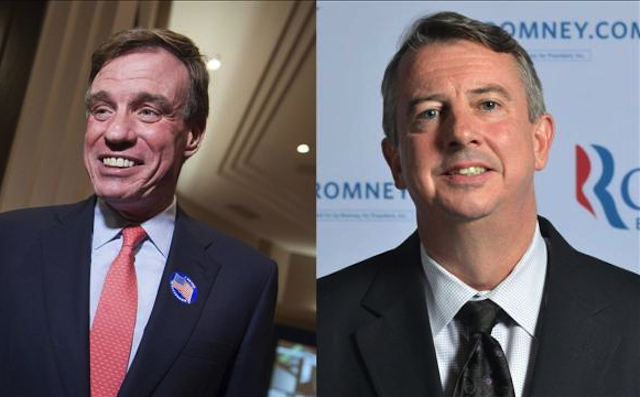
Democratic incumbent Senator Mark Warner (left) and former Virginia Republican Party chairmen Ed Gillespie (right)

The Virginia Senate race is the eleventh article in a succession of articles offering expanded analysis on the ratings for the PeoplesPunditDaily.com 2014 Senate Map. The last time we visited the “Old Dominion” Senate seat held by Democratic incumbent Senator Mark Warner, there was “no there, there.” Alas, this may not be a deadbeat Senate race, after all.

Thus far, I have released expanded analysis for the following Senate races:

AlaskaArkansasIowaKentucky, Louisiana, MichiganMontana, North Carolina, and Mississippi, with West Virginia, — which is rated “Safe Republican” on the 2014 Senate Map — released just before the end of the year.

It was going to be a heavy lift for Republicans to challenge Sen. Mark Warner to begin with, but when they decided to nominate their candidate through convention next year, that weight got even heavier. Nominating candidates through party convention tends to produce out-of-the-mainstream candidates, and even worse, stifles voter enthusiasm. Think former lieutenant governor nominee E.W. Jackson, who never gained traction despite Cuccinelli’s last-minute surge, and you’ll get where I am coming from.

In our last analysis of the state of the Virginia Senate race, it was looking pretty grim for Virginia Republicans, which pointed to an environment that warranted nothing less than a “Safe Democrat” rating. Incumbent Gov. Bob McDonnell is leaving office because of term limits, but most assuredly will not be seeking the nomination to run against Senator Warner. McDonnell is in serious trouble and is currently the target of a FBI investigation into large, unreported gifts that he and his wife have accepted.

Two Republicans, both of whom are military veterans, have declared their candidacies. First, retired Navy officer Howie Lind, 56, of McLean, then retired Air Force officer Shak Hill, 49, of Centreville. To be sure, any Republican candidate will have benefited from the latest ObamaCare news, as Senator Mark Warner supported the Affordable Care Act and has yet to back down from his vote. We all saw how the issue of ObamaCare influenced the vote in the final week of the gubernatorial election, and if that race was decided on Thursday instead of Tuesday, we likely would have had a different outcome.

Still, Warner is a shrewd campaigner, and can raise a ton of money. He is personally wealthy, in fact, fabulously wealthy and he will use it. Senator Warner has $7.1 million in the bank. Coupled with the power of incumbency, he was highly favored to win reelection.

But that was then, so the saying goes.

The Washington Post previously reported that sources told them Republican Ed Gillespie, political guru and former state chairman of the Republican Party of Virginia, is expected to run against Warner.  A recent poll conducted by notable GOP pollster Kelly Anne Conway had Warner leading a generic Republican candidate by a small 50 – 45 margin.

Prior to the news breaking, we said that Ed was a numbers guy, himself, and if he concluded that the damage done by ObamaCare has been great enough to Senator Warner, then he would make a go of it.

Now, we are beginning to see a clearing picture coming into focus on the state of the Virginia Senate race, with sources saying Gillespie will challenge the well-funded Warner for his seat in 2014.

“He is running. It’ll be announced next week,” one of the sources said Thursday night.

“I have concluded it is a winnable race,” Ed Gillespie told an anxious audience at a breakfast meeting for the Norfolk Republican Party at Cagney’s restaurant before the news broke. And if he concluded it’s winnable, it’s winnable.

Ed Gillespie may not have a proven track record as a candidate himself, but he played a vital role in countless statewide campaigns in Virginia, and has more than enough of a grasp on what it takes to garner statewide support. He is currently the head of the Republican State Leadership Committee, from which Gillespie hatched his brainchild, a strategy that focused on down-ballot races to elect state government officials nationwide in 2010.

With a candidate like Ed Gillespie — who is very telegenic and extremely folksy — the Democrats will not be able to pull off the extreme GOP narrative, and that goes for both social and economic issues. In order for a Republican candidate to win in Virginia, they must perform more like McDonnell and less like Cuccinelli in Loudoun County, which a more tactical speaking Gillespie would be capable of doing.

A mere moderate increase in performance among suburban white women from the dismal numbers posted by Cuccinelli, and it could be curtains for Warner.

Furthermore, President Obama isn’t the most popular person in the state of Virginia, but he isn’t hated yet either, with an approval rating bouncing around the low 40s to a high of 46 percent. ObamaCare, as we saw in the governor’s race, is a serious liability for Senator Warner. He will have all of the drag from President Obama, without enjoying his GOTV organization and machine, which his own campaign is sorely lacking.

Assuming Ed Gillespie meant it when he said we will hear his decision before the February 1 filing deadline, we will again visit the status of the Virginia Senate race shortly thereafter. But, for now, mere speculation over a potential Ed Gillespie campaign has exposed a surprising vulnerability in Senator Warner.

Until then, the assessment is pretty clear. The Republican Party could make this a competitive race, as whoever the Republican candidate may be will clearly have an electorate in 2014 favorable to their agenda. However, the correct call for this race is still “Likely Democrat,” it is just not a safe race for Warner, who just may get the fight he never expected.

Return To PPD 2014 Senate Map

Alas, new expanded analysis on the Virginia

WASHINGTON — Two years from today, Iowa — dark, brooding, enigmatic Iowa — will be enjoying its quadrennial moment as the epicenter of the universe. And in 10 months, voters will vent their spleens — if they still are as splenetic as they now claim to be — in congressional elections. Some numbers define the political landscape.

In an October poll, 60 percent favored voting out of office every congressional incumbent. The poll was taken just 11 months after voters re-elected 90 percent of House and 91 percent of Senate incumbents. Democrats are more likely to lose control of the Senate than gain control of the House. Ninety-three percent of Republican House members represent districts Mitt Romney carried, 96 percent of Democratic members represent districts Barack Obama carried. Since the mid-19th-century emergence of the current two-party competition, no party holding the presidency has ever won control of the House in any midterm election.

Larry Sabato and Kyle Kondik of the University of Virginia Center for Politics note that since the Civil War, the average turnout in presidential elections has been 63 percent and in midterms 48 percent. The decline comes mostly from the party holding the presidency, and analyst Charlie Cook says three crucial components of Obama’s coalition — unmarried women, minorities (more than 40 percent of Obama’s 2012 vote) and young people — are especially prone to skipping midterms. In the seven midterms since 1984, voters under 30 averaged 13 percent of the midterm vote, down from 19 percent during presidential years.

Furthermore, for House elections much of the Democratic vote is inefficiently concentrated in and around large cities. Obama won 80 percent or more in 27 districts; Romney did so in only one. That is why in 2012, Democratic House candidates got about 1.4 million more votes than Republican candidates, but did not win control of the House.

Today the 30 Republican governors — four short of the all-time GOP high of 34 in the 1920s — represent 315 electoral votes. Republicans have a 52 percent majority of state legislative seats. After the 2012 elections, Republicans controlled the governorships and legislatures in 25 states with 53 percent of the nation’s population; Democrats had unified control of 13 states with 30 percent of the population.

Since the emergence of the Republican Party, only two Democratic presidents, Franklin Roosevelt and John Kennedy, have been followed by Democrats, and both FDR and JFK died in office, so their successors ran as incumbents. But Republicans have not decisively won a presidential election since 1988. Since then, no Republican nominee has won more than 50.8 percent of the vote. In the six elections 1992-2012, Republicans averaged 211 electoral votes, Democrats 327. Republicans lost the popular vote in five of these elections, and in the sixth, 2004, George W. Bush’s margin was the smallest ever for a re-election.

In 2012, Obama became the first president since Ronald Reagan to win two popular-vote majorities, but Obama got 3.6 million fewer votes than in 2008, a 5 percent decline. (The last re-elected president, Bush, got 11.6 million more votes in 2004 than in 2000.) Except for a small gain among those 30-39, Obama lost ground among every age cohort. And in 2012, Republicans improved the share of votes they got in 2008 from men (in 2012 Obama became the first person to win a presidential election while losing the male vote by seven points), whites, young voters and Jews. And independents: John McCain lost them 44-52 but Romney won them 50-45. And by September 2013, independents were leaning Republican by 18 points, above even the 14-point advantage Republicans had in 2010.

In three of the most intensely contested states in 2012, Florida, Virginia and Ohio, Obama’s victory margins averaged 2.6 points. But even if he had lost all three he would have still won with 272 electoral votes. Analyst Jeffrey Bell calculates this:

“Of the 12 ‘battleground’ states, Obama won 11 — eight of them by a margin of more than 5 percentage points. Remarkably, this meant that if there had been a uniform 5 point swing toward the Republicans in the national popular vote margin — that is, had Romney won the popular vote by 1.1 percentage points instead of losing it by 3.9 — Obama would still have prevailed in the Electoral College, winning 23 states and 272 electoral votes.”

These numbers suggest that the great political prizes can be won by either party. There will be more numbers to contemplate by the time the 1 percent of Americans who live in Iowa are heard from.

George Will’s email address is [email protected].

WASHINGTON -- Two years from today, Iowa

rand-paul-suing-obama

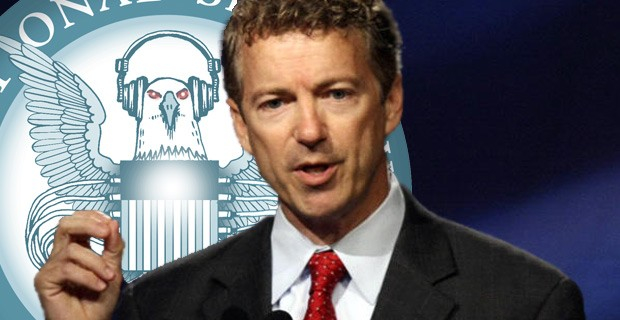
Libertarian-leaning Republican Sen. Rand Paul (R-KY), is suing the Obama administration for the NSA spying on Americans in an effort to “protect the Fourth Amendment.”

On “Hannity,” Paul told Fox News’ Eric Bolling Friday, “The question here is whether or not, constitutionally, you can have a single warrant apply to millions of people.” Though the argument seems straightforward, many constitutional questions still remain.

On December 16, a federal judge in Washington, D.C., stated the NSA phone record collection program “likely violates the Constitution.” However, in a contradictory ruling, a federal judge in New York ruled the NSA data collection program is legally within the bounds of the Constitution, particularly regarding Fourth Amendment rights to privacy.

“So we thought, what better way to illustrate the point than having hundreds of thousands of Americans sign up for a class action suit,” Rand Paul said.

Paul said he began collecting signatures about 6 months ago when Edward Snowden first leaked details surrounding the NSA spying programs, which involves the NSA collection of metadata from millions of Americans’ phone calls. In a recent Washington Post interview, Edward Snowden declared mission “accomplished,” stating he had “already won” and achieved what he’d set out to do, which was to start a national debate.

Though Sen. Rand Paul happily accepted the opportunity to debate privacy violations, he admitted it’s “kind of an unusual class-action suit,” since just about everyone in America who has a cell phone is eligible to join in the legal action.

Former Virginia gubernatorial candidate Ken Cuccinelli, and still state attorney general, is a member of the legal team involved in the effort, and supports Rand Paul suing Obama.

“We’re hoping, with his help, that we can get a hearing in court, and ultimately get this class-action lawsuit, I think the first of its kind on a constitutional question, all the way to the Supreme Court,” Sen. Paul said.

The real goal, obviously, is for President Obama to actually follow the Constitution, specifically regarding privacy protections outlined in the Fourth Amendment.

“We want them to protect the Fourth Amendment. We want them to protect the right to privacy,” Paul said. “We think we can have security, that we can defend against terrorism, but that doesn’t mean that every single American has to give up their privacy.”

The Obama administration on Friday made two moves to protect the NSA spying programs, first by appealing a major ruling against the agency — outlined above — while succeeding in seeking permission from a secret court to continue collecting Americans’ phone records.

The recent renewal by the Foreign Intelligence Surveillance Court, or FISC court, was the latest approval of mandatory periodic requests since the two conflicting court decisions were handed down.

In its brief court filing, the Justice Department said it was appealing the December 16 decision by the U.S. Court of Appeals for the District of Columbia.

Those interested in the class action lawsuit can visit Rand-2016.com

Libertarian-leaning Republican Sen. Rand Paul (R-KY), is

Fallujah captured

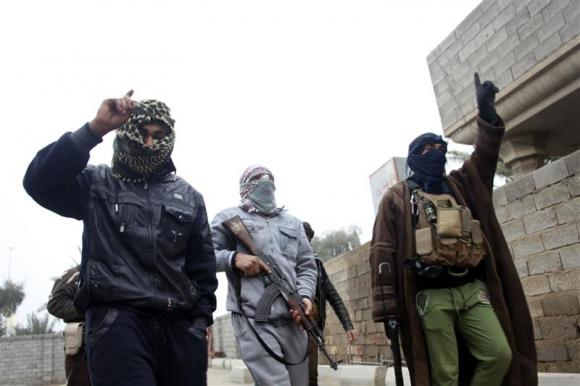
Gunmen fighters walk in the streets of the city of Fallujah, 50 km (31 miles) west of Baghdad January 3, 2014. REUTERS/Stringer

After a bloody 3-day war, with the city of Fallujah captured, Al-Qaeda raised its flag over a government building in the western part of the Iraqi city.

The city of Fallujah was secured by U.S. forces before withdrawing from the country a mere 2 years later under President Obama, but now it appears U.S. blood and treasure were spilled and spent for nothing.

At least 8 people were killed and dozens were injured Friday night as Iraqi troops tried to retake Anbar province from a mixture of Islamist and tribal foes battled Al Qaeda fighters in Ramadi. On Saturday, in response, tribal leaders and officials said the Iraqi army fired mortar rounds, shelling the city of Fallujah.

They have been joined by tribesmen from the Sunni stronghold of Ramadi. Iraqi military have deployed anti-terrorist teams to fight Al Qaeda militants in the streets following a request by tribesmen, who asked the government for help from the army, which had been deployed only on the outskirts of the city, according to tribal sources.

It is a strange alliance of convenience, to be sure, considering their history. 

Sunni tribes began turning against Al Qaeda before the American withdrawal at the end of 2011, but also do not support the Shiite-led government in Iraq.

Fallujah has been held since Monday by a combination of Sunni Muslim militants affiliated with Al Qaeda, as well as tribal fighters united in their opposition to the Iraqi Prime Minister Nuri al-Maliki.

On Friday, Al Qaeda gunman tried to win over hearts and minds of those who make up the population in Fallujah, with a militant commander joining worshippers for Friday prayers in the main city street, claiming that his fighters were there to defend the Sunni people from a hostile government, a resident said.

“We are your brothers from the Islamic State in Iraq and Levant,” militants shouted through the city using a stolen police car. “We are here to protect you from the government. We call on you to cooperate.”

The tactic seems to be working, having much the same effect on the population U.S. troops had to contend with during the Iraq War. A tribal leader named Sheikh Rafe’a Abdulkareem Albu Fahad, said the tribesmen were finding it difficult to hunt down the Al-Qaeda militants in the southern and eastern part of Ramadi, because Iraqi families had taken them into their homes to hide them.

“We cannot persuade the people to kick them out,” he said.

The Iraqi army is caught between a familiar rock and a hard place. “We asked them to raid the area or bomb it with jets, but they keep refusing as they say they do not want anyone to accuse them of attacking residential areas,” a tribal militia leader in Ramadi told Reuters by telephone.

Media adviser to the commander of the anti-terrorist squad, Sameer al-Shwiali, said: “We prefer not to attack now, as the militants have been deployed among the families. We call on people in Ramadi and Fallujah to stay away from the militants as there will be lethal strikes targeting those militants in the coming hours.”

The fall of Fallujah and Ramadi to the Al Qaeda Iraqi branch in the Sunni heartland — or, in western Anbar provinces — is a serious threat to the Shiite-led government. Prime Minister Al-Maliki has been trying to maintain a government struggling to stabilize souring sentiment among the Sunni minority, who are forced to live under Shiite domination.

Earlier this week, authorities arrested a senior Sunni politician and put an end to a months-old sit-in taking place in Ramadi, setting off long-standing discontent within the Sunni ranks.

Anbar province is a desert area that borders with Syria and Jordan, which has a near universal Sunni population. The area made headlines as the stronghold for Sunni insurgency fighting American troops and the Iraqi government after the 2003 U.S. invasion that overthrew former Iraqi dictator Saddam Hussein.

In an effort to ease the growing Sunni-Shiite tension, Al-Maliki ordered the military to withdraw from Anbar cities and transferred security duties to local police forces, which had been a make-or-break demand by Sunnis. Al Qaeda militants then broke the peace in Fallujah and Ramadi, overrunning the police station and driving out security forces, freeing prisoners as they did.

The total death toll from the violence, which began earlier in the week, is not yet known.

The city of Fallujah, which was secured

Jerusalem's Oldest Inscription

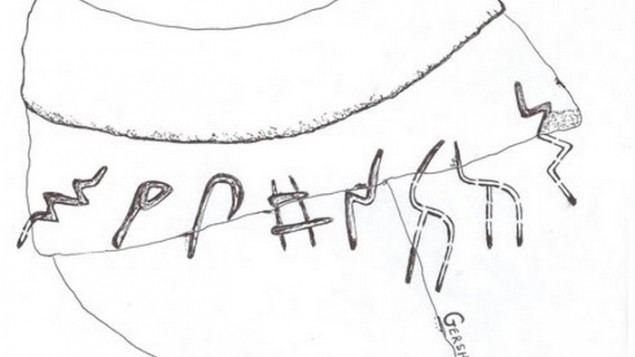
The engraving found on a 3,000-year-old clay jug is Jerusalem’s oldest inscription. (Photo: “New Studies on Jerusalem” Journal)

Biblical scholar Gershon Galil from the Bible Department at the University of Haifa says he has decoded Jerusalem’s oldest inscription dating back to the reign of King Solomon around 3,000 years ago.

The ancient 8-letter inscription was discovered on a clay jug near Ophel, which is located close to the southern wall of the Temple Mount, by a Hebrew University archaeological team headed up by Dr. Eilat Mazar.

In the Hebrew journal “New Studies on Jerusalem,” Galil wrote he believes the 8 letters, which were first thought not to be written in Hebrew, were in fact in early Hebrew and included the word for wine, or “yayin.” Also, according to Galil, the first intact letter observed on the inscription was actually the last letter of a longer word that was cut off, which represents the date. The middle portion of the carving refers to the type of wine stored in the jug — a “lowly” or cheap wine.

Galil claims the final letter originally carved on the inscription was also cut off from a longer word and identifies the location the wine was sent from.

Galil estimated that the carving was written in the middle of the tenth century BCE, which is after the period King Solomon built the First Temple, his palaces, and the massive surrounding walls that connect the 3 areas of the city — the Ophel area, the city of David, and the Temple Mount.

Though it may sound insignificant, the translation is a revelation, because archaeologists believe that infrastructural projects contributed, in large measure, to the need for large quantities of poor-quality wine.

“This wine was not served on the table of King Solomon nor in the Temple,” Galil wrote. “Rather it was probably used by the many forced laborers in the building projects and the soldiers that guarded them. Food and drinks for these laborers were mainly held in the Ophel area.” Galil’s theory is strengthened by other discoveries, including pottery fragments found in Arad.

“The ability to write and store the wine in a large vessel designated for this purpose, while noting the type of wine, the date it was received, and the place it was sent from, attests to the existence of an organized administration that collected taxes, recruited laborers, brought them to Jerusalem, and took care to give them food and water,” Galil wrote.

“Scribes that could write administrative texts could also write literary and historiographic texts, and this has very important implications for the study of the Bible and understanding the history of Israel in the biblical period.”

As has become typical of biblical discoveries, so-called mainstream archeologists are already gearing up to challenge some of the findings published by Galil. If Galil is correct, then the findings fly in the face of what has been a known concerted effort over decades by some “mainstream” scholars to reduce the historical account found in the Bible to little more than fairytale.

Despite the account written in the Bible and supporting archeological evidence, many claim the Hebrew nation was not as sophisticated or elaborate as the Bible suggests, and certainly not as Galil emphasized, which is what we would recognize as an organized bureaucratic system.

“Galil’s interpretation is sure to add fuel to the archaeological fires regarding the magnitude of David and Solomon’s kingdom,” Haaretz wrote.

“Some archaeologists believe that Jerusalem was a small, unimportant town, contrary to its biblical description. Galil and others view the Bible as a reliable historical document. For them, the inscription is proof of a significant, well-administered kingdom that received goods from afar and expanded during Solomon’s time from the City of David toward the Temple Mount.”

Biblical scholar Gershon Galil from the Bible

November 30, 2013: A flatbed truck hauls away what remains of the Porsche in which actor Paul Walker was a passenger when it crashed Saturday afternoon, killing Walker and the unidentified driver of the car (Courtesy Kevin Takumi)

Gruesome details have been revealed from the Paul Walker autopsy report, which shows the actor and the deceased driver of the car suffered terrible injuries in the car crash that took the young actor’s life.

The Paul Walker autopsy report, which was obtained by FOX411, shows that Paul Walker, and his friend and business partner, Roger Rodas, were driving his Porsche in excess of 100 mph when it struck a tree on November 30, 2013.

What the report described as an inferno, burned Walker’s body so severely that not one of his organs were “suitable for transplant.”

The documents stated that Walker died from the “combined effects of traumatic and thermal injuries,” and that the actor’s body was discovered in a “pugilistic stance,” or in a manner that suggested he was bracing for impact.

Dozens of fractures are cited in the report, including at least 2 caused by the actual heat of the inferno.

Rodas was described to have details that were equally troubling, claiming the actor’s friend was also severely burned and that he had suffered a significant head injury, exposing his brain.

The actor Paul Walker starred in the “Fast and Furious” movie franchise, which has delayed its next installment until 2015 following Walker’s death.

Gruesome details have been revealed from the

federal background check

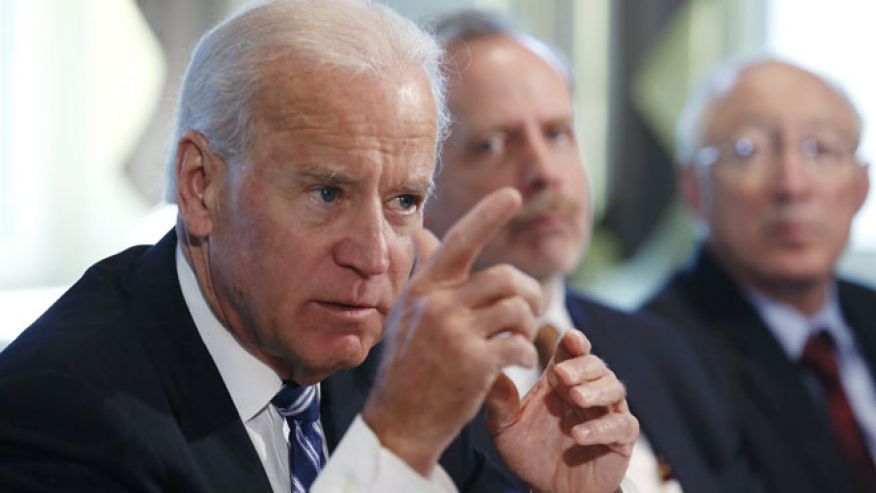
The Obama administration on Friday — via the Office of the Vice President — proposed two new executive actions they claim will “strengthen the federal background check system,” by making it easier for states to enter mental health information in to the federal background check database.

PeoplesPunditDaily.com recently reported on the Obama administration’s plans to reopen the gun control debate after the movement to restrict gun rights failed last year.

The first proposal will allow states to enter “the limited information necessary to help keep guns out of potentially dangerous hands,” without following the privacy provisions outlined in the health privacy law, otherwise known as HIPAA.

The administration released a statement to address critics’ concerns.

“The proposed rule will not change the fact that seeking help for mental health problems or getting treatment does not make someone legally prohibited from having a firearm,” the statement read. “Furthermore, nothing in the proposed rule would require reporting on general mental health visits or other routine mental health care, or would exempt providers solely performing these treatment services from existing privacy rules.”

However, the second of the two executive actions seems to piggy back off of the first, which unequivocally states that those who are involuntarily committed to a mental institution — for both inpatient and outpatient treatment — count under the law as “committed to a mental institution.” According to the Obama administration, the second change will clarify what information is to be provided to the background check system by the states, as well as who is barred from having guns.

But some are raising questions over the vagueness of the language, citing alcohol and drug abuse treatment as potential “illnesses” that could ban someone from ever exercising their right to purchase a gun. Many civil libertarians argue that mental illness doesn’t necessarily mean the same thing for everyone, and all retain the right to bear arms and protect themselves.

In a response to such concerns, a statement from the Office of the Vice President claimed the changes are merely to help ensure that “better and more reliable information” is entered in to the federal background check system.

The Obama administration also renewed calls for Congress to legislate on the issue. The White House statement read:

While the President and the Vice President continue to do everything they can to reduce gun violence, Congress must also act. Passing common-sense gun safety legislation – including expanding background checks and making gun trafficking a federal crime – remains the most important step we can take to reduce gun violence. The vast majority of Americans support these critical measures, which would protect our children and our communities without infringing on anyone’s Second Amendment rights.

Following the year in scandal that still plagues the Obama administration in 2014, the president’s opponents say he no longer has the trust or reliability to oversee such expansions of federal power, while many mental health experts say something must be done.

Late last year, the White House announced $100 million for mental health programs, which came on the same day Vice President Biden met with the families of victims from the Sandy Hook Elementary School shooting in Newtown. However, the response from most experts was lacking in any enthusiasm, as the gesture was seen as a token, rather than a real effort to reform the mental health system.

The Obama administration was widely criticized for how they handled the issue of gun control following the shooting in Newtown, Connecticut. Gun rights advocates charged the administration with exploiting the families of the victims in the shooting, as well as exploiting the tragic crisis.

The Obama administration on Friday proposed two

kim jong un

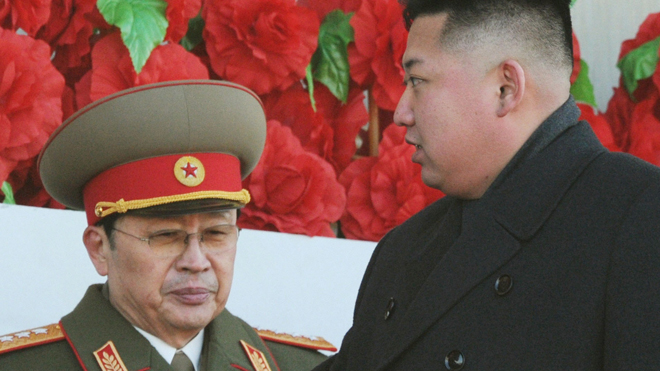
North Korean leader Kim Jong-un (Right), flanked by his uncle North Korean politician Jang Song-thaek in this photo taken by Kyodo February 16, 2012. Credit. REUTERS/Kyodo (NORTH KOREA)

The execution of North Korea’s number 2, Kim Jong Un uncle Jang Song Thaek, was far more radical than initially reported, according to a Beijing-controlled newspaper. The paper’s report is claiming Kim Jong Un fed his uncle to starving dogs.

The Singaporean Straits Times cited a report from Wen Wei Po, a Beijing-controlled newspaper, which said Jang Song Thaek — the country’s second-most-powerful figure and 5 of his close associates — were stripped, thrown into a cage filled with 120 starving dogs that had not eaten for 3 days, and eaten alive.

The event, which was reportedly witnessed by 300 senior officials, lasted about 1 hour. PeoplesPunditDaily.com could not immediately verify the report.

Most political prisoners in North Korea are executed by means of a firing squad, according to the Singaporean Straits Times. Kim Jong Un has been reported to have moved away from that method, which has been a focal point of criticism from The Global Times, a Communist Party paper. The Times editorial called the killing an example of the backwardness of the regime under Kim, urged Beijing to distance itself from the country.

The Singaporean Strait Times reported that Jang was accused of selling cheap coal and precious metals to China, as well as securing low commodity prices for Chinese businessmen.

However, Jang was widely viewed as a supporter of Chinese-style economic reforms in North Korea. In fact, he was seen as a staunch supporter of reforms in his country, who served as a vital figure in the relationship between Pyongyang and Beijing. And prior to his death, China had concerns regarding the direction North Korea has been going under Kim Jong Un.

China is North Korea’s only official ally.

North Korea accused Jang, 67, of corruption, womanizing, gambling and taking drugs. It said he’d been eliminated from all his posts. Allegations heaped on claims that he tried “to overthrow the state by all sorts of intrigues and despicable methods with a wild ambition to grab the supreme power of our party and state.”

In what some have said was a suspicious characterization of Jang’s execution, the nation by state media called Jang a traitor who was “worse than a dog” and was attempting to overthrow the government.

A Singapore Times report citing Wen Wei

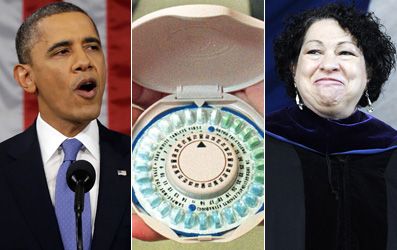
obamacare-birth-control-mandateLate last Tuesday, one day before it was set to go into effect, Supreme Court Justice Sonia Sotomayor blocked the ObamaCare birth control mandate for one Catholic group.

In her order, Sotomayor said the federal government was temporarily barred from enforcing the ObamaCare birth control mandate on the Denver-based group, Little Sisters of the Poor Home for the Aged, and must respond by 10 a.m. Friday, a deadline that just came and went.

The government responded by asking the Supreme Court not to grant exemptions to religious organizations for the ObamaCare birth control mandate. “Applicants have no legal basis to challenge the self certification requirement or to complain that it involves them in the process of providing contraceptive coverage,” the administration claimed.

The request from the Obama administration contradicts the White House response Wednesday, which was an assurance the groups in question weren’t subject to the requirement, because it doesn’t apply to self-funded church plans.

Several organizations, including the Roman Catholic Archbishop of Washington, the Catholic Diocese of Nashville, Catholic University and the Michigan Catholic Conference, had asked justices to block the law until their arguments were heard.

The White House said the Justice Department has already made clear the mandate doesn’t apply to such organizations and that it defers to the agency on litigation matters.

“But [we] remain confident that our final rules strike the balance of providing women with free contraceptive coverage while preventing non-profit religious employers with religious objections to contraceptive coverage from having to contract, arrange, pay, or refer for such coverage,” the White House said Wednesday.

The Obama administration claims it already came up with a compromise, which accommodated religiously affiliated hospitals, universities and social service groups that oppose birth control. Yet, Noel J. Francisco, a lawyer for the Catholic groups, said the law still requires insurers — or the health plan’s outside administrator — to pay for birth control coverage.

In arguments he said, “a regulatory mandate will expose numerous Catholic organizations to draconian fines unless they abandon their religious convictions and take actions that facilitate access to abortion-inducing drugs, contraceptives and sterilization for their employees and students.”

“In short, under the accommodation, applicants must authorize their third party administrators or insurance companies to provide the very products and services they find morally objectionable,” he said. “Suffice it to say, the ‘accommodation’ does not resolve applicants’ religious objection to participation in this regulatory scheme.”

Francisco said 11 federal judges have entered permanent or temporary injunctions against the ObamaCare birth control mandate, while 6 have refused to do so.

If Catholic organizations and other Christian objectors don’t comply with the law, they face “fines of $100 a day per affected beneficiary” and if they drop their health care coverage, “they will be subject to an annual fine of $2,000 per full-time employee after the first 30 employees, and/or face ruinous practical consequences due to their inability to offer a crucial health care benefit to employees.”

Francisco added, “In short, applicants are faced with a stark choice: violate their religious beliefs or pay potentially crippling fines.”

In America, more than 90 million individuals participate in health care plans that are supposedly excluded from the the mandate, Francisco said. “The government, however, has steadfastly refused to create a broader religious exemption, either for individuals seeking to run their businesses in accordance with their faith or for nonprofit religious organizations beyond houses of worship,” he said.

The Supreme Court already agreed to hear cases on whether businesses may use religious objections to escape a requirement to cover birth control for employees. In March, the high court will hear two cases involving Hobby Lobby Inc., an Oklahoma City-based arts and crafts chain with 13,000 full-time employees, and Conestoga Wood Specialties Corp., a Pennsylvania cabinet-making company that employs 950 people.

Hobby Lobby won in the lower courts while Conestoga Wood Specialties lost. The combined cases probably will be argued in late March with a decision coming by summer.

The government responded to Sotomayor's deadline by

The Obama administration claimed the ObamaCare medicaid expansion would reduce expensive emergency room visits, but a new study has found the complete opposite is true.

Using Oregon’s 2008 Medicaid expansion as a test case, researchers in a Harvard University study found, “that patients newly covered by Medicaid increased their emergency room visits by 40 percent.”

Many of the visits were for primary care services, which President Obama she the Democrats who supported the law said the ObamaCare medicaid expansion would cut down on. The study stated:

In 2008, Oregon initiated a limited expansion of a Medicaid program for uninsured, low-income adults, drawing names from a waiting list by lottery. This lottery created a rare opportunity to study the effects of Medicaid coverage using a randomized controlled design. Using the randomization provided by the lottery and emergency-department records from Portland-area hospitals, we study the emergency-department use of about 25,000 lottery participants over approximately 18 months after the lottery. We find that Medicaid coverage significantly increases overall emergency use by 0.41 visits per person, or 40 percent relative to an average of 1.02 visits per person in the control group. We find increases in emergency-department visits across a broad range of types of visits, conditions, and subgroups, including increases in visits for conditions that may be most readily treatable in primary care settings.

The study may serve as another warning sign for things to come, as a PeoplesPunditDaily.com study showed the number of Medicaid enrollments represents the vast majority of new ObamaCare signups. The administration touted a surge of enrollment in December, but has refused to provide the number of young and healthy vs. sick and old, which is a ratio that has the power to sink or keep the entire program afloat.

At last count, 25 states and Washington, D.C. opted to for the ObamaCare Medicaid expansion, and at least 9 refused to implement the program.


The Obama administration claimed the ObamaCare medicaid

People's Pundit Daily
You have %%pigeonMeterAvailable%% free %%pigeonCopyPage%% remaining this month. Get unlimited access and support reader-funded, independent data journalism.

Start a 14-day free trial now. Pay later!

Start Trial