Widget Image
Follow PPD Social Media
Sunday, January 11, 2026
HomeStandard Blog Whole Post (Page 722)

Police Informed Lareeb’s Father She Was Caught Stealing Condoms, Confirming Sexual Behavior

Lareeb-Khan-Germany-honor-killing

Lareeb Khan. (Photo: social media)

Asadullah Khan, 51, and his wife Shazia have been charged with murder in an honor killing in Germany after he admitted to strangling his 19-year-old daughter Lareeb while she slept in her own bed. Khan admitted to the honor killing by telling the court that his daughter had brought dishonor on the family when he received a letter from police informing him she had been caught shoplifting condoms, confirming her sexual activity. The couple dressed Lareeb in her work clothes as a dental assistant, put her body in the family car and discarded it in a nearby forest.

“’Lareeb stayed away from the home for several nights in a row and stopped wearing the headscarf,” Shazia Khan, Lareeb’s mother, told the court. “One day we received a letter from the police saying she had been caught trying to steal condoms. At this point it became clear that there was sexual contact. When I showed the letter to my husband he snapped.”

Lareeb’s mother told authorities in her defense that she is but a submissive wife who was physically unable to restrain her husband and prevent the murder. However, Lareeb’s younger sister, Nida, 14, told the court that her mother was just as bad as her father and would beat the girls often.

“My Mama was not suppressed, she could do what she wanted. She used to hit me with a stick,” Nida said. “We were never allowed to talk about her boyfriend. My father used to say my sister should be forcibly married in Pakistan.”

Raheel, 25, Lareeb’s boyfriend, told the court the couple had planned to get married.

The tragedy comes as Germany has recently agreed to take millions of Muslim refugees from Syria and the Middle East, leading many to call their understanding and preparedness into question. A U.K.-based human rights group that focuses on raising awareness to honor killings and “honor violence” slammed the German police department’s handling of the case.

“German police did not acknowledge the risk of ‘honor’ killing to Lareeb when they told her family that she had been caught attempting to steal condoms” the Iranian and Kurdish Womens Rights Organization (IKWRO) said in a statement. “We can only conclude that the police involved did not have a proper understanding of ‘honour’-based violence and had not been sufficiently trained to know that providing this information to her parents could put her in greater danger. The German police must be held to account for their failures for true justice for Lareeb.”

Asadullah Khan, 51, and his wife Shazia

home-prices-reuters

Home sales and home prices data and reports. (Photo: REUTERS)

The S&P/Case-Shiller U.S. National Home Price Index surveying 20 major U.S. metropolitan areas rose 0.6% in July on a non-seasonally adjusted basis in the month of August. On a year-over-year basis, U.S. home prices rose 5% compared to the 5.1% increase economists polled by Reuters had expected.

“Prices of existing homes and housing overall are seeing strong growth and contributing to recent solid growth for the economy,” says David M. Blitzer, Managing Director and Chairman of the Index Committee at S&P Dow Jones Indices. “The S&P/Case Shiller National Home Price Index has risen at a 4% or higher annual rate since September 2012, well ahead of inflation.”

The S&P/Case-Shiller U.S. National Home Price Index covers all nine U.S. census divisions, and posted a slightly higher year-over-year gain with a 4.7% annual increase in July 2015 juxtaposed a 4.5% increase in June 2015. However, the 10-City Composite was virtually unchanged from the month prior, gaining 4.5% on a year-over-year basis. The 20-City Composite posted a higher year-over-year gain of 5.0%.

“Most of the strength is focused on states west of the Mississippi,” Blitzer added. “Other positive indicators of current and expected future housing activity include gains in sales of new and existing housing and the National Association of Home Builders sentiment index. An interest rate increase by the Federal Reserve, now expected in December by many analysts, is not likely to derail the strong housing performance.”

San Francisco, Denver and Dallas reported the highest year-over-year gains among the 20 cities with price increases of 10.4%, 10.3%, and 8.7%, respectively. Fourteen cities reported greater price increases in the year ending July 2015 over the year ending June 2015. San Francisco and Denver are the only cities with a double digit increase, and Phoenix had the longest streak of year-over-year increases. Phoenix reported an increase of 4.6% in July 2015, the eighth consecutive yearover-year increase. Boston posted a 4.3% annual increase, up from 3.2% in June 2015; this is the biggest jump in year-over-year gains this month.

While housing market data has been stronger this year than in the prior two, it is somewhat mixed and not at all clear if Blitzer’s assertions on the impact from a rate hike are correct. The National Association of Realtors said Monday its Pending Home Sales Index unexpectedly declined 1.4% to a seasonally-adjusted 109.4 in August, from a reading of 110.9 in July. While the index, which is based on contract signings, showed a modest increase in the West it was offset by declines in all other regions.

Even though most of the attention regarding the housing market surrounds pending, existing and new home sales data, as well as home price data reported by the S&P/Case-Shiller U.S. National Home Price Index, these more-optimistic reports have somewhat shadowed the concerning trend in mortgage risk. The composite National Mortgage Risk Index (NMRI) for Agency purchase loans clocked in at 12.14% in August, up 1% from a year earlier. The monthly composite index, which measures how mortgage loans originated month by month would perform under severely stressed conditions, has now gained on a year-over-year basis every month since January 2014.

“The common claim that first-time buyers face tight credit is simply not true,” said Stephen Oliner, codirector of AEI’s International Center on Housing Risk. “If you have a steady job and an ordinary credit score, you can buy a home with little money down.”

Agency loan originations continued to migrate from large banks to nonbanks in August, a shift that has accounted for most of the upward trend in the composite NMRI. Nonbank lending is substantially riskier than the large bank business it replaces.

The S&P/Case-Shiller home price index surveying 20

[brid video=”16498″ player=”1929″ title=”Mark Levin on Donald Trump’s Tax Plan “Very Specific Reaganesque””]

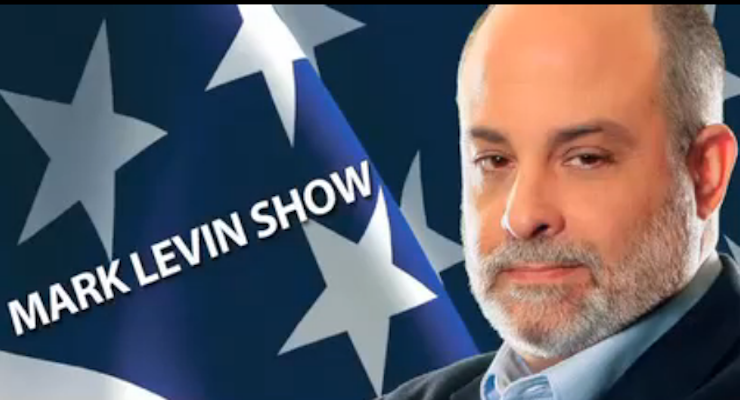
Conservative talk radio host Mark Levin weighed in on Donald Trump’s tax plan, which he called “very specific” and “Reaganesque.” Worth noting, Levin worked in the Reagan Administration.

Read Also — Trump and Taxes: A Bush-Like Plan from “The Donald”

Conservative talk radio host Mark Levin, who

Planned-Parenthood-President-Cecile-Richards-DNC

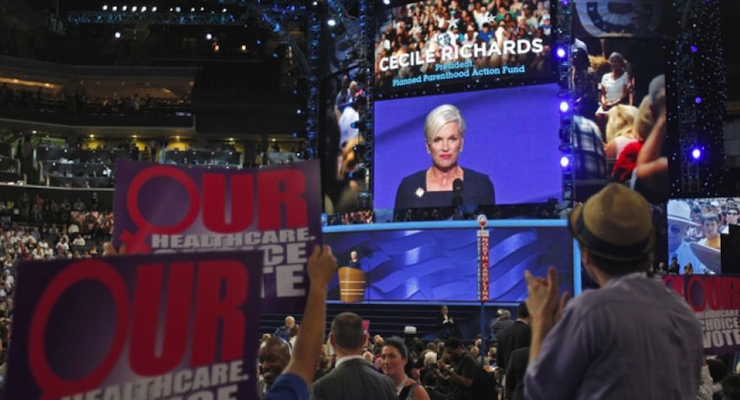
Planned Parenthood President and CEO Cecile Richards speaks at the 2012 Democratic National Convention. (Photo: AP)

Planned Parenthood President Cecile Richards will say she is “proud” of her organization’s role in the harvesting and trafficking of aborted baby body parts before the House Oversight and Government Reform committee Tuesday. In a transcript obtained prior to her testimony, Richards will apparently call for an investigation into the Center for Medical Progress, a pro-life group that filmed the controversial undercover videos that led to multiple ongoing state and federal investigations.

“Planned Parenthood is proud of its limited role in supporting fetal tissue research,” Richards will say to lawmakers.

Undercover footage released by CMP in the first video shows Planned Parenthood Federation of America’s Senior Director of Medical Services, Dr. Deborah Nucatola, describing how Planned Parenthood sells the body parts of aborted babies, and admitting she and others at the organization use and alter partial-birth abortions to supply intact body parts. Richards, herself, was featured in the video praising Nucatola’s work to facilitate connections for fetal tissue collection.

Yet, in her statement before Congress, Richards will rail against CMP Project Lead David Daleiden and call for him to be investigated, because she says he and his group “tried unsuccessfully to entrap Planned Parenthood physicians and staff for nearly three years.” Daleiden and members of CMP filmed the videos after posing as an executive of a nonexistent firm that buys fetal tissue for scientists.

According to its 2013-2014 annual report, Planned Parenthood received $528.4 million dollars in taxpayer federal funding for the year ending June 30, 2014. During the same year, the organization performed 327,653 abortions, which they have repeatedly claimed does not result in the harvest of body parts for sale or other illegal use. In fact, when they were first caught harvesting baby body parts 15 years ago, Planned Parenthood claimed it was the action of a rogue affiliate, or franchise-like location.

The sale or purchase of human fetal tissue is a federal felony punishable by up to 10 years in prison and a fine of up to $500,000 (42 U.S.C. 289g-2).


Planned Parenthood President Cecile Richards will say

Obama-Weekly-Address-9-19-15

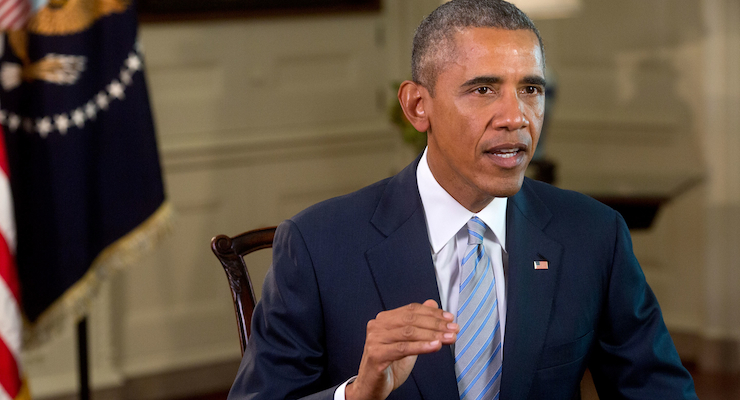
President Barack Obama tapes the Weekly Address in the Map Room of the White House, Sept. 18, 2015. (Official White House Photo by Amanda Lucidon)

Establishment Republicans inside and outside Washington miss the grassroots’ point. Even if we don’t eventually prevail with defunding Planned Parenthood, we need to take this issue to the American people.

Establishment types believe that just as we are finally poised to recapture the White House, crazy tea party extremists are about to mess everything up because voters would blame and punish the GOP in 2016 for a shutdown.

But they always tell us to wait until the next election. When we didn’t control the House, they told us to wait until we did. Same with the Senate. Now they say we have to wait until Jeb Bush is president.

They’ve cried wolf so long that conservatives no longer believe them. The conservatives aren’t idiots. They knew when they elected these majorities that they would have great difficulty advancing the conservative agenda with President Obama in office. But they didn’t expect them not to even try.

Yet the Republican leadership doesn’t put up a fight, and establishment pundits go along with this surrendering. These are the same people who are apoplectic over the rise of Donald Trump. They can’t understand how conservatives would support a man they believe is not conservative.

But what have their establishment darlings done to promote conservatism? Many Trump supporters believe that Trump gets it and will fight for them. They (SET ITAL) know (END ITAL) the establishment won’t.

The Trump phenomenon aside, I can’t understand the establishment’s resignation in assuming Republicans would automatically lose the PR battle over any federal government shutdown.

These folks said we’d lose the congressional elections if Ted Cruz fought for a shutdown over defunding Obamacare, but a year later, Republicans won stunning congressional victories. The establishment predictably responded that we won precisely because time had passed and people had moved on to other issues.

Nonsense. Establishment types knew at the time they issued their doomsday warnings that the elections were a year off, and they were still paralyzed with fear.

It is disheartening that they always pre-emptively cave before the fight begins. Why are they always so sure voters will blame Republicans for any shutdown no matter what issue is involved? Why do they say Obama will be viewed as the victim — no matter how heinous his positions, no matter how unpopular those positions are with the American people and no matter his approval ratings at the time?

Of course Republicans will lose if they aren’t united, if their establishment wing battles conservatives opposing Obama instead of Obama himself.

If ever there has been an issue worth fighting for and one that resonates with the people, it is the federal funding of Planned Parenthood, a thoroughly corrupt and evil enterprise.

So what if abortion procedures make up a relatively small percentage of the services it provides? Serial killers probably behave the majority of the time when they aren’t murdering people. This organization is on a mission to maximize the number of abortions performed, and there is just no way to spin that evil into a virtue.

Surely, you’ve heard the horror stories of Planned Parenthood’s not fully informing mothers of the potential emotional and psychological damage they’ll suffer from abortion. There are also reports of women who changed their mind about getting an abortion but were forced to proceed anyway.

Undeniably, Planned Parenthood is an abortion factory that is swimming in blood money. Whatever other services it provides for women can be done by thousands of benign organizations untainted by the death of innocents.

Republicans must call Obama’s bluff. As we all know, government shutdowns are not catastrophic, as essential services continue. And when they occur, the GOP doesn’t have to accept the media spin that Republicans caused them.

Republicans should view this shutdown not with trepidation but as an opportunity to showcase Obama’s obsession to fund a dark entity that kills babies and harvests their organs. Aren’t they skilled enough to deflect Obama’s propaganda that this as a war on women and accurately portray it as a noble struggle to save babies instead of rewarding those trafficking in their deaths?

If Republicans lack confidence to articulate such a clear-cut moral issue, how will they dare to roll back Obama’s agenda if they win back the White House?

We are losing our national soul. We are becoming morally and financially bankrupt. We are losing our Constitution. We are losing our national identity and our sovereignty. We are losing our national security. And we are squandering the greatest health care system in the world.

It is time to draw the line and take our case to the people. If we lose this battle, we will be in a better — not worse — position to win in 2016 because the Republican base will be energized in a way it hasn’t been since the Reagan ’80s. Don’t underestimate that force.

The establishment misses the point. Even if

Kevin-McCarthy-John-Boehner-Steve-Scalise

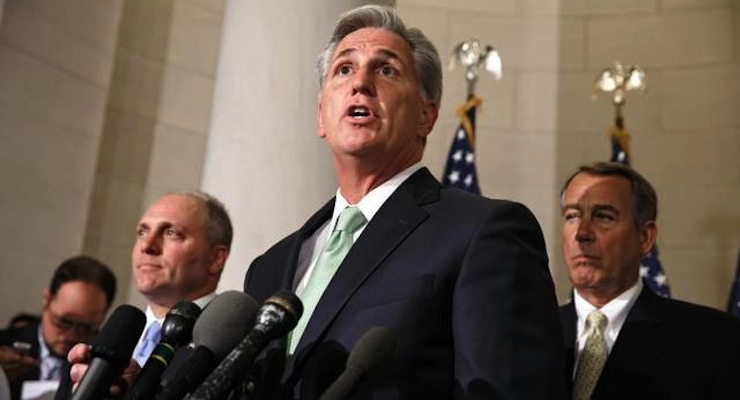
House Majority Whip Kevin McCarthy, R-Calif., is joined by Rep. Steve Scalise, R-La., and Speaker of the House John Boehner, R-Ohio, just after House Republicans voted to make McCarthy the new majority leader in 2014. (Photo: AP/J. Scott Applewhite)

Yogi Berra is no longer around, but one of his witticisms — “It’s deja vu all over again” — has never been more apt. This time, though, it’s not at all funny.

All over again, the hard right is threatening a government shutdown. All over again, the American people face the prospect of collapsing consumer confidence, stock market meltdown and national humiliation as Republican right-wingers seriously contemplate defaulting on America’s debt. Last time, they at least had ignorance for an excuse.

Should this sort of drama be replayed, which House Speaker John Boehner’s resignation makes increasingly likely, the public would once again blame mainstream Republicans for not curbing the tantrum wing of their party — and the GOP could kiss the 2016 presidential election goodbye.

That may sound like a good thing for the Democrats, but must the entire nation suffer in the process? As in those dreams of frustration, we’d find ourselves stuck back on a bus with a mad political minority at the wheel.

But you know, these people aren’t wrong about everything. Anger over Wall Street’s grip on Washington is widely shared. If Republican primary voters haven’t taken kindly to hedge fund titans throwing Jeb Bush $100,000-a-plate fundraisers, that’s understandable. Amid Donald Trump’s Niagara Falls of stupid verbiage come well-placed denunciations of tax breaks for private equity moguls.

However, there’s something truly creepy in hearing the newly empowered tea party “leaders” relish in their power to punish. And is it too much to ask that they learn the meaning of “full faith and credit of the United States” — and its import to the country’s well-being?

The tea party agitators might also look into the reality of government programs that benefit their many elder comrades. No, Medicare isn’t manna from heaven (Exodus 16). And no, few beneficiaries paid for what they get. Most Medicare spending comes out of taxpayer subsidies.

You will not hear these people called conservatives here. The Republican Party of my father valued stability and sound fiscal stewardship. My dad opposed what he considered high taxes and unnecessary regulation, but he felt no need to despise Democrats, a group that included his wife.

You will not hear the tea party hotheads called patriots, either. They can wear hats and quote the Founding Fathers out of context all day long. In reality, they don’t seem to like their country much. America is a much bigger place than the sliver that stares back at them in their narrow mirrors.

The business community is already bracing. What it needs is basic stuff — restoration of the Export-Import Bank, a U.S. highway system in decent repair and NO repeat of the debt ceiling fiasco of 2011. The Republican hard-line right promises none of it.

Its assumption may be that grown-ups will appear at the last minute — all over again — and pull America out of the fire of a devastating default on U.S. debt. But some tea partyers undoubtedly believe at the bottom of their hearts that default would be no big deal.

Even though adults did pull the country through that human-made crisis, America was not left whole. Standard & Poor’s stripped the U.S. of its triple-A credit rating. This ordeal and budget cliffhangers that followed continue to drag on the American economy, according to 77 percent of the economists surveyed last month by The Wall Street Journal.

The most frightening part isn’t what the right-wingers want to do. It’s that they want to do it all over again. Equally scary, the Republican mainstream, unable to contain them last time, may be even more powerless this time.

If the government shuts down, the public

home-foreclosures

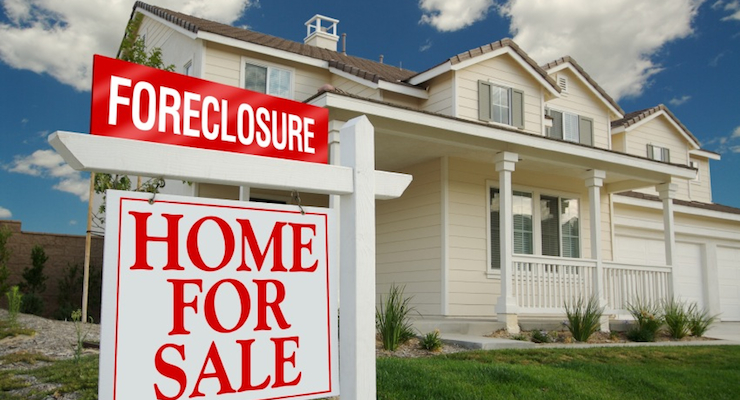
National and State Mortgage Risk Indices are tracked and released by AEI’s International Center on Housing Risk.

Nowhere has there been so much hand-wringing over a lack of “affordable housing,” as among politicians and others in coastal California. And nobody has done more to make housing unaffordable than those same politicians and their supporters.

A recent survey showed that the average monthly rent for a one-bedroom apartment in San Francisco was just over $3,500. Some people are paying $1,800 a month just to rent a bunk bed in a San Francisco apartment.

It is not just in San Francisco that putting a roof over your head can take a big chunk out of your pay check. The whole Bay Area is like that. Thirty miles away, Palo Alto home prices are similarly unbelievable.

One house in Palo Alto, built more than 70 years ago, and just over one thousand square feet in size, was offered for sale at $1.5 million. And most asking prices are bid up further in such places.

Another city in the Bay Area with astronomical housing prices, San Mateo, recently held a public meeting and appointed a task force to look into the issue of “affordable housing.”

Public meetings, task forces and political hand-wringing about a need for “affordable housing” occur all up and down the San Francisco peninsula, because this is supposed to be such a “complex” issue.

Someone once told President Ronald Reagan that a solution to some controversial issue was “complex.” President Reagan replied that the issue was in fact simple, “but it is not easy.”

Is the solution to unaffordable housing prices in parts of California simple? Yes. It is as simple as supply and demand. What gets complicated is evading the obvious, because it is politically painful.

One of the first things taught in an introductory economics course is supply and demand. When a growing population creates a growing demand for housing, and the government blocks housing from being built, the price of existing housing goes up.

This is not a breakthrough on the frontiers of knowledge. Economists have understood supply and demand for centuries — and so have many other people who never studied economics.
Housing prices in San Francisco, and in many other communities for miles around, were once no higher than in the rest of the United States. But, beginning in the 1970s, housing prices in these communities skyrocketed to three or four times the national average.

Why? Because local government laws and policies severely restricted, or banned outright, the building of anything on vast areas of land. This is called preserving “open space,” and “open space” has become almost a cult obsession among self-righteous environmental activists, many of whom are sufficiently affluent that they don’t have to worry about housing prices.

Some others have bought the argument that there is just very little land left in coastal California, on which to build homes. But anyone who drives down Highway 280 for thirty miles or so from San Francisco to Palo Alto, will see mile after mile of vast areas of land with not a building or a house in sight.

How “complex” is it to figure out that letting people build homes in some of that vast expanse of “open space” would keep housing from becoming “unaffordable”?

Was it just a big coincidence that housing prices in coastal California began skyrocketing in the 1970s, when building bans spread like wildfire under the banner of “open space,” “saving farmland,” or whatever other slogans would impress the gullible?

When more than half the land in San Mateo County is legally off-limits to building, how surprised should we be that housing prices in the city of San Mateo are now so high that politically appointed task forces have to be formed to solve the “complex” question of how things got to be the way they are and what to do about it?

However simple the answer, it will not be easy to go against the organized, self-righteous activists for whom “open space” is a sacred cause, automatically overriding the interests of everybody else.

Was it just a coincidence that some other parts of the country saw skyrocketing housing prices when similar severe restrictions on building went into effect? Or that similar policies in other countries have had the same effect? How “complex” is that?

Nowhere has there been so much hand-wringing

CATO Economist Dan Mitchell Analyzes Trump and Taxes

Donald-Trump-Jeb-Bush-CNN-GOP-Debate-AP

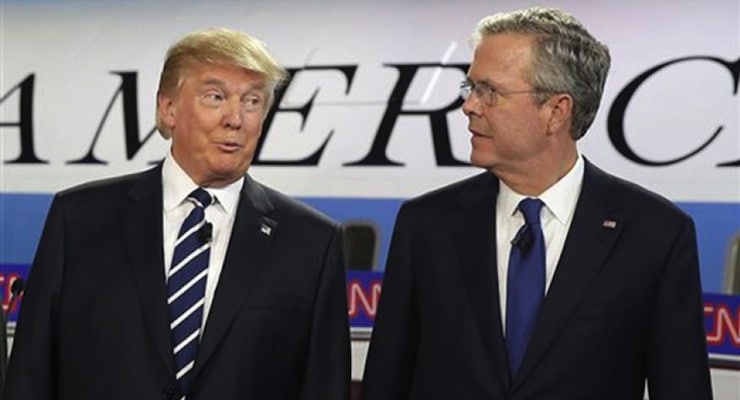
Republican presidential candidates, businessman Donald Trump, left, and former Florida Gov. Jeb Bush talk together before the start of the CNN Republican presidential debate at the Ronald Reagan Presidential Library and Museum on Wednesday, Sept. 16, 2015, in Simi Valley, Calif. (PHOTO: AP/Chris Carlson)

It’s been a challenge to assess Donald Trump’s fiscal policies since they’ve been an eclectic and evolving mix of good and bad soundbites. Though I did like what he said about wanting to pay as little tax as possible because the government wastes so much of our money.

On the other hand, some of his comments about raising tax burdens on investors obviously rubbed me the wrong way.

But now “The Donald” has unveiled a real plan and we have plenty of details to assess. Here are some of the key provisions, as reported by the Wall Street Journal. We’ll start with the features that represent better tax policy and/or lead to lower tax burdens, such as somewhat lower statutory tax rates on households and a big reduction in the very high tax rate imposed on companies, as well as a slight reduction in the double tax on capital gains.

…no federal income tax would be levied against individuals earning less than $25,000 and married couples earning less than $50,000. The Trump campaign estimates that would reduce taxes to zero for 31 million households that currently pay at least some income tax. The highest individual income-tax rate would be 25%, compared with the current 39.6% rate. …Mr. Trump also would cut the top capital gains rate to 20%, from the current 23.8%. And he would eliminate the alternative minimum tax. …For businesses, Mr. Trump’s 15% rate is among the lowest that have been proposed so far.

But there are also features that would move tax policy in the wrong direction and/or raise revenue.

Most notably, Trump would scale back certain deductions as taxpayers earn more money. He also would increase the capital gains tax burden for partnerships that receive “carried interest.” And he would impose worldwide taxation on businesses.

To pay for the proposed tax benefits, the Trump plan would eliminate or reduce deductions and loopholes to high-income taxpayers, and would curb some deductions and other breaks for middle-class taxpayers by capping the level of individual deductions, a politically dicey proposition. Mr. Trump also would end the “carried interest” tax break, which allows many investment-fund managers to pay lower taxes on much of their compensation. …The Trump plan would raise revenues in at least a couple of significant ways. It would limit the value of individual deductions, with middle-class households keeping all or most of their deductions, higher-income taxpayers keeping around half of theirs, and the very wealthy losing a significant chunk of theirs. It also would wipe out many corporate deductions. …The plan also proposes capping the amount of interest payments that businesses can deduct now, a change phased in over a long period, and would impose a corporate tax on future foreign earnings of American multinationals.

Last but not least, there are parts of Trump’s plan that leave current policy unchanged.

Which could be characterized as “sins of omission” since many of these provisions in the tax code – such as double taxation, the tax bias against business investment, and tax preferences – should be altered.

…the candidate doesn’t propose to end taxation of individuals’ investment income… Mr. Trump would not…allow businesses to expense all their new equipment purchases, as some other Republicans do. …All taxpayers would keep their current deductions for mortgage-interest on their homes and charitable giving.

So what’s the net effect?

The answer depends on whether one hopes for perfect policy. The flat tax is the gold standard for genuine tax reform and Mr. Trump’s plan obviously falls short by that test.

But the perfect isn’t the enemy of the good. If we compare what he’s proposing to what we have now, the answer is easy. Trump’s plan is far better than the status quo.

Now that I’ve looked at the good and bad policies in Trump’s plan, I can’t resist closing with a political observation.  Notwithstanding his rivalry with Jeb Bush, it’s remarkable that Trump’s proposal is very similar to the plan already put forth by the former Florida Governor.

I’m not sure either candidate will like my interpretation, but I think it’s flattery. Both deserve plaudits for proposing to make the internal revenue code less onerous for the American economy.

P.S. Here’s what I wrote about the plans put forth by Marco Rubio and Rand Paul.

CATO economist Dan Mitchell analyzes Donald Trump

[brid video=”16410″ player=”1929″ title=”NAR Chief Economist Lawrence Yun Explains August Pending Home Sales Index”]

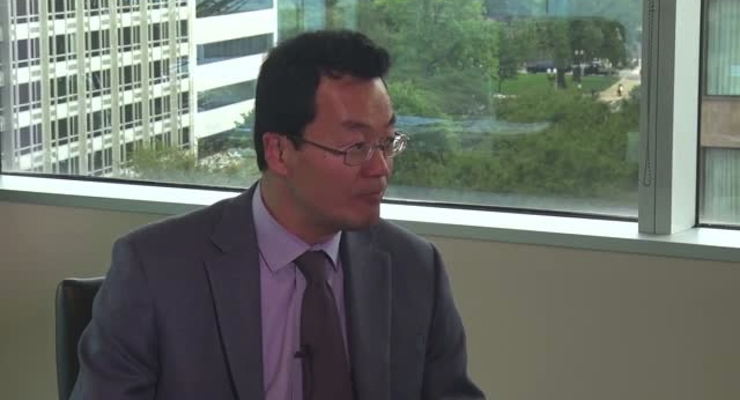
Lawrence Yun, chief economist at the National Association of Realtors, explains the Pending Home Sales Index in August unexpectedly falling from the month prior. The index released on Monday showed pending home sales in the U.S. declined 1.4% to a seasonally-adjusted 109.4 in August, from a reading of 110.9 in July. While the index, which is based on contract signings, showed a modest increase in the West it was offset by declines in all other regions.

Lawrence Yun, chief economist at the National

People's Pundit Daily
You have %%pigeonMeterAvailable%% free %%pigeonCopyPage%% remaining this month. Get unlimited access and support reader-funded, independent data journalism.

Start a 14-day free trial now. Pay later!

Start Trial