Widget Image
Follow PPD Social Media
Thursday, January 15, 2026
HomeStandard Blog Whole Post (Page 933)

climatologist professor michael mann

Dr. Michael E. Mann the author of The Hockey Stick and the Climate Wars spoke on his research of global warming at NASA Langley’s Reid Conference Center May 7, 2013.

More than half of the country says the argument over global warming is still ongoing and, science itself, is a systematic study of the structure and behavior of the physical and natural world through observation and experiment. To hold true to its very nature, those who study scientific theories much always challenge what one day may be referred to as settled science.

In many ways, freedom of speech protected in the First Amendment has allowed scientific research to thrive in the U.S., as the stifling of new and radical ideas are intolerable to our very principles. Yet, Pennsylvania State University professor Dr. Michael Mann, a supporter of global warming, is well-known for suing groups that challenge his controversial scientific methods aimed to prove manmade global warming.

In 2013, Intergovernmental Panel on Climate Change argued that it is “extremely likely” that humans are the primary  cause of global warming. The wording was stronger than the “very likely” assessment from the IPCC’s last climate change report released in 2007. However, it wasn’t swallowed without challenge.

In their response, Patrick Michaels and Chip Knappenberger of the Cato Institute, said the IPCC’s contradictory statements show an “embarrassing lack of internal inconsistency,” and failed to consider “the discrepancy between the observed effectiveness of greenhouse gases in warming the earth and this effectiveness calculated by the climate models that the IPCC uses to project future climate change.”

Michaels and Knappenberger argued that the IPCC declined to account for deviations between climate impacts predicted by IPCC models and actual temperature increases. IPCC models have also come under fire for their failure to explain an ongoing pause in the rise of global temperatures, which in reality, have remained flat for approximately 15 years, while the global warming argument has been evolving for well over 40 years.

Dr. Mann’s decision to sue the Competitive Enterprise Institue, National Review, Mark Steyn and others that oppose his methodologies, makes him more a petulant child than a scientist. Mann seemingly forgets positive role the First Amendment and freedom of speech has had on science.

The Reporters Committee for the Freedom of the Press with 26 other groups filed an amici curiae with the D.C. Court of Appeals. An amici curiae is a brief submitted to a court to raise additional points of view to sway a court’s decision.

“While Mann essentially claims that he can silence critics because he is ‘right,’ the judicial system should not be the arbiter of either scientific truth or correct public policy,” the brief states, adding that “a participant in the ‘rough-and-tumble’ of public debate should not be able to use a lawsuit like this to silence his critics, regardless of whether one agrees with Mann or defendants.”

The suit was originally filed when the Competitive Enterprise Institutes (CEI) Rand Simberg referenced Mann as “the Jerry Sandusky of climate science” and that Mann “molested and tortured data in the service of politicized science.”

CEI eventually  did retract the statements, but not National Review’s Mark Steyn, who elaborated and called Mann’s research fraudulent.

Mann responded by suing CEI, National Review and each of the authors of the pieces.

Even though Mann has sued in the past unimpeded, the unlikely coalition is putting their foot down on this one. The Cato Institute, Reason Foundation, Individual Rights Foundation and the Goldwater Institute all rushed to the defense of those sued by Mann, with each filing their own brief in support of CEI and National Review.

“Public figures must not be allowed to use the courts to muzzle their critics,” Cato’s Ilya Shapiro wrote earlier this week.

Shapiro, and the Cato Institute in general, argue that under the First Amendment, there must be room for “the marketplace of ideas to operate.” Shapiro warned that the court would, essentially, be judging whether the defendants’ opinions are false by sizing them up with much-disputed EPA findings.

“The point in this appeal is that courts should not be coming up with new terms like ‘scientific fraud’ to squeeze debate over issues impacting government policy into ordinary tort law,” Shapiro said. “Dr. Mann is not like a corner butcher falsely accused of putting his thumb on the scale or mixing horsemeat into the ground beef. He is a vocal leader in a school of scientific thought that has had major impact on government policies.”

Unbelievably, a D.C. court in July dismissed a the defendants’ arguments holding the statements made against Mann were protected under the First Amendment. The court went one step further in their ruling, claiming that there was enough evidence of “actual malice” for the suit to go forward.

CEI’s attorney Sam Kazman pointed out that “all Americans engaged in public debate and discourse on contentious political issues will be affected by the outcome of our case.”

In July, the Virginia Supreme Court ordered that the Energy and Environmental Legal Institute pay Mann and the University of Virginia – where Mann had previously worked — $250 in damages.

The Energy and Environmental Legal Institute had wanted to get Mann’s records as part of a campaign to disprove his research on climate change. The court ruled that Mann’s unpublished research, which included emails about global warming, were exempt from the Virginia Freedom of Information Act.

More than half of the country says

president obama job approval polls

President Obama’s job approval polls are tracked and aggregated on PPD, including polls conducted by Gallup, Reuters, AP/GfK, Rasmussen Reports and more.

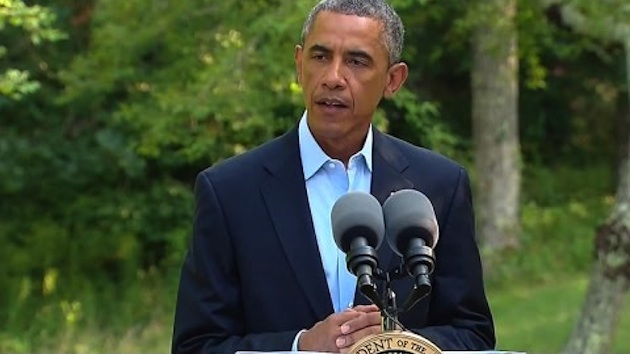
President’s Obama’s approval on foreign policy has once again hit an all-time low, with majorities of Democrats now saying the president has been too weak in his responses to the numerous crises around the world. Obama speaking from Martha’s Vineyard Thursday claimed that U.S.-led airstrikes have stopped the advance by ISIS in Iraq, though lawmakers on both sides of the aisle aren’t yet in agreement with the president.

Whether the events will cause American voters to see Obama’s foreign policy in a more favorable light, remains in dispute. On the PPD average of polls, just 35.8 percent of Americans approve of Obama’s handling of foreign policy, while nearly 54 percent disapprove. These numbers are significant, considering foreign policy was a strong issue for him throughout the 2012 campaign. In the fall of 2012, 49 percent of voters approved of his performance on foreign policy, according to a survey conducted for FOX News, which was higher than any other issue.

In fact, even though the president’s overall approval numbers have been underwater for over a year — and, currently stand at a negative 41 – 53 percent — his numbers on foreign policy were stubbornly high before displaying the most dramatic shift in public opinion out of any other issue. Behind the shift lays a deepening disapproval among voters who identify with the president’s own party.

Voters, overall, continue to give President Obama poor ratings regarding the job he is doing on Iraq, Israel and Ukraine. However, they approve of the recent U.S. airstrikes he ordered last week against ISIS militants in Iraq.

According to a new FOX poll released Wednesday, 74-percent say Obama hasn’t been tough enough on Russia, which is up from 66 percent measured in March.  On the flip side, an embarrassing 6 percent of voters say Obama has been too tough, while 10 percent volunteer “about right.” Even 65 percent of Democrats agree with 69 percent of independents and 88 percent of Republicans, who agree Obama needs to be tougher on Russia and Vladimir Putin.

In the poll, only 16 percent of voters say Putin takes Obama seriously, while 77 percent think he doesn’t, including 64 percent of Democrats.

The August 4, 2014, issue of TIME Magazine shouted the headline title, “Cold War II – The West is losing Putin’s dangerous game.” PPD previously examined whether the American people agreed with that headline and, as far as the results, the conclusion was damning for the president.

At that point, a survey conducted by Rasmussen Reports found that 63 percent of likely voters believed it is at least “somewhat likely” that the United States and Russia will return to a 1950s-like Cold War relationship within the next few years. That’s a startling number, even for those who aren’t particularly fond of Rasmussen polls, because it is up 18 points from 45 percent they measured in March and up an astonishing 27 points from 36 percent in August 2013.

Now, the most recent measurement of the national mood is continuing to validate those results.

In the FOX poll, a similar 64 percent think it is likely there will be a new cold war with Russia, which is also up from 54 percent who felt that way back in August 2008, when the same pollster posed the same question during the conflict between Russia and the Republic of Georgia. Increases, again, are observed across the political spectrum, with Democrats up 6 points, independents up a whopping 12 points, and Republicans leading the cautious with 15 more points than previously measured.

On Ukraine, a situation NATO is warning could soon turn into a Russian invasion under the pretext of a humanitarian operation, just 31 percent of voters said they approved of how Obama is handling the crisis, while 50 percent disapprove. Approval among Democrats is an unimpressive 52 percent, which is far outweighed by the 70 percent of Republicans who disapprove.

In Israel, Prime Minister Benjamin Netanyahu is enjoying unprecedented support from the Israeli people regarding how he is handling the recent conflict with Hamas. According to a recent survey conducted by Gallup, Americans heavily favor Israel and say “Operation Protective Edge” was justified. President Obama, however, who was openly critical of the Israeli response to Hamas launching rockets and subterranean attacks, is widely admonished for his statements and positions.

On the Israeli-Palestinian conflict, 30 percent approve of the president’s stance, while 54 percent disapprove and more voters say Obama has “not been supportive enough” of Israel (38 percent) than think it has been “too supportive” (18 percent) or “about right” in its support (33 percent).

These numbers are no doubt troubling for House Democrats seeking reelection in tough districts, as well as senators hanging by a thread in Republican-leaning states.There is an old adage in political science that says “foreign policy can’t help a president, but it sure can sink him.” Because voters can no longer hold Obama responsible for their disappointment, the only other option they have is to punish members of his party at the ballot box in November. Whether voters choose to do so or not will not be certain until November, 3. But what is certain is that the issue of foreign policy is becoming increasingly important as the 2014 midterm elections draw near.

The Fox News poll is based on landline and cell phone interviews with 1,001 randomly chosen registered voters nationwide and was conducted under the joint direction of Anderson Robbins Research (D) and Shaw & Company Research (R) from August 10-12, 2014. The full poll has a margin of sampling error of plus or minus three percentage points.

President's Obama's approval on foreign policy has

ANDREW KLAVAN: I’m Andrew Klavan and this is the Revolting Truth.

Thomas Picketty’s new book Capital in the 21st Century has excited leftists with its call for more income redistribution. The Financial Times and others say the books’ data are suspiciously skewed but the New York Times’ columnist Paul Krugman says he’s received confirmation of Picketty’s numbers on an interplanetary communication device that you can make yourself out of ordinary tinfoil you find at home.

Today, to clarify the underlying issues, the Revolting Truth presents this helpful Q&A.

Q: What is income redistribution?

A: Income redistribution is when you go to work or start a business or make an investment — and earn money — and the government takes the money away from you and gives it to someone else.

Q: So you mean it’s stealing?

A: No, it’s income redistribution.

Q: But what if I won’t give them my money?

A: Then armed men come to your house and take it.

Q: So then it’s armed robbery?

A: No, it’s income redistribution.

Q: Well, when the men try to take my money at gunpoint, what if I call the police?

A: The men are the police.

Q: The police are robbing me at gunpoint???

A: It’s income redistribution!

Q: What if I have a gun too?

A: That would be wrong.

Q: If they’re robbing me at gunpoint, why is it wrong for me to defend myself with a gun?

A: Huh?

Q: Look, instead of taking my money away to give to other people, why not just give those other people jobs?

A: It’s because there aren’t enough jobs to go around.

Q: Why not?

A: Because people aren’t spending enough or creating enough businesses or investing enough.

Q: But that’s because you took their money away!

A: Right! That’s income redistribution!

Q: Let me get this straight. We need more income redistribution because there’s too much income redistribution?

A: Congratulations. Now you’re smarter than Thomas Picketty.

Q: That’s it. I’m buying a gun.

A: But it’s income redistribution!

Q: Pound sand, you Communist thug.

Well, I hope this handy guide has been helpful in understanding Capital in the 21st Century.

Q: Come near me again and I’ll blow your head off!

I’m Andrew Klavan with the Revolting Truth.

Andrew Klavan, of the Revolting Truth, does


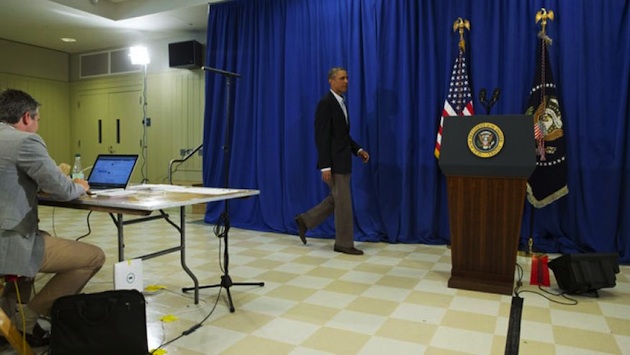
Obama press conference

President Barack Obama arrives to speak to reporters about the situations in Iraq and in Ferguson, Mo., Thursday, Aug. 14, 2014, in Edgartown, Mass. (Photo: AP)

Iraqi Prime Minister Nouri al-Maliki has resigned from his post, setting the stage for a peaceful transition to power and the formation of a new government. The Obama administration decided weeks ago to encourage Iraqi politicians to get behind Haider al-Abadi in an effort designed to form a multi-sectarian government and push out al-Maliki.

“We are prepared to consider additional political, military and security options as Iraq starts to build a new government,” Secretary of State John Kerry said Wednesday. Secretary of State Chuck Hagel also said the Obama administration “is prepared to intensify its security cooperation as Iraq undertakes and makes progress toward political reform.”

Meanwhile, President Obama said Thursday that U.S.-led airstrikes have broken the siege by Islamic militants against religious minorities who were trapped on a mountain in northern Iraq. Thousands of Iraqi citizens were forced from their homes to seek refuge in the Sinjar mountain range or further south of the Kurdish provence of Dahuk.

“The situation on the mountain has greatly improved,” Obama said, in brief remarks from Martha’s Vineyard, where his family is on vacation. “We broke the ISIL siege of Mount Sinjar. We helped vulnerable people reach safety.”

ISIL, also known as the Islamic State of Iraq and Syria (ISIS), gave Iraqi citizens just three options; convert, die of starvation or death by execution.

However, the president’s claims did stop the United Nations from escalating their humanitarian efforts, and upgrading the situation in Iraq to a level 3 emergency.

The president said he does not expect it will be necessary for the United States to order an evacuation operation. Over the past week, U.S. forces delivered over 114,000 meals and 35,000 gallons of water to the trapped religious minorities.

Obama plans to authorize additional humanitarian missions elsewhere in the region. ISIL has managed to uproot 1.5 million people from their homes since the capture of Mosul, during which they seized U.S. arms and fissile nuclear material from the University of Mosul.

The president promised to continue airstrikes where necessary to protect American personnel in Iraq.

“The situation remains dire for Iraqis subject to ISIL’s terror throughout the country,” President Obama stated. The president’s critics say his policies have led to the dire situation in Iraq. It wasn’t too long ago that the president called the terrorist group “JV,” a comment he won’t soon live down.

Obama made it clear that he will not  assign “combat troops on the ground,” even though ISIL still retains a bulk of U.S. military arms. He does not seem to mind airstrikes and said the U.S. is increasing military assistance to Iraqi and Kurdish forces.


Iraqi Prime Minister Nouri al-Maliki is reportedly

rauner vs quinn polls

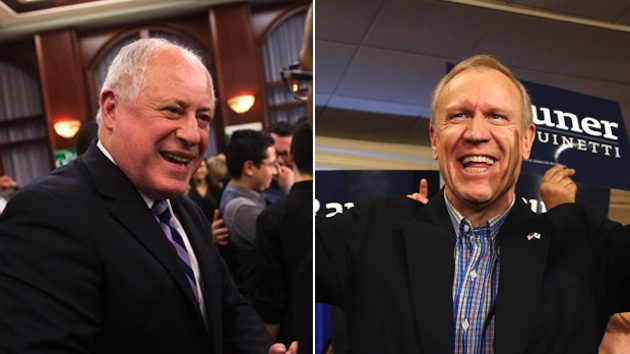
Republican businessman Bruce Rauner (right) leads Gov. Pat Quinn (left) in Illinois governor polls.

A new poll conducted by Illinois-based pollster WeAskAmerica found Republican businessman Bruce Rauner leading incumbent Democrat Gov. Pat Quinn in the Illinois governor race, 51 – 38 percent. Rauner’s lead in the latest poll, if accurate, marks a significant milestone. Though Gov. Quinn has trailed his Republican opponent in each poll conducted since the GOP primary, the latest poll shows Rauner breaking the ever-important 50-percent threshold.

The Quinn camp immediately pushed back on the results of the poll.

“This is from the same pollster who was off by 15 points in the Illinois Republican primary,” Quinn campaign spokeswoman Izabela Miltko said. “We don’t put much stock in phony robo-polls conducted by supporters of the governor’s opponent. Legitimate polls have this race neck and neck.”

In a reliably Blue state, which consistently votes Democrat on both statewide and national levels, isn’t it likely that Rauner’s lead — if any — is overstated? Quinn’s own campaign and the Illinois Education Association had Quinn trailing Rauner by 1 and 4 points, respectively.

So, whose right? Let’s take a look at the PPD average of head-to-head polling conducted since the beginning of the cycle, and then see if the results hold up against scrutiny .

Poll Date Sample MoE Rauner (R) Quinn (D) Spread
PPD Average 7/5 – 8/6 47.0 40.0 Rauner +7.0
Sun-Times/WeAskAmerica 8/6 – 8/6 1085 LV 3.1 51 38 Rauner +13
Rasmussen Reports 7/29 – 7/30 750 LV 4.0 44 39 Rauner +5
CBS News/NYT/YouGov 7/5 – 7/24 5298 RV 46 43 Rauner +3
Rasmussen Reports 4/9 – 4/10 750 LV 4.0 43 40 Rauner +3
WeAskAmerica 1/30 – 1/30 1354 LV 2.7 47 39 Rauner +8
PPP (D) 11/22 – 11/25 557 RV 4.2 38 41 Quinn +3

Obviously, Rauner enjoys a consistent lead in the polls, but polling this cycle has been abysmal, in general. Below is the Real Clear Politics average of polls from the 2010 gubernatorial contest in Illinois (PPD didn’t average the 2010 Illinois governor race). As we can see below, state Sen. Bill Brady, who took another stab in 2014 but was defeated by Rauner, held a decent lead over Quinn going in to Election Day.

Poll Date Sample Brady (R) Quinn (D) Spread
Final Results 46.1 46.6 Quinn +0.5
RCP Average 10/18 – 10/31 44.0 39.3 Brady +4.7
PPP (D) 10/30 – 10/31 814 LV 45 40 Brady +5
FOX News/POR-Rasmussen 10/30 – 10/30 1000 LV 44 38 Brady +6
Chicago Tribune 10/18 – 10/22 700 LV 43 39 Brady +4
Post-Dispatch/Mason-Dixon 10/18 – 10/20 625 LV 44 40 Brady +4

Despite all the prognosticators forecasting the race for Brady, Quinn eked out a small 46.6 – 46.1 victory over Brady, even when now-Sen. Mark Kirk (R-IL) won President Obama’s old seat. So, it’s easy to see why we are fairly cautious about polling and how it may unfairly influence our election projection model at PPD. That being said, we still rate this race “Leans Republican” and believe Rauner’s lead is real, albeit not nearly as large as WeAskAmerica suggested.

The reasons are simple yet there are several, and many of which now present in 2014 were non-issues in 2010.

First, Rauner’s support is strong statewide and dominate downstate. Brady’s numbers were strong downstate but weak in the Chicago suburbs and within the city. Since 2006, no Republican candidate has won statewide in Illinois without taking at least 20 percent of the vote in the city.

Even though Quinn has spent a ton of money attempting to paint Rauner as an out-of-touch “billionaire” — a line of attack that mirrors the “vulture capitalist” narrative Democrats used on Mitt Romney and so many others —  voters in Illinois are actually evenly split over which candidate best understands their everyday concerns. The same was not true of Brady.

Though the headline numbers vary by survey, there is one damning dynamic that is currently posing a serious challenge for Gov. Quinn. Not only do voters say Rauner is a reformer, but also that Quinn is a failure, which brings me to the second factor. Quinn was badly tarnished by his failed $54.5 million Neighborhood Recovery Initiative, a corrupt anti-violence grant program that is now under federal investigation.

Quinn shut down the program after Auditor General William Holland said NRI grant funds were going to the politically connected and suspicious social-service groups with little-to-no oversight of how taxpayer money was being spent. But the damage has been done.

Third, and perhaps most important, there is a very real civil war going on among Democrats in the state of Illinois. In one corner, you have loyal, lock-stepping liberals who continue to support the teacher unions and their budget-busting pensions that are bankrupting the state for zero return. In the other corner, moderate Democrats are in full rebellion, recognizing the state is headed for a financial disaster unless there is a course correction.

Scores of Illinois Democrats have backed Bruce Rauner over Gov. Quinn, beginning with former Kennedy administration official and Democratic activist Newton Minow back in March.

“President Kennedy once said, ‘Sometimes party loyalty asks too much,’” Minow said. “I think this is one of those times. I’m a strong Democrat, but I’m taking a leave of absence from my party because Illinois is in desperate shape.”

Minow believes the state must change course with Rauner before it is too late, as pension-to-debt ratios threaten to overwhelm the state tied with Nevada for the country’s second highest unemployment rate in the country.

And he is not alone.

Last week, the Rauner camp announced the formation of Democrats and Independents for Rauner and launched their first Spanish language ad. It features a plethora of Democrats, ranging from environmental activists to a member serving on the Board of Directors for the Chicago Urban League, as well as several pastors from black and Hispanic churches in the inner city and across the state.

Reverend James Meeks, a long-time Democrat and head of Salem Baptist Church in Chicago, endorsed Rauner over Quinn in April, just one month after Minow.

“The Democratic party just assume always that 97 percent of the African-American vote will go to the Democratic party. If that assumption is true, they never have to work for our vote,” Reverend Meeks said. “Our schools are still broken and getting worse. We’re last in employment or business. Our neighborhoods are deplorable,” he added.

Rauner has already made a visit to the faithful at Salem Baptist and Reverend Meeks has been reaching out to other pastors about getting Rauner in front of more African-American congregations. Rev. Ruben Cruz, Pastor at First Spanish Christian Church of Chicago, also answered the phone when Rauner called. Featured in the ad, as well, Revs. Cruz and Meeks will be crucial to Rauner’s performance in the city, which again, needs to exceed 20 percent.

Though this race is likely to tighten, as of now, we believe Rauner has the votes to defeat incumbent Gov. Pat Quinn. Illinois has a long history of polling competitive races until disgruntled Democrats come home in the final stretch. However, we also believe that Rauner’s support among Democrats is significant, which will limit that effect this cycle to the detriment of Team Quinn.

“We still get the same promises from the Democratic party, but we don’t get any deliverable. I think it’s time we should look at another candidate,” Reverend Meeks bluntly illustrated.

The teacher unions failed to stop Rauner in the GOP primary, despite ad buys and cross-over efforts, when they pulled Republican ballots and voted en masse for Kirk Dillard. According to PPD’s 2014 Governor Map Predictions model, which relies upon a comprehensive rating system dealing in probabilities, they have slightly less than a 44 percent chance of not repeating their past failure.

Gov. Pat Quinn's camp is pushing back

obama speech iraq

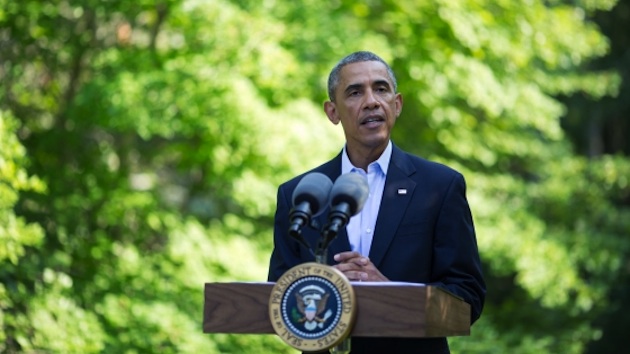
President Barack Obama makes a statement on the situation in Iraq from Chilmark, Mass., August 11, 2014. (Official White House Photo by Pete Souza)

The Obama administration has decided to encourage Iraqi politicians to get behind Haider al-Abadi in an effort designed to form a multi-sectarian government and push out Prime Minister Nuri Kamal al-Maliki. Secretary of State John Kerry and Defense Secretary Chuck Hagel said on Tuesday said the U.S. would be open to expanding military and political support for Iraq if Haider al-Abadi becomes prime minister and leads the new government.

“We are prepared to consider additional political, military and security options as Iraq starts to build a new government,” Mr. Kerry said. Hagel also said the Obama administration “is prepared to intensify its security cooperation as Iraq undertakes and makes progress toward political reform.”

However, al-Maliki isn’t going easy, and has thus far resisted any effort to coalesce Iraq behind Mr. Abadi. On Monday, Kerry said that the U.S. would cut off its support for Iraq if al-Maliki turned to Iraqi security forces to help stay in power by force or threat of force. Still, it may be those closest to al-Maliki that pose him the greatest threat, as his pretorian guard is somewhat populated with soldiers loyal to his political enemies.

Since the withdrawal of U.S. military forces from Iraq, Prime Minister al-Maliki has refused to give the Sunni population more of a voice in the Iraqi government. His decision to isolate large blocs of the Iraqi population made some Sunnis sympathetic to the ISIS militants, though sentiment even among sympathizers is weakening due to the horrific tactics from ISIS. Nouri al-Maliki assumed power with the help of the Bush administration, who insisted on demanding inclusion from al-Maliki, but the Obama administration was already taking a hands-off approach to Iraq by the time al-Maliki sought his second term.

During this period, the Shiite prime minister sought to treat the Sunni politicians and population — among other religious minorities — with a contempt not tolerated under the Bush administration. Now, done is done, and the Obama administration has decided that a new prime minister is needed to establish a new, inclusive Iraqi government.

Though the president spoke Monday at the White House, which aides characterized as an update on the latest developments regarding military operations, U.S. strategy in Iraq is still very much unclear. Obama has committed the U.S. to a containment strategy. Yet, Pentagon officials worry that the U.S. cannot contain a force that has no state to retreat to, acknowledge no resolution can be favorable if the U.S. allows ISIS to remain operable in Iraq.

The White House says U.S. operations aim to prevent ISIS fighters from advancing on the Kurdish capitol of Erbil located in northern Iraq, as well as any advances toward Baghdad. Secondary humanitarian operations consist of providing minor protection to Yazidi religious minorities and Christians who are trapped on Mount Sinjar without food and shelter.

The Kurds, a pro-West religious minority who always been a friend to U.S. interests, have repeatedly requested the Obama administration send sufficient enough arms to halt the ISIS advance, including antitank weapons, armored vehicles and ammunition. Kurdish pesh merga fighters, by far, are the most well-trained fighters in the region and have the capability to stop the ISIS militants. However, seizing vast amounts of territory from the Iraq security forces, ISIS made off with scores of American weapons that put the Kurds at a disadvantage.

While we have confirmed that the Central Intelligence Agency is already supplying some arms to the Kurds, it unclear what kind of arms, how many, or who is actually providing them. On Monday, Lt. Gen. William C. Mayville, the director of operations for the Joint Chiefs of Staff, said that the Kurds needed these weapons if we want them to destroy some of our own vehicles that ISIS now has control over, as well as “longer-range weapons” to counter the U.S. weaponry also now in the hands of Islamic militants.

While appearing to offer the Iraqi people a carrot, neither Kerry nor Hagel gave any details or indication of what a greater role for the U.S. would look like in Iraq.

The Obama administration has decided to get

Video: President Obama speech on Iraq Monday, August 11, at the White House.

Monday afternoon, President Obama Monday gave an update at the White House regarding the latest developments in Iraq, provided little to no direction for the end-game for U.S. operations in Iraq.

First, the President noted that U.S. forces have “successfully conducted targeted airstrikes to prevent terrorist forces from advancing on the city of Erbil, and to protect American civilians there.” He also addressed our ongoing humanitarian efforts to help those who are stranded on Mount Sinjar, adding that we’ve deployed a USAID Disaster Assistance Response Team to help.

“Some have begun to escape their perch on that mountain,” he said, “and we’re working with international partners to develop options to bring them to safety.”

The President against stated that “the only lasting solution is for Iraqis to come together and form an inclusive government,” and highlighted important steps Iraq is taking in that effort:

Last month, the Iraqi people named a new President. Today, President Masum named a new Prime Minister designate, Dr. Haider al-Abadi. Under the Iraqi constitution, this is an important step towards forming a new government that can unite Iraq’s different communities.

Earlier today, Vice President Biden and I called Dr. Abadi to congratulate him and to urge him to form a new cabinet as quickly as possible — one that’s inclusive of all Iraqis, and one that represents all Iraqis. I pledged our support to him, as well as to President Masum and Speaker Jabouri, as they work together to form this government. Meanwhile, I urge all Iraqi political leaders to work peacefully through the political process in the days ahead.

This new Iraqi leadership has a difficult task. It has to regain the confidence of its citizens by governing inclusively and by taking steps to demonstrate its resolve. The United States stands ready to support a government that addresses the needs and grievances of all Iraqi people. We are also ready to work with other countries in the region to deal with the humanitarian crisis and counterterrorism challenge in Iraq. Mobilizing that support will be easier once this new government is in place.

These have been difficult days in Iraq — a country that has faced so many challenges in its recent history. And I’m sure that there will be difficult days ahead. But just as the United States will remain vigilant against the threat posed to our people by ISIL, we stand ready to partner with Iraq in its fight against these terrorist forces. Without question, that effort will be advanced if Iraqis continue to build on today’s progress, and come together to support a new and inclusive government.

Monday afternoon, President Obama Monday gave an

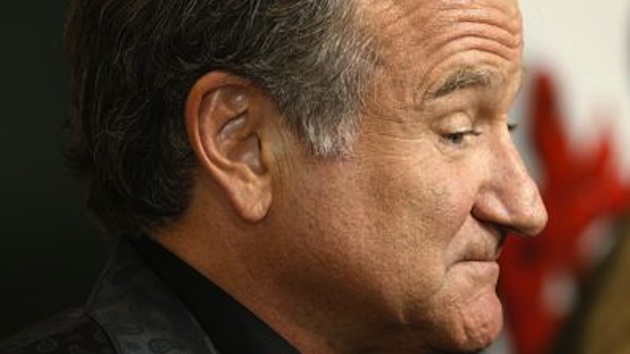
WATCH: Four4Four: Inside Robin Williams’ Tragic Death, And Why Everyone Feels His Loss – people reflect on the life and death of actor Robin Williams.

Robin Williams had been battling severe depression, according to his rep Mara Buxbaum. Last month, Williams publicly stated he was returning to a 12-step treatment program needed after 18 months of nonstop work. He had sought treatment in 2006 after a relapse that ended 20 years of sobriety.

Williams is survived by his wife and his three children: daughter Zelda, 25; and sons Zachary, 31, and Cody, 22. Zelda took to Twitter late Monday to pay tribute to her father by posting a quote from Antoine De Saint-Exupery’s “The Little Prince”:

“This is a tragic loss, and the family respectfully asks for privacy as they grieve in this difficult time,” a Williams family statement read.

Robin Williams won an Academy Award for his role in “Good Will Hunting,” and starred in other blockbusters, such as “Good Morning, Vietnam” and “Bird Cage.” Williams downplayed the award in an interview with comedian Marc Maron back in 2010.

“People say you’re an Academy Award winner,” he said. “The Academy Award lasted about a week and then one week later, people went, ‘Hey Mork!'” Of course, Williams got his break as the brilliant “Mork and Mindy” star.

Unfortunate details of actor Robin Williams death came to light at a press conference Tuesday afternoon.

Williams hung himself with a belt and was discovered by his personal assistant on Monday, said assistant chief deputy coroner Lt. Keith Boyd.

“Mr. Williams’ personal assistant was able to gain access to Mr. Williams’ bedroom and entered the bedroom to find Mr. Williams clothed in a seated position, unresponsive, with a belt secured around his neck with the other end of the [belt] wedged between the… closet door and the door frame,” he said. “His right shoulder area was touching the door with his body perpendicular to the door and slightly suspended.”

WATCH: Four4Four: Inside Robin Williams' Tragic Death,

generic ballot

Republicans have retaken the lead on PPD’s average of generic ballot polls, fueled largely by a late July-early-August surge on the all-important survey. The generic ballot is perhaps one of the best indicators for measuring the national mood and, up until now, has shown a relatively flat partisan mood among the electorate.

Democrats retained a small lead from 1 to 2 points on the PPD average of generic ballot polling from June to mid-July, and most of the polling samples were of registered voters. Historically, the measurement has a built-in Democratic lean that understates Republican support, particularly among registered voter surveys in midterm elections. But as the summer begins to wind down and voters begin to pay attention, the data suggest Republicans have an opportunity to break open their newly found lead.

Let’s take a look at the trend and some historical data.

In mid-June, Democrats had a 2-point lead that remained fairly consistent up until July 14, when, — save for the CNN/Opinion Research poll — surveys began to show a tie or a slight lead for Republicans. Since that period, Democrats have led in just 1 poll conducted for CBS News from July 29 to August 4, 41 – 37 percent. However, among those who told CBS they are more enthusiastic than usual about voting, Republicans led 47 – 40 percent.

Meanwhile, during approximately the same period (from July 29 to August 4), the one poll of likely voters conducted by Rasmussen Reports, found the GOP with a 4-point edge, 42 – 39 percent. Rasmussen uses an automated polling methodology, which we are very skeptical about, but even a broken clock is right twice a day.

In the most recent poll conducted by Marist College for McClatchy News, which uses a methodology that is considered the “gold standard” in public polling, Republicans have taken a 5-point lead over Democrats, 43 – 38 percent. While each party appears to have their base sown up, Republicans led by a whopping 14 points among independents. Considering the enthusiasm gap favors the GOP — though now it is slightly less than in previous polling — Democrats using impeachment to scare and gin up their base really is smart politics, despite the fact there is zero chance Republican leadership would take up such an effort.

Worth noting, the Marist poll asked respondents whether they were more or less likely to support Republican candidates if they were to sue or impeach President Obama over executive overreach, but they asked the generic ballot question first, which avoids a bias against the GOP. In future “public” polling that poses similar questions, it is vital to know whether the pollster ended the interview with the question or began the interview with these or other individual issues. PPP, or Public Policy Polling, for instance, not only uses a similar methodology as Rasmussen Reports, but also has a suspicious and dubious habit of asking questions first.

Methods such as these completely taint the polling results, and are aiming to influence public opinion rather than measure public opinion.

Nevertheless, if we are generous and include Democrat support levels in July, Republicans hold a slight .5 percentage point lead. If, however, we factor in the end of July until now, the GOP lead rises to just under 2 points, 41.25 – 39.5. Historically, that translates into a very real chance the party will meet their moderately ambitious “drive to 245” goal in the House, which was recently outlined by National Republican Congressional Committee Chairman, Rep. Greg Walden (R, OR-2).

The party’s goal puts their majority just one seat under the 246-seat majority the GOP held in 1946. As a side note, since the House expanded to 435 seats in 1913, the largest GOP majority in the People’s chamber was a whopping 302 seats won in 1920, and the president’s party has lost an average of 29 House seats in the “six year itch” midterm election.

Let’s take a look at the historical data below, which factors all 17 post-World War II midterm election results and compares them to generic congressional ballot results. Whether the Republicans maintain their lead is a critical question that needs to be answered before predicting the overall election outcome because, it isn’t until the late summer and early fall of the actual midterm election year that the results of the generic ballot begin to have predictive value. As of now, they are in the “Goldilock Zone,” as we like to call it at PPD, where the historical data trends are not too hot (volatile) or too cold (flat) to draw reliable conclusions.

[table id=11 /]

As we can see from the table above, Republicans historically have picked up more seats on a point-for-point basis. In other words, on average, a 10-point advantage for Democrats on the generic ballot yields just a 12-seat swing, while an identical lead for Republicans yields a 23-seat swing, on average.

Each election has mitigating factors and variables, and the 2014 midterm election will be no different. Despite what the data shows, Republican pickup opportunities are somewhat limited due to their success in 2010. The Democratic Party was overly exposed after their success in 2008, and it was essentially time to pay the piper. Now, it is the Senate that is exuding that same dynamic, which our model favors the GOP to control after this cycle, wave or no wave. But for the GOP to meet or exceed their “drive to 245” goal, the generic ballot must hold at current levels or continue its trend further toward the GOP.

If Republican support holds at the levels Marist measured, then the party has a very real chance to surpass the 247 seats held in 1946 and win its biggest majority since the Roaring ‘20s. In such a scenario, control of the U.S. Senate would definitely be ripped from Harry Reid’s hands.

Republicans have retaken the lead on PPD's

putin russian separatists

Russian President Vladimir Putin is contemplating further intervention in the ongoing conflict between pro-Russian separatists and the western-recognized Ukraine government. Donetsk, a city that once held one million people has been reduced to a city of just five thousand.

Pro-Russian separatists are now feeling the pressure from the rebel forces, and have suffered a series of battlefield defeats, despite the Kremlin lobbing artillery from Russian territory into Ukraine over the past few weeks. The rebel commander Igor Strelkove (aka Igor Girkin) stated that the five thousand separatists are now on their own.

The constant shelling from the Ukrainian military damaged several buildings, cutting off the city’s water supply and electricity in various parts of the city.

Commander Strelkove is sending the separatists a crystal clear message, which is that they will oppose — by force — any further interference from Russia, including an invasion. However, the possibility that the Ukrainian military is playing into Moscow’s hands is very real.

NATO officials said last week that Russia had massed around 20,000 combat-ready troops on Ukraine’s eastern border and there is concern the Kremlin will use the pretext of a humanitarian mission to invade. It was the most serious warning to date from the Western alliance that the Russian military could invade its western neighbor.

“We’re not going to guess what’s on Russia’s mind, but we can see what Russia is doing on the ground – and that is of great concern. Russia has amassed around 20,000 combat-ready troops on Ukraine’s eastern border,” NATO spokeswoman Oana Lungescu said in an email.

Amid the ongoing chaos the Russian separatists accused the rebels of a purposeful attack on a high security prison, during which approximately one hundred inmates escaped. Officials admit that inmates included rapists and murderers, but took no responsibility for the attack or inciting the riots that quickly followed.

In fact, Ukrainian Security Spokesman Andiry Lysenko blamed the prison strike on the separatists fighters. “Bandits in Donetsk shelled residential quarters and correctional facility NO.124,” he said. A similar back-and-forth blame-game occurred after the Russian separatists shot down Malaysian Airlines Flight MH17. It wasn’t until the Ukraine security forces released an intercepted audio capturing a conversion between Russian separatists after they accidentally shot down the passenger plane, killing nearly 300 civilians.

With the large troop presence Moscow has amassed just two hours east of Donetsk, whether Putin grants the petition for assistance will determine if this stand-off turns into a full blown war.

Russian President Vladimir Putin is contemplating further

People's Pundit Daily
You have %%pigeonMeterAvailable%% free %%pigeonCopyPage%% remaining this month. Get unlimited access and support reader-funded, independent data journalism.

Start a 14-day free trial now. Pay later!

Start Trial