Widget Image
Follow PPD Social Media
Friday, January 16, 2026
HomeStandard Blog Whole Post (Page 967)

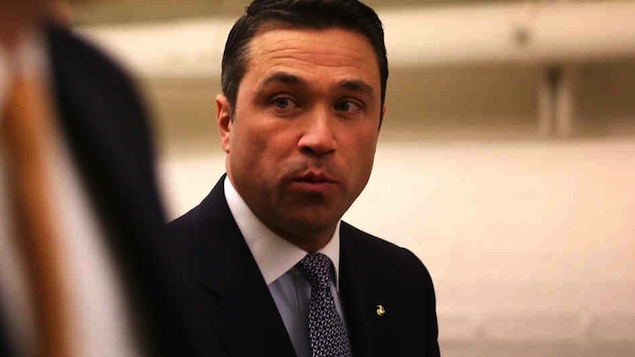
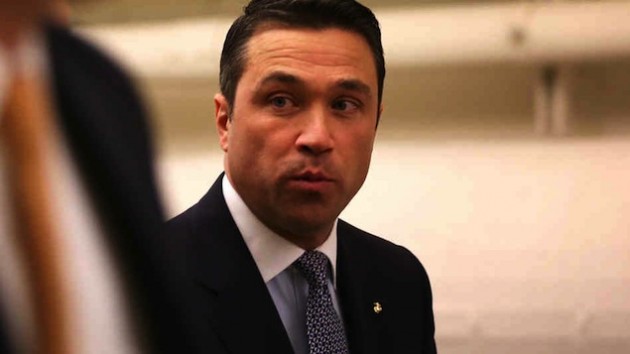
Rep. Michael Grimm

Rep. Michael Grimm was arrested Monday morning after it was expected he would turn himself in.

Learning he would face federal charges recently after a grand jury indictment, Rep. Michael Grimm was expected to turn himself in. But Grimm, a Republican congressman who represents Staten and Brooklyn, was arrested Monday morning and taken to FBI headquarters in Manhattan.

The charges will be announced by U.S. Attorney Loretta Lynch and are related to the Upper East Side restaurant, Healthalicious. However, it was not clear whether or not the charges are related to the alleged campaign finance violations during Grimm’s 2010 congressional campaign.

“We are disappointed by the government’s decision, but hardly surprised,” said the statement from Grimm’s attorney, William McGinley. “From the beginning, the government has pursued a politically driven vendetta against Congressman Grimm and not an independent search for the truth.”

The statement added that Grimm “asserts his innocence of any wrongdoing” and “will be vindicated.” He will not be stepping aside during the case, and filing deadlines are closed for another Republican to enter the race.

“Until then, he will continue to serve his constituents with the same dedication and tenacity that has characterized his lifetime of public service as a Member of Congress, Marine Corps combat veteran, and decorated FBI Special Agent,” the statement said.

Grimm has admitted to receiving $250,000 to $300,000 in contributions from members of a synagogue led by rabbi Yoshiyahu Yosef Pinto. There were members that came forward alleging they made tens of thousands of dollars in illegal contributions, including gifts funneled through straw donors.

The Israeli businessman who had served as Grimm’s liaison to Pinto’s followers, Ofer Biton, pleaded guilty in August to an immigration fraud charge. But just three days after the guilty plea, the FBI filed a sealed criminal complaint accusing a Houston woman who was romantically involved with Rep. Grimm, accusing her of using straw donors to make illegal campaign contributions.

She was accused of funneling at least $10,000 to Grimm’s campaign by passing them through friends who agreed to have the donations listed under their names. But none of this reportedly has anything to do with the arrest.

The Washington Post reported that Healthalicious was recently fined $88,000 for not providing workers compensation to their employees, while workers also accused the company of not following state wage laws. The restaurant allegedly gave workers cash payments to skirt New York tax and business laws.

Grimm has denied knowledge of any improprieties.

Rep. Michael Grimm was arrested Monday morning
Afghanistan presidential election

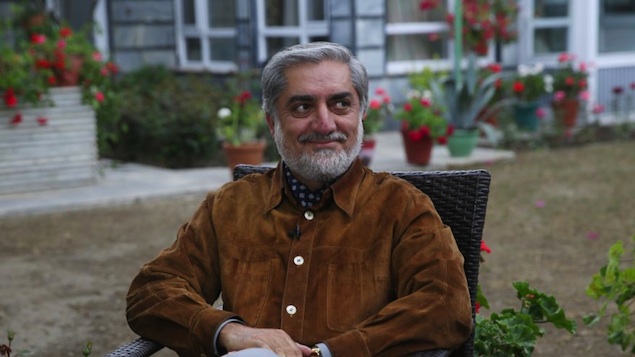
Afghan Foreign Minister Abdullah Abdullah at his residence in Kabul, Afghanistan. Abdullah finished first in the Afghanistan presidential election with 44.9 percent of the vote. (Photo: AP)

After getting a chance to vote nationwide for the first time in 13 years, voters in the Afghanistan presidential election will have to be satisfied with a “to be continued” resolution. Foreign Minister Abdullah Abdullah, by far, received the most votes but failed to reach the 50 percent threshold to outright win on Saturday, the chairman of the Independent Election Commission, Ahmad Yousuf Nouristani confirmed.

Abdullah, 54, earned 44.9 percent of the vote, which was significantly more than ex-Finance Minister Ashraf Ghani Ahmadzai, who took second with 31.5 percent of the vote. Though the results are preliminary, they will be finalized on May 14, only after investigations into voter fraud complaints. A total of 6.9 million votes have been counted by the election commission, Nouristani said. But he said the election commission needed to examine ballots in 444 polling stations, which roughly translates into more than 200,000 votes, because of allegations of fraud.

The runoff is scheduled to be held within 15 days of the final results.

The winner will replace President Hamid Karzai, who is the only president Afghans have known since the United States toppled the Taliban in the 2001 invasion. As a testament to Karzai’s unpopularity, Zalmai Rassoul, who was Karzai’s chose candidate and a foreign minister to the soon-to-be president, failed to earn enough votes to qualify to be included in the runoff.

Ahmadzai and Abdullah were the front-runners throughout the campaign, while Ahmadzai was a World Bank executive. Abdullah, on the other hand, stood as the opposition leader against all of the perceived corruption. Whomever the winner turns out to be will have a short honeymoon, to be sure. There are vast challenges ahead for the Afghan people.

U.S.-Afghan relations have deteriorated significantly, with a flailing foreign policy from the White House that apparently Obama didn’t even believe in, and an increasingly unstable Karzai becoming more and more difficult to keep relations with. Karzai is constitutionally barred from seeking another term as president. However, both Abdullah and Ahmadzai promised a new beginning with the West, vowing they will go forward with the proposed security pact with the U.S. that was stalled after Karzai refused to sign it.

That pact, which was quickly approved by the council of 3,000 prominent Afghans, known as the Loya Jirga, would allow a small force of American soldiers to stay in the country while training the Afghan army and police.

In 2009, both Ahmadzai and Abdullah lost to Hamid Karzai, though Abdullah finished second.

After 13 years of waiting to pick

G-7 agrees on new russian sanctions

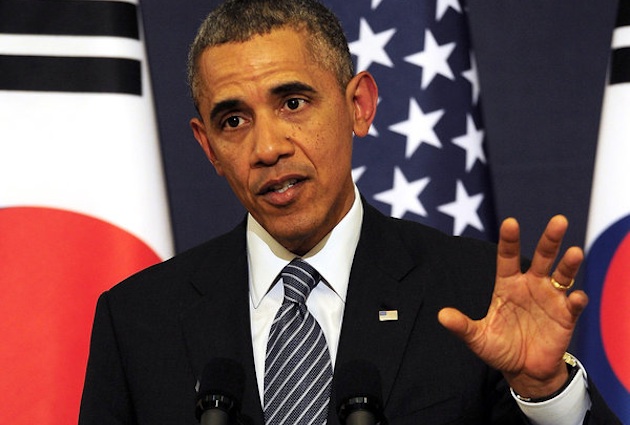
SEOUL, SOUTH KOREA: US President Barack Obama speaks during a joint press conference with South Korean president Park Geun-Hye at the presidential Bule House on April 25, 2014 in Seoul, South Korea. The U.S. President is on an Asian tour where he is due to visit Japan, South Korea, Malaysia and Philippines. (Photo by Song Kyung-Seok – Pool/Getty Images)

White House officials said Saturday that the G-7 leadership have agreed on new Russian sanctions after confirming a Russian aircraft had entered Ukrainian airspace Friday. Ben Rhodes, the administration’s deputy national security adviser for strategic communications, told reporters on Air Force One that the G-7 leaders have agreed on coordinated sanctions, but not identical per country per se.

In a statement released Saturday morning, G-7 leadership said Russia has broken some of the provisions of the accord agreed upon earlier this month in Geneva.

“We reiterate our strong condemnation of Russia’s illegal attempt to annex Crimea and Sevastopol, which we do not recognize. We will now follow through on the full legal and practical consequences of this illegal annexation, including but not limited to the economic, trade and financial areas,” the statement read.

“We have now agreed that we will move swiftly to impose additional sanctions on Russia. Given the urgency of securing the opportunity for a successful and peaceful democratic vote next month in Ukraine’s presidential elections, we have committed to act urgently to intensify targeted sanctions and measures to increase the costs of Russia’s actions,” G-7 leaders said in the statement.

“We have discussed with our partners the types of sanctions targets that we’re considering. They have discussed with us the types of targets that they’re considering,” Rhodes said. “So we believe that it’s important to move quickly, so I would expect to see movement at the beginning of — well, I’d say early in the coming week.”

Sanctions reportedly could be handed down as early as Monday, though People’s Pundit Daily could not confirm the claim made by the Washington Post.

The latest development comes almost immediately after the Obama administration drew harsh criticism from lawmakers for a tweet late Thursday by State Department spokeswoman Jen Psaki. In what many are referring to as “Hashtag Diplomacy,” the very liberal Psaki took to Twitter to show public support for Ukraine and to negotiate with Russia after the annexation of Crimea.

It was widely denounced as inappropriate and amateurish, symbolic of a seemingly flailing administration who has been seen as lost on a larger-than-them world stage time and again. “Note to the State Department: ‘The promise of a hashtag’ isn’t going to make [Russian President] Putin pull out of Ukraine,” Texas GOP Sen. Ted Cruz tweeted Saturday.

Former Arkansas Gov. and potential 2016 GOP president candidate Mike Huckabee on Saturday also criticized Psaki and the entire incoherent foreign policy from the Obama administration.

“The thought that somebody would come at him with 160 characters is absolutely terrifying to Vladimir Putin,” Huckabee said Saturday. Huckabee is currently leading by a small .5-point margin in the PPD average of polls for the 2016 Republican nomination.

Yet criticism over Obama’s obviously weak foreign policy is by no means limited only to conservatives and Republicans.

“Let’s face it Obama whether deservedly or not does have a — I’ll say it crudely — but a manhood problem in the Middle East,” the liberal New York Times writer David Brooks said on NBC’s “Meet the Press.”

“Is he tough enough to stand up to somebody like [Syrian President] Bashar Assad, somebody like Putin — and I think a lot of the rap is unfair but certainly in the Middle East there is an assumption it’s not tough enough.”

White House officials said Saturday that the

house of cards

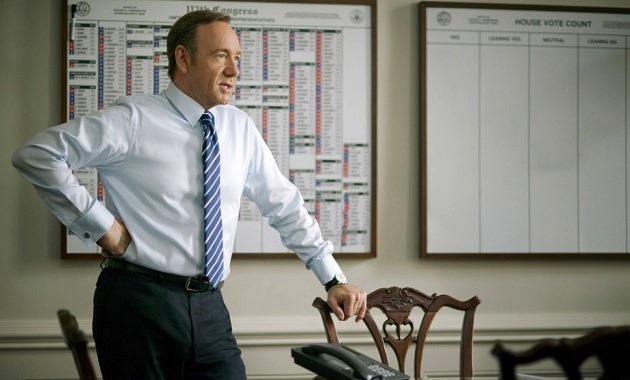
Kevin Spacey, star of Netflix series House of Cards.

Even lawmakers concede the successful Netflix series “House of Cards” accurately portrays the corrupt, crony system filled with special favors that dominates in Washington, D.C. But, ironically, the show has exposed the not-so virtuous ways of government both on and off the screen.

Variety reported that Netflix will finally begin to shoot its third season in the state of Maryland after reaching a deal with 2016 Democratic hopeful, Governor Martin O’Malley. The production company Media Rights Capital, like a petulant child, had threatened to take the show to another state if Maryland did not grant them the same level of tax credits the show received while shooting the first two seasons.

In a year that middle wage-earning Americans were forced to cough up the most tax revenue in history, some of Maryland’s elected officials said they felt like they were being extorted by Media Rights Capital; ironic, considering the liberal culture in Hollywood that supposedly believes the rich should pay their “fair share” of the tax burden.

This year, the show will be granted a total of $11.5 million in credits, which is less than the $15 million the Media Rights Capital had been demanding in order to keep “House of Cards” in the state.

Originally, the Maryland General Assembly refused to authorize the tax credit program in a vote earlier this month, but Democratic Gov. O’Malley reportedly hammered it out Media Rights Capital over the past few weeks. It was O”Malley who came up with the $11.5 million agreement complete with productions credits and even state budget grants.

“Spoiler alert: We’re going to keep the 3,700 jobs and more than $100 million of economic activity and investment that ‘House of Cards’ generates right here in Maryland,” O’Malley said in a statement. “Media Rights Capital has been a great supporter of the people and entertainment community in Maryland, and we couldn’t be happier to continue our partnership.”

Asif Satchu, co-CEO of Media Rights Capital, said that House of Cards “is the gift that keeps on giving, having injected hundreds of millions of dollars into the local economy, while also helping to provide thousands of jobs to our Maryland community.” Obviously, this liberal doesn’t believe in paying his “fair share.” He, like Martin O’Malley and other big government progressives, believes the tax law should apply only to Americans who don’t have friends in government.

It is widely known that Gov. Martin O’Malley will likely run for president if he is able, though he has run into problems. In his early effort to secure Super Delegates and build a national organization of donors, he was rebuffed by big, Democratic donors who insisted they will wait on a decision from the current frontrunner, Hillary Clinton.

The show "House of Cards" has exposed

keystone

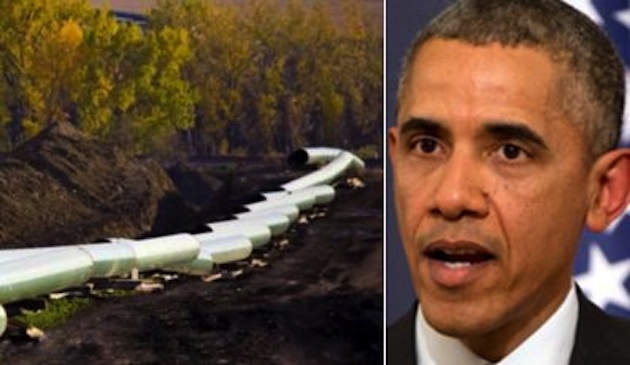
According to a recent ABC News/WaPo poll conducted before the delay, nearly two-thirds of Americans said they support the construction of the Keystone XL pipeline, while a Rasmussen survey conducted this past week found the highest level of support for the project measured to-date.

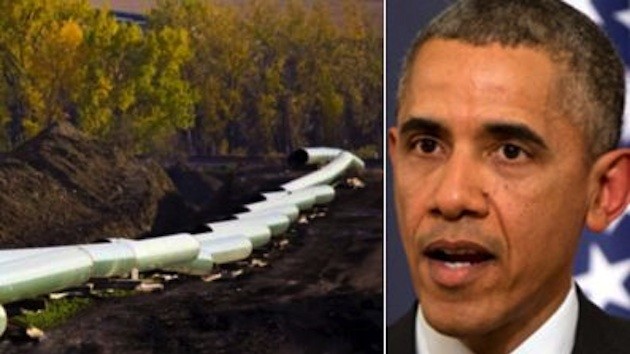
The last time Republicans benefited from significant union support was in the 1980s, when President Ronald Reagan attracted Teamster support among other national unions. Because of Obama’s political-motivated decision to indefinitely delay the Keystone XL pipeline, an attempt to galvanize the extreme left of the Democratic base, dissension among union leaders and members is growing.

Last week, Terry O’Sullivan, the general president of the Laborers International Union of America (LIUNA), called Obama’s decision “gutless” and characterized it as a “low blow to the working men and women of our country.” Now, O’Sullivan is doubling down on his criticism, adding to the already-quiet rumblings in the Beltway surrounding widening fissures in the Democratic Party before the 2014 midterm elections.

In a Washington Post op-ed, O’Sullivan slammed Obama, suggesting that “the Obama administration grow a set of antlers or take a lesson from Popeye and eat some spinach.” The tidbit of friendly advice refers to the president’s pandering to a small group of radical environmentalists, who oppose the Keystone pipeline no matter the facts.

A State Department review back in late January gave the Keystone XL pipeline the okay, finding no major potential environmental hazards. The report noted that Canadian tar sands are going to be developed regardless of whether or not the U.S. will be the benefactor of the pipeline, and found that other options to get the oil from Canada to Gulf Coast refineries will be worse for the environment. Without the pipeline, the product may get to refineries by other means, including railroads, trucks and barges, which we know emit even more greenhouse gases.

“No one seriously believes that the administration’s nearly-dark-of-night announcement last week, on Good Friday, that the pipeline would again be delayed was anything but politically motivated,” O’Sullivan wrote.

While pundits constantly focus on the Republicans’ troubles appealing to minority voters, a less-known and discussed problem exists for the Democratic Party, which underscores the fluidity of political coalitions. In a still majority white electorate, losing more of the white vote could be a potentially devastating development for the Democratic Party.

In 2012, President Obama lost the white vote to Mitt Romney by a 20-point margin, 59 – 39 percent. In 2008, even though John McCain won the white vote, the margin was a smaller 12-point margin. The long-term trend is even more pronounced. Unions, as you may have guessed, represent a sizable portion of what remains of the white Democratic base. Issues such as the Keystone pipeline, which are economic in nature, coupled with the realignment based on “values” voters, could widen that margin further.

According to a recent ABC News/WaPo poll conducted before the delay, nearly two-thirds of Americans said they support the construction of the pipeline, while a Rasmussen survey conducted this past week found the highest level of support for the project measured to-date. Some Republicans see the opportunity, and aim to exploit it.

The libertarian-leaning Republican Senator from Kentucky, Sen. Rand Paul, recently met with the Teamsters union and reportedly plans now to reach out to Terry O’Sullivan, though PPD can’t confirm those reports are true. It’s understandable why Republicans would think O”Sullivan and others may be receptive to their message. Although unions are an important and historical part of the traditional Democratic coalition, from his op-ed, he seems to understand “energy development is not a right-wing or a left-wing issue. It is critical to our country and to all of us.”

The fissure within the left-wing was highlighted by Keystone, and it is quickly becoming a part of a larger effort to increase the party’s share of the white vote, while at the same time continuing to reach out to minorities.

Whether or not the Republican Party will be successful, is unclear. But what is clear is that if Republicans are even marginally successful, it’s game over. Political obituaries are often written too early, and those post-2012 obituaries apparently were, as well.

Because of Obama's politically-motivated decision to indefinitely

florida abortion restrictions

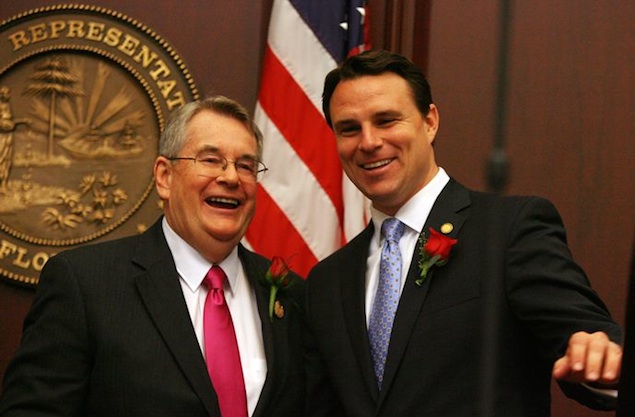
House Speaker Will Weatherford, left, and Senate President Don Gaetz.

Tallahassee – The Florida Senate Friday passed a bill to increase protections for unborn babies, state Senate President Don Gaetz confirmed in an email to People’s Pundit Daily. House Bill 1047/Senate Bill 918, sponsored by Senator Anitere Flores (R–Miami), expands legal protections for unborn babies by prohibiting the elective abortion of an unborn child when a physician determines a child is viable outside of the womb.

“This session, the Florida Senate has prioritized protecting the most vulnerable in our society and no life is more vulnerable than that of an unborn child,” said Florida Senate President Don Gaetz (R-Niceville). “With today’s vote of the Senate, this legislation will now move to the Governor’s desk for his signature.”

Gov. Rick Scott is expected to sign the law, even though push-back has been relatively strong from Planned Parenthood, a group that profits enormously from established relationships in the abortion industry, including with abortion doctors who mail coupons for Sunday abortions. In August of last year, Florida Right to Life conducted an investigation on a “open on Sundays” abortion center and subsequently learned that one of the doctors at this location was none other than the notorious Dr. James Scott Pendergraft

The new Florida abortion restrictions will add the state to a growing list of states who have pushed back on an archaic unrestricted abortion system. As more modern medical advancements are realized, children have been known to survived outside of the womb as early as the fifth month of pregnancy. As it stands now, current Florida law allows elective, unrestrictive abortions up until the sixth month of pregnancy.

Though Senate Bill 918 maintains Florida’s current prohibition on 24-week elective abortions, it requires a physician using his or her medical judgment prior to 24 weeks, to determine the viability of the child before an abortion procedure. SB 918 also provides medical exceptions to protect the mother if the termination of pregnancy is medically necessary during viability, or in other words, if the life or health of the mother is at risk.

The bill also requires “medically necessary” abortions performed when the baby is viable to be performed in a hospital, which is becoming a standard in state legislation across the country. While abortionists argue that the number of abortions that fit the criteria falls below an acceptable level, proponents of abortion restrictions argue that it is needed to protect both the mother and unborn child.

Recently, a federal appeals court upheld a similar provision passed in the Texas abortion ban, which pro-abortion activists claim placed harsh restrictions that closed many of the abortions clinics in the state. The New Orleans-based 5th Circuit Court of Appeals overturned a lower court federal judge who decided the rules violated the U.S. Constitution and served no medical purpose. However, in their opinion, the appeals court said the law “on its face does not impose an undue burden on the life and health of a woman.”

Further, both the United States Supreme Court and Florida Supreme Court have ruled regulation of elective, unrestrictive abortions are constitutional when the child has achieved viability. Representative Janet Adkins (R-Fernandina Beach) served as the House sponsor of House Bill 1047, which passed the Florida House on April 11. The bill now moves to the desk of Gov. Rick Scott to be signed.

Tallahassee–The Florida Senate Friday passed a bill

kentucky senate race

Senate Mcconnell (left), Matt Bevin (center), Grimes (Right) — Photo AP

A new survey conducted for Human Events by Gravis Marketing finds Minority Leader Mitch McConnell with a healthy lead against Tea Party challenger Matt Bevin and Democrat Allison Lundergan-Grimes. In the survey of 1,359 registered Kentucky voters conducted from April 15-17, McConnell leads his primary challenger 51 – 34 percent and general election challenger 43 – 36 percent.

While the poll is news the McConnell camp can tout, there are some findings that should be of serious concern for McConnell if he cares about his political future. What stands out immediately about the survey’s findings is that — even though Kentucky voters are supporting McConnell — they don’t necessarily like him or feel he is in-step with their positions. It would appear that Bevin hasn’t made his case, Grimes is even farther away from Kentucky values, and they will hold their noses when voting for McConnell.

When all voters were asked, “Has Senator McConnell done enough to end ObamaCare?” 46 percent said that he did not do enough, while 29 percent said he had and 25 percent were not sure. Still, Bevin hasn’t gained much momentum, despite the fact that Kentucky voters are clearly aligned more with his views. McConnell, regardless of his denials, did have plans to ram through amnesty for illegal aliens before he realized he would have a tough reelection. And we know Democrat Allison Grimes will assuredly back any Democratic plan. But Kentucky voters oppose granting a supposed path to citizenship by a whopping 68 – 17 percent margin, with only 15 percent saying they are unsure.

Democrats had thought they might have a pick up opportunity in the Kentucky Senate race considering how unpopular McConnell has become in the state, but this has always been somewhat of a dream. Much of McConnell’s unfavorable ratings are due to his own right flank, not that Kentucky is becoming more fertile ground for Democrats.

Some Democratic pollsters, such as PPP, have released some unexplainable results in this race, but we currently and confidently rate the race “Likely McConnell” and have since the beginning of the cycle.

A New York Times/Kaiser poll released this week found McConnell ahead of Grimes by just 1 point, 44 – 43 percent. But, as Bill Kristol pointed out at the Weekly Standard, this poll was deeply flawed and intentionally dishonest. McConnell is running for a state that Mitt Romney carried by 23 points in 2012, yet the sample of respondents was never weighted to reflect as much, thus showing a 3-point advantage for Romney, far from reality.

And it was across-the-board bunk.

kentucky senate poll

A new Human Events/Gravis Marketing poll found

joni ernst

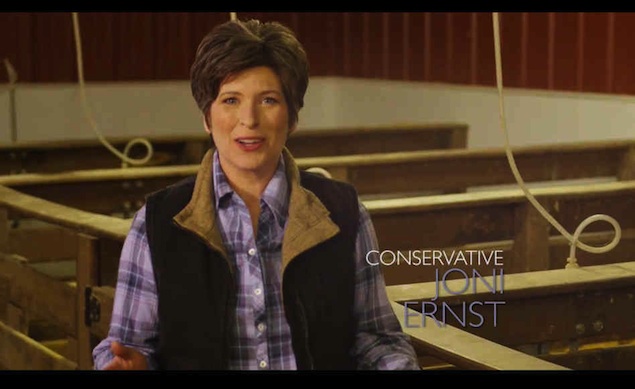
Republican Iowa Senate candidate, Joni Ernst, picks up a key endorsement from the Senate Conservatives Fund.

Republican candidate Joni Ernst has picked up a key endorsement from the Senate Conservatives Fund in the Iowa Republican primary for U.S. Senate.

“We are very proud to announce our support for Joni Ernst (R-IA) who is seeking the Republican nomination for U.S. Senate in Iowa,” wrote Matt Hoskins, executive director of Senate Conservatives Fund.

Joni Ernst drew wide praise from conservatives after releasing her ad “Squeal,” in which she touts her Iowa roots in a rather blunt yet entertaining way. “I grew up castrating hogs on an Iowa farm,” Ernst says in the ad. “So in Washington, I’ll know how to cut pork. Washington’s full of big spenders…let’s make ‘em squeal.”

Conservatives, obviously, ate it up. Polling shows Joni Ernst running particularly strong against Democrat Rep. Bruce Braley, who put his own foot in his mouth recently for trashing Iowa farmers and praising lawyers, which is not a very smart comment to make in the “American Heartland.”

Ernst is currently the slight favorite on our 2014 Senate Map Predictions, but she is locked in a tight race against another Republican in the primary, Mark Jacobs. Ernst currently holds a small 1.3-point lead on our PPD average for the Iowa Senate race. Jacobs, according to Hoskins, is no conservative.

Poll Date Sample Ernst Jacobs Clovis Whitaker Schaben Spread
PPD Average 4/3 – 4/14 22.0 20.7 6.7 5.0 2.3 Ernst +1.3
WFB/The Polling Company (R) 4/13 – 4/14 223 RV 23 20 6 7 2 Ernst +3
Loras College 4/7 – 4/8 600 LV 18 19 7 4 4 Jacobs +1
Suffolk 4/3 – 4/8 224 LV 25 23 7 4 1 Ernst +2

“Joni Ernst is currently locked in a tight race with Mark Jacobs (R-IA), another Republican candidate who is not a conservative,” Hoskins said in an email. He points to a Breitbart News report stating, “Former energy executive Mark Jacobs has expressed support for cap and trade, Common Core, the Ryan-Murray budget compromise, and raising the debt ceiling. He donated to Arlen Specter after Specter switched parties to become a Democrat. And in a new campaign ad he says one of the best things about a strong economy is that it would provide the federal government more tax revenue.”

If Ernst wins the general election, she will go on to face Bruce Braley in a race we currently rate as a “Toss-Up” on our map. Many pundits still consider the race to be “Leans” or “Tilts” Democrat, but if you want to read why they are wrong, then view our expanded analysis, or Why Iowa Senate Polls Showing Braley Leading GOP Hopefuls Don’t Mean Anything.

Republican candidate Joni Ernst has picked up

S&P downgrades Russia

The ratings agency Standard & Poor’s downgraded Russia’s credit rating to just above junk status, as analysts warned the nation is appears on the brink of political and economic mayhem.

S&P downgraded Russia’s credit rating from “BBB” to “BBB-,” nearly junk status, and warned investors the rating could be downgraded further over the next two years if the political and economic situation doesn’t improve.

The latest move from the credit ratings agency, comes as tension in eastern Europe between Russia and Ukraine continues to mount. A revolt earlier this year in Ukraine, a former Soviet satellite state, ousted President Viktor Yanukovych, a puppet of Russian President Vladimir Putin. S&P had already downgraded Russia to “negative outlook” back on March, 20.

Global markets took a beating on the news, with the Stoxx Europe 600 index falling 0.5 percent by midmorning, and earlier in the session it was trading 0.7 percent lower. It mirrored Asian stock market losses overnight. But Germany suffered far more.

Because of Germany’s strong economic ties to Russia, predominantly in energy, Frankfurt’s DAX fell by as much as 1.2 percent, while the U.K.’s FTSE 100 and France’s CAC-40 both fell by a marginal 0.3 percent.

S&P warned “the large capital outflows from Russia in the first quarter of 2014 heighten the risk of a marked deterioration in external financing, either through a significant shift in foreign direct investments or portfolio equity investments.”

The threat of Russian invasion into Ukraine appeared to be imminent earlier in the month, with most experts agreeing Putin is in no rush to invade, but due to the large Russian force is likely waiting for an opportune time. Regardless of whether or not Russia invades, the economic damage from the already-politically unstable situation is clear.

“With the Geneva agreement in tatters, events seem to be spiraling out of control in eastern Ukraine,” analysts at Potomac Research Group, a Washington, D.C.-based political consultancy wrote in an email to clients Friday. “Even if Russia doesn’t invade (Ukraine), the economic impact of tough new sanctions on trade could become a growing market concern.”

Moscow’s RTS declined by as much as 2% before bouncing back slightly.

“The downgrade, while not entirely unexpected, has nonetheless fueled further market stress,” Société Générale analyst Benoit Anne wrote in a note. The ruble was beat down 0.6 percent against the dollar to 36.

Meanwhile, Secretary of State John Kerry Thursday accused Russia of “distraction, deception and destabilisation” in eastern Ukraine. Secretary Kerry said what everyone already knows, which is that US intelligence knows that Russia was “playing an active role in destabilising eastern Ukraine,” supplying agitators, weapons, money and operational planning on the ground.

He added that the US was ready to impose further sanctions if Russia did not change course.

On the commodities front, gold was again trading around 0.4 percent higher, up to $1,295.70 a troy ounce, while Brent Crude oil continued its day=long decline by 0.4 percent to $109.89 per barrel.

S&P downgrades Russia citing continued turmoil in

Consumer sentiment rose in the Thomson Reuters/University of Michigan’s final survey in April to a nine-month high, beating Wall Street’s expectations. But tracker data from Gallup and Rasmussen Reports show very different consumer environments.

The Thomson Reuters/University of Michigan reading on the overall index of consumer sentiment measured in at 84.1, above expectations of 83.0 and up from 80.0 the month before. The preliminary April reading was 82.6, but views on current and near-term conditions skyrocketed, according to the survey released Friday.

While the closely-watched headline number was the highest reading since July of 2013, the Rasmussen Consumer Index, which measures consumer confidence on a daily basis, fell three points on Friday to 101.4. Consumer confidence is down a point from both one week ago and a month ago, and is unchanged from three months ago.

Similarly, the Gallup measurement that tracks consumer spending on a 3-day rolling average tanked from from $82 to $72, while the 14-day rolling average is down 5 to from $90 to $85. For both Gallup and Rasmussen, the trends so little sign of improvement over the last quarter, and Gallup has been roughly flat since July.

“Perhaps the more important question is whether consumer confidence will show greater resistance to the backslides that have repeatedly occurred in the past few years,” survey director Richard Curtin said in a statement. He finds no disturbing data in the short-term, both going forward or looking at the last quarter.

“Resilience is dependent on positive, long-term economic expectations. While near term expectations have improved substantially, longer term expectations for personal finances as well as the overall economy have not improved as much.”

The survey’s barometer of current economic conditions rose to 98.7, which is its highest reading since July of 2007 and up from 95.7 in March.  It beat expectations of 97.2, and the preliminary reading measured in at 97.1.

The survey’s gauge of consumer expectations rose to 74.7 in April from 70.0 in March and also beat the expected 73.7, and the preliminary reading for this month, which came in at 73.3.

Both the 1-year inflation expectation five-to-10-year outlook were unchanged from their March readings. A 3.2 percent reading in the 1-year came in just a bit above the 3.1 percent preliminary April reading, while the survey’s 5-to-10-year inflation outlook was also unchanged from last month at 2.9 percent. The 5-to-10-year came in at 3.0 in the preliminary report.

However, despite the positive outlook, food prices alone sharply increased by 1.1 percent in a report earlier this month, which was the largest increase since May.

Consumer sentiment rose in the Thomson Reuters/University

People's Pundit Daily
You have %%pigeonMeterAvailable%% free %%pigeonCopyPage%% remaining this month. Get unlimited access and support reader-funded, independent data journalism.

Start a 14-day free trial now. Pay later!

Start Trial