
Widget Image
Follow PPD Social Media
Friday, January 16, 2026
HomeStandard Blog Whole Post (Page 974)

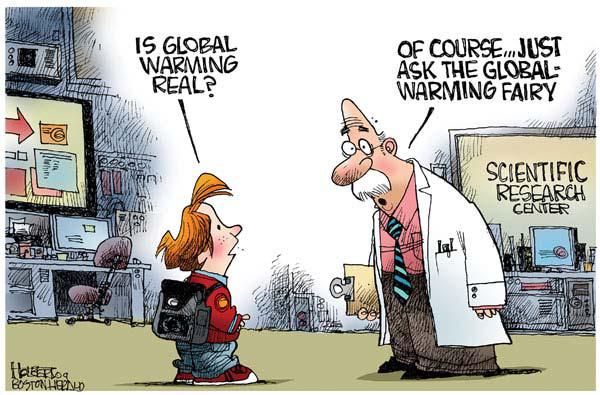
Nongovernmental (NGO) and intergovernmental (IGO) climate change panels are at odds with one another regarding the existence and impact of climate change.

The United Nations Intergovernmental Panel On Climate Change (IPCC), an IGO, or  intergovernmental organization, recently released a report that all but predicted the zombie apocalypse. The report stated that climate change is harming the growth of crops, the quality of water and forcing various wildlife to adapt a new way of life. Prior impacts on natural systems have astonishingly left human beings relatively unscathed, according to the IPCC.

But, now, we can soon expect world hunger and poverty if no course correction is made. “Throughout the 21st century, climate-change impacts are projected to slow down economic growth,” the report stated. Yet, their policy prescriptions consist of unrealistic regulations that will redistribute wealth to lesser-developed nations and create heavy economic burdens on developed, wealthy and willing nations.

If climate change skeptics question the scientific methods of the IPCC, or whether or not their data has been cherry-picked, then they are heartless for not caring how global warming will “make poverty reduction more difficult, further erode food security, and prolong existing and create new poverty traps, the latter particularly in urban areas and emerging hotspots of hunger.”

A nongovernmental International Panel on Climate Change (NIPCC), a NGO, or nongovernmental organization, argues the polar opposite has and data suggest will continue to occur as a result of greenhouse gases. The NIPCC state global warming is not causing substantial harm to the biosphere.

The NIPCC  directly counters the United Nations Intergovernmental Panel On Climate Change (IPCC) with critiques of their methods and motives. In essence, they argue that they are simply an alarmist, crisis-creating collective government body with an alternative agenda and obvious bias.

This work provides the scientific balance that is missing from the overly alarmists reports of the United Nations’ Intergovernmental Panel on Climate Change (IPCC), which are highly selective in their review of climate science and controversial with regard to their projections of future climate change,” the report opens.

“Although the IPCC claims to be unbiased and to have based its assessment on the best available science, we have found this to not be the case. In many instances conclusions have been seriously exaggerated, relevant facts have been distorted, and key scientific studies have been ignored.”

The panel of more than 50 scientists concluded that human impact on the global climate is small. When taken in total, and not just specific cherry-picked periods, changing temperatures are within a historic scope of periodic temperature variations, and there is no net harm to human health or food production.

“Biological Impacts broadly tracks and critiques the work of IPCC’s Working Group II. It appears IPCC is continuing its pattern of selectively reporting data to present an alarmist view of the impacts of climate change,” the report explains.

In fact, regarding food productions, the NIPCC found that an increase of CO2 stimulates vegetative productivity, which has increased food supplies in impoverished regions. Further, in the past, greening of the Earth transpired even in the face of real assaults from fires, disease, pest outbreaks, deforestation and climatic change.

The IPCC reports state that in many regions of the earth, changing precipitation and melting snow are altering hydrological systems, which negatively impact the quantity of water resources. They also claim that climate change is forcing terrestrial, freshwater and marine species to shift their geographical ranges and migration patterns.

The NIPCC, however, found that the rates of global sea-level change vary in decadal and multi-decadal ways and show neither recent acceleration nor any simple relationship with increasing CO2 emissions. A sea-level rise due to heat expansion is also unlikely given that the Argo buoy network — Argo is a system for observing temperature, salinity, and currents in the Earth’s oceans which has been operational since the early 2000s — shows no significant ocean warming over the past 9 years.

Nevertheless, while we could go back and forth on the data points, the average American is neither a professional scientist nor seriously concerned with the debatable phenomena, if any, of manmade climate change. What we can do as average Americans, sarcasm emphasized, is examine and weigh the motives and agendas of both nongovernmental organizations and intergovernmental organizations.

The Heartland Institute feels that the scientific community is under tremendous financial and peer pressure to reach the conclusion that global industry is damaging the environment. Governments have a pro-big government agenda that requires subverting powerful citizens and their businesses, placing them completely under the regulatory power of the state. Statists are aligned with industries who seek to profit and centralize power in the event current status quo, powerful private citizens are subdued.

“Ethical standards have been lowered, peer review has been corrupted, and we can’t trust peers in our most prestigious journals anymore,” said Joe Bast, President and CEO of Heartland Institute.

What we do know is that climate change alarmists are, in fact, funded by government or proponents of central government, have released multiple doomsday projections over the decades that have never materialized, are proven liars (remember climate-gate?), and are actively attempting shutdown debate using ridicule and fear tactics.

“Mostly it’s a bunch of old, retired guys that got together and wrote a report for the Heartland Institute that is basically full of misinformation,” said Donald Wuebbels, a professor of atmospheric science at the University of Indiana Champaign Urbana.

The Heartland Institute, which publicly rolled out their report Wednesday in Washington, D.C., insists that it is peer-reviewed. Upon further examination, we located over 100 scientists who have, in fact, reviewed the NIPCC research from what they claim to be an objective — or scientific — method of approach. For these scientists, the IPCC approach is riddled with methods that violate the fundamental tenets of the scientific method, such as a lack of willingness to even scrutinize a model with obvious contradictions.

Much of the IPCC model relies on natural climate processes or variability, “weaknesses in climate models and data sets used to measure temperatures or forecast future climate conditions, or with data that raise serious scientific questions about the IPCC’s attribution of climate change to human greenhouse gas emissions.”

It is certainly true that we cannot know for sure what the NIPCC is driven by; perhaps, the desire to bring integrity back to the field. But it is true the NIPCC has worked with leading thinkers in the fields of statistics, physics, economics, geology, climatology, and biology. This should have satisfied Dr. Wuebbels’ concerns, or at least cause him to pause before making the claim the work wasn’t peer-reviewed.

In the course of their study, the NIPCC has avoided the appeals to authority, making certain “assumptions,” or relying upon “circumstantial evidence that characterize the reports of the IPCC and other partisans in this debate.”

On the other hand, the United Nations’ Intergovernmental Panel on Climate Change (IPCC), is a government-sponsored collection of likeminded proponents of centralized power. They are politically motivated and obviously predisposed to believing that climate change is a problem in need of a collective U.N. solution, or else they would not be selected for the project. Those in the field who help to validate their methods and conclusions, are without fail-rewarded with funding for their own projects, institutions and careers.

The NIPCC are not affiliated or sponsored by any government or governmental agency. The panel is independent and not part of the political arena. Thus, at least theoretically, they are free of pressures and influences from the political class. The international panel of scientists and scholars first came together to understand the causes and consequences of climate change, in fact.

“Our sole goal in presenting this information is to enable fellow scientists, elected officials, educators, and the general public to make up their own minds about what the science says, to understand climate change rather than simply believe in it,” stated the panel of their own agenda. It sounds suspiciously reasonable; completely lacking that typical “flat-earth,” close-minded kind of tone.

Nongovernmental (NGO) and intergovernmental (IGO) climate change

Kathleen SebeliusA White House official says Health and Human Services Secretary Kathleen Sebelius is resigning from the Obama administration, ending what may have been the most incompetent tenure of any HHS Secretary.
Sebelius’ resignation comes only one week after the close of the disastrous enrollment period for President Barack Obama’s health care law, with one deception after another making its way into the headlines almost daily. Initially, problem-riddled code and failures plagued the website in the first weeks of the six-month enrollment period, but enrollment suffered as a result of many other factors, such as high deductibles and premiums.

Sebelius’ resignation, no doubt, will make for a combative nomination and confirmation hearing during what has become an election year dominatied by ObamaCare. President Barack Obama Obama reportedly will nominate OMB Director Sylvia Mathews Burwell as her successor.

Sebelius has served as HHS secretary since the start of the Obama administration.

A White House official says Health and

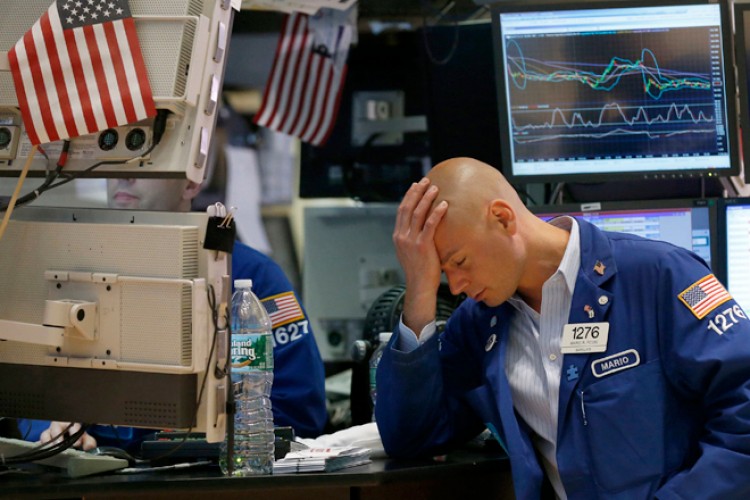
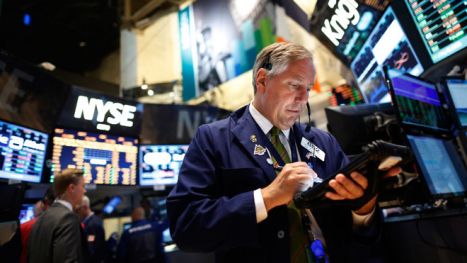
The same growth stocks traders sought in bargain-buying yesterday were dumped on Thursday for safe-haven assets, which caused the Nasdaq to take its biggest hit since 2011.

The Dow Jones Industrial Average was down 267 points, or 1.6 percent to 16170, while the S&P 500 shed 39 points, or 2.1 percent to 1833. The Nasdaq Composite, however, tanked 130 points, or 3.1 percent to 4054, as biotech shares were crushed.

It was just yesterday that the S&P 500, the Nasdaq and the Dow all touted their best day since the beginning of March on Wednesday, after traders breathed a sigh of relief from dovish minutes out of the Federal Reserve’s recent policy-setting meeting.

On Thursday, all the sentiment of easy money making easy fortune was gone. Biotechnology and other technology sectors took a serious beating, with Wall Street moving instead to utilities, consumer staples and telecommunications sector. All eyes were on the Nasdaq Biotechnology Index as it plummeted down 4.5 percent. The broader Nasdaq composite took its biggest hit since 2011.

The Dow and S&P 500, as well, both took their biggest hits since last February of this year.

As was predictable considering the inverse relationship between equities and safe-havens, traders ran for cover to assets like Treasury bonds, sending the yield on the 10-year down .056 percentage point to 2.628 percent. Gold, once-again, was the benefactor to the tune of $14.60, or 1.1 percent to $1,321 a troy ounce.

Exports in China caused alarm early, as the world’s No. 2 economy tanked 6.6 percent on the year-over-year in March, which took economists by complete surprise. Economists had forecasted a 4.8 percent gain.

Meanwhile, the Labor Department reported the number of Americans who filed first-time unemployment benefits ticked down to 300,000 last week, down from an upwardly-revised 332,000 last week. Perhaps, with so many out of work and the work-force, there are simply too few people left participating to even have such large first-time filings anymore, because the reading was the lowest since May 2007.

Economists had forecasted first-time jobless claims to drop to 320,000, down from an initially reported 326,000.

A separate report from Labor showed U.S. import prices increased 0.6 percent on a month-to-month basis in March, which beat Wall Street’s expectations of a 0.2 percent gain. However, export prices also increased by 0.8 percent, which was the biggest increase since 2012. Economists forecast a 0.2 percent gain.

U.S. crude oil futures shed 19 cents, or 0.18 percent to $103.41 a barrel, while Wholesale New York Harbor gasoline inched down 0.62 percent to $2.99 a gallon.

The same growth stocks traders sought in

The U.S. Treasury Department reported a budget deficit of $37 billion last month, which is down from $107 billion during this time last year. The short-term narrowing of the deficit is bitter-sweet news, because even as the national debt overall continues to rise, a wider and growing deficit is expected in the mid-term.

According to the CBO, budget deficits will continue to decline until 2015 and then they will sharply increase to extraordinary levels historically. The large budget deficits recorded in recent years have substantially increased federal debt, and the amount of debt relative to the size of the economy is now very high by historical standards,” the CBO stated.

“CBO estimates that federal debt held by the public will equal 74 percent of GDP at the end of this year and 79 percent in 2024 (the end of the current 10-year projection period),” the report added. “Such large and growing federal debt could have serious negative consequences, including restraining economic growth in the long term, giving policymakers less flexibility to respond to unexpected challenges, and eventually increasing the risk of a fiscal crisis (in which investors would demand high interest rates to buy the government’s debt).”

Analysts polled by Reuters had expected a deficit of $78 billion, which was far higher than reported.  However, the reported deficit was influenced by the monthly calendar timing. In other words, if adjustments were actually incorporated, Treasury said under the radar, then the monthly deficit would have been more like $77 billion.

Meanwhile, the Labor Department reported Thurday U.S. import prices increased by 0.6 percent on a month-to-month basis in March, beating Wall Street’s expectations of a 0.2 percent gain. However, export prices also increased by 0.8 percent, which was the biggest increase since 2012. Also, economists forecast a 0.2 percent bump.

The effect on the budget deficit from higher prices can be bitter sweet. While increases in export prices can lead to more revenue, it can also lead to less demand, which slows down production when drastic.

The U.S. Treasury Department reported a budget

obamacare-approval-ratingA new USAToday/Pew survey says their latest ObamaCare approval rating has tumbled down in to the dirty 30s, specifically 37 percent. With support for the law now lower than pre-2010 midterm election levels, political reality for Democrats is beginning to get even worse.
As far as making a decision about who to vote for in the upcoming elections, 54 percent of Americans say a candidate’s stance on the health care law say it will be “very important,” while another 30 percent say it will be “somewhat important.” And from the pool of public sentiment, it isn’t difficult to discern how that vote will swing.

By a 43 to 30 percent margin, respondents say that — up until now — the health care law has had a “mostly negative” rather than “mostly positive” impact on the country. And when asked about the future, 44 percent say it will have a mostly negative impact to 38 percent who think it will have a mostly positive impact.

On our PPD average of ObamaCare approval polls, several pollsters have found a steep drop in support for the Democrats’ and president’s health care law. Just when pundits begin to think that support for the law had a floor, it beats the bottoms. Rasmussen Reports, which stubbornly found support hovering around 40 percent, recently reported a record-high 58 percent of likely voters oppose the law, with a record-low 38 percent supporting it. Other pollster are in line with those findings, as well.

A recent Reason Rupe poll found just 36 support with 53 in opposition, and an Associated Press/Gfk poll found an astonishing 26 percent of adults support the law.

While Democrats have touted enrollment surges, which don’t even jive when scrutinized, a new study conducted by healthcare analysts at Morgan Stanley found health insurance premiums increased at the highest rate ever measured due to ObamaCare. From the data reported by Pew and other pollsters, the negative impacts have not gone unnoticed by the American people, which will no doubt bode bad for Democrats in red, purple and even bluer states.

A new USAToday/Pew survey says their latest

read letter to eric holderThe House Ways and Mean Committee voted 23 – 14 Wednesday to refer former IRS official Lois Lerner to the Justice Department for a criminal investigation. The committee accused her of “extreme bias” in her role in the agency’s scandalous targeting of conservative groups to weaken their influence in the 2012 presidential election.
In the 14-page letter to Eric Holder, the attorney general who is still in contempt himself, the House outlined the case against the former IRS official at the heart of the political targeting scandal. The vote and the letter come after a new report from the House Oversight and Government Reform Committee laid out its case for holding Lerner in contempt, as well.

“Lois Lerner’s testimony is critical to the committee’s investigation,” the oversight report stated. “Without her testimony, the full extent of the IRS’s targeting of Tea Party applications cannot be known, and the committee will be unable to fully complete its work.”

“If we don’t stand up for the right of the American people, who else will?” House Ways and Means Committee Chairman Dave Camp of Michigan said after the vote.

The accompanying letter accused Lois Lerner of targeting conservative groups and denying their constitutional rights, as well as attempting to subvert an inspector general investigation by giving false and/or misleading statements to investigators. A less-reported accusation is that Lerner disclosed confidential taxpayer information.

“This investigation has uncovered serious, unprecedented actions taken by Lois Lerner that deprived conservative groups of their rights under the Constitution,” Rep. Camp said in a statement. “Today’s action highlights specific wrongdoing for the Department of Justice to pursue. DOJ has a responsibility to act, and Lois Lerner must be held accountable.”

<iframe src=”http://personal.crocodoc.com/tWY6raj?embedded=true” width=”100%” height=”600″ style=”border:1px solid #ddd;”></iframe>

The House Ways and Mean Committee voted

The Federal Reserve caused a market rally on Wall Street Wednesday after minutes from the policy-setting committee suggested the Fed likely won’t be raising rates due to supposed worries over low inflation and slumping in the labor market.

Members of the policy-setting committee discussed how to message their plans for hiking short-term interest rates from their current record lows. Of concern, is what they view to be stubbornly low inflation, which “a couple” members are now debating whether the Fed is even funneling an “appropriate degree of monetary accommodation.” The dovish report shows the dominant thought at the central bank lacks concern over the long-term hazards of printing money.

The news from the Fed did, however, reverse the recent drop in U.S. equities markets. As of 4:02 p.m. ET, the Dow Jones Industrial Average was up 181 points, or 1.1 percent to 16437, while the S&P 500 increased 20.2 points, or 1.1 percent to 1872. The Nasdaq Composite also increased by 70.9 points, or 1.7 percent to 4184.

It was the first gain in four days on Wall Street after four days of selling ended Tuesday, with good old fashion deal-buying moving toward growth stocks off of their yearly average. Alcoa (AA), the aluminum magnate, reported adjusted earnings that beat the street’s expectations.

The Fed news comes after Janet Yellen recently suggested the Fed could start hiking short-term interest rates just as soon as six months following the completion of its bond-purchasing program, which sent markets spinning down.

Meanwhile, U.S. crude oil futures jumped 15 points, or 0.15 percent to $102.71 a barrel, while Wholesale New York Harbor gasoline rose 0.31 percent to $2.99 a gallon. As is the case with the oft-inverse relationship between equities and precious metals, Gold fell $5.30, or 0.39 percent to $1,304 a troy ounce.

The Federal Reserve caused a market rally

On Tuesday the International Monetary Fund scaled back its estimates for global growth, stating the year will be subject to emerging market troubles and global conflict. The global economy will likely expand by 3.6 percent in 2014, which is lower than initial expectations released in January.

Global output will grow by 3.9 percent in 2015, according to the IMF World Economic Outlook report. Yet most of the gains will be made by the world’s more-developed economies. “Global activity has broadly strengthened and is expected to improve further in 2014–15, with much of the impetus coming from advanced economies,” the IMF forecast stated. But, “activity in many emerging market economies has disappointed in a less favorable external financial environment, although they continue to contribute more than two-thirds of global growth.”

Contributing to the lessened expectations in the IMF report was the recent developments in Ukraine and an increasingly aggressive posture by Russia in East Europe. The potential for mutually harmful sanctions concerned the IMF, though they took specific aim at monetary policy stemming from the European Central Back.

The IMF has repeatedly voiced its concern for low inflation in Europe as a result of loose monetary policy, forecasting a 20 percent chance of deflation in the region.

“Sustained low inflation would not likely be conducive to a suitable recovery of economic growth,” the IMF report stated.

On Tuesday the International Monetary Fund scaled

repeal obamacareDo you think the ObamaCare settled law narrative is working with American voters? Well, think again. According to a new survey, Americans now believe the Republican Party will likely be successful at repealing the president’s signature health care law, while just under a quarter say it has been a success.
A new Rasmussen Reports survey found a whopping 62 percent of “likely voters” now say repeal of the law is likely. Of course, that necessarily means voters believe the Republican Party will take the Senate in November, at least. Even with a Republican majority in the upper chamber President Obama is not likely to sign its repeal.

Thus, Americans must be relatively or at least somewhat uncertain about the certain media coronation of Hillary Clinton in 2016. With just 23 percent saying ObamaCare has been successful, such a sentiment among the electorate being a possibility is very real. A recent study found the sharpest rate increases ever measured as a result of the law, and increasing majorities say the law will negatively impact the quality of health care and cost them more money.

Do you think the ObamaCare settled law

health insurance premiums increase under ObamaCare

A study conducted by healthcare analysts at Morgan Stanley found health insurance premiums increased at the highest rate ever measured by the firm. The survey of 148 brokers concluded health insurance premiums increase under ObamaCare because of ObamaCare, blatantly stating “increases are largely due to changes under the ACA.”

The steepest increase in small and individual group rates was found in the April survey than in any of the 12 prior quarterly periods when it has been conducted, averaging increases in excess of 11 percent in the small group market and 12 percent in the individual market. But in some states, which we will list below, premium rate increases are as much as 10 to 50 times the average.

The analysts at Morgan Stanley found that the rate increases are due to four factors directly attributed to ObamaCare, which are  commercial underwriting restrictions, the age bands that prohibit insurers to vary premiums between young and old beneficiaries based on the actual bottom line costs of providing the coverage for the insurer, the new and burdensome excise taxes targeting insurance plans in the law, and new benefit designs or the Essential Health Benefit Standards. The standards mandate ridiculous measures so-oft seen in collectivist policy, such as old men being forced to pay for prenatal care.

On average, the largest rate increases have been seen in the Blues plans, which show an average rate increases of nearly 16 percent on year-over-year figures for simply renewing coverage. As far as the individual market, the publicly traded health plans had higher increases than the blues, on average of over 11 percent. For private and not-for-profit plans, the largest averages in premiums increases overall came in at 13 percent.

Among the ten states with much of the sharpest average increases were Delaware with a whopping 100 percent increase; New Hampshire at an abhorrent 90 percent; Indiana with 54 percent increases; California with 53 percent; Connecticut 45 percent; Michigan 36 percent; Florida 37 percent; Georgia 29 percent; Kentucky 29 percent and Pennsylvania 28 percent.

Kentucky, ironically, was touted early on during the enrollment period by Democrats who were seeking desperately to be able to point to positive data. However, the health increase premiums increase in Kentucky suggest the Medicaid enrollment is likely to dwarf private enrollment.

Among the states seeing the sharpest increases in premiums in the small group market were Washington at 588 percent, Pennsylvania at 66 percent, California at 37 percent, Indiana at 34 percent, Kentucky at 30 percent, Colorado at 29 percent, Michigan at 27 percent, Maryland at 25 percent, Missouri at 25 percent and Nevada at 23 percent.

A study conducted by healthcare analysts at

People's Pundit Daily
You have %%pigeonMeterAvailable%% free %%pigeonCopyPage%% remaining this month. Get unlimited access and support reader-funded, independent data journalism.

Start a 14-day free trial now. Pay later!

Start Trial