Widget Image
Follow PPD Social Media
Friday, January 16, 2026
HomeStandard Blog Whole Post (Page 983)

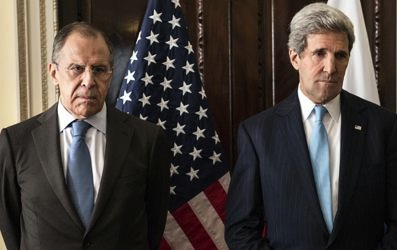
Secretary of State John Kerry and Russian Foreign Minister Sergei Lavrov failed to reach an agreement Friday to resolve the Ukraine crisis. The latest development comes as Russian troops gather in at least three regions of Ukraine’s eastern border, and even after Sec. Kerry issued a Monday deadline for Russia, threatening “very serious steps” in the event they do not meet it.

Kerry traveled to London Friday for a meeting with Lavrov ahead of a Sunday referendum vote in the Crimea region to secede from Ukraine and join the Russian Federation. Following the meeting, Kerry said he came in “good faith with constructive ideas” to that Putin is not backing down.

“I presented a number of ideas on behalf of the president which we believe absolutely could provide a path forward for all the parties,” Kerry added. “However, after much discussion the foreign minister made it clear that President Putin is not prepared to make any decision regarding Ukraine until after the referendum on Sunday.”

Thursday, Kerry told a Senate Appropriations subcommittee that if the talks failed, the U.S. and Europe on Monday would impose sanctions on Russia.

“There will be a response of some kind to the referendum itself,” Kerry said. “If there is no sign [from Russia] of any capacity to respond to this issue … there will be a very serious series of steps on Monday.”

Meanwhile, Russian news agencies reported the Defense Ministry had ordered six Sukhoi-27 fighter jets and three transport planes to Belarus, a Russian ally, in order to respond to what the Belarus president called a potential NATO threat. The Belarus move came after NATO sent 12 F-16 fighters to Poland last week.

Moscow acknowledged significant military operations including armored vehicles and airborne troops in the Belgorod, Kursk and Rostov regions, all of which within striking distance of eastern Ukraine.

Oleksandr V. Turchynov, Ukraine’s acting president, said in a statement on his official website that he believed Russian forces building on the eastern border were “ready to intervene in Ukraine at any time,” and that he hoped diplomacy between Russia, Ukraine and other nations would “stop the aggression.”

But the failure of the diplomatic meeting in London leaves little to hope such an outcome is likely.


Sec. of State John Kerry and Foreign

The consumer sentiment index fell modestly in early March, but the dip was entirely due to reduced expectations for the future.

The preliminary Thomson Reuters/University of Michigan overall index of consumer sentiment fell to 79.9 in March, down from the 81.6 final reading in February. That was below analyst expectations for a reading of 82 and is now the lowest level measured for that index since November.

The index of consumer expectations for future growth fell to 69.4 in March, down from 72.7, which is also its lowest level since November.

Still, somehow the assessment of current economic conditions brightened a bit, ticking up to 96.1 from 95.4 in February. There was also a statically slight improvement in current personal finances.

“Overall, consumers continued to demonstrate their resilience in the face of a long and harsh winter, and have not recognized any implications for the domestic economy from the Russian incursion into Ukraine,” survey director Richard Curtin said in a statement.

In the Consumer sentiment index on the future contained notable contradictions, as  well. Respondents expected the highest rate of annual income gains since November 2008, while nearly half expected their living standards to fall in the coming year.

Further, consumers thought the pace of gains in their home’s value would slow in the coming year, even though the smallest percentage of homeowners reported losses in the value of their home since the beginning of 2007.

The consumer sentiment index fell modestly in

UPDATE: Rep. Bruce Braley was caught on video trashing Iowa farmers, elevating lawyers above regular Iowans as a viable profession for the Senate. If the GOP can capitalize on this, it’s very bad news for Braley and the Democrats. Further, new surveys, which do not reflect exposure to the video, show the race tightening considerably. Keep that in mind when you read the article below.

In the latest Iowa Senate poll conducted by Quinnipiac University, Democratic Rep. Bruce Braley holds double-digit leads over all of his likely Republican contenders, save for Mark Jacobs.

  • 42 – 30 percent over former U.S. Attorney Matt Whitaker;
  • 42 – 29 percent over State Sen. Joni Ernst;
  • 40 – 31 percent over businessman Mark Jacobs;
  • 42 – 27 percent over radio commentator Sam Clovis.

(Note: The new surveys mention above show Braley ahead of Ernst by just 3 points, Jacobs also 3 points and Whitaker by 4 points. All but Clovis, who is down 13 points, keep him around 40 percent.)

However, despite the appearance of a large Democrat advantage, we are keeping the rating for the Iowa Senate race a “Toss-Up” on our 2014 Senate Map Predictions.

And here is why.

Bruce Braley has greater name recognition, and independents and Republican-leaning independents are soft on support for his potential challengers, a common anomaly in primary polling. Even though Braley gets a 35 – 18 percent favorability rating, and 46 percent of Iowa voters don’t know enough about him to form an opinion, his support and favorability ratings haven’t increased in a positive, proportional measure.

TREND: Is your opinion of Bruce Braley favorable, unfavorable or haven’t you heard enough about him?
                     Mar 13  Jul 22  May 24
                     2014    2013    2013

Favorable            35      27      27
Unfavorable          18      13      14
Hvn't hrd enough     46      58      57
REFUSED               1       2       2

Of the 13 percent of respondents in the previous Iowa Senate poll who said they either hadn’t heard enough about him or refused to answer, yet gave an answer in this latest Iowa Senate poll, just 8 percent now viewed him favorable compared to 5 who said unfavorable. In other words, for every 100 voters who get to know Braley enough to formulate an opinion about the candidate, roughly 38 have not liked what they see.

But when asked about the Republican candidates, 77 to 85 percent of voters said they don’t know enough about them to form an opinion, offering far more opportunity for improvement than Braley. In fact, Matt Whitaker has a very favorable trend, comparatively. When measurement next to Braley, just 1 in 6 say they now view Whitaker unfavorable after learning more about him.

TREND: Is your opinion of Matt Whitaker favorable, unfavorable or haven’t you heard enough about him?
                     Mar 13  Jul 22  May 24
                     2014    2013    2013

Favorable            13       8       8
Unfavorable           5       4       4
Hvn't hrd enough     81      88      86
REFUSED               1       -       1

If this trend continues — for Whitaker or any other potential candidate — these polling numbers will flip in short order.

These trends easily explain why the “curse of President Obama’s low approval does not seem to be hurting U.S. Rep. Braley,” as Peter Brown, the assistant director of the Quinnipiac University Poll incorrectly noted. As I have hammered time and time again, President Barack Obama having a negative 39 – 57 percent approval rating in Iowa will make it very difficult for Braley, or any Democratic candidate for that matter, to win in November.

When we run a regression analysis at the 39 percent approval rating measured by Quinnipiac University — for the purpose of observing the historical relationship between presidential job approval and Senate election outcomes since 1980 — we find, with a 95 percent level of confidence, Braley has no more than a 10 percent chance of victory. Similarly, Gallup currently measures President’s Obama approval rating at 42.5 percent in Iowa, which after 20,000 simulations still finds Braley with no more than a 30 percent chance of victory.

Of course, presidential job approval is only one variable factored in to our model used at PeoplesPunditDaily.com, but the political landscape is shaping up to not be very Democrat-friendly, particularly in the state of Iowa.

Iowa voters approve 62 – 27 percent of the job Senator Chuck Grassley is doing, but only approve 55 – 31 percent of Senator Tom Harkin. When we compare trends, both of which show respectable improvements, we see a large disparity. The difference reflects the same political dynamic we discussed in the analysis of the last Iowa Senate poll conducted by Quinnipiac University: Iowa voters, ideologically and on the specific issues, have voter’s remorse over Barack Obama and largely agree with the Republican Party.

TREND: Do you approve or disapprove of the way Chuck Grassley is handling his job as United States Senator?
                     Mar 13  Dec 18  Jul 19  May 23
                     2014    2013    2013    2013

Approve              62      60      59      52
Disapprove           27      30      29      33
DK/NA                12      10      12      15

Now, let’s look at the job approval trend for Senator Harkin, and compare it with the job approval of Senator Grassley.

TREND: Do you approve or disapprove of the way Tom Harkin is handling his job as United States Senator?
                     Mar 13  Dec 18  Jul 19  May 23
                     2014    2013    2013    2013

Approve              55      50      50      47
Disapprove           31      38      35      35
DK/NA                14      12      15      18

Clearly, Iowans approve of the job Harkin is doing, but the spread is significantly smaller than it is when asked about Grassley. Harkin is a far more talented — and well-like — candidate than is Braley, and candidate recruitment cannot be understated when combatting a political landscape that isn’t at all favorable to a candidate’s ideology. Quinnipiac found Iowa voters by a margin of 46 – 41 percent say that they want the Republican Party to control the U.S. Senate, while Harper Polling found Iowa voters by a margin of 42 – 38 percent want a Republican senator.

By a 2 to 1 margin, Iowa voters say they want a senator who opposes ObamaCare and a path to citizenship for illegal immigrants, and a plurality want someone who is opposed to stricter gun control laws. Many of the other so-called pundits are rating this race “Leans Democrat,” but for all the reasons above, I must respectfully disagree.

Consequently, I disagreed with “them” on the FL-13 special election, as well. Yet, despite Sink holding a similarly large lead found for Braley in the latest Iowa Senate poll, David Jolly is headed to Washington D.C., not Alex Sink.

From March 5 – 10, Quinnipiac University surveyed 1,411 registered voters with a margin of error of +/- 2.6 percentage points. Live interviewers call land lines and cell phones.

Despite the appearance of a large Democrat

Concerns over new China Banking and Regulatory Commission (CBRC) policy sent markets tumbling on Thursday, as report suggests crisis is on the horizon.

According to banking and industry sources, growing concerns regarding the mid-to-long term viability of inflated industries in China have triggered a move by many banks to cut lending in various sectors by up to 20 percent. Several developments surrounding changes to China banking have caused traders on Wall Street to view the report with credibility, and Thursday U.S. equity markets took a severe beating, with the S&P 500 seeing its worst drop since February 3.

The Dow Jones Industrial Average fell 231 points, or 1.4 percent, to 16109, the S&P 500 declined 21.9 points, or 1.2 percent, to 1846 and the Nasdaq Composite dipped 62.9 points, or 1.5 percent, to 4260.

Lending credibility to the sources, the China Banking and Regulatory Commission (CBRC) called on banks to submit their regular report of outstanding loans owed by various over-inflated sectors, but has also asked them to include loans linked to derivative products and debt financing.

The request for these two areas — derivative products and debt financing — is a “new development”, said one banking source. Concerns over derivatives and debt financing reek of financial crisis, a timely development following the publishing of a study on PeoplesPunditDaily.com addressing cause of lending-induced financial crisis. When countries’ governments direct lending, then the statistical risk of financial crisis drastically increases.

The request, which is in truth a a demand, comes in the wake of a landmark corporate bond default by Chaori Solar, as well as the default of a coal-related high-yield trust product. These underscore the regulator’s concerns about financial risks posed by heavily indebted sectors, such as steel makers and shipbuilders.

Regardless of whether or not investors’ concerns are warranted in, at least, the short-term, is irrelevant. In the short-term, the risk to investors can be self-created and very real.

“It’s as if traders think some big defaults (in China) are imminent,” said Michael Block, chief strategist at Rhino Trading Partners. “(Chinese Premier) Li spoke out overnight about not allowing systemic risk, which should have been taken well except now everyone waiting for the big default shoe to drop.”

The VIX, which is widely viewed as Wall Street’s fear gauge, shot up by 12.1 percent, while the yield on the 10-year U.S. Treasury bond fell 0.07 percentage point to 2.656 percent, with traders looking for a safe-haven asset. The S&P is down 0.1 percent for the year, while the Dow is down 2.8 percent.

Beijing has attempted to crack down on industrial sectors with surplus production capacity for much of the past 10 years, but they have not been successful.

Chinese industrial production climbed at a lower-than-expected 8.6 percent rate in January through February, and disappointing retail sales have increased concerns about whether the pace at growth in the world’s second-biggest economy will sharply slow down in the near-term.

“The drop-off in industrial production growth, fixed asset investment, retail sales and electricity production confirmed to our economists’ the weakening of China’s economic momentum, while the relatively modest slowing in property investment growth … bolstered their belief that the property sector poses the single largest risk to China’s outlook,” analysts at Nomura wrote to clients.

China industrial industry leaders are now feeling the pressure as the government tries to restructure the economy. It has always been the policy of Beijing to bank on investment — no pun intended — and exports, in order to fuel what has been double-digit growth. However, the communist-led government is trying to shift towards an economy that is more reliant on consumption and services, such as the United States.

China’s cabinet, the State Council, has said that credit must be cut to these sectors and that no new project approvals are allowed until 2017.

The CBRC has not set any targets for a reduction in lending, but banks started to cut loans to struggling sectors late last year, banking sources said.

Some steel mills received letters from their banks this month telling them that their 2014 credit limit would be 20 percent below the amount they borrowed in 2013, industry sources said.

Concerns over new China Banking and Regulatory

The number first time jobless benefits unexpectedly fell and hit a three-month low last week, according to the Labor Department report released Thursday.

Initial claims for state unemployment benefits dropped 9,000 to a seasonally adjusted 315,000, which was the lowest reading since late November.

Claims for the week ending on March 1 were unfortunately but expectedly revised up 1,000 more applications than previously reported.

Economists polled by Reuters had forecast first-time applications for jobless benefits rising to 330,000 in the week ended March 8.

The four-week moving average for new claims, considered a better measure of underlying labor market conditions as it irons out week-to-week volatility, fell 6,250 to 330,500, the lowest level since early December.

A Labor Department analyst said no states were estimated.

Unseasonably cold weather has slowed job growth in recent months, but the labor market is showing signs of shaking off winter’s icy grip.

Non-farm payrolls increased 175,000 in February. They had risen 129,000 in January and gained 84,000 in December. Economists expect job gains to accelerate in March as temperatures warm up.

The claims report showed the number of people still receiving benefits after an initial week of aid fell 48,000 to 2.86 million in the week ended March 1. That was the lowest level since December.

The number first-time jobless benefits unexpectedly fell

Jan Brewer

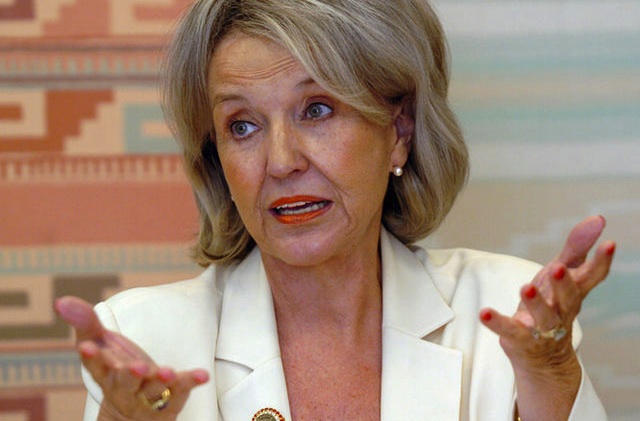
Arizona Governor Jan Brewer not seeking reelection to a third term.

Arizona Gov. Jan Brewer says she won’t seek a third term in office.

The decision ends months of speculation about whether or not the governor would mount a challenge to a provision of the Arizona Constitution that limits officeholders to two terms in office. Brewer completed the term of former Gov. Janet Napolitano when she took a job in the Obama administration in 2009, then won a full term in 2010.

Legal experts, however, had maintained it would have been a long shot to challenge the Arizona Constitution. Gov. Brewer made the announcement at a school where she touted her accomplishments on issues, including education and the economy.

In February, Gov. Jan Brewer vetoed SB 1062, a controversial bill that would’ve allowed religious beliefs as a defense for denying service to gays. The decision was praised by the left and many on the right, as well.

Host of conservative talk radio show Liberty Never Sleeps, Thomas Purcell, hammered Republicans in the state legislature for the passage of the bill. “Legislators set a low water mark for the political process when they passed Arizona SB 1062 and sent it to Governor Brewer’s desk for signature,” Purcell wrote on PeoplesPunditDaily.com.

Still, the Arizona Governor race is rated “Leans Republican” on our 2014 Governor Map Predictions. Actor Steven Seagal made headlines for weighing a bid for Arizona governor, but it is less than clear if he is serious or just promoting his new reality TV show with Sheriff Arpaio.

Democrat Richard Carmona barely lost to now-Sen. Jeff Flake last November for a seat in the U.S. Senate. Too bad for the Democrats, Carmona decided not to run. Now, ex-Arizona Board of Regents President Fred DuVal is the only viable candidate for Democrats, despite state House Minority Leader Chad Campbell.

The Republican side is pretty cut and dry. Now that Brewer won’t be running, Secretary of State Ken Bennett, who announced early he has decided to run, is starting off as the favorite for the Republican nomination.

Bottom line, Democrats have been disappointed time and time again, overestimating the strength of the Latino vote in this state. Mitt Romney handily defeated Barack Obama by just under 10 percent.

Arizona Gov. Jan Brewer says she won't

Vivek H. Murthy

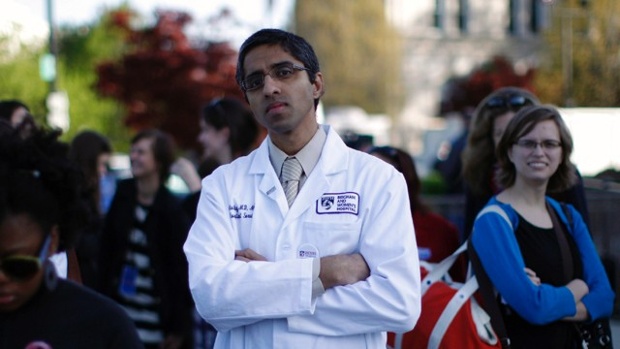
Controversial Obama nominee, Vivek H. Murthy (shown), called the Second Amendment a health care issue, and criticized Gov. Romney during the 2012 presidential election for his foreign policy stances, which warned of events that have now bore out.

President Obama nominated physician Vivek H. Murthy to serve as the 19th Surgeon General of the United States.

Murthy is a co-founder of Doctors for America, a group that supposedly advocates for affordable healthcare for all Americans, which was started in 2008.

Coincidentally, Doctors for America worked extremely hard to help elect the president in 2008, and the very same group also campaigned for ObamaCare before Congress passed it in 2010.

Its seems that Obama’s choice could possibly be a payback for all of the work that the doctor did campaigning for him in ’08, and promoting ObamaCare rather than his “qualifications.”

Senator Lamar Alexander — one of the Republicans that voted against Vivek H. Murthy — does not argue the fact that he is a talented individual but, “His experience does not measure up to the stature and leadership expected of our surgeon general.”

The Republican Party believes he lacks the ability to examine issues that are pertinent to all Americans with an objective eye.

Since the doctor has a lengthy record of political activism, many believe and, justifiably so, that he would not be able to fulfill the duties of the surgeon general appropriately.

Senator of Kentucky Rand Paul wrote, “Dr. Murthy has disqualified himself from being Surgeon General because of his intent to use that position to launch an attack on Americans’ right to own a firearm under the guise of a public health and safety campaign.”

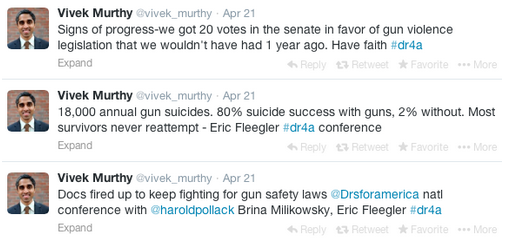
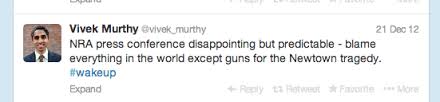
Senator Paul was referring to the doctor’s active political career fighting against the Second Amendment, and has publicly called gun rights a “healthcare issue” and a public health threat. Murthy’s bias is rather self-evident in his tweets on the issue:

vivek h. murthy second amendment stance

vivek h. murthy bias view of guns

Majority Leader Harry Reid has rigged the nomination process in the Senate, preventing a filibuster, leading one to think that this would guarantee Murthy’s confirmation. But in another recent nomination battle over a controversial DOJ nominee to the Civil Rights division, Republicans, joined by a few Democrats, were able to stall the vote.

If confirmed by the U.S. Senate, Murthy would become the youngest Surgeon General in U.S. history. He will succeed the current acting Surgeon General Boris D. Lushniak.

President Obama has nominated yet another controversial

obama job approval

You had to figure that Obama and the Democrats would start pulling out all the stops when they started falling behind in the polls, and this week Team Democrat pulled out a whopper of rising oceans and general global destruction in an attempt to deflect what is going on in Crimea and ObamaCare.

Congress gathered together in a leftist orgy in the halls of the Senate and the House to make them feel better about themselves. It certainly did nothing to solve any problems in this country, except perhaps keep a few pizza delivery companies in business for a few more hours before the chaos of Obamanomics closed in on them further.

The leftist narrative is pretty simple: we produce too many pollutants which contribute greenhouse gases to the atmosphere. These gases warm the planet and thus cause chaos in the atmosphere. This warming will eventually makes the seas rise and destroy life as we know it on Earth.

It’s a pretty fantastical story. I’m surprised no one is cracking wise that a group of men and women that are mostly atheists and malcontents are coming up with a modern-day version of Noah and the flood. Not to mention there isn’t a whole helluva lot that they can do about it, assuming its true. “Democrats Plan to Control the Weather” would make a snarky but excellent New York Time headline this week.

Just don’t tell the President. The last thing this nation needs is a president who gets his feelings hurt, to hear the Democrats tell it. Maybe that’s why he needs so many vacations, buying pink V-neck sweaters at the Gap. Any woman with low self-esteem will tell you, a shopping binge will do wonders for the self-image. While the Obamas shop, Putin is fortifying.

It’s a good narrative to sell that Americans are solely responsible for all the problems in the world. Despite accounts being varied about the nature of the global warming and the reporting being poorly researched (there is significant evidence that it may not be happening at all), Team Democrat pushed this story forward in the media machine.

Putting aside for the moment that the President was toking on weed and snorting coke, blowing off class and generally drinking into oblivion during his education, you have to ask yourself, why would Team Democrat take this ideology and put it forth now?

As I said, Team Democrat is smarting right now and it’s mainly from Russia acting like a party pooper and Vladimir Putin schooling Obama in the realities of geopolitical politics. It was time for a little self-love now that the schoolyard bully was rubbing Obama’s face in the sand. Reality and truth stings, but in our modern-day society we don’t fix the problem, do we?

No, we make the bullied child feel better about himself. Team Democrat has always had distaste for the rich country club crowd and with Obama its more than a professional dislike, it’s personal.

After all Obama was the victim of bullying as a child and has said so on several occasions:

“As adults, we all remember what it was like to see kids picked on in the hallways or in the schoolyard,” Obama said. “And I have to say, with big ears and the name that I have, I wasn’t immune. I didn’t emerge unscathed.”

The realities of a complex world are folding in on the Democrats and Obama because like many bullied and troubled children they become the bullies themselves. They were going make people like Putin pay. They are going to make the rich pay. They will make the Tea Party pay. They are going to make everyone that hurt them pay.

They will indulge themselves in this mental circle jerk of self-congratulatory behavior, lick their wounds and perpetrate the equivalent of a teenage angst ridden pajama party  up on the Hill. Then, of course, they end up in later years as broken people who bring everyone else down to their level of misery. When things get really bad, it results in violence and self-destructive behavior.

This is the fate that awaits America, unless things change, and soon.

Thomas Purcell is a nationally syndicated columnist and host of the Liberty Never Sleeps podcast hour and author of “Shotgun Republic.”

Opinion: Obama and the Democrats would start

David Jolly

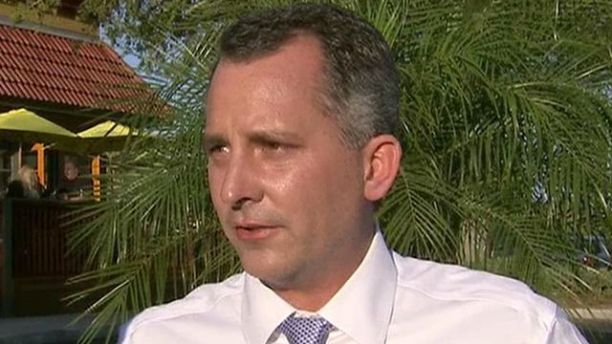
Republican David Jolly defeated Democrat Alex Sink on Tuesday in a Tampa-area House district where ObamaCare got its first test ahead of November’s midterm elections. Both Democrats and Republicans spent millions of dollars testing out national strategies for the rest of the year.

With 100 percent of the vote counted, Jolly had 49 percent of the vote to Sink’s 47 percent. Libertarian Lucas Overby had 5 percent.

U.S. House – District 13 – General
225 of 225 Precincts Reporting – 100%
Name Party Votes Vote %
Jolly, David GOP 88,294 49%
Sink, Alex Dem 84,877 47%
Overby, Lucas Lib 8,799 5%

The special election to replace the late Rep. Bill Young was considered a tossup by People’s Pundit Daily, but once again the guys at the University of Virginia Center for Politics shot way to the left. The race was cast as a political bellwether, and a testing ground for each party’s messaging strategy, but in truth Democrats won 3 out of the 4 special elections in 2010, a year they were thumped.

Larry Sabato and others got it wrong, because their models are currently flawed, relying far too much on the talent gap and overstating Democrats’ advantage. That’s not to say the midterm elections will be an easy night for Republicans, but as we have previously explained, these people consistently underestimate ObamaCare and the fact Democrats would have to have a significant lead on the generic congressional ballot survey to make any significant gains.

“As your congressman, I will always be accessible. I will serve humbly and with honor,” Jolly told supporters at a victory rally. “While this campaign has seemed at times to be partisan, your next congressman is not partisan.”

Jolly, a former aide to Young, had, along with Republican groups spent millions to hammer his Democratic opponent over ObamaCare.

Sink, who also narrowly lost the 2010 governor’s race to incumbent Gov. Rick Scott, had cautiously embraced the health law — while insisting it urgently needs fixing. She had played down its importance in the special election.

“I hear a number of different issues that people are concerned about — like protecting Social Security and Medicare,” she said. “They’re frustrated with Washington, believe that Washington is not working for them.”

President Bill Clinton could not bail out his fellow-Democrat this time More than $11 million has been spent on the race, according to the Sunlight Foundation, a nonprofit group that tracks government information. More than one in four registered voters in the district is older than 65, a population that could account for more than half of those casting ballots and has trended considerably Republican over the last decade.

The battle for Florida’s 13th District seat is a prequel of sorts to the national fight this year over who controls Congress in the last two years of Obama’s final presidential term. The House is expected to remain under Republican control. But in the Senate, Republicans are hoping to leverage Obama’s unpopularity and his health care law’s wobbly start to gain the six seats required to control the 100-member chamber.

That makes the race in Florida a pricey proving ground for both parties, with the candidates the faces of the effort.

Jolly, backed by Republicans and outside groups, says Sink would undermine Medicare because of Democratic-passed cuts to programs under the health law.

Sink and her allies, meanwhile, paint Jolly an extremist who wants to privatize Social Security and gut Medicare.

Clinton recorded a phone call last week seeking local volunteers to help with Sink’s campaign, and a half dozen House Democrats emailed fundraising appeals to their own supporters on her behalf. More than a third of Jolly’s campaign contributions came from members of Congress.

Meanwhile, Ryan joined Jolly on a conference call with voters, while Kentucky Republican Sen. Rand Paul recorded a phone message for the GOP nominee aimed at supporters of Libertarian candidate Lucas Overby.

While Republicans held the congressional seat for four decades until Young’s death last year, the district’s voters favored Obama in the 2008 and 2012 presidential elections. The district is 37 percent Republican, 35 percent Democrat and 24 percent independent.

Sink has outspent Jolly by more than 3 to 1 on television advertising, though outside groups aligned with the GOP have helped narrow the overall Democratic advantage.

Republican David Jolly defeated Democrat Alex Sink

new ObamaCare numbers

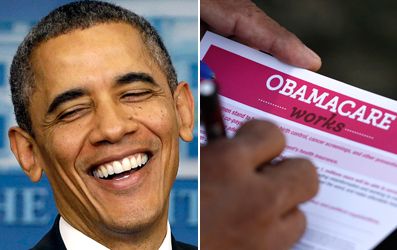
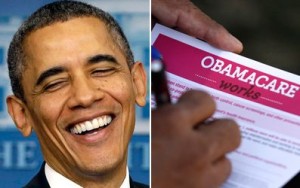
The new ObamaCare numbers are far below the goal and needed enrollment to keep the law viable, but Obama appeared on Funny Or Die’s “Between Two Ferns” for a laugh.

The administration said about 943,000 people signed up for private insurance in federal and state exchanges in February, bringing the total to 4.2 million.

With the deadline fast approaching, the new ObamaCare numbers for the first 5 months are barely at 75 percent of the administration’s goal for the 5-month period.

A of the month of January, the percent of young adults who selected a Marketplace plan was 3 points higher than it was from October through December, 27 percent up from 24 percent. But cumulatively, just 25 percent are between the ages of 18 and 34, far below the needed floor of at least 40 percent for that bloc.

The administration has foolishly staked the viability of the entire program on enrollment patterns in other health care programs. Now, they no longer have the luxury to simply expect, but need more people to sign up before the fast-approaching March 31 deadline. No expert, on either side of the aisle, will go on the record to predict they will meet that unrealistic goal.

“Over 4.2 million Americans have signed up for affordable plans through the Marketplace,” said Health and Human Services Secretary Kathleen Sebelius. “Now, during this final month of open enrollment our message to the American people is this: you still have time to get covered, but you’ll want to sign up today – the deadline is March 31.”

However, only 1 in 10 uninsured Americans who qualify for private plans through the new health insurance marketplaces actually enrolled as of last month, according to a survey by the consulting firm McKinsey & Co., which was previously reported by PeoplesPunditDaily.com.

Although the administration views the lack of enrollment as an outreach problem, the survey cited cost as the number one reason for the lack of registration. Further, health insurers “participating in ObamaCare are a very worried group right now,” according to health insurance industry consultant Robert Laszewski.

The 4.2 million includes those who have and have not yet paid for their premiums, and according to insurers, roughly 20 percent have never paid the first month’s premiums, and an additional 2 to 5 percent haven’t paid the second month’s premium, Laszewski wrote, citing insurers.

President Obama, attempting to boost ObamaCare enrollment numbers, appeared on Funny Or Die’s “Between Two Ferns” to promote the health care law. While the president’s team defended the move, many critics say it is a display of desperation, unworthy and beneath the Office of the President.

Either way, the new ObamaCare numbers spell a taxpayer bailout in the making, which is actually demanded by the law, but at least Obama can still set aside time from his busy schedule to joke.

With the deadline fast approaching, the new

People's Pundit Daily
You have %%pigeonMeterAvailable%% free %%pigeonCopyPage%% remaining this month. Get unlimited access and support reader-funded, independent data journalism.

Start a 14-day free trial now. Pay later!

Start Trial