Widget Image
Follow PPD Social Media
Saturday, January 17, 2026
HomeStandard Blog Whole Post (Page 1006)

gates-interview

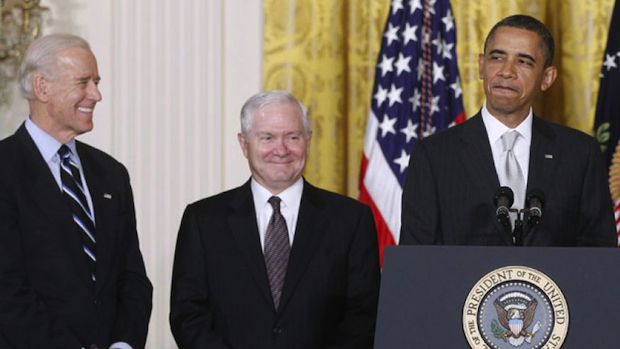
On April 28. 201, President Obama stands in the East Room of the White House in Washington with Vice President Biden and then-outgoing Defense Secretary Robert Gates. (Photo: AP)

In an interview on Sunday, former Sec. of Defense Robert Gates doubled-down on his bombshell criticism of President Obama, saying the president’s “absence of passion” and “conviction” over his Afghanistan war strategy “disturbed” him.

The Gates interview was the first time the former Defense Secretary spoke publicly regarding claims made in his new bombshell book, “Duty: Memoirs of a Secretary at War.” In the Gates memoir, he exposes the disturbing fact the president did not believe in his own Afghanistan policy.

Speaking candidly, Gates compared and contrasted Obama’s leadership style with that of his former boss, who he served under for less time, former President George W. Bush.

“It’s one thing to tell the troops that you support them. It’s another to work at making them believe that you believe as president that their sacrifice is worth it, that the cause is just, that what they are doing is important for the country, and that they must succeed,” Gates told CBS News (video below).

“President Bush did that with the troops when I was secretary. I did not see President Obama do that. As I write in the book, it was this absence of passion, this absence of a conviction of the importance of success that disturbed me.”

When the details of the Gates memoir emerged, the White House immediately defended Vice President Biden and Hillary Clinton, who were also criticized in the book, but even mainstream media journalists were forced to concede the damage to Hillary Clinton and Joe Biden would be severe if either of them decided to run for president in 2016.

Both in his book and in the Gates interview on Sunday, the former Defense Secretary criticized the White House over interference in military affairs, stating “I actually think it’s gotten worse.”

John Bolton, former U.S. Ambassador to the United Nations under the Bush administration, and Charles Krauthammer both told Fox News that claims made in the Gates memoir are an “indictment of Barack Obama.”

Unsurprisingly, Gates has not received a free pass from criticism over the book, with many arguing it was untimely for a former Defense Secretary to be speaking out against the Obama administration he served before they leave the White House.

However, Gates defended his claims in the interview on Sunday, stating he didn’t think it made sense to wait until 2017, when the presidential election concluded, to underscore these issues.

The former Pentagon chief made it crystal clear that he does not regret anything he’s written, calling it an “honest” account.

Watch Gates interview clip below:

In an interview on Sunday, former Sec.
iran-nuclear-deal

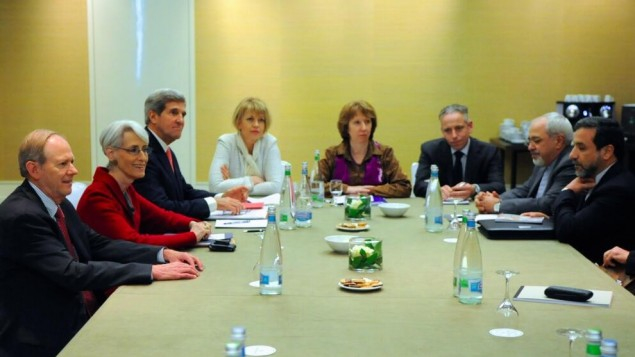
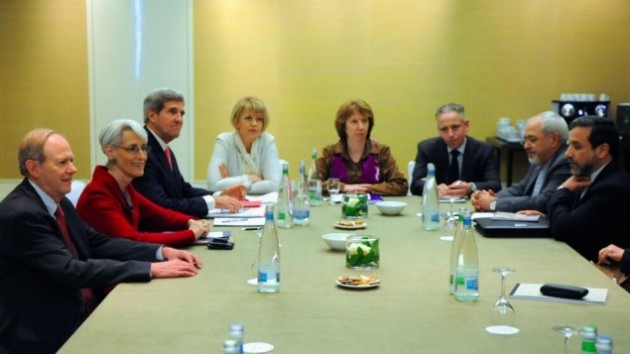
The Ayatollah-led regime and the six world powers have agreed on the terms for implementing the agreed upon Iran nuclear deal, the White House announced Sunday.

The agreement set to go into effect starting Jan. 20.

Under the terms of the six-month agreement, the regime will start to rein in its nuclear program, while the United States and other countries will ease off sanctions.

Iran agreed to limit its uranium enrichment to 5 percent, which is the level commonly used to power reactors. The Iran nuclear deal also commits the regime to ending the production of 20 percent enriched uranium, a level compatible and necessary for weapons-grade material.

They will also be required to supposedly neutralize their already existent 20 percent stockpile.

In exchange, the economic sanctions placed on the Iranian regime will be all but dismantled for a period of six months, during which time, the world powers of Britain, China, France, Germany, Russia and the United States would continue to negotiate the terms of a permanent Iran nuclear deal.

Many critics still say the current deal allows Iran to continue with its nuclear program, essentially allowing it to build a nuclear bomb. Iran claims its program is for peaceful purposes, such as medical research and power generation, which could benefit their economy and standard of life.

ISNA also reported Sunday that under the terms of the deal, Iran will guarantee that it won’t try to attain nuclear arms “under any circumstance.”

President Obama has a challenge ahead of him, as some of the most stanch critics of the Iran nuclear deal are Democrats in the House and Senate. Bipartisan legislation to reinstate Iranian sanctions is currently being written up in the Senate, which would force a veto showdown between the president and members of his own party.

The legislation is widely believed to have more than sufficient support to pass both houses of Congress.

The Ayatollah-led regime and the six world

WASHINGTON — Constitutional arguments that seem as dry as dust can have momentous consequences. On Monday, the Supreme Court’s nine fine minds will hear oral arguments about the meaning of “the” and “happen.” What they decide could advance the urgent project of reining in rampant executive power.

“The president,” says the Constitution, “shall have the power to fill up all vacancies that may happen during the recess of the Senate” (emphasis added). Monday’s case concerns whether Barack Obama made recess appointments when the Senate was not in recess, and made them to fill vacancies that did not happen during a recess.

In 2012, the National Labor Relations Board rendered a decision adverse to a soft-drink bottler in Yakima, Wash. The bottler asked the court to declare the NLRB’s intervention unlawful because the board did not have a legitimate quorum, three members having been installed by Obama when the Senate was not in recess as the Framers understood this term.

Republicans, wanting to block some Obama nominations, used a practice Democrats used in 2007 when they controlled the Senate and wanted to block some George W. Bush nominees. Under a unanimous consent agreement — no Democrat objected — pro forma sessions occurred on Jan. 3 and Jan. 6 of 2012. Obama declared the Senate in recess Jan. 4 and made his NLRB appointments, thereby disregarding the Senate’s determination of the rules of its proceedings, and the settled practice both parties have used to remain not in recess even when most senators are away.

The Obama administration argues that the word “happen” is a synonym for “exist.” And it rejects the argument that an intra-session Senate break is a synonym for “adjournment,” not “recess.” This, however, ignores the reasonable reading of the definite article: Recess appointments fill vacancies that “happen,” meaning come about, during “the” recess of the Senate — the one break that occurs between sessions, which until the Civil War usually lasted only three to six months.

The first president made the first recess appointment in the first year of his first term, in 1789, when travel was slow and arduous, and Congress was usually not in session. The Recess Appointments Clause was written when conditions made such a power crucial. Obama, however, contends that in today’s world of instant communication and easy travel, he deserves a much larger — almost unlimited — recess appointment power.

His administration argues that “at least 14 presidents have, collectively, made at least 600 civilian appointments (and thousands of military ones) during intra-session recesses.” But Obama’s action regarding the NLRB is characteristic of his aggressive expansion of presidential power. He is the first president to make recess appointments when the Senate was convening pro forma sessions every three days, and he has articulated an anti-constitutional defense of his aggression:

“I refuse to take no for an answer. … When Congress refuses to act … I have an obligation as president to do what I can without them.”

If he really can refuse a “no” answer, then the Senate’s role in the appointment process is vitiated. Now the court should apprise him of what he cannot do without Congress. Which means a Madisonian dialectic is occurring: The executive’s usurpation of power has provoked the legislature, precipitating an overdue judicial intervention to clarify constitutional boundaries. The Constitution’s text, and perhaps its original meaning, may be at odds with historical practice.

Because the ability to defeat by filibuster some presidential nominees has recently been restricted, perhaps not for the last time, presidents will have less need to resort to recess appointments. Nevertheless, were the court to uphold Obama’s action, two of the Senate’s constitutional powers would be substantially reduced — the power (which the House also has) to “determine the rules of its proceedings,” and the power to reject presidential nominees.

Many presidents have chafed against limits to their power, but in progressive presidents normal political ambition is alloyed with a validating ideology. Woodrow Wilson provided the progressive template by disparaging the separation of powers as an anachronistic impediment to the presidential power requisite for the modern age.

Monday’s argument will be another manifestation of America’s intermittent efforts to tame executive power, efforts that predate nationhood: The Declaration of Independence is a menu of complaints against “a long train of abuses and usurpations” by “the present King of Great Britain.” The present president’s cavalier approach to statutes (as with his unilateral rewriting of the Affordable Care Act) and the Constitution (see four paragraphs above) make Monday’s argument important.

George Will’s email address is [email protected].

On Monday, the Supreme Court's nine fine

obamacare-signup-numbers

The administration touted a bump in new ObamaCare sign up numbers, but Humana said it expects the risk pool to be disproportionately sicker, further increasing cost far more than anticipated. The cause of the increase in directly due to the president’s politically motivated decision to allow healthier people keep their existing plans.

When it became clear that President Obama misled the American people when he said, “If you like your plan, you can keep your plan, period,” the administration began implementing a series of delays and temporary exemptions in an attempt to arrest the free fall in the president’s approval ratings.

According to Humana, there will be consequences for the president’s political decisions, and that consequence will be higher cost that ultimately will be passed on to the American people.

The ObamaCare sign up numbers will be swamped with enrollees who will be “more adverse than previously expected,” Humana said in a regulatory filing. To calm investor fears, the company adamantly reassured their 2014 profit forecast, but the Louisville, Kentucky-based health insurer said it was evaluating expectations for the new year.

Experts and insurers said at the time the president made his political calculation that it would cause “tremendous instability” in the insurance market by allowing younger, healthier customers to either opt out of ObamaCare or temporarily keep or purchase “catastrophic” coverage.

“Humana was already assuming the exchange business would be unprofitable,” Carl McDonald, a Citigroup analyst, wrote in a note to clients today. “It now appears Humana believes it could lose even more money because the mix of exchange enrollment is less favorable than anticipated.”

The company also said it expects harsher cuts to Medicare Advantage, which Gov. Romney warned about during the 2012 presidential election. The program pays private insurers to provide benefits to the elderly. The government will announce their proposed payments for 2015 plans next month, which Humana now estimates will be cut by 6 percent to 7 percent, up from the initial 4 percent to 5 percent initial projection.

Humana reiterated its 2014 earnings forecast of $7.25 to $7.75 a share. The company sees sales and enrollment ahead of expectations for Medicare Advantage plans this year, as well as for Medicare prescription drug plans.

Because Humana offers pricier plans with more generous coverage, it’s unclear if insurers who offer coverage with less generous benefits are experiencing similar issues, forcing them to pass cost of to the consumer.

“It’s worth asking the question of whether Humana believes the entire exchange risk pool is worse than anticipated,” McDonald wrote. If the problem is on a grand scale, an insurance death spiral will become a serious concern.

Including companies who offer more and less generous coverage nationwide, as of the first week in January, only 5 – 15 percent of those who selected a plan on either the state or federal exchanges have paid their first premiums. Among those who did pay, the vast majority are plans with more generous coverage, suggesting the consumer is in need of such coverage.

The data suggest the issue is not specific or unique to Humana, but rather underscores a common challenge throughout the country to the entire system.

The administration touted a bump in new

A food stamp fraud investigation targeting Butler County, Ohio, which received shocking increases in food assistance dollars, suggests that nationwide reform is badly needed.

From July 2012 to June 2013, the food stamp fraud investigation has led to the arrest of 116 people, as well as another 100 caught from July 2013 to December 2013. Throughout the total length of the operation, the apprehensions have saved the taxpayers roughly $5.2 million since July 2012. It was headed up by two Butler County Sheriff’s office detectives aided by the Secret Service and the U.S. Department of Agriculture, as well as other state and local agencies.

“It’s the tip of the iceberg,” Sgt. Jason Rosser, a Butler County Sheriff said.

Compounding the problem of food stamp fraud has been the economic recovery that never was and a common symptom of nationwide economic distress — record high drug abuse. A record 47 million Americans were on food stamps as of 2013, and the U.S. Department of Agriculture says that food stamp fraud costs the taxpayers $750 million each year.

In Butler Bounty, Sheriff Richard K. Jones says heroin has become a real problem.

The Butler County food stamp fraud investigation uncovered a common occurrence found in other investigations among drug addicts, who are trading their SNAP cards for cash to buy heroin (or, other drugs).

“They didn’t want to eat, they wanted caps of heroin,” Rosser said.

Rosser found much the same scam previously reported by PeoplesPunditDaily.com, which consists of people selling their SNAP assistance to others for 50 cents on the dollar.

“Someone sees a person in a store pushing a cart load of groceries and goes up and says, ‘Give me $100 for this card. It has $200 on it,’ ” Rosser said. That cash, he said, is then used to buy drugs or items not permitted with assistance funds.

The investigation also uncovered another all-to-common occurrence, where retailers purchase SNAP cards or allow SNAP cardholders to purchase items that are not unauthorized under the program, even items such as alcohol and cigarettes.

Sometimes, the store owner uses the SNAP benefits to purchase items from another location, which they then sell at their own establishment. In the investigation, one Fairfield gas station owner purchased a SNAP card from a person deemed in need of assistance, proceeded to enter another grocery store where they used it to purchases cases of beverages. They were sold at his gas station, Rosser said.

“You could see the people who sold the card helping him load the stuff in the back of the car,” Rosser said.

Of the 216 violators, 124 have been given administrative waivers, which amounts to little more than being barred from receiving SNAP benefits for a year. Still, some offenders have been sentenced already or have been charged with a fifth-degree felony. Out of the 216 offenders, just 51 have received a lifetime ban from the SNAP assistance program as a result of their conviction.

The program, which is one of the first of its kind in the state, was initiated by Sheriff Richard Jones and county Commissioner Don Dixon.

“There are others out there copying our program,” Jones said, adding the investigation is having an impact. The saddest aspect, however, is the potential harm to those truly in need of assistance.

“These people are taking it away from those who really need it,” Jones said. “If you are using these cards for fraud, you will end up in my jail.”

Dixon rightfully touts how a crime that “was not secret” has been spotlighted by the investigation.

“It was common knowledge what was going on, but everybody was kind of walking around it. This is doing something about it,” said Commissioner Dixon. “You know it’s just not fair to the people out there who work hard to pay the bills, when they see people cheating the system while they do without.”

The initiative, which is costing just $136,000, is well worth its own weight. The number represents the total contract between Butler County Job and Family Services, the county prosecutor and the Butler County Sheriff’s office.

“We are very pleased with the success,” said Jerome Kearns, job and family services director. “It has been a huge return on our investment.”

Kearns also said the investigation has targeted an area where they didn’t have the resources to operate in, but because word is spreading on the streets it is compounding the effectiveness of the program.

“I was on Heaton Avenue the other day a woman yelled out ‘there’s the food stamp guy’,” he said.

In total, roughly $6.6 million is directed monthly to Butler County to fund the Supplemental Nutrition Assistance Program, commonly referred to as either food stamps or SNAP. Considering that in the past 18 months, alone, $5.25 million has been saved by the efforts of the Butler County Sheriff’s Office, the policy could serve as a nationwide template for an ever-growing national problem.

A food stamp fraud investigation targeting Butler

Ariel Sharon dead

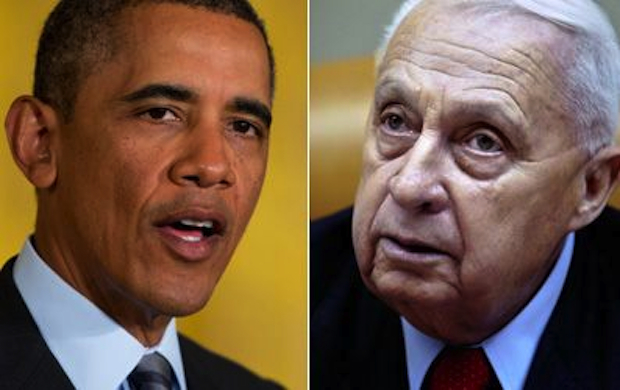
President Obama expressed sorrow Saturday over the news former Israeli Prime Minister Ariel Sharon died at age 85. Sharon was at the height of his power when he suffered a stroke in 2006 and fell into a coma he never recovered from.

Obama joined other U.S. and world leaders in reflecting on the life and passing of former Israeli general Ariel Sharon.

“On behalf of the American people, Michelle and I send our deepest condolences to the family of former Israeli Prime Minister Ariel Sharon and to the people of Israel on the loss of a leader who dedicated his life to the State of Israel,” Obama said. “We reaffirm our unshakable commitment to Israel’s security and our appreciation for the enduring friendship between our two countries and our two peoples.”

President of the State of Israel Shimon Peres, who was a longtime friend and rival of Sharon, said he was “a brave soldier and a daring leader who loved his nation and his nation loved him.” He added, “He was one of Israel’s great protectors and most important architects, who knew no fear and certainly never feared vision.”

Sharon died at Tel Hashomer hospital outside Tel Aviv, with his family gathered around his bedside after his vital organs began to fail from long-term deterioration.

“Ariel Sharon’s journey was Israel’s journey,” Secretary of State John Kerry said.  “The dream of Israel was the cause of his life, and he risked it all to live that dream. … During his years in politics, it is no secret that there were times the United States had differences with him. But whether you agreed or disagreed with his positions … you admired the man who was determined to ensure the security and survival of the Jewish State.”

Sharon fought in three wars before entering Israeli politics, and was elected prime minister of Israel in 2001. In January 2006, he suffered a stroke just when he was at the height of his political power. Though he never recovered, there was some hope that his condition would improve in 2011.

His son Gilad told the New York Times his father could move his fingers when he asked him to, adding, “I am sure he hears me.”

Prior to his stroke, Sharon had shocked his pro-Israel political base by removing Jewish settlers from 21 Gaza settlements and from 4 on the West Bank. He also resigned as head of the Likud Party — the more hardline Israeli party — and founded a new “centrist” party called Kadima (“Forward”).

The development led to now-Prime Minister Benjamin Netanyahu, who was Sharon’s longtime rival, being elected as his replacement as head of the Likud Party.

Former President George W. Bush also offered his response to Sharon’s death.

“Laura and I join our friends in Israel and around the world in mourning the loss,” said the former president, commenting for both himself and his wife. “He was a warrior for the ages and a partner in seeking security for the Holy Land and a better, peaceful Middle East.”

While Sharon was seen as a late-career compromiser, he was downright hated by most Palestinians who considered him an enemy. Palestinians see Sharon as someone who has dashed their hopes at independence several times, and organized military offensives against them in Lebanon, the West Bank and Gaza. After decisively being defeated by Israeli forces under Ariel Sharon, they began settlement schemes on the lands they want for their state.

The Palestine response to the former Israeli prime minister’s death has been insinuations of happiness, saying they regret he wasn’t held accountable for his actions when he was till alive.

“He wanted to erase the Palestinian people from the map,” said Tawfik Tirawi, a Palestinian intelligence chief who served when Sharon was prime minister. His comments ignore the history of Palestinian aggression, and get worse with every comment.

“He wanted to kill us, but at the end of the day, Sharon is dead and the Palestinian people are alive.”

Some militant figures in the Gaza Strip, such as Khalil al-Haya, who is a leader in the Islamic militant group Hamas, is less concealing about his views. He said Sharon was responsible for the suffering of generations of Palestinians.

“After eight years, he is going in the same direction as other tyrants and criminals whose hands were covered with Palestinian blood,” he said.

Sharon’s deputy, Ehud Olmert, was elected prime minister 2 months after Sharon was hit with the stroke.

Sharon was born February 26, 1928 in the then-British territory of Palestine. He was born and raised by a family of Lithuanian Jews, and by the age of 10 he had entered the Zionist youth movement Hassadeh, and then joined the Haganah, the military precursor to the Israel Defense Forces.

His military career was successful and fueled by his talent as a military strategist, eventually making his way up to a commander in the Israeli army. Ben-Gurion, legendary Israeli leader, called Ariel Sharon the “greatest field commander,” he had known.

Following the conclusion of the Suez War, then-prime minister David Ben-Gurion wrote of Sharon in his journal: “The lad is a thinker, an original. Were he to be weaned of his fault of not speaking the truth in his reports he would make an exemplary military leader.”

Ariel Sharon played a pivotal role in the 1956 Suez War, the Six Day War of 1967, the Yom Kippur War of 1973 and as Minister of Defense directed the 1982 Lebanon War.

Sharon joined the Likud party after retiring from the military, serving in a number of ministerial posts and then as party leader in 2000 before becoming prime minister from 2001-2006.

Sharon was married twice and widowed twice during his lifetime, and is survived by his sons Gilad and Omri.

President Obama expressed sorrow Saturday over the

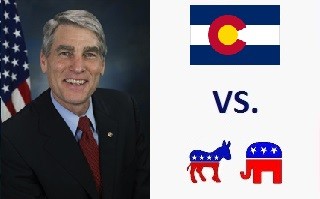
colorado-senate-raceThe Colorado Senate race is the twelfth article in a succession of articles offering expanded analysis and commentary on the ratings for the PeoplesPunditDaily.com 2014 Senate Map. The dynamic of this race has changed dramatically since the National Journal released a May article entitled, “Colorado’s Forgotten Senate Race.”
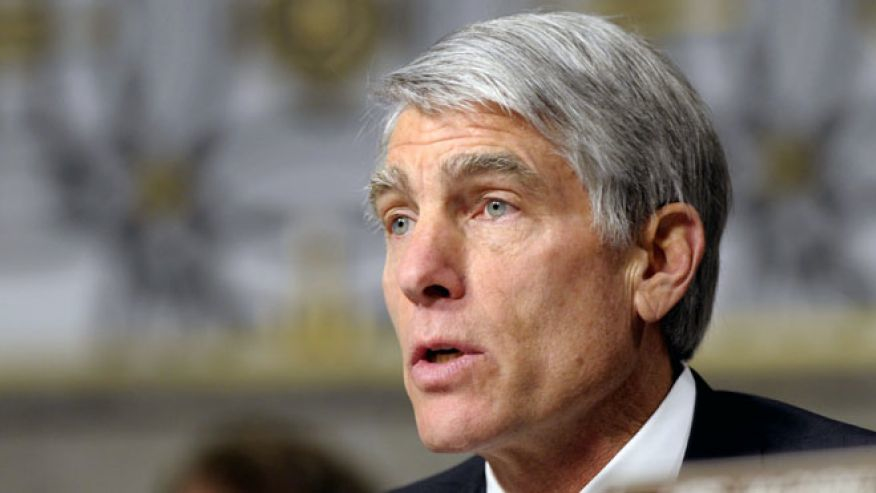
UPDATE: This is the outdated pre-Rory Garnder prediction. View the new updated race prediction here.

Democratic incumbent Governor John Hickenlooper was in big trouble early on, but Senator Mark Udall appeared early to be in a solid position to win reelection in 2014. Udall was elected with 53 percent of the vote in 2008, a Democratic wave election cycle, but not one Republican early on had been willing to jump into the contest.

That’s no longer the case, as the field quickly became crowded with many second-tier candidates. Let’s take a look at the Republican field of declared candidates.

State Senator Randy Baumgardner, is a Hot Sulphur Springs Republican who spent 4 years in the state House before being elected to the state Senate. He is an avid campaigner, who in 2012 beat Republican Jean White in a heated Republican primary that entertained the voters with a wide variety of drama, ranging from a registered sex offender to support for civil unions.

Fomer State House Leader Amy Stephens, spent 7 years in the state legislature and has ties to the Colorado Springs-based social conservative organization, Focus on the Family, and may very well be the grassroots best bet. Stephens ran an ad touting her record as House Leader, emphasizing her support for the middle class and seniors, while supporting the effort to balance the budget and promised “to fight ObamaCare until the day we are finally able to repeal it.”

She will no doubt be forced once again to defend her sponsorship of a 2011 measure that set up the state’s health insurance exchange, dubbed “AmyCare.” But she already held off a formidable primary challenge from former Rep. Marsha Looper, which was induced by state redistricting, and is ready with arguments to defend her action.

State Senator Owen Hill,  is a lawmaker from Colorado Springs who served just 1 term in the Colorado General Assembly. While he says he is ready to bring the next generation of Republicans to Washington D.C., a prospect many are attacking him on, his loose connection to politics may help him in an anti-establishment year when a recent Gallup measurement found the highest number of independents ever on record.

Businessman Mark Aspiri is also declared. Aspiri is the president of Generation Point, LLC., an economic development company.

Small business owner Jaime McMillan is also declared, but outwardly supports mainstreaming the LGBT movement, which may not play to well in a Republican primary during a time when the state is fighting to protect their gay marriage ban.

Ken Buck is the Weld County District Attorney and Republican nominee for the U.S. Senate in 2010. In his 2010 bid, Buck’s campaign was derailed by a series of gaffes, including comparing homosexuality to alcoholism and making a comment that voters should elect him because he does not wear “high heels,” which was an ill-conceived reference to his former primary opponent, Jane Norton.

Buck may be a better candidate this time around, for sure, but his race underscores the importance of candidate recruitment, a variable considered in the model used at PeoplesPunditDaily.com. Buck is included in the 17 percent of races Republicans lost in states where the PVI (Partisan Voting Index) was more Republican than D+2.

Walt Klein, a consultant on the Buck campaign, said “Ken’s going to finish the job in 2014.” Since the PVI was dead even in 2010, and will only tick up to D+1 in 2014, it is statistically likely a formidable candidate can, in fact, “finish the job in 2014.”

Because Rep. Cory Gardner, who is widely seen as a Republican rising star, decided he was not going to make a run we assume that the political landscape in the Centennial State was just not that GOP-friendly. But that was before the rollout of ObamaCare, Udall’s support of the bill, and his shared broken promises with President Obama regarding Americans’ ability to keep their plans.

While Senator Mark Udall has an approval that’s averaged from a low of 40 percent (where he is now) to a high of 44 percent (where he was), voters say by an average 47.5 – 40 percent margin that the Democratic incumbent does not deserve to be reelected. Adding to the conclusion Senator Udall is soft on support, he earns well under the 50 percent threshold for an incumbent even when pitted against lesser-known Republican candidates.

It is too early to tell whether or not the news that Udall’s office intimidated the state’s insurance agency by pressuring them to change the ObamaCare-induced health plan cancellation numbers, will have a lasting effect. Still, it is clear that the issue of ObamaCare, in general, has hurt the incumbent.

Colorado voters oppose the 2010 Affordable Care Act 60 – 37 percent in the latest Quinnipiac University poll, and disapprove 59 – 37 percent of the job President Barack Obama is doing. Similarly, Gallup has measured Obama’s job approval at no more than 42 percent beginning in the fall of 2013.

The competitiveness of this race will depend upon who the Republicans nominate to run against Udall. Tea Party candidate Ken Buck, who failed to win a winnable race against Sen. Bennet, ironically has the best chance of beating him in surveys and is favored to win the nomination. Buck leads potential GOP candidates in primary polling, and perhaps we can call it voters’ remorse or name recognition, but Buck has made up a tremendous amount of ground.

Because polling conducted on the Colorado Senate race has been from Quinnipiac University and PPP, both of which use registered voter models and make presuppositions about the electorate far more favorable to Democratic candidates, Buck just may be leading in a likely voter model.

President Obama’s approval rating has cratered in the state, which is sure to be of concern to Sen. Udall. With Hispanics turning on President Obama, as well, this could be an interesting race under the right conditions. We see Sen. Udall as being very vulnerable — stemming from both ObamaCare and the potential scandal surrounding office emails — but until the Republican field plays itself out, the right call for this race is “Likely Democrat.”

View Polling Below Or Return To PPD 2014 Senate Map

Poll Date Sample Udall (D) Buck (R) Spread
Quinnipiac 1/29 – 2/2 1139 RV 45 42 Udall +3
PPP (D) 12/3 – 12/4 928 RV 46 42 Udall +4
Quinnipiac 11/15 – 11/18 1206 RV 45 42 Udall +3
PPP (D) 6/14 – 6/17 799 RV 50 35 Udall +15
Poll Date Sample Udall (D) Baumgardner (R) Spread
Quinnipiac 1/29 – 2/2 1139 RV 43 41 Udall +2
PPP (D) 12/3 – 12/4 928 RV 47 40 Udall +7
Quinnipiac 11/15 – 11/18 RV 44 39 Udall +5
Poll Date Sample Udall (D) Stephens (R) Spread
Quinnipiac 1/29 – 2/2 1139 RV 43 41 Udall +2
PPP (D) 12/3 – 12/4 928 RV 44 37 Udall +7
Quinnipiac 11/15 – 11/18 RV 45 38 Udall +7
Poll Date Sample Udall (D) Hill (R) Spread
Quinnipiac 1/29 – 2/2 1139 RV 44 39 Udall +5
PPP (D) 12/3 – 12/4 928 RV 44 37 Udall +7
Quinnipiac 11/15 – 11/18 RV 45 39 Udall +6


The Colorado Senate race is the twelfth

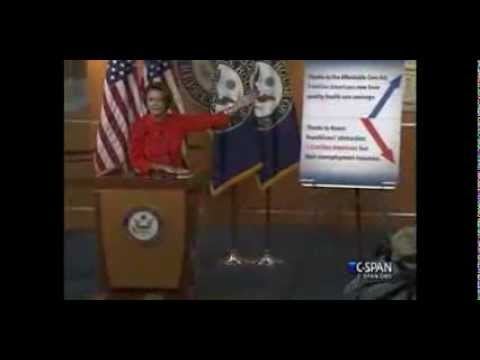
House Minority Leader Nancy Pelosi (D-CA), in response to a reporter’s question about cratering support for ObamaCare among Democrats, snapped back with, “First of all, it’s called the Affordable Care Act.”

During her Thursday press conference, a reporter asked:

The three “Obamacare” bills on the floor  tomorrow in the House, some Democrats have indicated they might be open to supporting them. How strongly are you pushing members to vote against them? And does it start to become a sign of weakening support if more Democrats…

Pelosi cut the reporter off, snapping back with a response:

Absolutely not. First of all, it’s called the “Affordable Care Act.” If that’s what you’re referencing, yeah, they are going after the Affordable Care Act. They’re saying, let’s do everything we can to take away health insurance from 9 million Americans who already have it and prevent many more millions of Americans from having it.

Nancy Pelosi, who infamously said “we have to pass the bill so that you can find out what’s in it,” has referred to the law previously as ObamaCare many times before, and in November told David Gregory on “Meet the Press” hat she has “always” referred to ObamaCare as the Affordable Care Act.

Clearly, as many media outlets are showing in an infinite number of video rewind clips, she is a “dunce,” and has referred to ObamaCare by that name countless numbers of times. In fact, that’s not the only rewind worth taking a look at in light of recent developments.

In Feb. 2010, Nancy Pelosi also said that ObamaCare wasn’t only about health care reform, but that is would benefit the economy and jobs. The then-Speaker of the House outrageously claimed that ObamaCare will create 4 million jobs over its lifetime — which she offered up without media challenge, opting to just make up a number and an arbitrary timeframe — but also said that ObamaCare “will supply 400,000 jobs almost immediately.”

Today, the December jobs report said that 917,000 Americans moved to the “discouraged workers” category according to the Bureau of Labor Statistics, with a pathetic 74,000 jobs being added in the month of December.

The latest economic news shows both that Nancy Pelosi is a complete economic illiterate, and everyone’s hopes for a vibrant recovery in 2014 were premature. The economy, particularly the labor market, has once again fizzed out, and the number one job killer is ObamaCare.

Nancy Pelosi snapped back at a reporter

ed-gillespie

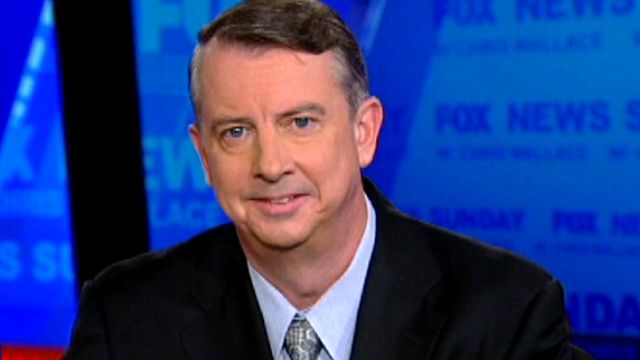
Sources say former RNC Chairman Ed Gillespie has decided to challenge Sen. Mark Warner (D-VA) and will be announcing his campaign next week, two sources close to Gillespie confirm to The Hill.

Apparently he has been thinking more like a candidate for weeks, because the sources also said that Ed Gillespie is already close to finalizing much of his campaign staff, picking Chris Leavitt to be his campaign manager.

Leavitt is a young Republican strategist who most recently ran Republican Mark Obenshain’s 2013 race for Virginia attorney general. Though Obenshain lost the race, he did so by fewer than 1,000 votes, far out-performing the rest of the Republican candidates in the state.

Hoping to duplicate the success of Virginia Gov. Bob McDonnell’s successful 2009 campaign, many of his members also worked on the governor’s bid, which Gillespie was a senior strategist on.

“He is running. It’ll be announced next week,” one of the sources said Thursday night.

Gillespie wasn’t ready to announce just yet, though he was reachable for a comment.

“I’ve been asking folks and talking to people about advice, that kind of thing. I’ve got until Feb. 1st,” he told The Hill, referencing Virginia’s filing deadline.

When asked if he had been telling people he was definitely in or not, he again demurred.

“I’ve been having conversations with folks. People are asking what my intentions are. I’ll let you know as soon as I’m ready to announce a decision one way or the other,” Gillespie said before ending the call.

The New York Times first reported Thursday evening that Gillespie was telling Republicans that he had decided to run

The mere speculation of Ed Gillespie entering the Virginia Senate race exposed several vulnerabilities in the incumbent Democratic senator, though Warner’s seat is currently rated “Likely Democrat” on the PeoplesPunditDaily.com 2014 Senate Map.

Gillespie — who is very telegenic and extremely folksy — is seen as a formidable challenger to Senator Warner, who is personally wealthy already has $7.1 million in the bank. But Gillespie has long ties to Virginia races, serving as the state Republican Party leader, and will be able to raise a ton of money for his campaign, helping to close the spending gap against the well-funded Warner.

He also has long been a proponent of comprehensive immigration reform, a stance which could help him woo suburban voters and the state’s fast-growing Hispanic population — though it might hurt him with the GOP base.

Warner will be very difficult to beat, though believe Gillespie gives Republicans a much better chance than with other candidates who are pursuing the nomination. President Obama approval rating in the swing state has been soft, varying between 39 – 45 percent.

The Democratic Senatorial Campaign Committee wasted no time in ripping Gillespie.

“Virginians don’t want to elect a DC shadow lobbyist like Ed Gillespie who epitomizes the reckless and irresponsible Republican economic agenda. Gillespie won’t work to strengthen Virginia’s economy, cut the nation’s debt or work to find common ground in Washington the way Mark Warner has done, and Virginians know that,” DSCC Executive Director Guy Cecil said in a statement.

Gillespie will still have to win the Republican nomination at the June party convention, and is likely to find opposition from some of the more conservative activists who often dominate the state’s Republican conventions. However, the two Republicans currently in the race are little-known and lightly funded, and the party wants to win.

Sources say former RNC Chairman Ed Gillespie

People's Pundit Daily
You have %%pigeonMeterAvailable%% free %%pigeonCopyPage%% remaining this month. Get unlimited access and support reader-funded, independent data journalism.

Start a 14-day free trial now. Pay later!

Start Trial