Widget Image
Follow PPD Social Media
Friday, January 16, 2026
HomeStandard Blog Whole Post (Page 965)

Concerns over China economic data weighed Wall Street down Monday.

Economic data out of China shows the rising giant’s manufacturing sector slowed for the fourth-straight month in April, sending U.S. stocks into the red. The Dow is down 120 points, or 0.73%, while the broader S&P 500 is down 0.69%. Financials are taking the biggest hit, followed by the health-care sector.

As 9:32 a.m. ET, the Dow Jones Industrial Average fell 75 points to 16437, while the S&P 500 shed 5.86 points to 1875. Meanwhile, the Nasdaq Composite fell 12.38 points to 4111.

HSBC’s purchasing-managers index was revised down to 48.1 in late April from an estimate of 48.3, wildly missing economists’ expectations of an increase to 48.4. The index shows the factory sector in the world’s second largest economy contracted for the fourth month in a row.

“Over the past few days, Beijing has introduced more reform measures which could support growth by inducing more private sector investment,” Hongbin Qu, HSBC’s chief economist for China wrote in the report. “We think bolder actions will be required to ensure the economy regains its momentum.”

In U.S. equity markets, Wall Street rebounded a bit after The Institute for Supply Management’s gauge of non-manufacturing activity showed slight growth to 55.2 in April, beating the expectations for a reading of 54.1, up from 53.1 in March.

Readings above 50 in the index suggest expansion, while those below 50 indicate contraction.

Pfizer (PFE) reported bottom-line results that topped estimates, but also released disappointing sales numbers. The American biotech giant is plotting to buy AstraZeneca (AZN) for at least $106 billion. Also in corporate news, Target’s (CEO) CEO Gregg Steinhafel abruptly resigned and will step down effective immediately. The retailer named CFO John Mulligan interim CEO as it launches a search for a new chief executive.

In commodities, U.S. crude oil futures rose 8 cents, or 0.09 percent to $99.85 a barrel, while Wholesale New York Harbor gasoline dipped 0.56 percent to $2.928 a gallon. Gold increased $8.90, or 0.68 percent to $1,312 a troy ounce.

Economic data out of China shows the

smart gun control

U.S Attorney General Eric Holder is pushing a new smart gun control angle that is cleverly disguised as safety measures.

The administration’s new push for gun control has taken on a different form, with Attorney General Eric Holder asking the House Appropriations Subcommittee back in April to consider new smart gun technology as a means to curb gun violence.

The Justice Department wants additional funds totaling over $380 million for fiscal year 2014 to offer grants for gun safety technology that is proven, reliable and effective.

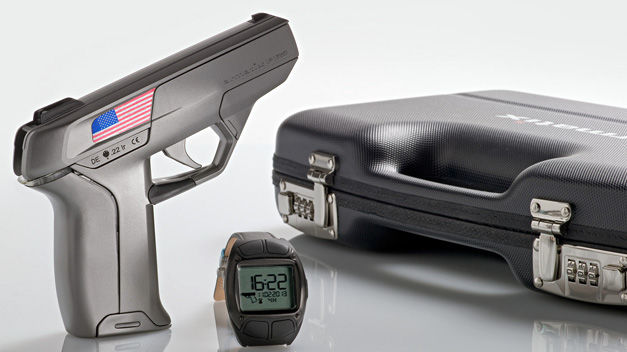
Since the 1990s, smart gun technology had made several different advancements. Radio Frequency Identification, or RFID, involves a ring that is worn by the owner, which is identified by the weapon upon close proximity. Shotguns made by Mossberg & Sons, for instance, went through their own smart development that is now marketed by IGun Technology Corporation. Again, the design is accompanied with a ring that is worn by the owner and used to identify the owner with a passive tag that depends upon the owner’s proximity to the shotgun.

Dynamic Grip Recognition, or DGR, embeds multiple electronic sensors in the grip. The gun has 32 electronic sensors embedded in the hand grip, which measures the size, strength and structure of a person’s hand, and even the reflexive way in which the person reacts when firing the weapon. The way an individual squeezes — in this case the trigger — produces a unique and measurable pattern. Embedded sensors will read and record the size and force of the users’ hands within the first second that the trigger is squeezed. The technology works with a wide range of users, firing postures, under stressful conditions and even while wearing gloves.

Biomac Systems has been researching and implementing the biometric aspect of this new technology. This futuristic technology incorporates eight optical sensors, which are then molded into the handle of the gun. The optical sensors will not rely on geographic parameters, but instead will measure biometric data below the user’s skin. Biomac’s technology will allow authorized gun owners to program the biometric data of up to eleven additional users into their firearm, unlike current technology from others that only allow one user per weapon. The authorized weapon dealer will be responsible for programming biometric data into the firearm at the time of the sale.

For military and law enforcement, biometrics will be printed on a wearable device, and once worn will allow a soldier or a law enforcement officer to access to any biometric weapon programmed for their particular organization. Obviously, this will allow any soldier or officer to fire any organization-specific weapon without having their individual biometrics programmed into the weapon, unlike individual citizens.

There are some so-called smart guns currently on the market using RFID technology that are accompanied with a ring or watch. While the Justice Department and various participating companies are selling the new technology as nothing more than innocent, common sense safety measures in the market of public opinion, they have instantly become controversial and suspect to proponents of gun rights.

Opponents not only say there is a cynical motive behind the government’s push that has nothing to do with gun safety, but also that the technology is a logistical and practical nightmare.

“I could imagine if the bad guy wrestled the gun from the cop, the gun (in the assailant’s hand) would probably be very near the officer’s hand as well, when the bad guy pulls the trigger – the gun would fire anyway since the cop would most likely still be grappling for it and the transmitter would be near enough to allow it to fire,” one police officer, who opposes the measure said.

Many officers feel that — in the real world under real conditions — the technology will not serve its stated purpose. For instance, if the gun is wrestled free, then the officer would be consumed with maintaining a one meter distance. In a closed room or other urban situations, it is an unpractical expectation.

To be sure, the technology is an example of great human innovation and ingenuity, but it raises serious questions about the Justice’s Department’s true intent.

Considering the recent developments and revelations regarding the NSA surveillance programs, it is not unreasonable for the opposition to accuse the Justice Department of finding another way to track gun owners nationwide.

If Sen. Ed Markey (D-MA) has his way, then the federal government would be monitoring radio, television and the entire Internet for speech they deemed “hate,” WND reported Monday. Markey’s proposal, called the “Hate Crime Reporting Act of 2014,” would require the National Telecommunications and Information Administration to report “the use of telecommunications,” which “advocate and encourage violent acts and the commission of crimes of hate.” Of course, the bill does not specify what, exactly, constitutes “hate,” or who, exactly, would decide what does.

Aside from the obvious threat to individual rights and liberty, law enforcement officials who oppose the “safety measures” say that the technology is simply riddled with worse case scenarios. What if the “bad guys” figure out a way to pick up and manipulate the radio frequencies and discover an undercover agent? “Anything that one engineer can do, another engineer can undo,” another officer said.

There are officers and gun manufacturers who believe that the technology is also a potential liability. That is, if an officer or innocent was killed due to a technological failure, an inevitability in the minds of some.

“I’ll pass,” another officer said.

The bottom line for gun rights activists and groups like the National Rifle Association is that the measures would reduce the ability of all citizens to protect themselves, both from other citizens and oppressive government. What is often missed in the gun debate is that the Second Amendment was adopted in compromise, an assurance for many Founding Fathers who justifiably feared the adoption of a strong, national government without an unfettered safeguard for liberty.

Attorney General Eric Holder asked the House

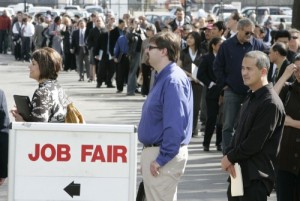
adp-national-jobs-reportDemocrats were quick to tout the April jobs report released Friday, but new polls suggest they will be forced to change their strategy back to dividing the electorate sooner rather than later. While the headlines were filled with upbeat spin over the headline unemployment number, Americans aren’t buying it.
Unemployment, again, fell only because of the number of adults seeking work dropped considerably, and now just one of out of six men between the ages of 25 and 54 are without jobs. The number of Americans who have given up on looking for work are far too many and not counted in the jobless rate.

A new Rasmussen Reports survey found that 69 percent of American adults know someone who is out of work and looking for a job, which is down only slightly from March, but 42 percent say they know someone who has given up on looking for a job.

When we actually count these adults on the sidelines who say they would seek employment if conditions were better and part-timers desiring full-time work, the jobless rate shoots up to a more realistic 12.3 percent.

Though modest job gains were made in nearly every sector, save for information technology, which realized a small loss, it was widely reported that this translated into better-paying jobs being added to the U.S. economy. However, hourly earnings made no gains, whatsoever, suggesting the economy is still only creating low-paying jobs, a sad norm in the Obama recovery.

Prior to the April jobs report being released, a Commerce Department report showed that the pullback in economic growth was severe, down to 0.1 percent from the fourth quarter’s 2.6 percent pace. This is becoming a pattern under the Obama administration, which all too early decides to tout a recovery after fourth-quarter numbers only to watch it fizzle-out in the first. Despite the upbeat spin on the jobs report, a whopping 49 percent say the U.S. economy is in a recession.

And the data suggest this pattern is likely to continue.

The U.S. Payroll to Population employment rate (P2P), as measured by Gallup, has followed a fairly consistent trend since the Obama administration took office after the recession. Seasonal employment, which is dominated by low-paying jobs, boosts the job numbers around this time of year, but quickly precipitates right on cue.

Meanwhile, in the annual Economy and Personal Finance Gallup poll conducted April 3-6, the number of American workers who say they are “fairly likely” or “very likely” to lose their job within 12 months was at its highest level since 1981. This type of insecurity does not bode well for the party in power, historically speaking.

All in all, the April jobs report was certainly an improvement, but the totality of economic data are still nowhere near what would constitute a trend, and Americans know it. It would seem Democrats are celebrating a bit too early.

Democrats were quick to tout the April

Kiev | Odessa | Ukraine

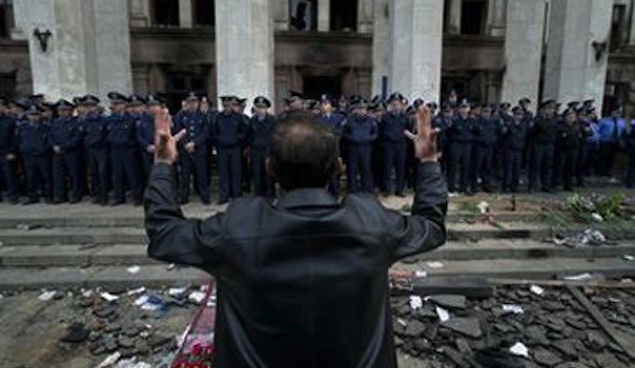
Kiev launches a new counter-assault after the incident with the burnt trade union building in Odessa, Ukraine. Tensions in Ukraine heightened significantly after at least 42 people died in clashes between government supporters and opponents in Odessa on Friday. (AP Photo/Vadim Ghirda)

On Sunday, interim Prime Minister Arseniy Yatsenyuk stepped up Ukraine’s rhetoric against Russia, claiming the Kremlin-backed anti-government protesters are orchestrating a “real war” against the pro-West government in Kiev, Ukraine. The accusation comes just days after violence and unrest resulted in the death of 42 people in the city of Odessa.

In an interview with the BBC, Yatsenyuk said that Ukraine would support a “full, comprehensive, and independent investigation” into the violence that occurred on Friday in the Black Sea port. Anti-government forces secured the trade union building in Odessa, Ukraine, and at least three people were killed by gunfire. But rather than allowing Russian forces to remain in the building, pro-Kiev groups instead firebombed the building.

“I personally blame the security service and law enforcement office for doing nothing to stop this crackdown,” Yatsenyuk told the BBC. Still, Prime Minister didn’t stop the blame-game there, stating also that Russian-backed groups were “provoking the unrest.” Russia and the protesters of orchestrating “real war … to eliminate Ukraine and eliminate Ukranian independence,” Yatsenyuk said.

Ukraine has been a real mess over the past few months, but violence and unrest have increased substantially after the Crimean referendum that resulted in the Russian annexation of Crimea, a vital warm-water lifeline to the Black Sea.

Ukraine says their troops have recently made gains against positions formerly held by pro-Russian forces in the eastern part of Ukraine, which Russian intelligence and special forces have been hammering away at since the Crimean vote.  On his Facebook page, Interior Minister Arsen Avakov posted a statement reporting that a new effort by the National Guard to retake control over the town of Kramatorsk began Sunday at dawn.

Until now, counter-insurgency operations have focused on the nearby town of Slovyansk, but the town of Kramatorsk saw violent clashes Saturday that resulted in insurgents setting buses alight to ward off attacks. While Russian television has reported a total of 10 deaths, including two among government forces, we could not independently confirm those figures.

Meanwhile, the government claimed that Ukrainian forces have reclaimed a television tower in the town, but that claim, too, People’s Pundit Daily has not confirmed. Over the past month, government buildings have been seized by pro-Russian forces in more than a dozen Ukrainian cities and towns across eastern Ukraine.

The Donetsk People’s Republic says it plans a referendum, as well, as plans to hold a vote on autonomy by May 11. However, with less than a week remaining, on the ground there is no visible effort to make that vote happen.

On Sunday, interim Prime Minister Arseniy Yatsenyuk

benghazi cover upSpeaker John Boehner announced a special committee to investigate the Benghazi cover up moments after the House announced they will subpoena Secretary of State John Kerry to testify. The Speaker said the House will vote on whether to establish a select committee to investigate after newly released emails prove the White House misled Congress and the American people on the terrorists attacks on September 11, 2011.
“In light of these new developments, the House will vote to establish a new select committee to investigate the attack, provide the necessary accountability, and ensure justice is finally served,” he said in a statement.

A source close to Speaker Boehner told People’s Pundit Daily that the Republican leader just made the decision Thursday after damning evidence surfaced tying the White House inner circle to the fictitious talking points fabricated to keep President Obama’s campaign message — “General Motors is alive, and Al Qaeda is dead” — from being exposed as a complete mischaracterization of reality during the 2012 presidential election. Boehner had faced consider pressure from Republican lawmakers in both the House and Senate, who wanted him to make a move of this nature last year.

While the special committee would still have to be approved by the House in a vote on the floor, the decision all but ensures its establishment and is widely expected to pass. The announcement by Boehner was the second of a one-two punch delivered to the White House this week.

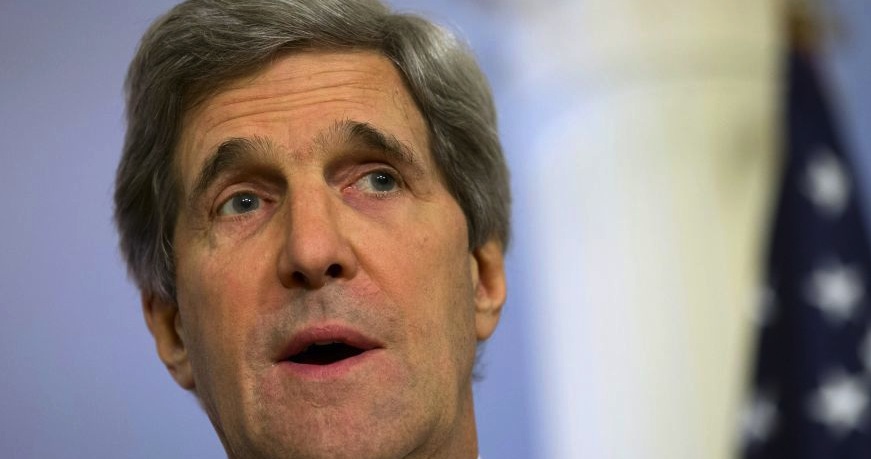
The House Oversight and Government Reform Committee announced Friday it has subpoenaed Secretary of State John Kerry to testify about the new bombshell Benghazi documents at a May 21 hearing. The emails were only obtained and published by the conservative watchdog group Judicial Watch as a result of a June 21, 2013, Freedom of Information Act (FOIA) lawsuit filed against the Department of State (Judicial Watch v. U.S. Department of State (No. 1:13-cv-00951)).

“The State Department’s response to the congressional investigation of the Benghazi attack has shown a disturbing disregard for the Department’s legal obligations to Congress,” Chairman Issa wrote in a letter to Sec. John Kerry.

“Compliance with a subpoena for documents is not a game. Because your Department is failing to meet its legal obligations, I am issuing a new subpoena to compel you to appear before the Committee to answer questions about your agency’s response to the congressional investigation of the Benghazi attack,” he added.

Speaker John Boehner announced a special committee

john kerryThe House Oversight and Government Reform Committee announced Friday it has subpoenaed Secretary of State John Kerry to testify about the new bombshell Benghazi documents at a May 21 hearing.

Chairman Rep. Darrell Issa (R-CA) accused the Obama administration of hiding the newly released records following an earlier congressional subpoena.

“The State Department’s response to the congressional investigation of the Benghazi attack has shown a disturbing disregard for the Department’s legal obligations to Congress,” Chairman Issa wrote in a letter to Sec. John Kerry.

“Compliance with a subpoena for documents is not a game. Because your Department is failing to meet its legal obligations, I am issuing a new subpoena to compel you to appear before the Committee to answer questions about your agency’s response to the congressional investigation of the Benghazi attack,” he added.

At a congressional hearing Thursday, Issa ripped the administration over the Benghazi emails, which were obtained and published by the conservative watchdog group Judicial Watch. The group only obtained the emails as result of a June 21, 2013, Freedom of Information Act (FOIA) lawsuit filed against the Department of State (Judicial Watch v. U.S. Department of State (No. 1:13-cv-00951)). Issa said the State Department also told his committee about those emails in an April 17 letter.

In one of the emails, White House advisor Ben Rhodes writes about a “prep call” with then-U.N. ambassador Susan Rice, right before her despicable Sunday show appearances on ABC, CBS, NBC, Fox News and CNN. The email went on address the game plan was to stress the anti-Islam Internet video, and divert attention from the foreign policy failures following negative developments on the botched Arab Spring.

The email specifically lists the following two goals, as well as several others:

“To underscore that these protests are rooted in an Internet video, and not a broader failure of policy.”

“To reinforce the President and Administration’s strength and steadiness in dealing with difficult challenges.”

Wednesday, the White House outrageously claimed that the email was referencing protests elsewhere in the Middle East and Africa, but no one is buying it any longer, including a rather favorable White House Press Corps, who repeatedly cornered White House Press Secretary Jay Carney on Wednesday and Thursday.

“The goal of the White House was to do one thing primarily, which was to make the president look good. Blame it on the video and not [the] president’s policies,” Judicial Watch President Tom Fitton said.

The context, however, is irrelevant to Issa, who notes the documents were withheld for Congress for over a year. “It is disturbing and perhaps criminal … that documents like these were hidden by the Obama administration from Congress and the public alike,” Issa said at Thursday’s hearing. He claimed the withholding of these documents is the worst transparency violation since at least the Nixon administration.

Interestingly, right before the House announced the subpoena, House Speaker John Boehner also called on Kerry to testify before Congress in light of these revelations.

The House Oversight and Government Reform Committee

unemployment rate and jobs reportThe April unemployment rate dropped to the lowest level since September 2008 as employers added 288,000 jobs, which is the most in two years and more than the 210,000 Wall Street was expecting.
The latest figures show the scapegoating of a harsh winter, blaming it for slower growth, was disingenuous.

The Labor Department Friday reported that the unemployment rate fell to 6.3 percent from 6.7 percent in March. However, because the number of people working or seeking work plunged last month, the increase in jobs disproportionately effected the unemployment rate, painting a rosier picture than reality. People aren’t counted as unemployed if they’re not looking for a job.

Still, employers also added more jobs in February and March than was previously reported, with job totals for the two months being revised upward by a total of 36,000 jobs.

Employers added an average of 238,000 jobs the past three months, which is up significantly from the 167,000 added to the US economy in the previous three.

Unlike most BLS reports in recent years, hiring last month was in a variety of sectors, including higher-paying jobs in manufacturing, which gained 12,000 positions. Construction, as well, added 32,000 new jobs. Professional and technical services, which include accounting and engineering positions, added 25,100 jobs.

The latest jobs reports comes after a large amount of other data showing that the economy is not growing. while consumers are increasing spending on health care, the US economy barely grew at all from January through March, with an annual growth rate of just 0.1 percent, down from a 2.6 percent rate in the final three months of 2013. Americans spent more last quarter on utilities and health care, but their spending on goods barely rose. Businesses also reduced spending, and exports fell.

Meanwhile, the latest news has prompted many economists to adjust their forecast to a 3.5 percent annual rate in the current April-June quarter, with growth projected to be roughly 3 percent for the full year.

That would be up from 1.9 percent in 2013.

The April unemployment rate dropped to the

If you watched “The Factor” Talking Points Memo on Wednesday, April 30, then you know Bill O”Reilly rips Obama and several members of his administration for what we now know to be a cover up of the Benghazi attack. But he really railed against the so-called free press because, in the end, they helped the administration cover it up.

“Now we know. Now there’s no question that the White House misled on the terror attack in Benghazi, Libya, on Sept. 11, 2012.” That’s about as nice as Bill O’Reilly can say the American people were lied to in order to protect Obama’s reelection.

“The best information and the best assessment we have today, is that this was not a preplanned attack,” Rice said. She then went on to blame the video, which was a flat-out lie. Yesterday, PeoplesPunditDaily.com reported on documents obtained by conservative watchdog group, Judicial Watch.

“Not one person has been brought to justice for the Benghazi attack, not one,” O’Reilly noted. But, in fact, law enforcement officials arrested the foolish but innocent man who made a video that had nothing to do with the premeditated attack that led to the death of four Americans, including the late former Ambassador Chris Stevens. Then-Sec. of State Hillary Clinton, then-Sec. of Defense Leon Panetta, and President Obama, himself, all looked straight into the eyes of Sean Smith’s mother and promised they would “get the guy who made that hateful video.”

The irony of all of this, as O’Reilly noted, is that President Obama and his inner circle, both political and policy advisors, have all accused the Republicans of playing politics with the Benghazi scandal. In fact, Mitt Romney was punched upon by both the White House and the liberal press when he dared to challenge the then-very vulnerable president up for reelection on his self-evident foreign policy failures. But, in reality and in the emails, it was and still is crystal clear that the White House was the side playing politics, which is exactly what the recently released emails show.

President Obama ran for reelection on a platform that literally stated, “General Motors is alive, and Al Qaeda is dead,” which by the way, subsequently was amended to “on the run.” And the Benghazi attack shattered his campaign narrative, exposing the claim to be what it truly was — a lie. Yet, despite clear proof for what is an impeachable offense under any other president, the press coverage today — save for White House press core journalist Jon Karl at ABC News — was disgraceful.

“That is proof the American press is dishonest, period. That is a scandal, a cover up of a cover up,” O’Reilly quipped, referencing Charsle’s Krauthammer’s characterization of the press coverage during what are serious scandals surrounding this administration.

There is one reason and one reason only the press would be covering this scandal up,” he concluded, “to protect President Obama.”

Bill O"Reilly rips Obama for what we

gm auto bailout cost us treasury

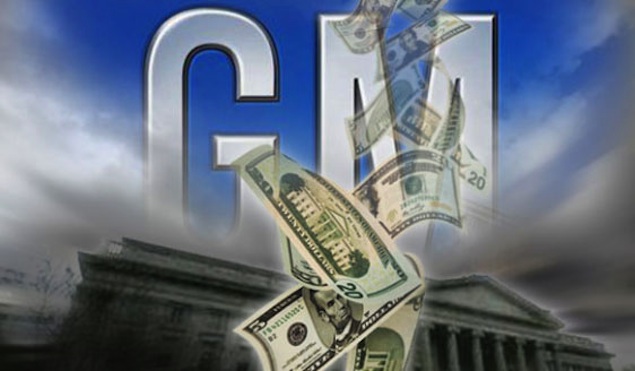
GM auto bailout cost US Treasury more than government estimated it would after selling its last share.

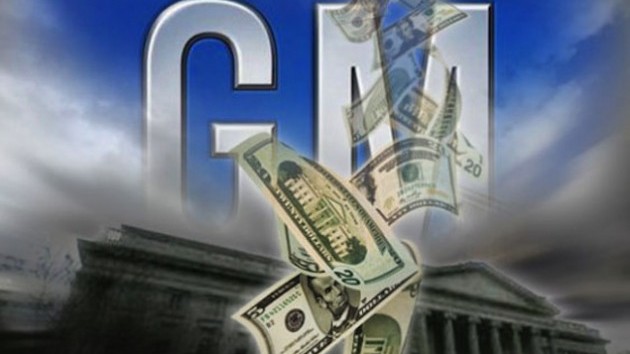
The U.S. government, which really means we the taxpayers, lost more on the GM bailout than the Treasury Department initially claimed we would. According to a new government report released on Wednesday, US taxpayers lost $11.2 billion on the bailout for General Motors Co., which is obviously more than the $10.3 billion the government estimated when it sold its remaining GM shares on December 9, 2013.

The $11.2 billion loss even includes a write-off back in March pertaining to the government’s remaining $826 million share investment in “old” GM, says the quarterly report from the Treasury watchdog.

The U.S. government spent about $50 billion to bail out GM, which went through a 2009 bankruptcy. The government’s investment was then converted to a 61 percent equity share stake in the Detroit-based automaker, on top of preferred shares and a structured loan.

Treasury whittled down its GM stake through a series of stock sales starting in November 2010, but could not dump the amount of shares to keep from realizing a loss in an adequate time because the shares would have collapsed.

When Treasury sold its final share, they estimated a total loss of $10.3 billion, but did say we shouldn’t expect any proceeds from its remaining $826 million investment in “old” GM, the report by the Office of the Special Inspector General for the Troubled Asset Relief Program said.

The U.S. bailout of GM and Chrysler, which received about $12.5 billion, supposedly saved 1.5 million jobs following the financial crisis, when the union-heavy companies found themselves over-extended by unrealistic benefit payments to the United Auto Workers Union. But the widely cited numbers are from the Center for Automotive Research, and are not universally accepted among economists.

Nevertheless, even though a small plurality of Americans view the auto bailouts as a necessary evil, they have a less-than favorable opinion of the companies who took them. Meanwhile, Ford Motor Co., the one and only of the Big Three automaker who didn’t take a taxpayer bailout, is still better liked than General Motors and Chrysler, and a sizable number of Americans even continue to say they buy based upon those bailouts.

While GM sits in the dumps, 68 percent of American adults say they have at least a somewhat favorable opinion of Ford, according to a recent Rasmussen Reports poll. Only 23 percent have an unfavorable opinion of Ford, including 25 percent with a “very favorable” opinion of the company, and just 6 percent with a “very unfavorable” one.

Last week, GM posted its 17th consecutive quarter of realized profits, but earnings were hurt by a $1.3 billion charge for the costs associated with various recalls, including one for faulty ignition switches on a whopping 2.6 million cars.

Currently, after all of that money, GM is under investigation by the Justice Department, U.S. auto safety regulators and Congress for its failure to detect the faulty ignition switch for over a decade. The U.S. Securities and Exchange Commission is also investigating GM, and the various recalls have resulted in an untold number of deaths, as estimates continue to rise.

GM auto bailout cost US taxpayers more

maine governor race

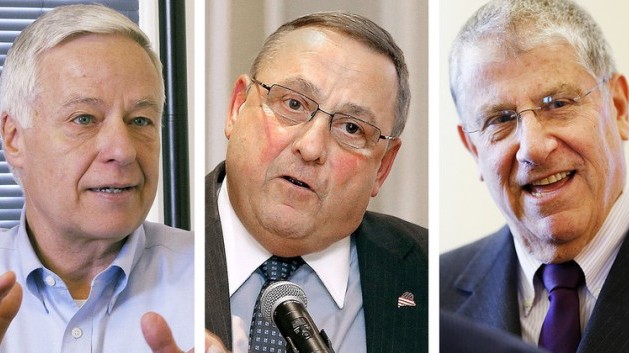
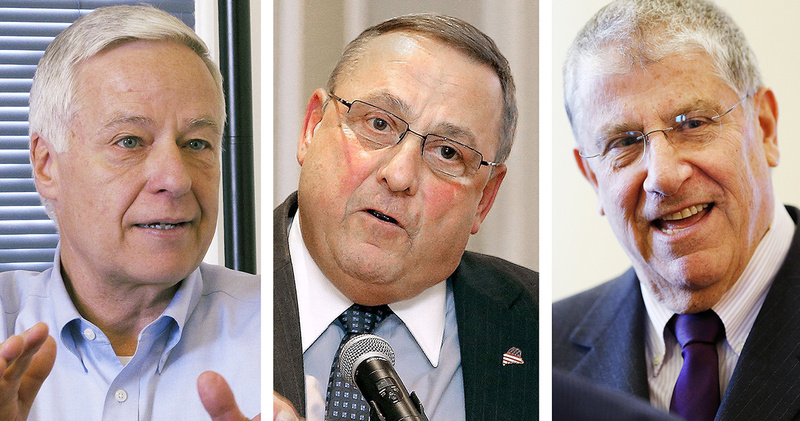
Incumbent Republican Gov. Paul LePage (center), Democrat Mike Michaud (left), and independent Eliot Cutler (right) vie for top spot in Maine governor race.

The Maine Governor race is the tenth article in what is a succession of articles offering expanded analysis for the ratings on our 2014 Governor Map Predictions. Incumbent Republican Governor Paul LePage will seek reelection in a three-way race, challenged by Democrat Rep. Mike Michaud and independent Eliot Cutler. It won’t be LePage’s first three-way dance, but what about his last?

In 2010, with political muscle from the Tea Party, Gov. Paul LePage won another three-way race for governor, barely defeating independent Eliot Cutler 38.1 to 36.4 percent, trailed by Democrat Libby Mitchell at a pathetic 19.1 percent. LePage will have to deal with Cutler again in 2014, but this time Democrats will have a chance to take the spot of lead challenger away from the independent.

On June 13, 2013, Rep. Mike Michaud announced that he had formed an exploratory committee, and was polling about 4 to 6 percent ahead of LePage, with Cutler at the end of the pack. A March poll found LePage ahead of both Cutler and Michaud, but prophetically found Michaud’s favorability rating second only to Sen. Susan Collins among Maine politicians. But Michaud has another element working to his advantage.

A big boon to Michaud will be the fact he represents the more conservative of Maine’s two congressional districts, which happens to be the biggest congressional district east of the Mississippi River. Polling has been difficult to rely upon in this race, because most of the early polling was conducted by Democratic polling firms, one of which was 4 points more Democrat on average in past surveys of races in the state.

Initially, I rated this race “Leans Democrat” for the simple fact LePage has been somewhat controversial and much of the excitement he had in 2010 seemed to be absent early in the cycle. Of course, that all changed with the implementation of ObamaCare in this state and across the country, but he is vulnerable, nonetheless. To be sure, Gov. LePage is polling better in recent surveys, no doubt due to ObamaCare, and is currently leading on the PPD average of polls by a small 1-point margin. However, in what I expect to be a very close race, it would be wise to dive deeper into the fundamentals.

Though Maine remains a Democratic-voting state on the federal level, Republicans have managed to nearly dominate the state’s national Senate elections over the past fifty years. Speaking of which, the state’s most popular politician — Sen. Susan Collins — just so happens to be on the ballot this cycle, and is currently crushing her opponent by more than 30 points in recent polling. Her coattails may have marginal yet significant influence in a very close race, because the electorate in the 2014 midterm elections will be older and more conservative.

Still, Maine is somewhat of a political outlier in American politics. With roughly 95.2 percent of the state’s population being white, conventional wisdom holds that the state should be dominated by the Republican Party. But, in addition to having the highest percentage of non-Hispanic whites out of any state in the nation, it also has the highest percentage of French Americans and current French speakers out of any state, most of whom are descendents from Quebecois immigrants who arrived between 1840 and 1930. Why does any of this matter?

Because Maine’s white population is filled with subgroups that remain a part of the shrinking white Democratic voter base, including French Catholics who make up the largest religious group in the state. While Romney barely lost the Catholic vote nationwide in 2012, he won the Irish and Italian Catholic voting blocs while losing the Hispanic and French voting blocs. LePage doesn’t have to worry a whole lot over the 1.3 percent population of Hispanics in Maine, but he does have to worry about the 23.9 percent of French and French-Canadian voters who live and vote in the state.

As far as party identification and Partisan Voting Index variables, Maine is expected to have a PVI of D+5, which is identical to 2010 but lower than 2012. This certainly points to a good outcome for the incumbent, but Gallup also found a slight rightward shift since 2012 in their annual Gallup party ID by state survey.

Worth noting, Maine voters have a history of accepting independent and third-party candidates more often than most other states, including Reform Party candidate Ross Perot and Maine’s other senator, independent Angus King. This has the very real potential to doom Michaud, and it is beginning to show up in polling.

Both LePage and Michaud have factors working in their favor, but it is pretty clear Michaud has lost at least some of his early steam. The political environment has moved from leaning to favoring to out-right favoring Republicans, though gubernatorial races are much more influenced by local politics than national elections, such as statewide elections for U.S. Senate.

Poll Date Sample LePage (R) Michaud (D) Cutler (I) Spread
PPD Average 3/31 – 4/25 39.5 38.5 17.0 LePage +1.0
Rasmussen Reports 4/23 – 4/25 830 LV 40 40 14 Tie
Pan Atlantic SMS 3/31 – 4/5 400 LV 39 37 20 LePage +2
Pan Atlantic SMS 11/25 – 11/30 400 LV 36 37 18 Michaud +1
PPP (D) 11/8 – 11/11 964 RV 36 38 15 Michaud +2
Critical Insights 9/27 – 9/30 600 LV 30 33 24 Michaud +3
MPRC (D) 9/8 – 9/10 652 LV 34 40 17 Michaud +6
PPP (D) 8/23 – 8/25 953 RV 35 39 18 Michaud +4
Pan Atlantic SMS 3/11 – 3/16 403 RV 34 23 26 LePage +8
PPP (D) 1/18 – 1/20 1268 RV 34 30 26 LePage +4

The Maine Governor race is the tenth

People's Pundit Daily
You have %%pigeonMeterAvailable%% free %%pigeonCopyPage%% remaining this month. Get unlimited access and support reader-funded, independent data journalism.

Start a 14-day free trial now. Pay later!

Start Trial