Widget Image
Follow PPD Social Media
Friday, January 16, 2026
HomeStandard Blog Whole Post (Page 972)

Generic BallotThe Democrats are maintaining a small lead over Republicans on the PPD average generic ballot, but if they don’t widen the margin they are headed for defeat.

A new Rasmussen Reports generic ballot survey found Democrats leading Republicans by just 2 points — 40 to 38 percent. However, because of the natural skew in favor of Democrats, the margin is still far too small to forecast any Democratic gains in the House, and the margin means even worse news for statewide Senate elections.

As we have previous examined, Republicans historically pick up more seats on a point-for-point basis, thus a Democratic lead of about 5 points, is likely to end up with a net 3-seat gain for the Democrats. However, a 5-point lead for Republicans will likely result in a net 15-seat gain for the GOP.

These predictions (which you can read here) are based upon a look at all 17 post-World War II midterm election results, which were compared to past generic congressional ballot results, and we drew some real conclusions all other variables excluded. There is an upside for Democrats, however.

Because of the massive Republican gains in 2010, there are fewer opportunities for the party in the 2014 midterms, thus Republican pickup opportunities are likely to be limited.

View PPD Generic Ballot Average Or Weekly Tracking Data From Rasmussen Reports Below

The latest national telephone survey of 3,500 Likely Voters was conducted by Rasmussen Reports from April 7 -April 13, 2014. The margin of sampling error for the survey is +/- 2 percentage points with a 95 percent level of confidence.

DATE DEM GOP
04-13-14 40% 38%
04-06-14 40% 39%
03-30-14 39% 38%
03-23-14 41% 37%
03-16-14 38% 39%
03-09-14 39% 39%
03-02-14 39% 36%
02-23-14 41% 37%
02-16-14 41% 37%
02-09-14 40% 38%
02-04-14 39% 40%
01-26-14 42% 37%
01-19-14 41% 35%
01-12-14 41% 37%
01-05-14 40% 38%
12-29-13 40% 40%
12-22-13 39% 42%
12-15-13 40% 40%
12-08-13 38% 43%
12-01-13 38% 43%
11-24-13 41% 40%
11-17-13 39% 40%
11-10-13 41% 39%
11-03-13 43% 37%
10-27-13 43% 37%
10-20-13 43% 36%
10-13-13 45% 38%
10-06-13 40% 40%
09-29-13 42% 38%
09-22-13 40% 37%
09-15-13 38% 38%
09-08-13 39% 39%
09-01-13 39% 37%
08-25-13 38% 39%
08-18-13 38% 38%
08-11-13 39% 39%
08-04-13 38% 41%
07-28-13 39% 38%
07-21-13 40% 38%
07-14-13 38% 39%
07-07-13 39% 40%
06-30-13 38% 39%
06-23-13 40% 39%
06-16-13 39% 39%
06-09-13 40% 38%
06-02-13 40% 40%
05-26-13 41% 39%
05-19-13 39% 40%
05-11-13 40% 38%
05-05-13 40% 38%
04-28-13 39% 40%
04-21-13 41% 39%
04-14-13 42% 38%
04-07-13 41% 38%
03-31-13 44% 37%
03-24-13 43% 38%
03-17-13 43% 38%
03-10-13 43% 40%
03-03-13 43% 40%
02-24-13 43% 38%
02-17-13 43% 37%
02-10-13 42% 39%
02-03-13 44% 38%
01-27-13 45% 37%
01-20-13 44% 39%
01-13-13 43% 37%
01-06-13 44% 38%
For complete Generic Ballot history, Click Here.

The Democrats are maintaining a small lead
The New York Fed’s manufacturing index grew far below expectations in April, while the cost of food and shelter increased above forecasts, two reports said Tuesday.

The New York Fed’s “Empire State” general business conditions index fell to 1.29 this month, which is the lowest measurement since November, down from 5.61 in the previous month of March. Economists polled by Reuters had expected a reading of 8.0, but a decline in new orders and a decline in inventories threw economists for a loop.

The measurement still remains in growth territory, albeit anemic growth, as any reading above zero represent growth. New orders tumbled to -2.77, down from 3.13 the month prior, while inventories plummeted to -3.06, down from 7.06.

The index measuring the number of employees actually rose to 8.16, up from 5.88, but the average employee workweek index dropped to 2.04, down from 4.71. The workweek decline in the survey of manufacturing plants in New York state, which is one of the earliest monthly forecasts to U.S. manufacturing, is troubling considering the Consumer Price Index released by the Labor Department.

The Labor Department said Tuesday that its Consumer Price Index increased 0.2 percent last month, up from 0.1 the month prior, and beating Wall Street’s expectations. Though the rise is fairly small overall, the increases in food and shelter costs were offset by a steep decline in gasoline prices.

Economists polled by Reuters had expected a mirrored 0.1 percent rise last month.

Food prices, alone, increased 0.4 percent in the month of March, after rising by the same degree in February. Economists are expecting even more increases in food costs. However, Gasoline prices dropped sharply by 1.7 percent, which was the third straight month in declines

Shelter costs increased by 0.3 percent in the Core CPI, which represented nearly two-thirds of the entire index gain. The cost of rents also increased 0.3 percent, as well as increases in the cost of medical care, apparel, used cars and trucks, airline fares and tobacco. However, recreation costs and the price of household furnishings ticked down.

In the 12 months through March, consumer prices increased 1.5 percent after rising 1.1 percent over the 12 months through February. It is unlike the Fed will look to move their interest rates despite the increase in the cost of products everyday Americans rely upon everyday, because even though Yellen claimed monetary policy is geared toward the worker, the reality is far different. The Fed looks at the index as a whole, not on a class basis.

A gauge of manufacturing in New York

Following a week of assaults on government buildings by armed, pro-Russia agitators, Ukraine is fighting back with a military campaign. Ukraine Acting President Oleksander Turchinov said they’ve kicked off their “anti-terrorist” in the northern Donetsk region, to push back pro-Russian forces.

Northern Donetsk has been the center of unrest since the Crimean referendum that saw 95 percent of voters support the Russian annexation of Crimea. Russian President Vladimir Putin has amassed large troop forces just outside the border, which special forces and intelligence operations underway to cause civil unrest in Ukraine.

Ukraine’s acting president had called an emergency meeting after armed, Russian-backed agitators seized control of government buildings in eastern Ukraine last Saturday. Armed men took control of police headquarters in Donetsk, an eastern Ukraine city that has been ground zero for pro-Russia “protests.” But this one event was just one of many, and over the past 10 days, there have been more than a dozen government offices assaulted 10 eastern Ukraine cities by pro-Russian forces.

Now, the results of these incursions are developing into a militarized response by the new, pro-West government.

“Overnight, an antiterrorist operation began in the north of Donetsk. But it will be phased, responsible and balanced. The purpose of the actions, I stress once again, is to protect the citizens of Ukraine,” Turchynov told Ukraine’s parliament.

Yesterday, President Obama spoke to Russian President Vladimir Putin. The White House said Obama told Putin Russia’s role and connection to the separatists’ activities in Ukraine were a “grave concern,” and Obama told Putin to tell the forces to vacate the government buildings they have seized.

“The president made clear that the diplomatic path was open and our preferred way ahead, but that Russia’s actions are neither consistent with or conducive to that,” the official said in an email. They also said that the conversation was requested by the Kremlin, not the United States.


Following a week of assaults on government

nebraska senate race

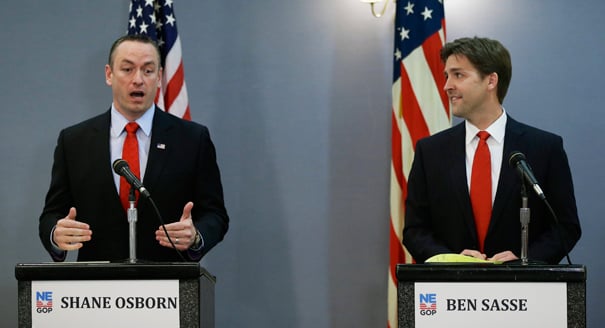
Nebraska Senate race hopefuls, former Republican State Treasurer Shane Osborn and Midland University President Ben Sasse participate in a debate in Omaha, Neb., Tuesday, March 11, 2014. (AP Photo/Nati Harnik)

Armed with an anti-Establishment sentiment, groups like The Club For Growth, Senate Conservatives Fund, and FreedomWorks are mounting challenges to incumbent GOP Senators deemed insufficiently conservative. For the mainstream media and the Washington political class, they are dangerous and threatening to the Republican Party’s chances at taking the Senate.

Despite the anti-incumbent rhetoric, incumbents rarely lose elections. And memories of Todd Akin and Richard Mourdock — two very winnable Senate seats lost to careless if not stupid comments — still fester in the back of Republican primary voters’ minds. But the Nebraska Senate race is one race in which primary voters are in a position to choose whomever they want as their next senator.

Both leading Republican hopefuls Shane Osborn and Ben Sasse are odds-on favorites to win against their Democratic challenger in the Nebraska Senate race. On our 2014 Senate Map Predictions, the general election is rated “Safe Republican.” However, Sasse, 42, who has been the president of Midland University, a small Lutheran school in Fremont since Dec. of 2010, is backed by the aforementioned conservative groups. Recently, FreedomWorks revoked their endorsement of Shane Osborne, opting instead to back Sasse.

“Both Osborn and Sasse are great people, and this was not a decision taken lightly,” FreedomWorks president Matt Kibbe said in an email.

“The question at the heart of this decision is, who would caucus with the Freedom Caucus, and who would fall in line with the establishment? At this point, it is clear that Shane Osborn formed allegiances with Mitch McConnell and the K Street lobbying class.”

But, unlike many other races across the nation, Sasse runs stronger among both GOP primary voters and all voters in the state of Nebraska, according to a recent Rasmussen Reports poll. And although Senate Majority Leader Mitch McConnell may or may not personally favor Osborne, the NRSC — National Republican Senatorial Committee — will “plan to support the eventual nominee,” Bill Murphy from the NRSC wrote in an email.

“Our only role in the Nebraska Senate race is to be a resource for ALL of the candidates,” he said in an email to PPD.

Though the party fracture is often overblown, there are very real divisions in states such as Georgia, Louisiana, Alaska and North Carolina. But with the GOP’s chances of taking control of Senate gaining by the day, both the national political environment and the internal state dynamics are making it more and more possible for Republican primary voters to not have to settle on who they believe — or are told — is the most electable.

PPD still currently rates the GOP Nebraska Senate primary a “Toss-Up” — which you can review here — though the race is beginning to show signs of moving in Ben Sasse’s favor.

Armed with an anti-Establishment sentiment, groups like

After a week of selling off, Wall Street is back in the green in large part due to Citigroup earning and Commerce Department data from retail sales.

The Commerce Department said Monday retail sales in March rose 1.1 percent in the month of March, which was its largest increase since September 2012, beating Wall Street’s estimates of 0.8 percent. Excluding the auto segment, sales rose 0.7 percent, beating estimates of a 0.5 percent gain.

While JPMorgan may have firm-specific problems, which we examined this past weekend, Citigroup posted better-than-expected first-quarter, after releasing a plan that failed the Federal Reserve’s stress tests.


After a week of selling off, Wall

retail sales

(Photo: REUTERS)

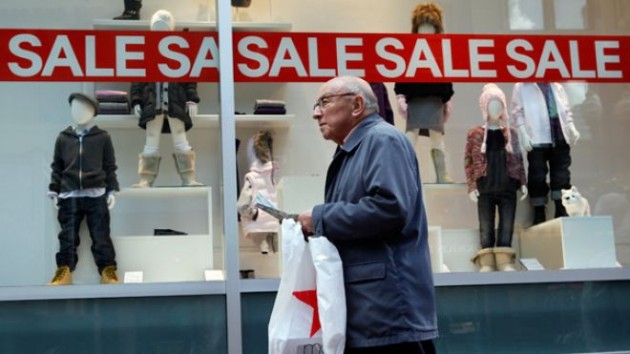
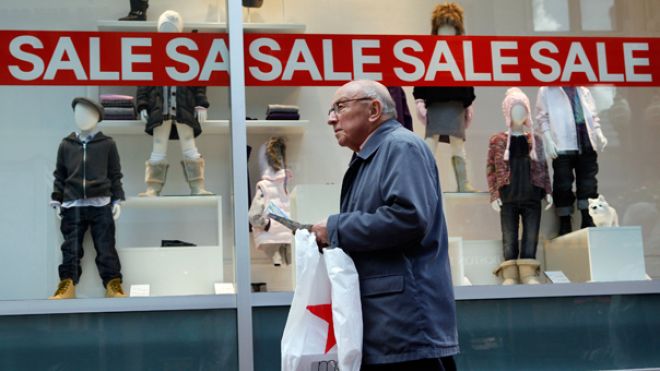
Retail sales in the United States posted their largest increase since 2012 in March, according to the Commerce Department report released on Monday. Retail sales gained 1.1 percent, with receipts making gains in almost every single category.

Retail sales account for a third of consumer spending. They rose by a revised 0.7 percent in the month of February after an initial report of 0.3 percent, but beat economists’ expectations in March. Those polled by Reuters had forecast retail sales would gain just 0.8 percent last month.

In core sales, which excludes automobiles, gasoline, building materials and food services, increases were 0.8 percent in the month of March.

Because of the two consecutive months of relatively small gains, experts believed a drop in these core sales in suggested consumer spending was slowing down dramatically. In the fourth quarter they gained 3.3 percent, in total.

Sales at building materials and garden equipment stores shot up 1.8 percent, which was the largest gain in eight months.

Receipts at electronics and appliance stores were among those that actually fell, losing 1.6 percent. Other included a drop in sales at gasoline stations, which fell 1.3 percent. However, excluding gasoline, retail sales rose by 1.4 percent, which was the biggest rise in four years.

Sales at furniture stores increased 1.0 percent. Receipts at clothing stores climbed 1.0 percent as well. There were also gains in receipts at sporting goods shops, restaurants and nonstore retailers.

Retail sales in the United States posted

UPDATE: Three people are dead after shootings at two Jewish Centers in the Kansas City area, authorities say, while a person of interest has been taken into custody.

DEVELOPING: One person reportedly has been killed in two separate shootings at two known Jewish centers in Kansas.

Officials who spoke to Fox 4 said that one person was shot and subsequently killed at the Jewish Community Center in Overland Park. Another person, reportedly, was injured in a nearby shooting at the Village Shalom, which is an assisted living facility.

The Jewish Community Center is on lockdown and it is not yet known where the shooter is, Fox 4 reports.

“My son and I were walking into the Jewish Community Center this afternoon for an umpire clinic, around the westside and all of the sudden we heard a gunshot, a pretty loud gunshot,” witness Mike Metcalf called Fox 4. “I turned to look to my right and I can see a man standing outside a car with a shotgun, what to me looked like a shotgun, and there was somebody laying on the ground.”

Officials who spoke to Fox 4 said

On “Justice” Saturday night, Judge Jeanine Pirro tears in to President Obama for what she called a “relentless affront to the core values of this republic,” truth and justice. The entire administration laughs at the American people and the idea they could be held accountable for their numerous lies over Benghazi or the IRS scandal, Pirro says.

Judge Jeanine rips CIA Deputy Director Mike Morell for lying to Congress about changing the Benghazi talking points. New revelations and documents show Morell knew he wasn’t telling a congressional committee the truth when he gave the fabricated video story as a reason for altering the talking points. The deputy director claimed that removing all mention of radical Islamic terrorist was a deliberate attempt not to stoke the fires in the Islamic world, which had already been engaged in “numerous protests and demonstrations because of the video.”

But none of that was ever true, and Deputy Director Morell knew that. “What are you stupid too?” Pirro says, suggesting that Morell was not only a liar and a political hack, but also naive for thinking the removal of a few words like Islamic terrorists will suddenly result in radical Islamic terrorosts warming up to America.

On "Justice" Saturday night, Judge Jeanine Pirro

common core standards

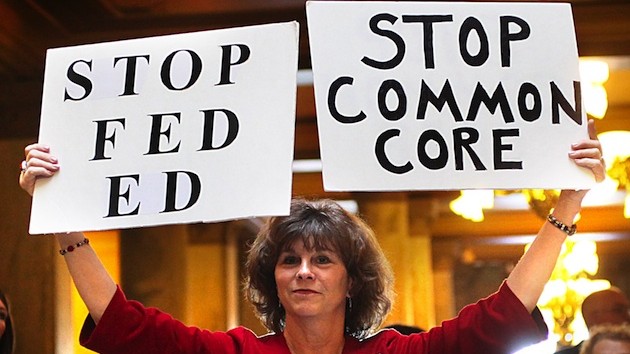
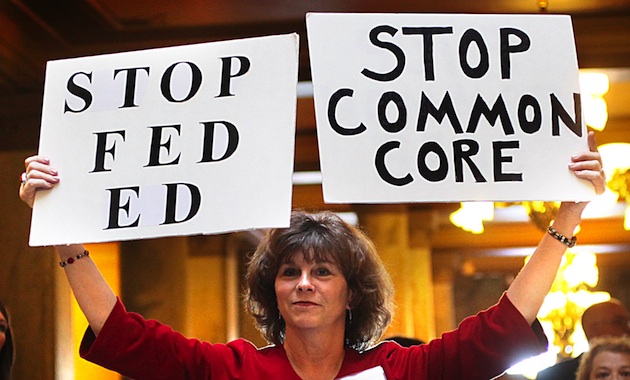
In this Jan. 16, 2013 file photo, concerned grandparent Sue Lile, of Carmel, Ind., shows her opposition to Common Core standards during a rally at the State House rotunda in Indianapolis. Some states are pushing back against the new set of uniform benchmarks for reading, writing and math that replace a hodgepodge of of goals that had varied wildly from state to state and are being widely implemented this school year in most states. (AP Photo/The Star, Frank Espich)

Gallup recently released a survey of public school parents that found a startling two-thirds of them have not even heard of the controversial Common Core standards. While the findings show American parents’ views toward the program tilt slightly positive — 35 percent say they have at least somewhat positive views to 28 percent who say at least somewhat negative — an even larger amount say they haven’t heard of it or don’t know enough to form an opinion.

Shamefully, 37 percent either say they haven’t heard enough about Common Core standards to form an opinion or haven’t even heard about it, including 35 percent who say they haven’t even heard about it. That’s an alarming amount of parent delinquency in America, with enough blame to be shared among teachers, politicians and parents.

Even worse still, among those who say they have heard at least a little about the Common Core standards, or in other words,”I don’t really know what it is but I guess I’ll give an answer to the pollster,” responses tilted positive by a 52 to 42 percent margin. There is one piece of data that stands out as an unequivocal sign the centralized federal program faces enormous challenges ahead, however.

Even though the vast majority of parents either know nothing or just a little about the criteria the federal government has mandated be taught to their children, among parents actually familiar with the standards, just 13 percent view them as very positive, while 19 percent view them very negative. So, who are these high information parents?

The answer is contrary to typical media narratives. Those who are most familiar with Common Core standards are Republican parents, 42 percent whom, view the program in a negative light. However, even among Democrats who are familiar with the standards, nearly a quarter (23 percent) say they view them negative.

Interestingly, whether or not parents are residing in one of the 44 states that have already begun to adopt Common Core criteria, has little to no impact. Sadly, as a testament to the severity of the problem of low-information American parents, even if public school parents are unfamiliar with the standards, they somehow still give relatively positive ratings to the key components of the law. Or, in other words, many American parents are simply unwilling to do their homework and are filling in the blank in their own parental tests.

“Parents in states that have already implemented Common Core are only slightly more familiar with it than those in other states, and their overall views toward the standards are about the same,” Gallup’s Mitchell Ogisi and Lydia Saad said.

There should be little wonder why or how our school systems and children consistently rank among the bottom worldwide.

Gallup recently released a survey of public

jamie dimon

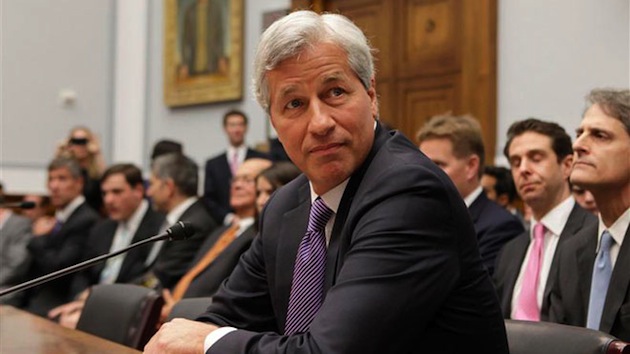
JP Morgan Chase CEO Jamie Dimon (Photo: REUTERS)

The markets learned last week that JPMorgan Chase CEO Jamie Dimon saw his total compensation fall a whopping 37 percent to $11.8 million in 2013, and the largest U.S. bank by assets reported weaker-than-expected first-quarter earnings and disappointing sales on Friday.

Whether or not JP Morgan’s misfortunes are confined to the firm alone will be revealed this week when a slew of bank earnings are released. Dimon said the company’s legal issues and a need to comply with new, burdensome regulations are to blame, one of which all U.S. banks will have to grapple with.

In addition to the 8,000 workers tasked to implement the firm’s new anti-money laundering program, the company will have added 13,000 employees between 2012 and 2014 just to comply with a myriad of regulatory demands. The new positions had to offset somehow, and according to its securities filings, JPMorgan cut more than 8,900 employees over the past 12 months.

In large part due to high legal costs associated numerous financial crisis legal issues, the firm reported a net income of $5.3 billion, or $1.28 a share. The reported income was down from $6.5 billion, or $1.59 last year, and below the $1.40 a share experts had forecast in a Thomson Reuters poll.

Revenue fell a whole 8 percent to $23.9 billion, down from $25.1 billion last year and also missing Wall Street’s estimate of $24.53 billion. While Dimon cited new regulations, much of the legal cost is confined to JPMorgan. JPMorgan was smacked with $8.6 billion in after-tax legal expenses in the year 2013 solely due to mortgage issues.

“The most painful, difficult and nerve-wracking experience that I have ever dealt with professionally was trying to resolve the legal issues we had this past year,” Dimon said in his 2013 letter to shareholders that was just released Wednesday of last week.

Wall Street will be watching the impact of new Wall Street regulations on other big U.S. banks, with an eye toward the Obama administration’s propensity to target specific companies in a post-crisis era. Dimon, consequently, was one of the few heads who were actually forced by Uncle Sam to take the bailout plan, though the company was certainly not clean from toxic debt. Dimon just chose to deal with that debt and, now the legal issues, in a different way.

“We thought the best option, perhaps the only sensible option — for our company, our clients and our shareholders — was to acknowledge our issues and settle as much as we could all at once, albeit at a high price,” Dimon said.

Even though JPMorgan — the first of the banks to release their earnings report — missed expectations, Wells Fargo beat Wall Street’s expectations. Bank of America, Citigroup, Morgan Stanley and Goldman Sachs, are among others who are set to release data during the upcoming market week.

Several other economic reports are due out next week, including retail sales on Monday, the consumer price index on Tuesday, as well as housing starts and industrial production on Thursday. Markets are closed on Friday for the Good Friday holiday.

Whether or not JP Morgan's misfortunes are

People's Pundit Daily
You have %%pigeonMeterAvailable%% free %%pigeonCopyPage%% remaining this month. Get unlimited access and support reader-funded, independent data journalism.

Start a 14-day free trial now. Pay later!

Start Trial