Widget Image
Follow PPD Social Media
Friday, January 16, 2026
HomeStandard Blog Whole Post (Page 976)

nc voter fraud

If Republicans want to stopp getting hosed, then it might be wise to turn off the spigots. A good place to start would be to acknowledge that the massive amount of voter fraud outlined in an audit by the North Carolina Elections Oversight Committee, is the Democrat Party’s election strategy, not the exception.

In a December article that went viral, we highlighted instances of mass voter fraud in Ohio, then examined the numbers to demonstrate Obama’s 2 percent state margin over Mitt Romney in the 2012 presidential election, was erased. Now, a report presented Wednesday by Elections Director Kim Strach to the Joint Legislative Elections Oversight Committee easily explains how and why North Carolina was such a nailbiter on Election Day, though Romney still flipped the traditionally-Republican Tar Heel State in the end.

The report found 13,416 deceased voters were on voter rolls in October of 2013. But because “dead voter voting” is an old trick — though for Democrats every vote counts — a new method of disenfranchising legal voters has emerged.

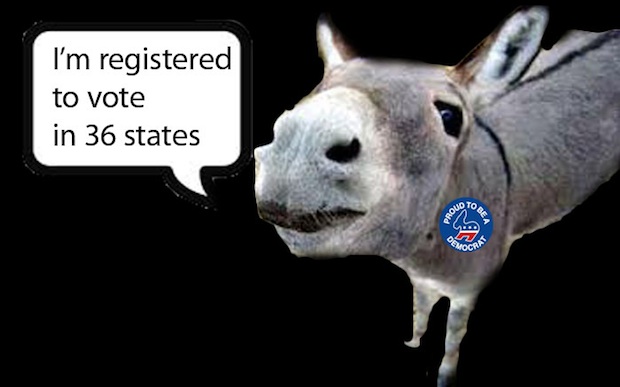
Voting in multiple states, as previously reported by PPD and others, such as John Fund at National Review Online, is relatively easy and Democrats target university students frequently to carry it out. Universities are home only some of the time to thousands of left-leaning college students, who are encouraged to vote both in their home-state and in the state the university is located.

Project Veritas attempted to highlight this during the election cycle. You may or may not remember this video, in which Stephanie Caballero, the director for Obama’s Organizing for America Houston office, told an undercover Project Veritas reporter how to vote in both Texas and the crucial swing state of Florida via absentee ballot.

So, that’s pretty much how it works, and it works well. Is there any wonder why Democrats were running up and down the streets of Charlotte, NC, during the 2012 Democratic Convention signing up students, or conducting  “voter registration” drives at the University of North Carolina? Let’s see how successful they were, keeping in mind these numbers are significantly lower than what is really happening, which I will address in a moment. The entire audit report is below, but here are a few caveats.

  • A total of 35,750 voters with matching first and last names and date of birth were registered in North Carolina and another state, and voted in both states in the 2012 general election.
  • Another 155,692 registered North Carolina voters whose first and last names, dates of birth and last four digits of their Social Security number match those of voters registered in other states, but who most recently registered or voted elsewhere.

Now, of course, all of these names, addresses and social security numbers cannot be from students, and they aren’t. However, the exploitation of influential students, many of which will most-assuredly be sorry if and when the North Carolina Secretary of State’s office decides to press charges, just as Ohio’s Secretary of State Jon Husted has done, is but one tactic Democrats employ.

While voter ID laws are typically the focus of this debate, which are naturally met by false charges of racism from Democrats, the truth is that this is a much, much bigger and nationwide problem.

A total of 28 states participated in the crosscheck, but 22 states have refused to participate, meaning the NC voter fraud numbers, alone, are even higher. Because large population states, such as California, New York and Florida will not crosscheck, it is statistically likely that these numbers are far less than what is truly occurring nationwide. Leaving out missing data from 22 other states renders a report that cannot even capture the depth of this problem, a problem Democrats insist doesn’t even exist.

Even more disgusting than Democrat politicians pretending massive voter fraud doesn’t exist, is Democrat reporters masquerading as journalists pretending massive voter fraud doesn’t exist. In an article contributed to the “Staff” at WNCN, the audit report and severity of voter fraud was shamelessly downplayed.

“In 2012, nearly 7 million ballots were cast in the general and two primary elections. Of those 6,947,317 ballots, the state Board of Elections said 121 alleged cases of voter fraud were referred to the appropriate district attorney’s office,” the “Staff” wrote.

“That means of the nearly 7 million votes cast, voter fraud accounted for 0.00174 percent of the ballots.”

Almost as ridiculous as their math skills, is their insinuation that a certain amount of voter fraud is acceptable. First, because 121 cases are being prosecuted, only means 121 cases are provable. When you are busing illegal immigrants to vote in place of the dead or otherwise valid voters who chose not to participate — both of which, we saw in Ohio using Somalis — it is wholly impossible to prosecute after the fact. Second, you cannot possibly draw a definitive conclusion about quantity when data is missing from 22 states.

But lastly, and most importantly, Barack Obama came within 90,000 votes of winning North Carolina, barely won the neighboring state of Virginia, eked out Florida by only 70,000 or so votes, and likely stole Ohio as previously investigated by People’s Pundit Daily. Add up these numbers, and suddenly they aren’t so insignificant.

Look, the Republican Party has some real challenges in desperate need of addressing. And it is always a mistake for conservatives and other Republican voters to simply blame voter fraud for losing elections. But massive voter fraud cannot be tolerated in a so-called “free” society, from the right or left. It is just sad the Republican Party is apparently too inept to take this to the American people and, if they cannot, they can forget finding the competence to begin addressing their other challenges.

If Republicans want to stopped getting hosed,
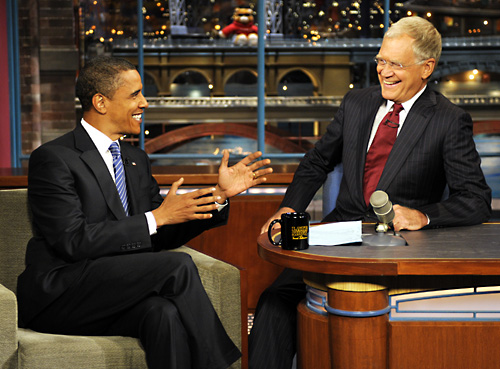
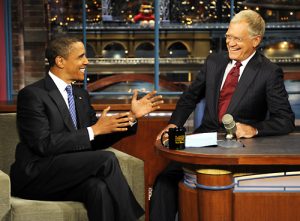
david letterman retiring“Late Show” host David Letterman announced his plans to retire “sometime next year,” CBS announced Thursday.

Letterman, 66, is now a famous comedian who began his late-night career in 1982. He became the NBC “Late Night” host and made the announcement during a taping of Thursday night’s show, CBS said.

“For 21 years, David Letterman has graced our Network’s air in late night with wit, gravitas and brilliance unique in the history of our medium,” CBS Corporation President and CEO Leslie Moonves said in a statement. “During that time, Dave has given television audiences thousands of hours of comedic entertainment, the sharpest interviews in late night, and brilliant moments of candor and perspective around national events.

Letterman told the audience that his departure will be “at least a year or so” from now when his current contract expires.

With nearly 32 years under his belt, Letterman has the longest tenure of any late-night talk show host in U.S. television history. When in 1992 NBC made the heavy decision to replace “Tonight Show” host Johnny Carson with Jay Leno, who was widely considered his only competition for the gig, Letterman moved on to CBS. At his new home, the “Late Show” on CBS was a serious competitor. However, the more liberal Letterman has consistently run behind the more conservative Leno on “The Tonight Show” in ratings.

Leno, too, retired from “The Tonight Show” earlier this year, opening the door for “Late Night” host Jimmy Fallon to take over what has become the gold-standard of late-night TV.

While others are speculating whether or not Leno’s decision weighed on Letterman’s, in an interview with Howard Stern in back January, Letterman claimed it would have no impact on how much longer he might stay as host of “Late Show.”

“I would do it forever if it were up to me,” said Letterman, before adding a wry aside: “Sometimes, it isn’t up to me.”

Who May Replaces Letterman is the new guessing game, because the NBC line-up has already taken form. A potential name thrown around as a likely heir is Craig Ferguson, host of “The Late Late Show,” which follows Letterman.

With nearly 32 years under his belt,

Growth in the U.S. service sector growth picked up in March, increasing on modestly along with the employment index ahead of the jobs data, an industry report showed on Thursday.

The Institute for Supply Management reported its services sector index rose to 53.1 in March, but came in under expectations. Economists polled by Reuters forecasted a 53.5 measurement, but reality missed the mark, even though it was still above the February reading of 51.6.

The February report was the worst read for the index since February of 2010 and many blamed the winter weather for terribly slow business activity.

The March measurement marked the 51st straight month the index was above 50. Readings above 50 point to expansion, while below 50 suggests contraction. Though that is a welcomed piece of data, low wage paying jobs are by majority those produced in the Obamaeconomy.

The pace of growth was far below the seven-year high of 57.9 the index reached in August. The employment index rose to 53.6 from 47.5 in February, which had been the lowest read for the subindex since March 2010.

The gauge of business activity fell for two consecutive months, dropping to 53.4 from 54.6 in February, while analysts were looking for 55.2.

The new orders index rose to 53.4 from 51.3, which was its third straight monthly increase. Still, markets are skeptical of tomorrow’s job report.

The Dow Jones Industrial Average fell 0.45 point, or 0.00 percent to 16572. The S&P 500 fell 2.1 points, or 0.11 percent to 1889, while the Nasdaq Composite decreased 38.7 points, or 0.91 percent to 4238.

The broad S&P 500 clocked yet another record high on Wednesday, fueled by relatively positive data on private-sector employment from payroll processor ADP.

Growth in the U.S. service sector growth

A whopping 9 out of the top 10 states losing population are Democrat-led bastions or recently Democrat-leaning states on the presidential level. What’s even more damning to the Democratic Party, that is, if Republicans were half-way competent enough to communicate the indictment, is that whatever positive trends can be observed in these states occurred after the Republican rout in 2010.

For instance, under the leadership of Gov. John Kasich, Ohio now leads the Midwest in job creation and is number five in the nation. With a 6.5 percent unemployment rate, down from over 10 percent under Democratic Gov. Ted Strickland, the Buckeye State is beginning to show improvement and again offer individuals and business incentives to stay in-state. But, again, that wasn’t the case in recent years.

Michigan, too, now under Republican Gov. Rick Snyder, actually saw a population increase for the first time this decade from 2012 to 2013, as net migration slowed to about 28,500, down from more than 33,000 in 2011-2012. High taxes on a shrinking tax base, fueled by a decades-long need to fund bankruptcy-inducing union pensions, had pushed once-productive citizens from the city that was once called the “Arsenal of Democracy.”

Gov. Rick Snyder is favored to win reelection come November on our 2014 Governor Map Predictions, though he could lose some of his party allies in the legislature.

Here are the top 10 states “Americans are fleeing,” according to the list compiled by Real Clear Politics. Forbes compiled a list, as well, and although they had the usual actors, they were in a slightly different order. I have tweaked the RCP descriptions a bit, but would still like to tip my hat to them. They did a great job in the magazine.

  1. New York, as usual, was a wasteland in the analysis. The Empire State has led the nation in domestic out-migration since the late 1990s. The New York Post reported in 2011 that “62 percent of New Yorkers planning to leave cited economic factors — including cost of living (30 percent), taxes (19 percent) and the job environment (10 percent) — as the main reasons.” Obviously, aside from former GOP Gov. George Pataki some years ago, and a miraculous turnaround when he shared power with Republican Mayor Rudy Giuliani, the state is a liberal mecca. 2012-2013 state-to-state net domestic migration: -104,470
  2. According to IllinoisPolicy.org, residents have left the state at a rate of one person every 10 minutes for the last 15 years. Taxes, corruption and housing prices, all have had Illinois losing on a net basis for years, but more than 806,000 people made up their out-migration between 1995 and 2009. Perhaps, Illinois voters are sick of the Democratic disaster, because the Illinois governor race is favorable to Republican nominee Bruce Rauner in November. 2012-2013 state-to-state net domestic migration: – 67,313
  3. According to the Los Angeles Times, the decade measured by the most recent census was the first in a century in which the majority of Californians were native-born, reflecting the state’s transition from a place many Americans are drawn to into a place many prefer to leave. Driven away by high home prices during the housing bubble, enormously high taxes of all kinds, and a deteriorating jobs market, Californians have steadily been leaving for other states for most of the last decade. And who is the biggest benefactor of California’s former most-productive citizens? The answer, for several years, has been the largest Republican state in the union — Texas. GOP nominee Greg Abbott is highly favored to win the Texas governor race in November. 2012-2013 state-to-state net domestic migration: – 49,259
  4. According to a study using data collected by the United Van Lines, 64 percent more people left New Jersey than moved there in 2012-2013. The state has preposterously high property taxes, state and local taxes and, prior to Governor Chris Christie, was dominated by Democratic rule. Following his big, historic reelection win, the blue machine had to find something to stop the governor, even if they cannot tie any wrongdoing to him. Though the Ft. Lee closures were gross abuses of power by staffers, as a long-time resident of the Garden State with friends and family still calling it home, I take this personally. Then again, I suppose traffic is more important than bettering people’s lives. 2012-2013 state-to-state net domestic migration: – 45,035
  5. The Keystone State’s population grew a bit in 2012-2013 to 12,773,801, but growth was fueled by foreign immigration to the larger cities and positive birth rates. While net population increased by about 9,300, 30,718, more native Pennsylvanians chose to leave for other states. It will be a battleground for incumbent Republican Gov. Tom Corbet in Nov., whom we view as the most vulnerable GOP incumbent on our 2014 Governor Map Predictions2012-2013 state-to-state net domestic migration: – 30,718
  6. Michigan saw a population increase for the first time this decade in 2012-2013 (a 0.1% gain), as the net outflow migration slowed to about 28,500, down from more than 33,000 in 2011-2012. Michigan remains the nation’s ninth most-populous state for now, but if current trends continue, North Carolina will bump it to 10th place sometime next year. 2012-2013 state-to-state net domestic migration: – 28,539
  7. A local NBC affiliate reports that “three-fourths of Ohio’s counties had a net loss of residents because of people moving out” of the state. Hocking County lost the most people, with a drop of 2.34 percent, while Franklin County (Columbus) maintained healthy growth, actually increasing its population by 4 percent over the last three years. 2012-2013 state-to-state net domestic migration: – 23,094
  8. Despite improving economic indicators, Blue Connecticut has recovered “not quite half” of the jobs lost to the 2008 recession, the Hartford Courant reports. With the jobs picture recovering, it is not surprising that about 17,000 more citizens chose to leave the Constitution State than move there in 2013. We tend to think of Connecticut as a Democratic stronghold, because of Republican performance on the presidential level. Yet, Republican governors held the governor’s office for 16 years in a row prior to Malloy winning in 2010, though they are unable to truly practice conservative governance thanks to Hartford. Voters in the Nutmeg State, however, have been more than willing to turn to the Republican Party on a gubernatorial basis, because perhaps, they like checks and balances on total liberal government. 2012-2013 state-to-state net domestic migration: -17,224
  9. Kansas is the only Republican-dominated state on the list, which saw an outward migration net loss of 12,557 people in 2012-2013. This loss is up from just under 6,000 the previous year. However, even with this increase, the state’s high birth rate and foreign immigration was enough to keep the overall population growth rate positive. According to the Kansas City Star, Sedgwick County (Wichita) alone had 25,480 births (and 13,226 deaths) during 2012-2013, counterbalancing those lost to outward domestic migration. This is a testament to the basic value that holds traditional family in high regard. 2012-2013 state-to-state net domestic migration: -12,557
  10. New Mexico kicks off the list of states experiencing the highest negative net domestic migration. The latest one-year tally from the Census Bureau, compiled here by William H. Frey of the Brookings Institution, shows that approximately 10,000 more people moved out of the Land of Enchantment than entered it in the calendar year ending July 1, 2013. 2012-2013 state-to-state net domestic migration: -10,526

A whopping 9 out of the top

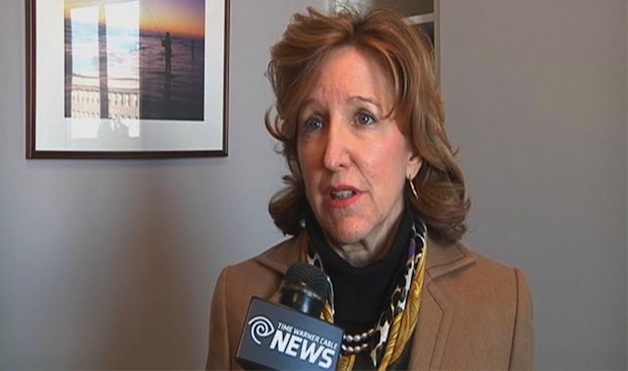
It is becoming increasingly clear from the latest round of polling that Democrat incumbent Senator Kay Hagan is in deep, deep trouble. While we are holding our election rating at a “Toss-Up” for now, we are warming up to the reality that Hagan may just be one Republican primary away from certain defeat come November.

Since Rasmussen Reports released their first survey showing Hagan trailing the two Republican challengers polled, Tillis by 7 points and Brannon by 4 points, respectively, partisan polling from American Insights (R) and PPP (D) had suggested the race was moving back toward the incumbent ever-so slightly. However, a new Time Warner Cable News poll conducted by SurveyUSA during the final week of March, found Hagan behind every single declared Republican candidate between 1 and 4 points.

Worth noting, there aren’t many pollsters out there who perform as well as SurveyUSA, who is currently enjoying a stellar 1.25 rating on a scale from 1 (most accurate) to 4 (least accurate), as assigned by PPD. And, although Senator Hagan isn’t exactly trailing by a rather wide margin, there are several danger signs pointing to the status of the race moving from the “Toss-Up” category to “Leans Republican.”

First, if SurveyUSA says her approval rating is an abysmal 38 percent, then that’s roughly where it is, which is treading in territory that will make it nearly impossible for her to find a path to victory. For Hagan to have a snowball’s chance in you know where, she must energize the base in Raleigh and Charlotte, but that simply won’t happen if her approval ratings in those regions remain where they are today. She enjoys her highest approval in Raleigh, where only 42 percent approve of her job performance. In Charlotte, the scene of the 2012 Democratic convention, just 37 percent agree.

Speaker Thom Tillis has posted some serious fundraising numbers as of late, but the lesser-funded Heather Grant is ahead of Hagan with slightly more support than Tillis. Tillis is a controversial figure to be sure, but the fact that a lesser-known candidate — who has far more potential to grow support as voters become more familiar with her — is ahead in the mid 40s, is a real problem for the incumbent.

Remember, North Carolina is one of just two states that Mitt Romney flipped back to the Republican side in 2012, and Hagan will almost certainly not have an electorate as Democrat-friendly. Aside from the usual stipulation around midterm electorates being older and whiter, Census data show increases in eligible voting population among demographics who tend to vote Democrat (i.e. black voters) from 2010 to 2014, aren’t significant enough to expect the 2014 midterm electorate will resemble anything other than a slightly less Republican electorate than in 2010.

Hagan has been an impressive fundraiser, but she is just a first-term senator who isn’t even well-known throughout the state and, among those who are familiar with her, she isn’t very popular.

We will continue to watch this race very closely with a skeptical eye on pollsters who release findings that do not comport with the fundamentals of the race. As of now, as previously stated, we will hold the “Toss-Up” rating on our 2014 Senate Map Predictions, and air on the side of caution. However, that can and likely will change as the 2014 midterm elections get underway.

The North Carolina Senate race is widely viewed by forecasters to be a bellwether, and we would agree. If we are correct, then we shouldn’t at all be surprised the race is moving toward favoring the Republican Party. We will certainly know more after the Republican primary.

It is becoming increasingly clear from the

supreme courtIn a 5-4 vote, the Supreme Court justices Wednesday overturned the aggregate limits on campaign contributions to candidates, political parties and political action committees, ruling that Americans have a right to give the legal maximum to candidates for Congress and president. Now, individual citizens will no longer have to worry that they will violate the law when they bump up against a limit on all contributions, which was set at $123,200 for 2013 and 2014. That includes a separate $48,600 cap on contributions to candidates.

Chief Justice John Roberts wrote in the majority opinion for McCutcheon v. FEC:

To put it in the simplest terms, the aggregate limits prohibit an individual from fully contributing to the primary and general election campaigns of ten or more candidates, even if all contributions fall within the base limits Congress views as adequate to protect against corruption. The individual may give up to $5,200 each to nine candidates, but the aggregate limits constitute an outright ban on further contributions to any other candidate (beyond the additional $1,800 that may be spent before reaching the $48,600 aggregate limit). At that point, the limits deny the individual all ability to exercise his expressive and associational rights by contributing to someone who will advocate for his policy preferences. A donor must limit the number of candidates he supports, and may have to choose which of several policy concerns he will advance—clear First Amendment harms that the dissent never acknowledges.

It is no answer to say that the individual can simply contribute less money to more people. To require one person to contribute at lower levels than others because he wants to support more candidates or causes is to impose a special burden on broader participation in the democratic process.

Their decision does not overturn limits on individual contributions to candidates for president or Congress, which are currently set at $2,600 an election.

Justice Clarence Thomas agreed with the ruling of the case, but authored a separate decision that he would have gone a step further, wiping away all contribution limits.

Justice Stephen Breyer, writing for the liberal dissenters, took the unusual and somewhat dramatic step of reading a summary of his opinion from the bench.

Congress enacted the limits in the wake of Watergate-era abuses to discourage big contributors from trying to buy votes with their donations and to restore public confidence in the campaign finance system. However, Democrats hoped to protect the status quo because their donor base — including unions and trial attorney organizations — have a unique ability to skirt the rules, placing Republicans at a fundraising disadvantage they have had to deal with for decades.

Yet in a series of rulings in recent years, the Roberts court has struck down provisions of federal law aimed at limiting the influence of individual donors, claiming them to be what they are to many Americans, an unconstitutional violation on our First Amendment right to free speech.

In 2010, in another 5 to 4 decision in the Citizens United case, the court ruled that corporations and labor unions are equally free to spend as much as they want on campaign advocacy, as long as it is independent of candidates and their campaigns. That decision did not affect contribution limits to individual candidates, political parties and political action committees.

Case Background

Republican activist Shaun McCutcheon of Hoover, Ala., the national Republican party and Senate GOP leader Mitch McConnell of Kentucky challenged the overall limits on what contributors may give in a two-year federal election cycle. The total is $123,200, including a separate $48,600 cap on contributions to candidates, for 2013 and 2014.

Limits on individual contributions, which are currently $2,600 per election to candidates in Congress, were not at issue in the case.

McCutcheon gave the symbolically significant $1,776 to 15 candidates for Congress and wanted to give the same amount to 12 others. But doing so would have put him in violation of the cap.

Nearly 650 donors contributed the maximum amount to candidates, PACs and parties in the last election cycle, according to the Center for Responsive Politics. Though it is unclear exactly what the impact of the ruling will be on future election cycles, it is likely that the influence of PACs will be reduced to some degree. No longer will individuals have to donate to PACs who support their candidate if they would rather donate directly to a candidate, themselves.

The court did not heed warnings from Solicitor General Donald Verrilli Jr. and advocates of campaign finance limits that donors would be able to funnel large amounts of money to a favored candidate in the absence of the overall limit.

The Republicans also called on the court to abandon its practice over nearly 40 years of evaluating limits on contributions less skeptically than restrictions on spending.

The differing levels of scrutiny have allowed the court to uphold most contribution limits, because of the potential for corruption in large direct donations to candidates. At the same time, the court has found that independent spending does not pose the same risk of corruption and has applied a higher level of scrutiny to laws that seek to limit spending.

In a 5-4 vote, the Supreme Court

Wall Street held steady after payroll processor ADP said the U.S. private sector added 191,000 jobs in March, slightly missing economists’ forecasts for a gain of 195,000.

The privately conducted jobs report is a prelude to the more closely-watched and market-influencing government jobs report, which is scheduled to be released by the Bureau of Labor Statistics on Friday. Economists forecast the U.S. economy added 195,000 jobs in March, increasing slightly from 175,000 in February.

The unemployment rate adjusted to exclude those workers who have dropped out of the labor force, is expected to tick down to 6.6 percent from 6.7 percent.

Wall Street held steady after payroll processor

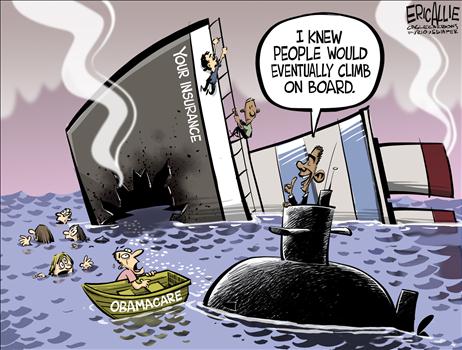
Our health insurance marketplace is being turned into a health insurance “system” with disastrous results. Government always does this in an effort to fix things. It turns things into “systems” instead of what they should be, which are marketplaces.

First of all, let’s get something straight — health insurance is not a “system.” It is a product by which you transfer the risk of financial loss to an insurance company for a fee. It is not health care; it is a device by which you protect yourself from financial loss. It does nothing to heal people, advance medical science or lower doctor’s bills.

ObamaCare is a failure for many reasons, but this administration seems to think that if seven million people signed up for it, it must be good. I think just as many also signed up to send Justin Bieber back to Canada. What’s oh-so-hilarious is that not more than a year ago, this administration referred to 14 million people losing their insurance as a “small sliver of the health care marketplace.”

The vast majority of the 7 million ObamaCare enrollees (purportedly) are people that never paid for it. That’s not a success in my book, particularly when so many got rate increases or were forced off existing policies.

It’s classic liberal “common core” math. Ignore the 6-7 million that got forced off their existing policies, but loudly trumpet that 7 million signed up for ObamaCare.

Hey, we helped 7 million people!

Furthermore, percentages from a hush-hush RAND Corporation study suggest barely 858,000 previously uninsured Americans have enrolled and paid premiums, as reported by the Guardian and the LA Times. To benefit 7 million — EVEN IF THEY ALL PAID — at the detriment of 160 million policy holders (maybe more), is an insane entitlement and is a redistribution of wealth from the middle class to the hands of the very wealthy who stand to benefit the most from this law.

No one was ever turned away from serious medical conditions that required hospital care — by law. The poor already were protected by Medicaid and the disabled received Medicare, so the mantra we are protecting the sick and the old, is false.

The rich, who had medical conditions got insurance, however, they did so to protect their wealth from seizure or creditors, and they did so at taxpayer expense. What did the middle class get while the wealthy mined the treasury gold mine? The shaft.

The middle class got the higher premiums and larger deductibles with policy features they did not want nor need.

This entitlement will bankrupt us all in the end. Wait until our doctors’ offices flood with people now forced onto Medicaid, who were irresponsible with their health care for years. Wait until our premiums soar from actuarial costs.

It must be repealed and ANYONE who stood to defend it in ANY way needs to be removed from office in the upcoming elections.

Yes, I am angry. And you should be, too.


Thomas Purcell is a nationally syndicated columnist,  host of the Liberty Never Sleeps podcast hour, and author of “Shotgun Republic.”

The government is notorious for turning things

The latest UN report on climate change from the Intergovernmental Panel on Climate Change (IPCC), which gathered last week in Yokohama, Japan, asserted that the impacts of global warming will be “severe, pervasive and irreversible.” In what is being called the most comprehensive assessment to date, authors of the second of three major reports abandoned scrutinized data from the first report, which boldly claimed it is “extremely likely” humans are the primary cause of climate change, for scare tactics.

According to the IPCC, up until now the cost of climate change has mostly impacted natural systems, but now will be increasingly felt by humans.

While the latest UN report on climate change made a few new, wildly unsupported claims, much of the stated costs would be familiar to those who remember the 1970s. The assertion that global warming could put the world’s food supply at risk, particularly in poorer countries, was a favorite of the left during the Carter years.

“Throughout the 21st century, climate-change impacts are projected to slow down economic growth, make poverty reduction more difficult, further erode food security, and prolong existing and create new poverty traps, the latter particularly in urban areas and emerging hotspots of hunger,” the report said.

But, one Reagan recovery and unfulfilled doomsday prophecy later, and the “world will run out of resources in thirty years” mantra disappeared. Still, the report projects widespread hunger will befall a generation largely too young to remember prior end of the world UN reports.

Crop yields for maize, rice, and wheat were projected at over 25 percent in about one tenth of the reports projections. In parts of the tropics and Antarctica, fish species are expected to decline drastically, leading to catches shrinking by as much as 50 percent. What isn’t mentioned, however, is the failure of the United Nations to stop or restrict overfishing, a legitimate and proven cause of shrinking fish catches.

Also addressed in the report was the melting of artic sea ice, and the increasing risk of drought, heat waves, and heavy rains. “Now we have overwhelming evidence that it is happening,” said on of the authors, “and it is real.”

Debate over, right? Not so fast, because not everyone agrees. A dissenting report was released after the first UN report, which criticized the IPCC’s methods and conclusions.

The report’s concludes, that “the human effect is likely to be small relative to natural variability, and whatever small warming is likely to occur will produce benefits as well as costs.”

The potential benefits of global warming is an often-overlooked aspect of the debate that Danish economist, Bjorn Lomborg, addressed in a column after the first IPCC report.

“Globally, and in almost all regions, many more people die from cold than heat,” Lomborg wrote. “With increasing temperatures, fewer cold deaths will vastly outweigh extra heat deaths.”

“Likewise, CO2 fertilizes crops and will increase production more in temperate countries than it will slow down crop increases in tropical countries. It will lower heating costs more than it will increase cooling costs,” he added.

The UN, through the IPCC, is expected to release a third and final report calling for wealth distribution policies, or global communism, as a prescription to combat the effects of global warming. And all of this at a time when leftist economists continue to blame an unusually cold winter for the lack of economic growth.

Of course, it couldn’t at all be the economic regulations weighing down economic growth.

The latest UN report on climate change

The latest ObamaCare enrollment extension unilaterally granted by the Obama administration turned out to produce more uncertainty than the industry can handle. On Monday, the ratings agency Moody’s released its health insurance industry outlook after the latest extension, rating it “credit negative” for insurers.

Last Wednesday, the Department of Health and Human Services confirmed the administration would extend the deadline for enrollment on the federal exchanges, but they have not yet announced a deadline for the extension.

“It will depend on how long it takes to cycle through the people who are in the queue.  Could be a few days, a week,” a spokeswoman for HHS said. “We encourage people to finish the process as soon as possible. We have not announced a date.”

However, a little-reported reality will soon set in, as Moody’s says this open-ended policy creates too much instability for the industry.

“Any extension of the open enrollment period exposes insurers to anti-selection. In essence, individuals who had decided to forgo insurance but now find themselves in need of medical care have been given an additional opportunity to enroll,” the report from Moody’s said. “Since these extensions were not previously contemplated by insurers, it is unlikely that insurers factored them into their premium rates. As a result, we expect that the losses insurers were projecting for this block of business will be greater than they anticipated.”

Opponents of the law and the unilateral changes made to the law by the Obama administration argued that those changes were not only lawless but reckless, and that the financial ramifications for the health insurance industry were predictable.

In fact, it was back in January when Moody’s first downgraded their health insurance outlook, then citing uncertainly under and from ObamaCare, as well. Although ObamaCare mandates that every individual in the country purchase insurance by the end of open enrollment period, which was on Monday, or pay a $95 a year fine or 1 percent of their annual income, it is unclear how to accurately project how many people would simply pay rather than purchase insurance.

Then, in March, Moody’s said the so-called “fix” announced by the Obama administration, which was a political decision to allow Americans who had their insurance cancelled temporarily keep them through March of 2016, further added to the “negative outlook” for the industry.

The Senior Vice President of Moody’s, Steve Zaharuk, told FoxBusiness.com the industry is simply riddled with far too many unknowns. “The insurance industry wants affordability of products and they want to make them profitable. The riskier this whole thing looks challenges the affordability for people.”

Experts say premiums would necessarily have to increase as ObamaCare continues to be put into practice due to the way the law is written, Zaharuk noted.

“When you think about the ACA and what it meant for insurers from the 30,000-foot level, it looked great for insurance companies because everyone was buying products,” he says. “But they gave up a lot of the tools they had—their underwriting tools, guaranteed issue — basically we have a situation that is constantly changing, and a lot of what they had been anticipating is now negative for them.”

As far as whether or not the administration could announce another unilateral change to the law that would “fix” the uncertainty, it is certainly not possible right now. Moody’s would have to see significant signs of stability before even considering a potential revision to the health insurance industry outlook.

At the heart of the industry’s challenge, is the question of how to calculate premiums without knowing the risk pool. Because the administration is not releasing data on demographics or payments, it is widely believed that those numbers are already negative. Health insurance industry consultant Robert Laszewski said in early March health insurers “participating in ObamaCare are a very worried group right now.”

Steve Zaharuk of Moody’s echoed those concerns in his statement, which sums up the failure of the Obama administration to centralize and implement the massive government overhaul of the health insurance industry that is ObamaCare.

“Through all the smoke and mirrors, open enrollment looks to be extended forever. You don’t want a situation where people can just buy health insurance as they need it.”

On Monday, the ratings agency Moody’s released

People's Pundit Daily
You have %%pigeonMeterAvailable%% free %%pigeonCopyPage%% remaining this month. Get unlimited access and support reader-funded, independent data journalism.

Start a 14-day free trial now. Pay later!

Start Trial