Former Internal Revenue Service official Lois Lerner, a central figure in the IRS scandal, will appear before Congress Wednesday after refusing to testify last year.
Representative Darrell Issa (R-CA), the chairman of the House Committee on Oversight and Government Reform, told “Fox News Sunday” that Lerner’s lawyers said she will testify before his committee, after just stating last week that she would not.
“It’s going to be a good, fact-finding hearing,” he said.
Issa claimed he didn’t know why Lerner’s lawyers changed their mind, but did say Lerner testifying was “in her best interest,” referring to the recent and damning evidence uncovered by the committee.
Issa and Lerner’s attorneys have argued about whether she is protected under the Fifth Amendment from having to testify, an argument incited in May 2013 after Lerner gave an opening statement defending herself before taking the Fifth Amendment.
It was her first and only appearance in front of the House Oversight Committee, until now.
Lerner resigned last year from her role as the agency’s director of tax-exempt organizations after the leaking of emails showing Lerner conspiring with Obama donor, Holly Paz.
The House committee continued to investigate the IRS in its 2012 targeting of Tea Party groups and other politically conservative organizations trying to get tax-exempt status. Newly discovered email released by the House Ways and Means Committee conducting the IRS investigation reveal former IRS official Lois Lerner was integrating new rules in secret with Obama’s treasury officials.
Congressional investigators are trying to determine who exactly gave the orders for IRS agents to target the groups.
Issa said Sunday that Lerner was “in a powerful position and could have been acting alone.” Congressional documents also suggest that she was under political pressure to orchestrate the targeting.
However, safeguards against such situations should have been in place and Congress should work to put in “more checks and balances,” he also said.
Last week, Lerner attorney William Taylor said his client will testify on Capitol Hill only if compelled by a federal court or if given immunity for the testimony. South Carolina Congressman Trey Gowdy, an avid critic of the IRS since the beginning of the IRS scandal, made clear that he would vehemently oppose any deal that grants Lois Lerner immunity.
Taylor stated his position in a letter to Issa. He was responding to a letter Tuesday from Issa saying, in part, that Lerner’s testimony remains “critical to the committee’s investigation.”
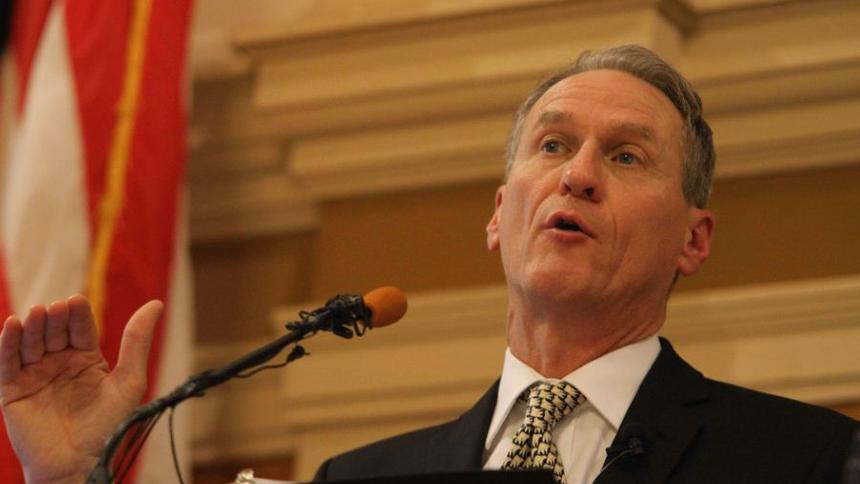
A South Dakota Governor poll affirms the “Safe Republican” rating on our 2014 Governor Map Predictions.
In a recent Rasmussen Reports South Dakota Governor poll Republican Governor Dennis Daugaard literally leads his likely Democratic challenger Joe Lowe by a 3 to 1 margin.
The new statewide telephone survey found 63 percent of likely South Dakota voters support Daugaard, while former state fire chief Joe Lowe earns just 23 percent. The undecided don’t offer much room for improvement for Lawe, with only 5 percent saying they prefer some other candidate in the race, and 9 percent remaining undecided.
The South Dakota Governor race is currently rated “Safe Republican” on our 2014 Governor Map Predictions. Democrat heavyweights who have opted out of the state’s open Senate race — U.S. Attorney Brendan Johnson and ex-Rep. Stephanie Herseth Sandlin — have also done so on the governor race, as well. It is a safe bet to predict Gov. Dennis Daugaard will sail to reelection.
With noting, Daugaard recently traveled to Connecticut to attract gun manufacturers from that state to move to South Dakota, and found himself in competition with Gov. Rick Perry. It played over very well in the state.
The state is also reaffirming it is fertile territory for the Republican Party in the South Dakota Senate race. It is an easy turnover net pick up for the Republican Party, despite the fact that the Democrats have represented the state up until now (View SD Senate Rating Analysis).
The survey of 500 Likely Voters in South Dakota was conducted on February 25-26, 2014 by Rasmussen Reports. The margin of sampling error is +/- 4.5 percentage points with a 95% level of confidence. (To see survey question wording, click here.)
View Polling Below Or Return To 2014 Governor Map Predictions
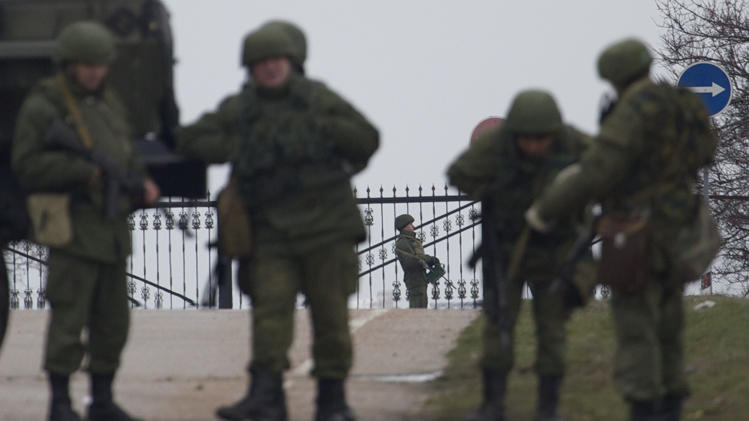
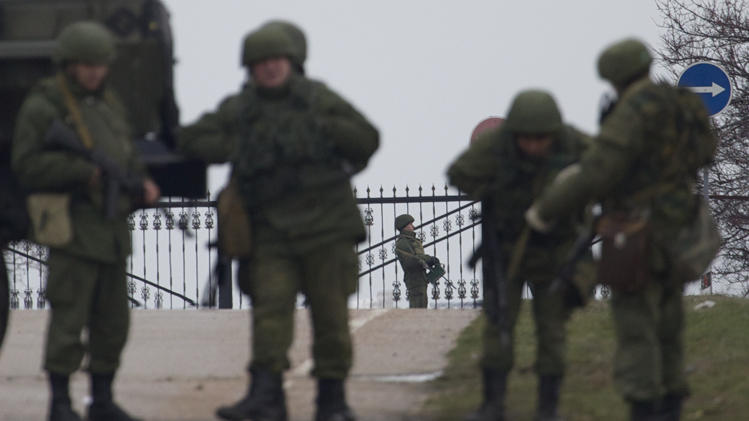
At least several hundred unidentified gunmen have arrived outside Ukraine’s infantry base in Privolnoye in its Crimea region.
The Russian convoy reportedly includes some 13 troop vehicles with Russian license plates containing 30 soldiers each and 4 armored vehicles with mounted machine guns. The vehicles have surrounded the Ukrainian military base and are blocking Ukrainian soldiers from entering or leaving the base.
Ukrainian soldiers, in an effort to repel a Russian advance, have positioned a tank at the gate.
Ukraine’s acting Prime Minister said Sunday that his country was “on the brink of disaster” and called for world leaders to take “real steps” to stop the ongoing crisis in the Crimea region as Russian troops appeared to be advancing toward the provincial capital.
Arseniy Yatsenyuk spoke after a closed session of his new parliament in Kiev, calling on Russian President Vladimir Putin to “pull back his military.”
Earlier Sunday, Andriy Paruby, Secretary of Ukraine’s Security Council, which is made up of Ukraine’s top security and defense chiefs, announced that all military reservists were being called up to active duty and added that it was vital to ensure that the Ukrainian armed forces were combat-ready as soon as possible. Paruby also said that Ukraine’s Foreign Ministry had been ordered to seek assistance from the U.S. and Great Britain in guaranteeing the country’s safety.
A convoy of 12 troop-carrying military trucks, an armed Tiger vehicle, and two ambulances were traveling along the road from Sevastopol, the home of Russia’s Black Sea Fleet, to the regional capital, Simferopol. There have been no reports of Russian troops meeting any resistance in either landing or moving through the Crimea region.
NATO’s North Atlantic Council and the NATO-Ukraine Commission are set to meet on Sunday. NATO Secretary-General Anders Fogh Rasmussen said the allies will “coordinate closely” on the situation in Ukraine, which he termed “grave.”
Ukraine is not a NATO member, meaning the U.S. and Europe are not obligated to come to its defense. But Ukraine has taken part in some alliance military exercises and contributed troops to its response force.
President Obama told Russian President Vladimir Putin in a 90 minute phone call Saturday that sending troops into Ukraine is a “clear violation” of their country’s sovereignty, and called on Russia to de-escalate tensions by pulling forces back to bases in Crimea, according to the White House.
On Saturday, Russian President Vladimir Putin received permission from parliament to mobilize the country’s military in Ukraine. Parliament voted unanimously on the request and also recommended that Moscow’s ambassador be recalled from Washington over earlier comments made by President Obama.
Meanwhile, the Kremlin released a defiant statement following the parliamentary vote.
“Vladimir Putin emphasized that, in the case of a further spread in violence in eastern regions (of Ukraine) and Crimea, Russia maintains the right to protect its interests and the Russian-speaking population that lives there,” the Kremlin statement said.
Obama told Putin that he would support sending international monitors to Ukraine to help protect ethnic Russians. He said the U.S. will halt its participation in preparatory meetings for June’s G-8 summit in Sochi, Russia, the site of the recently concluded Winter Olympics, warning that Russia’s “continued violation of international law will lead to greater political and economic isolation.”
French Foreign Minister Laurent Fabius agreed, saying on French radio Europe that planning for the summit should be put on hold. France “condemns the Russian military escalation” in Ukraine, and Moscow must “realize that decisions have costs,” he said Sunday.
With the Ukraine military on high alert, a growing number of lawmakers are pressing President Obama to craft an immediate and stern response to the Russian intervention in Ukraine.
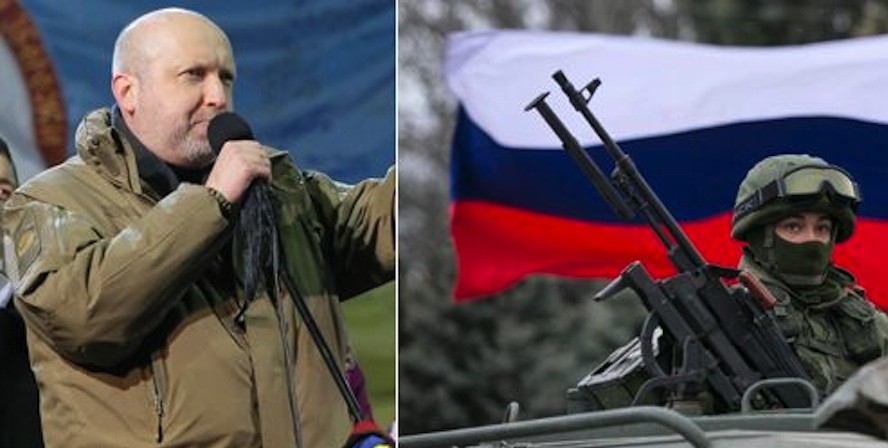
Oleksandr Turchynov, Ukraine’s acting president announced that he has put the Ukraine military on high alert after the Russian parliament unanimously voted to grant President Vladimir Putin permission to mobilize the country’s military in Ukraine.
Lawmakers on Capitol Hill made clear they back an immediate response by President Obama. A bipartisan group of lawmakers, including Sens. John McCain (R-AZ), Robert Menendez (D-NJ), and Marco Rubio (R-FL), said they are willing to work with President Obama to impose sanctions to “dissuade individuals who would foment unrest to undermine Ukraine’s territorial integrity .”
President Obama told Russian President Vladimir Putin in a 90 minute phone call that sending troops into Ukraine is a “clear violation” of their country’s sovereignty, and called on Russia to de-escalate tensions by pulling forces back to bases in Crimea, according to the White House.
Earlier, Defense Secretary Chuck Hagel, CIA Director John Brennan, Joint Chiefs of Staff Chairman Gen. Martin Dempsey and Director of National Intelligence James Clapper, all gathered at the White House for a high level to craft a response to Russia. Officials say the U.S. has not prepared “any military contingencies” for Ukraine.
Sen. Ted Cruz (R-TX), said Putin would not take Obama’s “vague threats” seriously and urged the administration to consider suspending Russian membership in the World Trade Organization and the United Nations Security Council.
“The United States should stand with Ukraine,” Cruz said.
Obama issued a “vague threat” to Russia on Friday, stating at a press conference that “there will be costs” for any military intervention in Ukraine.
Sen. John McCain, a committee member and military hawk, said on Twitter that Russia’s efforts, which already reportedly including sending military guards into Ukraine’s Crimea region, were “straight out of [the] Soviet playbook.”
He also tweeted “Obama needs to impose ‘costs’ now,” referring to the president’s remarks Friday.
Putin says a military-backed Russian intervention is needed to protect ethnic Russians and the personnel of a Russian military base in the strategically imperative region of Crimea in Ukraine.
The Senate Foreign Relations Committee called on Obama to lead an immediate international effort to stop the Russian military intervention in Ukraine, which included targeted sanctions.
“The United States and our European allies should immediately bring to bear all elements of our collective economic strength to stop Russian advances in Ukraine,” both Democrats and Republicans on the committee wrote.
They committee said Congress will also consider targeted sanctions against Russian people and entities that “undermine the sovereignty and territorial integrity of Ukraine” and that the Russian government “felt free to intervene militarily in Ukraine” only due to the fact the U.S. and Europe were not assertive enough in conveying to Putin that there will be serious consequences.
The bipartisan group of lawmakers echoed critics, such as Charles Krauthammer, who picked up on the subtle yet significant choice of language by the president, which failed to underscore that the security of Ukraine and stability of the entire region is in fact in U.S. interest.
Michigan Congressman Mike Rogers, the chairman of the House Select Committee on Intelligence, issued a statement saying, “It appears that the Russian military now controls the Crimean peninsula. This aggression is a threat not only to Ukraine, but to regional peace and stability. Russia’s latest action is yet another indicator that Vladimir Putin’s hegemonic ambitions threaten U.S. interests and allies around the world.”
Rogers was echoed my Republican House Majority Leader Eric Cantor, who called the Russian military aggression a “grave concern.”
“It is essential that the United States, our European and NATO partners, and the international community stand up to any aggression,” Cantor said. “We need strong American and European leadership now to forestall any further threats to international peace and stability. Russia’s leaders must understand that military intervention and further interference in Ukraine’s affairs are unacceptable, and would result in significant consequences for Russia.”
In the House, Armed Services Committee Chairman Howard P. “Buck” McKeon called Putin’s aspirations “a throwback to the last century.”
“Our response should demonstrate the U.S. stands by its friends against bullies,” said McKeon, R-Calif. “We should do everything practical to help Ukraine turn back these invaders.”
Whether or not lawmakers would find a military response practical is unclear, but what is clear is that a bipartisan coalition supporting an immediate response by the president is clearing building.
UPDATE: Russian President Vladimir Putin received permission Saturday from parliament to mobilize the country’s military in Ukraine. Parliament voted unanimously on the request and also recommended that Moscow’s ambassador be recalled from Washington over earlier comments made by President Obama.
EARLIER: Following a clear signal of weakness by President Obama, Russian President Vladimir Putin has asked parliament to sanction a Russian intervention in Ukraine.
Putin says a military-backed Russian intervention is needed to protect ethnic Russians and the personnel of a Russian military base in the strategically imperative region of Crimea in Ukraine. The request comes a day after President Obama warned Moscow that “there will be costs” if Russia intervenes militarily in Ukraine.
The latest move by Putin confirms the fears of Ukrainian officials, who described an ongoing deployment of Russian troops in the strategic region of Crimea as an “armed invasion.” The Putin motion refers to the “territory of Ukraine” rather than specifically to Crimea, increasing the likelihood that Russia will use military force in other Russian-speaking provinces in eastern and southern Ukraine. In these regions, many oppose the new pro-West government in Kiev.
“I’m submitting a request for using the armed forces of the Russian Federation on the territory of Ukraine pending the normalization of the socio-political situation in that country,” Putin said in a statement released by the Kremlin.
He said the move is needed to protect ethnic Russians and the personnel of a Russian military base in Ukraine’s strategic region of Crimea. Putin sent the request to the Russian legislature’s upper house, which doesn’t necessarily need to approve the motion for Putin to act, contrary to the constitution, because Putin has and will act alone. The rubber-stamp Russian Parliament is expected to approve it in a vote Saturday.
In Crimea, the pro-Russian regional prime minister had earlier claimed control of the military and police there and asked Putin for help in keeping peace, increasing tensions between the two neighboring Slavic countries.
Sergei Aksenov, the head of the main pro-Russia party on the peninsula, said in a statement reported by local and Russian news agencies that he appealed to Russian President Vladimir Putin “for assistance in guaranteeing peace and calmness on the territory of the autonomous republic of Crimea.”
The new pro-West government seems to have been completely subverted in the region, at least. Aksenov has already declared that the armed forces, the police, the national security service and border guards will answer only to his orders. He said any commanders who don’t agree with these developments should simply leave their posts.
Meanwhile, Russia’s Foreign Ministry said unidentified gunmen sent by Kiev had attempted overnight to seize the Crimea region’s Interior Ministry offices and that innocent people had been wounded in the “treacherous provocation,” a move if true was clearly an attempt for the new government to gain back authority.
Ukrainian border guard vessels were put on combat alert in the Crimea region to prevent the capture of military bases and ships, Interfax news agency quoted the border guard service as saying. Also on Saturday, Ukraine’s defense minister said Russia had “recently” brought 6,000 additional personnel into Ukraine and that the Ukrainian military were on high alert in the Crimea region.
Ukraine’s Prime Minister Arseny Yatsenyuk opened a cabinet meeting by calling on Russia not to provoke discord in Crimea.
“We call on the government and authorities of Russia to recall their forces, and to return them to their stations,” Yatsenyuk was quoted as saying by the Interfax news agency. “Russian partners, stop provoking civil and military resistance in Ukraine.”
At the White House, President Obama said the U.S. government is “deeply concerned” by reports of Russian “military movements” and warned any violation of Ukraine’s sovereignty would be “deeply destabilizing.” However, he made no mention of what the U.S. is prepared to do in the vent of Russian intervention or notably Obama didn’t even bother to mention it was against U.S. interests.
U.S. officials confirmed “evidence of air and maritime movement into and out of Crimea by Russian forces,” but the Pentagon refused to officially “characterize” the movement.
Charles Krauthammer told criticized Obama Friday, saying President Obama’s statement late Friday afternoon showed “weakness” and that the president implied that “we’re not really going to do anything” about the Russian intervention in Ukraine.
Earlier Friday, Agence France Press quoted a top Ukranian official as saying Russian aircraft carrying nearly 2,000 suspected troops have landed at a military air base near the regional capital of the restive Crimean peninsula.
A spokesman for the Ukrainian border service said eight Russian transport planes have landed in Crimea with unknown cargo.
Serhiy Astakhov told The Associated Press that the Il-76 planes arrived unexpectedly Friday and were given permission to land, one after the other, at Gvardeiskoye air base, north of the regional capital, Simferopol.
Astakhov said the people in the planes refused to identify themselves and waved off customs officials, saying they didn’t require their services.
Earlier in the day, Russian armored vehicles rumbled across Crimea and reports surfaced of troops being deployed at airports and a coast guard base – signs of a more heavy-handed approach to the crisis from Moscow.
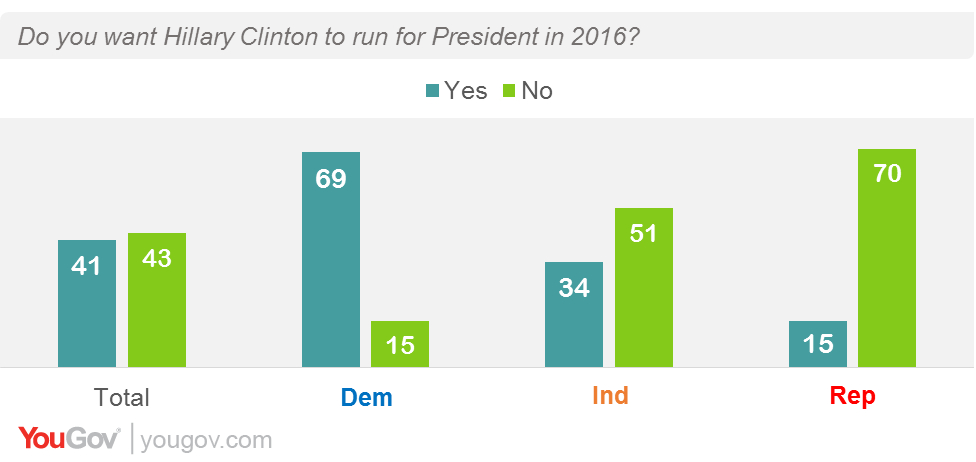
Examining a recent Economist/YouGov poll that found Americans are deeply divided on whether or not they want to see Hillary Clinton running for president in 2016.
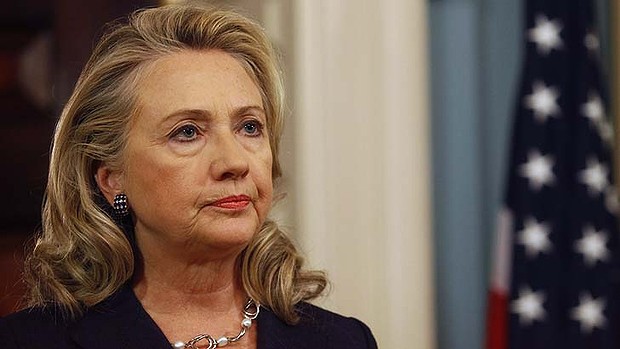
A recent Economist/YouGov poll found 43 percent of Americans do not want to see Hillary Clinton running for president, while 41 percent do. In our model used to project election outcomes, which weighs pollsters based on past accuracy, surveys conducted by YouGov have a near stellar rating. Thus, this poll, despite the little predictive value of early surveys, is worth taking a brief look at.
A recent Economist/YouGov poll finds deep division over Hillary Clinton running for president despite rather broad favorables. (Economist/YouGov)
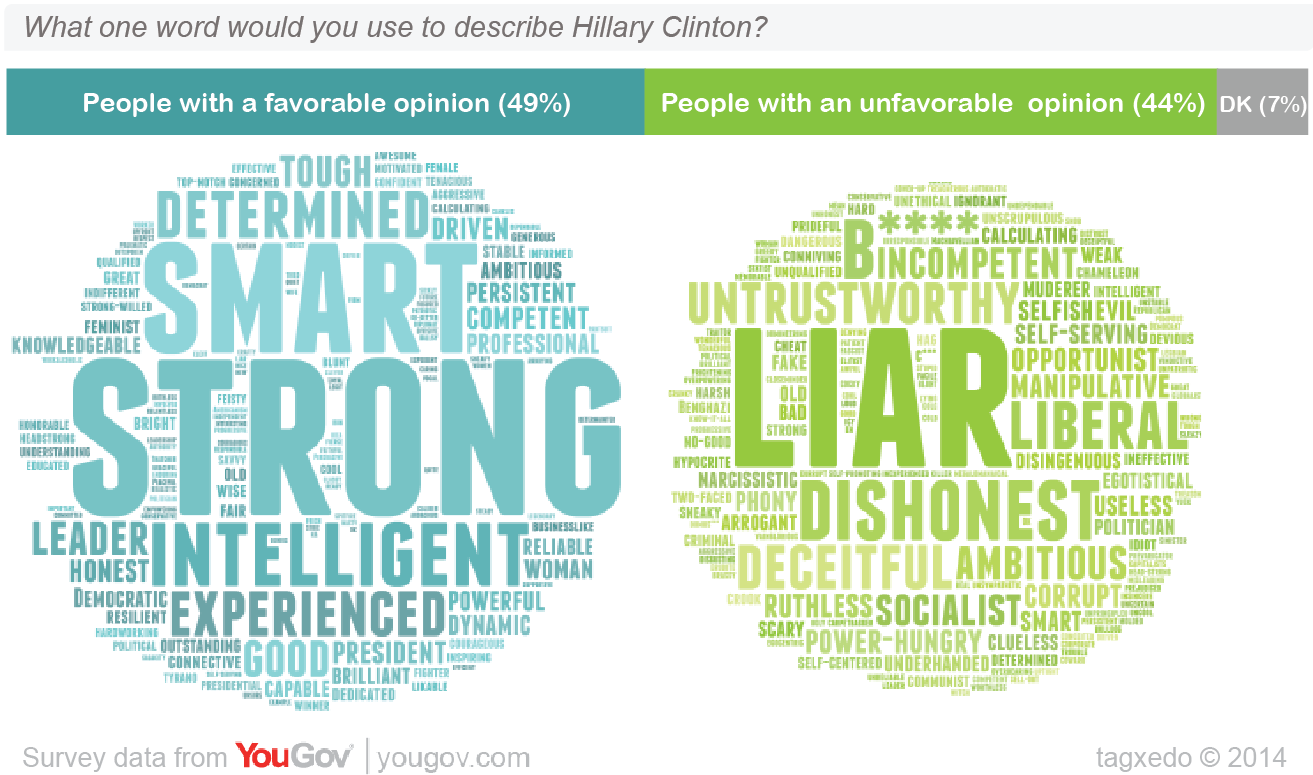
Ironically, Americans, including many Republicans, have a generally favorable view of the former First Lady and Secretary of State regardless of whether or not they want Hillary Clinton running for president in 2016. Overall, 49 percent have a favorable opinion of Clinton, while 44 percent do not. Yet, her above-water favorability ratings do not translate into strong, broad support for a presidential bid. There are some signs within the survey to help understand what accounts for this division.
Comparing those with a positive and negative view of Hillary Clinton, we see the two biggest adjectives that stand out are “strong,” and “liar.” (Economist/YouGov)
The issue of honesty is clearly a drawback that Hillary Clinton will have to deal with if she decides to run. Americans are evenly divided on the question of whether or not Clinton says what she really believes or what she thinks others want to hear, with 41 percent saying she says what she believes and 43 percent saying she will say whatever she thinks people want to hear. Yet, she still does better than Obama on the question, who has a negative 53/37 margin in favor of “what he thinks others want to hear.”
Americans, overall, view Clinton as competent in general, but they are split evenly at 42 percent on whether or not she has the ability to handle an international crisis. That number includes nearly two-thirds of Republicans who say she does not have the ability to handle an international crisis, fueled no doubt by the death of Ambassador Chris Stevens and the terrible handling of Benghazi. We have published the findings from two separate surveys in the past that found 6 in 10 Americans blame Hillary for Benghazi.
What is clear is that the mainstream media narrative, which has already begun to attempt to force an “air of inevitability” on the American people, is not particularly accurate, as usual. When we look at the early polling in its totality, we find historic levels of support among Democrat partisans, but not broadly speaking. Hillary Clinton is well-known, for better or worse, and name recognition weighs heavily upon early polling outcomes, such as those finding Clinton ahead of most of her Republican challengers.
But we saw Gov. Chris Christie begin to rack up a significant lead following his reelection victory, prior to the Bridgegate scandal the media clearly used to erode his support before it became apparent that their narrative was manufactured. After examining the actual data, there is little reason to believe that other candidates cannot erase whatever lead Hillary Clinton has due to name recognition just as Christie did. There is little wonder why Mike Huckabee, a now better-known candidate due to his show on Fox News, is already catching Clinton in recent polls.
Similarly, there is little wonder why the mainstream media went out of their way to edit a tape supposedly showing Huckabee making anti-women comments, which were grossly misrepresented. The former Arkansas governor and presidential candidate, was in fact claiming that Democrats reduce women to one or two issues, which relegates them to a diminished position intellectually.
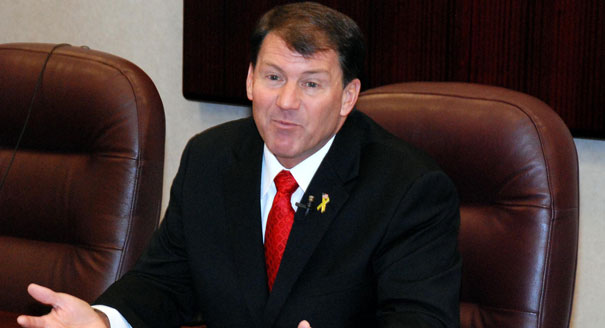
The South Dakota Senate race prediction is the sixteenth article in what is a succession of articles offering expanded analysis on our 2014 Senate Map Predictions. A recent Rasmussen Reports survey found Republican Mike Rounds simply trouncing Democrat Rick Weiland by 20 points – 51 percent to 31 percent.
Thus far, I have released expanded analysis for the following Senate races:
The retirement of Democratic Sen. Tim Johnson had Democrats focused on two candidates: ex-Rep. Stephanie Herseth Sandlin and U.S. Attorney Brendan Johnson, the son of the senator. Unfortunately for them, however, both of them declined to run, leaving Rick Weiland, a former unsuccessful House candidate who is close to former Senate Majority Leader Tom Daschle. Daschle’s backing of Weiland apparently chapped the pants of the Democrat Senate Majority Leader Harry Reid, who preferred the more conservative (and probably more electable) Herseth Sandlin.
Weiland started off as an underdog to ex-Governor Mike Rounds, who is likely to become the Republican nominee after Rep. Kristi Noem, the at-large representative who defeated Sandlin in 2010, decided against a run. I believed Noem would have been the stronger candidate, but Rounds now has a commanding lead over Weiland.
The only wildcard in this race could be former South Dakota Senator Larry Pressler, a registered Republican, who said that there is a 70 percent chance he will run as an independent for his old seat next year. Pressler spent 22 years in Washington before Senator Tim Johnson defeated him in 1996.
Rounds might have primary trouble, but as far as the state’s politics are concerned, he looks like a good bet to be in Washington come 2015. The PVI, or Partisan Voting Index, actually ticked up to R+10 in 2014 from R+9 in 2010. Similarly, Gallup found a slightly smaller Democrat identification in the state in 2013, with President Obama’s approval rating struggling to get up to 32 percent (it is averaging 31.7 in the state for 2014).
This is an easy rating, because it is an easy turnover net pick up for the Republican Party, despite the fact that the Democrats have represented the state up until now. The South Dakota Senate race is rated “Safe Republican” on our 2014 Senate Map Predictions.
View Polling Below Or Return To 2014 Senate Map Predictions
The NRSC (National Republican Senatorial Committee) shared a new scathing ad starring Harry Reid with conservative alternative media site, Townhall.com.
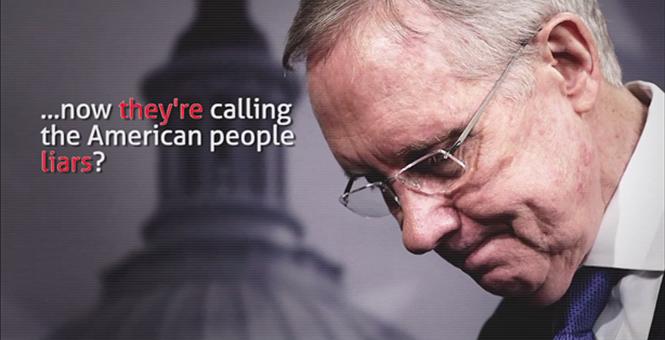
Democratic Senate Majority Leader Harry Reid drew staunch criticism after claiming that Americans appearing in ads citing how they have been hurt by ObamaCare are all lying, paid for by the “billionaire Koch brothers.” However, while the response was immediate, it wasn’t very coherent.
Now, the NRSC (National Republican Senatorial Committee) shared a new scathing ad with conservative alternative media site, Townhall.com. Not that I am citing any poll-tested to data to make this claim, but it is a good one. In fact, if I were Harry Reid I would be glad to know that I was not up for reelection again in 2014.
In the ad, Megyn Kelly, host of the “Kelly File” on Fox News, is depicted covering the comments made by Harry Reid, in which he called one woman’s “horror story” patently “untrue.” It is more than ironic to hear the Senate majority leader call anyone a liar, when his party’s president and member lawmakers were literally awarded the PolitiFact “Lie of the Year” Award for claiming Americans would be able to keep their health plans and doctors under ObamaCare.
The Americans Harry Reid is calling liars are by majority those who were misled into thinking they could keep their plans and doctors, and typically tell their stories about being dropped and assuming large costs under ObamaCare. Reid has since walked back his assertion that all of the claims are untrue, now pretending he meant that “the vast majority are.” He took to twitter to do what Harry Reid does best, shy away from his comments like a coward.
I can’t say that all of the Koch ads on Obamacare are deceptive, but the vast majority are. http://t.co/hCbWIBVND6
Meanwhile, Senator Reid keeps on harping about the Koch brothers, who he claims are manipulating the political process because they have an infinite amount of money to do so. However, aside from the fact they have a constitutional right to try, according to OpenSecrets.org the Koch brothers do not even appear on their list of “Top Heavy Hitters” until number 59. The Koch brothers’ placement is far behind other groups, such as Act Blue (#1), who donate only to Democratic lawmakers.
The Russian troop movements are the result of several tests by Russian President Vladimir Putin, who order a large scale military operation to take airports in the Crimea region.
There are large numbers of Russian troops reportedly landing at a military air base in Crimea Friday, prompting Ukraine to accuse Russia of a military invasion.
U.S. officials said they see “evidence of air and maritime movement into and out of Crimea by Russian forces.” Agence France Press quoted a top Ukranian official as saying Russian aircraft carrying nearly 2,000 suspected troops have landed at a military air base near the regional capital of the disputed Crimean peninsula.
“Thirteen Russian aircraft landed at the airport of Gvardeyskoye (near Simferopol) with 150 people in each one,” Sergiy Kunitsyn, the Ukrainian president’s special representative in Crimea, told the local ATR television channel, according to AFP. He accused Russia of an “armed invasion.”
Speaking from the White House Press Room, President Obama said the U.S. is “deeply concerned” by the Russian troops defending on the Crimea region in Ukraine and warned there “will be costs” for any military intervention.
The recent developments caused Ukraine to accuse Russia of a “military invasion and occupation.” The Russian troop movements are the result of several tests by Russian President Vladimir Putin, who order a large scale military operation to take airports in the Crimea region.
Earlier in the day, Russian armored vehicles rumbled across Crimea and reports surfaced of troops being deployed at airports and a coast guard base – signs of a more heavy-handed approach to the crisis from Moscow.
Ukraine’s U.N. ambassador Yuriy Sergeyev told the U.N. Security Council that Russian military helicopters and transport planes are entering his country, and that neither major airport in Ukraine is under national control and that the main airport was “captured by Russian armed forces.”
He claimed 11 Russian military helicopters had been brought in along with M-24 military transport planes.
Armed gunmen took control of the two main airports in Crimea Friday. However, Russia has so far been silent on the claims of military involvement. No violence was reported at the civilian airport in Crimea’s capital of Simferopol or at the military airport in the Black Sea port of Sevastopol, also part of Crimea. At the Simferopol airport, a man claiming to speak for the camouflage-clad forces patrolling the airport described them as Crimean militiamen.
Meanwhile, ousted Ukrainian President Viktor Yanukovych surfaced in Russia Friday, defiantly claiming that “pro-fascist hooligans” ran him out of office, apologizing for not having the strength to deter the movement.
Yanukovych also warned of “irresponsible Western policy” and vowed to continue the fight for Ukraine’s future Friday at a press conference in Rostov-on-don, Russia—his first public appearance since last Saturday. Interestingly, he spoke Russian during the press conference.
“I intend to keep fighting for the future of Ukraine against those who are using fear and terror to seize the country,” he told reporters.
Yanukovych said he did not have plans to ask Russia for military support in dealing with the crisis in Ukraine, where he said power was stolen by “a bunch of radicals.” However, the latest Russian troop movements clearly show that Russia is not willing to let Ukraine go without a struggle.
Ukraine’s population is divided between those with loyalty to Russia and the West. The region of Crimea, which was seized by Russian forces in the 18th century under former praised ruler, Catherine the Great, was once the crown jewel in both Russian and the former Soviet empires.
The Crimea region in discussion became part of Ukraine in 1954 when Soviet leader Nikita Khrushchev transferred jurisdiction from Russia, a move that was a mere symbolic formality until the Soviet Union collapsed in 1991. Following those events, which were as rapid as the events today, Crimea found itself truly under the control of an independent Ukraine.
You have %%pigeonMeterAvailable%% free %%pigeonCopyPage%% remaining this month. Get unlimited access and support reader-funded, independent data journalism.