Widget Image
Follow PPD Social Media
Saturday, January 17, 2026
HomeStandard Blog Whole Post (Page 997)

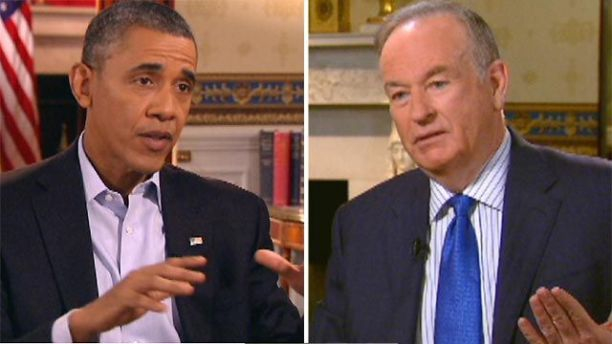
President ObamaWhile there are criticisms of the Super Bowl interview on both sides of aisle, Bill O’Reilly did successfully accomplish one thing. He exposed the weakness of character that President Obama has.

It’s not any news to those who follow politics of course, but O’Reilly exposed the President’s weakness to millions of viewers who heretofore may never have watched politics or been interested in anything either man had to say.

Confronted with O’Reilly barrage of questions about the old “who shot John” narrative, Obama folded , if only for moment. He backed the President into about who ultimately is the main source of issues in government and Obama pointed the finger at his favorite target  — FOX News.

The President’s startling finger-pointing at FOX and other ‘troublemakers’ (his words, not mine) is nothing new for this White House. At the outset of his administration, White House officials made the rounds on morning news outlets exclaiming that FOX News was the problem, not the constant failures of policy on behalf of this government. Apparently, things in administration haven’t changed.

FOX News reports and issues opinions, but it does not control this government Mr. President, you and your party do. During the first term that control was complete, now it has the Senate and the Executive branch. You personally have complete control over the military and the bureaucracy. You have the most administration friendly media in 100 years and a complicit State Department under both Hilary Clinton and now John Kerry.

Therefore, the net result of sagging economy after five years of control is yours. We have a foreign policy that has left the Middle East literally in ruins, relationships damaged perhaps beyond repair and a resurgent power in the former Soviet Union. If anyone is to blame for both domestic and foreign affairs failures it’s your administration sir.

By blaming FOX News, you are acting as a petulant child does when he or she is caught with their hand in a cookie jar. It defines weakness of character to blame others for your own mistakes; it is the quintessential shelter of both children and tyrants. Adults accept responsibility for their own deeds.

Even if we are to accept that FOX News has played a role in the five years of failure that you have presented to the American people, what of it? No president has ever had as complicit a media as you have. Your press secretary Jay Carney yesterday said ‘freedom’ was nothing more than a buzz word and the barking seals of the White House press corps lapped it up willingly. Throw them a fish. Let them toot the horns.

Are you the leader of this country or a sniveling malcontent? Show some backbone and act accordingly. Address Congress with your issues and introduce legislation to correct the problems and put away the pen. Order the military to win the war in Afghanistan at all costs. Talk to the opposing side in the political parties instead of talking AT them. Go to few Tea Party meetings and address their concerns instead of dismissing them with whitewash and bluster. Stop ordering the American people around and provide guidance instead. Pick up the damn phone once in a while.

Act like a leader, instead of the tin plated dictator you are being painted as. Talking points provide no path to greatness. Statesmanship does not come from the teleprompter.

This is the hallmark of a great President. This is the role of and responsibility of the office. To provide leadership, and to provide an example for the nation to follow. To be circumspect with the political ideologues surrounding you and not place fences to divide a society.

Lead not blame. You are the President. Grow up and act like one.

Thomas Purcell is the host of the popular radio show Liberty Never Sleeps, and author of “Shotgun Republic.”

Bill O’Reilly did successfully accomplish one thing
service-sector

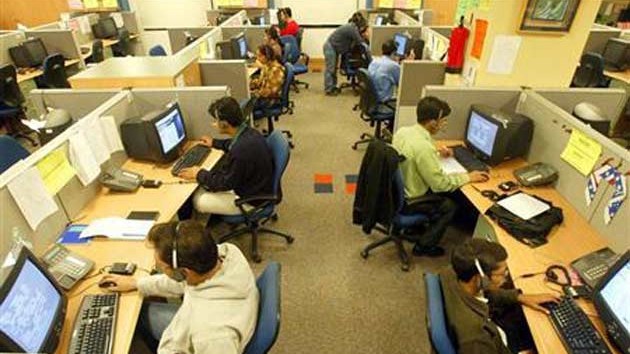
The Institute for Supply Management reports the U.S. service sector expanded to 54 in January from 53 the month prior, just slightly beating Wall Street estimates of 53.7.

Readings above 50 indicate expansion, while those below point to contraction.

The markets took a beating early this week on news that manufacturing slowed dramatically in the last month, squeezing jobs that typically and historically provide higher wages.

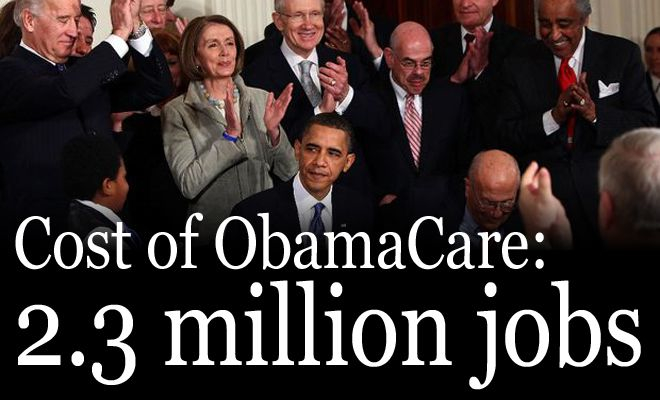
Meanwhile, yesterday the Congressional Budget Office released a revised report showing that ObamaCare will cost the economy nearly 2.5 million jobs.

In both the long and short-term labor markets, a few low wage-paying service jobs hardly provide comfort to a struggling economy.

U.S. manufacturing growth, the historical sector providing middle class Americans with decent wages, slowed significantly in the month of January as new order growth plummeted by the largest drop seen in 33 years, driving overall factory activity to an 8-month low, an industry report showed on Monday.

New factory orders in the U.S. fell in December, but rose for the third consecutive month only when the weak transportation sector was excluded. Some economists pointed to the data as reason for modest optimism after other economic data showed a severe slowdown in U.S. and Chinese manufacturing sectors.

But the report today is expected behind the backdrop of the new Congressional Budget Office report, because lower-wage, part-time service sector job growth has been the norm in the post-crisis recovery.

The Institute for Supply Management reports the

cbo-obamacare-costs-jobs

All of the American people’s worst nightmares and Republic economic predictions got real Tuesday after the Congressional Budget Office released a revised report claiming nearly 2.5 million workers will opt out of full-time jobs because ObamaCare incentivizes them to do so — leading to employers elimination 2.3 million full-time jobs in the next ten years.

The administration had the same, small and insulting response they did when news broke that the individual health insurance market would be eliminated, downplaying the 2.5 million people as “a small percentage of the overall economy.”

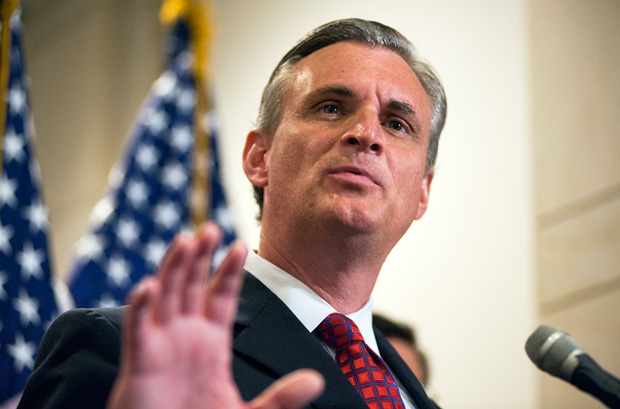
First of all, this number itself is a small percentage of the overall economy. Second of all, this number itself is about, effectively, choices of people. And third, it doesn’t reflect the full set of factors that go into it,” said White House economist Jason Furman, who was filling in for Jay Carney at the White House press conference,

Jay Carney also took the same position when the Washington Post reported over 22,000 Americans have purchased the wrong insurance at the direction of the health insurance Marketplace “experts,” with no appeal process as promised by the federal workers.

In an exchange between Fox News’ Ed Henry, Furman actually suggested ObamaCare actually incentivizes entrepreneurship by allowing people to work less, and get subsidies.

“If they make that choice and they go from 60 to 30, 35 hours, presumably that family is going to have a lot less take-home pay and they’re going to have less money to put back into the economy,” Henry asked. Furman responded, “They still have that job; they can still go to that job; they can still do that, but you give them this extra new thing.”

Real Clear Politics’ Alexis Simendinger also pressed Furman on the disastrous estimates released by the Congressional Budget Office, and followed up on the line of questioning offered up by Ed Henry. “If 2.5 million people change their choice about working, that is not a net drag on economic growth?” Simendinger asked.

“First of all, I haven’t accepted that number. There’s a lot of factors that go into that number. Not all of them an uncertainty. And second of all, I’m saying that that whole analysis refutes the claim that this is about employers cutting back on jobs and increasing unemployment, and that has been an essential argument against the Affordable Care Act. Instead its this analysis itself. It isn’t a complete analysis, but the analysis itself about the choices that people make,” Furman said.

“But you didn’t answer my question,” Simendinger pointedly fired back.

Even Peter Alexander of NBC News asked in dismay, “Doesn’t, Jason, that incentivize though, some people to do less, that all of a sudden, there’s an incentive to do less, because if your salary’s less, you’re still getting government subsidies but then benefits?”

And according to the Congressional Budget Office, that’s exactly what is going to happen, which many Republicans rightfully noted was predictable. The CBO said that because ObamaCare offers an insurance alternative to employer provided coverage, many Americans who hold full-time jobs will make a choice not to work part-time — or at all for that matter — and get their coverage from the exchanges rather than paying so much of their take home in cost.

House Speaker John Boehner, who once called ObamaCare a “job killer,” said the report showed how “the middle class is getting squeezed in this economy.”

In 2010, however, the CBO projected ObamaCare would destroy 650,000 jobs, but Tuesday’s new 2.3 million estimate is significantly higher, adding to the criticism that the CBO is not truly nonpartisan as Democratic lawmakers have long-claimed. They also now say a whole 2 million fewer people will get covered this year than they had previously estimated during the height of the health care debate.

Republican Sen. Orrin Hatch of Utah, a ranking member of the Senate Finance Committee, said the report was “devastating” to the millions of Americans in need of a job.

“A direct threat to the long-term health and prosperity of our nation, this law must be repealed,” Hatch said in a statement. “Its impact and consequences are too great.”

On those consequences, President Obama told Bill O’Reilly Sunday that his presidency has not “massively expanded the welfare state,” but clearly that was another falsehood.

A new CBO ObamaCare report is projecting

New factory orders in the U.S. fell in December, but rose for the third consecutive month when the weak transportation sector was excluded. Some economists pointed to the data as reason for modest optimism after other economic data showed a severe slowdown in U.S. and Chinese manufacturing sectors.

The Commerce Department said on Tuesday new factory orders for manufactured goods dropped by 1.5 percent, which is the largest fall since July. The decrease was fueled by a reduction in bookings for transportation equipment.

November’s orders were revised to show a 1.5 percent increase instead of the 1.8 percent gain previously reported.

Economists polled by Reuters had forecast new orders received by factories falling 1.7 percent in December.

New orders for transportation equipment, however, plummeted by 9.7 percent, or the largest drop since July. The drop came after an 8.1 percent increase in November. Orders for motor vehicles fell by the most in five months, while non-defense aircraft and parts orders fell 17.5 percent.

When excluding transportation, new factory orders actually gained 0.2 percent after rising 0.3 percent in November. There were increases in orders for machinery, electrical equipment, appliances and components. Orders for primary metals fell and bookings for computers and electronic products posted their biggest drop since June 2012.

Economists now expect factory activity to slow down early this year after output grew at its fastest pace in nearly two years in the fourth quarter. This will no doubt decrease GDP growth in the second half of the year.

The Institute for Supply Management reported on Monday that its index of national factory activity dived to an eight-month low in January, with orders recording their largest drop in more than 30 years.

But some have claimed manufacturing is not slowing as sharply as suggested by the ISM survey. There also has been a steady rise in order backlogs.

Unfilled orders at the nation’s factories rose 0.4 percent in December to their highest level since the series started in 1992 and were up 0.9 percent in November.

The Commerce Department said orders for durable goods, manufactured products expected to last three years or more, dropped 4.2 percent instead of the 4.3 percent fall reported last month. Durable goods orders excluding transportation fell 1.3 percent and not 1.6 percent as previously reported.

Orders for non-defense capital goods excluding aircraft – seen as a measure of business confidence and spending plans – declined 0.6 percent instead of the previously reported 1.3 percent drop.

New factory orders in the U.S. fell

obama-reid-pelosi-Democrats

As the 2014 elections come to the forefront Democrats in both the House and Senate are distancing themselves from President Barack Obama’s agenda on energy, trade, and healthcare.

We have been beating the drum that President Obama’s approval rating will be a huge determining factor in the 2014 elections, as reflected in the model used at PeoplesPunditDaily.com. But one just needs to look at the actions of Democratic lawmakers to see just how true it is, and they know it.

The president is facing an insurmountable amount of pressure coming from his party to approve the Keystone XL pipeline, particularly since the latest of five reports stated there were no major environmental concerns.

While the mainstream media hammers the Republican Party over an apparent split, this is but one issue presenting the potential for a major fracture of the Democratic Party. With their seats in danger, Democratic House and senators are avoiding the issue of the Affordable Care Act, or ObamaCare.

Unfortunately for those that voted for the Affordable Care Act (all of the Democrats did, including those up for reelection), the negative results will plague their campaign efforts. And the last person they need to be seen with is President Obama or viewed in line with his policies.

Senate Majority Leader Harry Reid met with President Obama regarding the approval of the international trade pacts, which Reid also opposes.

Later Reid was joined by the chairman of the Democratic Senatorial Campaign Committee Senator Michael Bennet (D-CO) and the executive director Guy Cecil to deal with their inner party fissures.

White House officials have attempted to minimize the internal fractures, setting the narrative that they remain united on major policy issues, such as extending unemployment benefits that lapsed late last year.

The president will meet this week with House and Senate Democrats to discuss a legislative strategy for raising minimum wage from $7.25 to $10.10, in hopes that it will pull them through the 2014 elections. But many Democrats are concerned that the inequality argument simply doesn’t have the data behind it to carry the day against mounting electoral odds.

study conducted by the Department of Labor concluded that the first minimum wage, 25 cents per hour in 1938, cost the jobs of 30,000 to 50,000 of the 300,000 workers who were covered and had previously earned below the minimum. And a 2007 review of 102 studies that were conducted beginning in the 1990s by David Neumark and William Wascher found, “Indeed, the preponderance of the evidence points to disemployment effects.”

The people at MSNBC can’t understand this, which is why Bill Gates had to explain it to them. “You have to be a bit careful: If you raise the minimum wage, you’re encouraging labor substitution and you’re going to go buy machines and automate things,” Gates told MSNBC’s “Morning Joe.”

Then Mr. Gates continued, “And so within certain limits, you know, it does cause job destruction. If you really start pushing it, then you’re just making a huge trade-off,” he said much to the chagrin of his hosts.

Representative Richard Neal (D-MA), introduced legislation to hike up the federal minimum wage in increments to $10.10 hourly over a four-year period.

Obama has agreed to the Senate Democratic bill that incrementally raises minimum wage, which much like ObamaCare, will have attempt to drip negative effects on the public subtly, rather than instantly and noticeable.

Pollster Joel Benenson stated to The Wall Street Journal, “There is far more that Democrats in Congress and the president agree on than there are areas where there might be differences.”

Democrats mostly concur over economic matters, although other issues keep surfacing, revealing the truly deep fractures within their party.

The blatant opposition by Reid toward Obama’s SOTU attempt to rally the congress to vote on trade agreements, those that will advance deals with Europe and Asia, exposes another problem within the leftist “family.”

Senator Jeanne Shaheen (NH-D ) and Reid both expressed wariness over pushing the issue before the 2014 elections.

“I think everyone would be well-advised just not to push this right now,” Reid said.

Sen. Jeanne Shaheen stated, “We’re taking a look at it.”

The Democratic Senators Hagan and Landrieu are also facing very rough races for 2014 elections (both are rated “Toss-Up” on the PeoplesPunditDaily.com Senate Map Predictions).

Incumbent Democrat Kay Hagan of North Carolina seems to be trailing her two leading Republican challengers by wider and wider margins each time a new poll is released.

In the first survey conducted by Rasmussen Reports on the 2014 North Carolina Senate race, in a Hagan vs Tillis matchup the incumbent trails by 7 percent.

Hagan is practically begging for the president to approve the Keystone XL pipeline, because her campaign is in quicksand.

Senator Mary Landrieu is also set to have a tough reelection year in a state that supported Mitt Romney with 58 percent of the vote. Yet, despite refusing to respond to reporters’ questions over whether or not she will campaign with Obama, she doesn’t seem to feel as if her blatant ignoring of the people of Louisiana will cause her to lose her seat.

“The Affordable Care Act, as I said, the bill itself has very good concepts, and yes, I would support it again. But that doesn’t excuse the poor rollout of what should have happened. There should not have been a glitch in the software,” Sen. Mary Landrieu told WAFB-TV, a local CBS affiliate in Baton Rouge.

Not quite sure how Senator Landrieu will be able to back pedal such statements to her constituents.

Ironically, Senate Minority Leader Mitch McConnell (K.Y-R) took on both issues stating, “The president’s own party is now standing in the way of getting anything done.”

The Democratic Party has quite a fight ahead of them. Between the Obama administration’s opposition to further sanctions imposed on Iran, trade, and the plagued ObamaCare website, well, lets just say in the words of Ricky Ricardo — “they have a lot of explaining to do.”

As the 2014 elections come to the

rob andrews resigns

That’s right. New Jersey Democrat Rep. Rob Andrews resigns, escaping the jurisdiction of the House Ethics Committee who for more than a year has been probing into his use of campaign money for a family trip to Scotland.

Rob Andrews, however, claims the resignation was a “personal and family decision.” He cited financial reasons, stating that he and his wife were going to pay for their two daughters, 19 and 21, to go to college and for one to go to medical school.

And where will the likely lawbreaker-lawmaker be heading? Andrews will take over as head of government affairs at prominent Philadelphia law firm Dilworth Paxson.

As is typical in New Jersey Democratic circles, the people have already been given their establishment Democratic candidate of choice. State Sen. Donald Norcross, the former head of the AFL-CIO’s South Jersey chapter and brother of South Jersey power broker George Norcross, has been given the nod from Andrews and the Democratic Party.

Perhaps the New Jersey liberal media has been so busy making news regarding the Ft. Lee traffic jam, because the vast majority of New Jersey voters had no idea that Rob Andrews was even under investigation. But under the gun he was.

The ethics committee has been investigating his family trip to Scotland, because of the use of $30,000 of campaign money to pay for flights, a stay at a luxury hotel for the whole family and other expensive accommodations while attending a wedding in Edinburgh.

Conveniently, the findings will have no bearing on a former member, unless a Democratic administration — keen on attacking others for misusing campaign funds as of late — decides to pursue the investigation. While Rob Andrews says the decision was irrelevant and that he did hear word about a damning report, others disagree.

“Clearly he wants to leave before there’s any more embarrassment,” said Melanie Sloan, executive director of Citizens for Responsibility and Ethics in Washington, a group that has long criticized Andrews’ behavior.

Sloan noted that retiring members of Congress rarely find it in their best interest to leave early, opting instead to stay until the end of their last term.

“He’s leaving right in the middle, which suggests he wants to make sure this doesn’t see the light of day,” Sloan said of the pending House Ethics Committee investigation. “When you’re kicked out of the house you’re going to have a tough time getting a high priced law firm job. People are not going to be calling you for advice.”

“This was the entirety of the campaign against me in 2012,” Andrews said. “And the people rendered their judgment.”

When Rob Andrews was asked whether or not he had regrets about using campaign funds inappropriately, he said “I regret creating any distraction that would take people away from the mission I brought to his office, which is to try to help the people of my community.”

But despite the fact that little has been done for his district outside of strengthening labor unions, not test scores and opportunity, the district remains solidly Democrat.

New Jersey Democrat Rep. Rob Andrews resigns,

oreilly-obama-interview

In part 2 of the Obama O’Reilly interview (view below), Fox News’ Bill O’Reilly asked the president about poverty and big government dependence. President Obama continues to blame Fox News for his administration failing to implement ObamaCare, among other issues.

On poverty driven by the dissolution of the traditional family in black communities, Obama insisted he addresses the issue.

“I’ll send you at least 10 speeches that I’ve made since I’ve been president talking about the importance of men talking responsibility for their children, talking about the importance of young people delaying gratification, talking about the importance of when it comes to child-rearing, paying child support, spending time with your kids, reading with them,” Obama said. “So whether it’s getting publicity or not is a whole different question.”

On the Keystone XL pipeline, Obama told Bill O’Reilly he was waiting on Secretary of State John Kerry before approving the construction. In a strikingly disturbing comment, which demonstrates the president’s utter lack of economic understanding, the president argued with O’Reilly over estimates on job creation.

“Keystone Pipeline, a new study comes in, environmental impact negligible, 42, 000 jobs. You’re going to OK it, I assume,” O’Reilly asked.

Obama responded, “Well, first of all, it’s not 42,000. That’s not correct. It’s a couple of thousand to build the pipeline.”

President Obama also said “probably not” when asked about being the most liberal president in history, pointing to Richard Nixon as a more liberal president.

Obama ended the interview by saying “self-reliance is alive and well in America. I think the problem is people don’t see as many opportunities to get ahead.”

You can watch part 1 of the interview, in which Obama claimed “not even a smidgen of corruption” was involved in the IRS scandal.

Watch part 2 of the Obama O’Reilly interview below:

http://video.foxnews.com/v/3147474906001/bills-presidential-interview-unedited-/

Watch part 2 of the Obama O'Reilly

2014-sochi-olympics

Worldwide athletes from a record 88 countries are set to compete in the 2014 Sochi Olympics, a record for the Winter Olympics previously set at the 2010 Vancouver Games.

Today the IOC released the final list of national Olympic committees that will be participating in the Sochi Games, which open Friday.

The previous record set at the 2010 Vancouver Games was 82 national teams.

Among those competing in the Winter Games for the first time is the southern African nation of Zimbabwe, represented by Alpine skier Luke Steyn.

Togo and Morocco have also qualified for the 2014 Sochi Olympics, and 3 athletes from India will be competing as “independent participants” under the Olympic flag.

Their national Olympic committee is still suspended by the IOC pending election of new officials.

In total, around 3,000 athletes will be competing in the 2014 Sochi Olympics in 98 medal events.

U.S. athletes who are arriving for the Winter Games say they feel safe, witnessing the unprecedented amount of security at the 2014 Sochi Olympics.

An estimated 100,000 police, agents and army troops are on hand in response to militant groups threatening to attack during the next few weeks.

“As far as safety over here, I’m looking at it from the standpoint of a soldier,” U.S. bobsled member Dallas Robinson told Fox News. Robinson is also a sergeant in the Kentucky National Guard. “A lot of our soldiers are in combat zones where there’s hundreds of thousands of people who don’t want them there, people that are headhunting. We’re in an area where there’s hundreds of thousands of people protecting us.

“I feel pretty safe.”

Athletes from a record 88 countries will

philip-seymour-hoffman

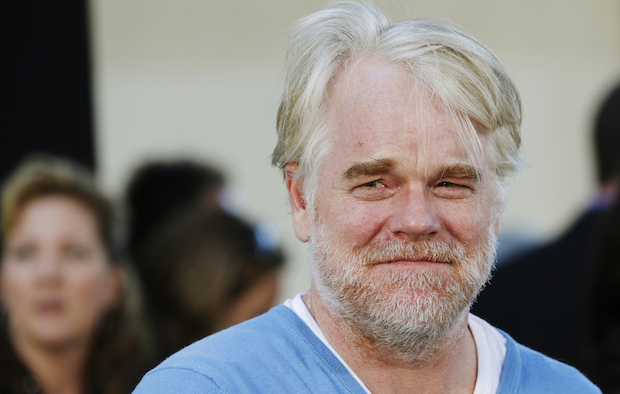
It was confirmed that a screenwriter friend found Oscar-winning actor Philip Seymour Hoffman dead in his New York City apartment Sunday.

NYPD law enforcement sources told PeoplesPunditDaily.com early Sunday afternoon that the cause of death was a heroin overdose, an addiction that Hoffman had been battling for years. Hoffman was found with a needle stuck in his arm filled with heroin, sources said.

Investigators are now trying to track down surveillance video at a bank where a male witness told cops he saw who he believed was Philip Seymour Hoffman buying drugs from two men Saturday night, the evening before his death.

A man told police he saw the actor withdraw large amounts of cash at an ATM at a bank near Hoffman’s West Village apartment at about 8pm Saturday night, and watched Hoffman hand over the cash to buy drugs from the two men, both of whom were wearing messenger bags and appeared to be working together.

The witness told NYPD investigators that Philip Seymour Hoffman looked “like $h!t” and was “very sweaty.”

Now, sources say NYPD investigators are looking for surveillance footage of the two men via cameras above the ATM where Hoffman withdrew cash, but as of late Sunday night the video was not yet in police possession.

Hoffman’s trip to the ATM at about 8pm is believed to be around the last time he was seen alive, sources said.

A neighbor said he saw Hoffman looking “grey” and “not well” on Saturday at about 10:30 AM ET when the actor purchased Kleenex tissues and soda, two items closely associated with individuals experiencing opiate withdrawal.

Adding to this story, sources said police are looking into whether Hoffman had injected a lethal batch of heroin responsible for the recent deaths of hundreds nationwide.

The star had reportedly been sober for 23 years up until a relapse just last year, which prompted him to spend 10 days in a rehabilitation facility. The news, despite the history of drug addiction, shocked those close to the actor.

“He was always quite intense, a little bit paranoid and troubled. Addiction was always going to be a constant struggle for him but this is so unexpected,” a source close to Hoffman told FOX411. “He was an incredibly knowledgeable person and so concerned with problems and issues around the world. He was one of those people with such an awakened mind he couldn’t switch off.”

Philip Seymour Hoffman is survived by his partner of 15 years, Mimi O’Donnell, and their three children.

“We are devastated by the loss of our beloved Phil and appreciate the outpouring of love and support we have received from everyone,” the family said in a statement on Sunday. “This is tragic and sudden loss and we ask that you respect our privacy during this grieving. Please keep him in your thoughts and prayers.”

It was confirmed that a screenwriter friend

manufacturing-growth

(Photo: REUTERS)

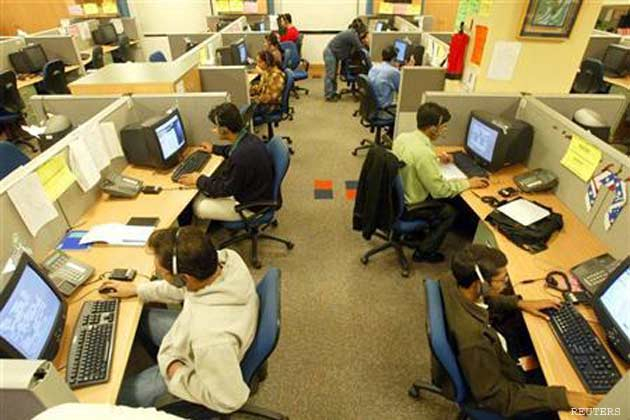
U.S. manufacturing growth slowed significantly in the month of January as new order growth plummeted by the largest drop seen in 33 years, driving overall factory activity to an 8-month low, an industry report showed on Monday.

The much weaker-than-expected reading sent U.S. equity markets sinking deep into the red, as manufacturing growth has nearly stalled in the United States.

The Institute for Supply Management (ISM) said its index of national factory activity fell to 51.3 last month, to its lowest level since May 2013, from a recently revised 56.5 in December.

January’s figure was also well below the economists’ forecast of 56 polled by Reuters, missing even the lowest estimate of 54.2. Readings above 50 point to expansion, while those below indicate contraction.

The January reading marked a second straight month of slowing growth from November’s recent peak reading of 57, which had been the highest since April 2011, suggesting the economy may once again be losing some of the steam some thought it may have had coming out of the second half of 2013.

Throughout his presidency, President Obama has been plagued by an economy that seems to be expanding, only to reverse course in the following quarter.

The biggest concern in the ISM report was the huge drop in the forward-looking new orders index, which fell to 51.2 from 64.4 in December. That 13.2-point drop was the largest monthly decline in that key component since December 1980.

Indicators of employment, production and inventory growth also declined from December. At 52.3, the employment reading was the weakest since June and well below December’s 18-month high of 55.8.

However, the prices index surged to 60.5 from 53.5, the highest reading since last February, suggesting overall cost is increasing.

UPDATE: February is off to a terrible start. Wall Street experienced a heavy sell-off today, as the Dow shed 326 points and the S&P 500 plummeted 2.3 percent fueled by weak global factory sector data and instability in emerging markets.

In addition to the report on U.S. manufacturing growth, an official reading on China’s manufacturing sector showed the factory sector in the world’s No. 2 economy is anemic. The PMI gauge came in at 50.5 in January from 51 in December.

January was a tough month. The S&P 500 slid 3.6 percent in the broad market average’s worst month since May 2012 and its worst January since 2010.

The Dow Jones Industrial Average fell 326 points, or 2.1%, to 15373, the S&P 500 shed 40.7 points, or 2.3 percent, to 1742 and  the Nasdaq Composite dropped 107 points, or 2.6 percent, to 3996.

January was a tough month for Americans’ 401Ks. The S&P 500 shed 3.6 percent in the broad market average’s worst month since May 2012 and its worst January since 2010.

The drop was fueled by worries about intense volatility in emerging-market currencies, coupled with increasing trouble in China.

U.S. manufacturing growth slowed significantly in the

People's Pundit Daily
You have %%pigeonMeterAvailable%% free %%pigeonCopyPage%% remaining this month. Get unlimited access and support reader-funded, independent data journalism.

Start a 14-day free trial now. Pay later!

Start Trial