Widget Image
Follow PPD Social Media
Friday, January 2, 2026
HomeStandard Blog Whole Post (Page 650)

Northern Virginia just got buried by more than two feet of snow.

This has two implications. First, I’m going to have a fun time shoveling my driveway.

Second, I’m going to add to my collection of humor that pokes fun at libertarians.

And now, courtesy of a left-leaning, quasi-populist softball buddy, we have our new addition: The tyranny of government snowplows!

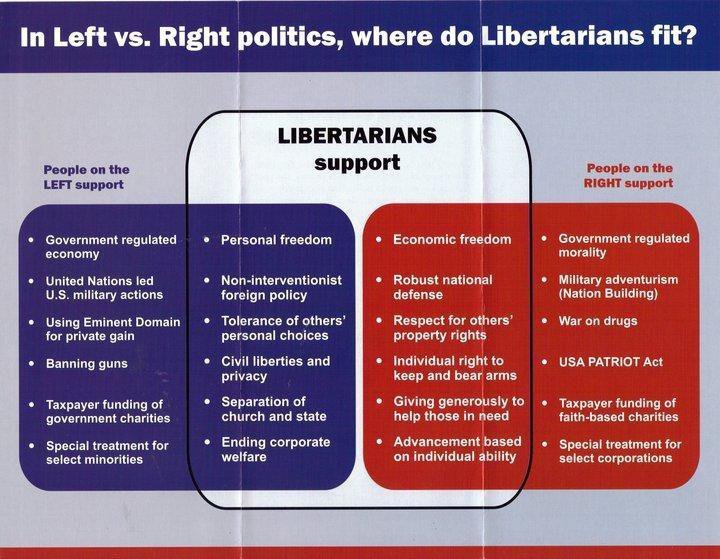
Now that we’ve all enjoyed a good laugh (because some of us libertarians can be very doctrinaire and dour, and thus deserve to be teased), it’s worth noting that plenty of places, such as private communities, shopping centers, etc, do rely on the private sector.

And it’s no mystery that the snow in those places is generally cleared faster and at lower cost.

That being said, most libertarian types are far more tolerant of local governments spending money on things that arguably might be public goods.

Indeed, one of our principles is that things tend to go awry (like the water scandal in Flint) when responsibility and accountability are blurred because of involvement by state government or the federal government.

So most of us will tolerate snow removal by local governments, even if we would prefer the private sector.

P.S. I also have a collection of pro-libertarian humor.

P.P.S. Just in case you want to vicariously share my snow-shoveling misery, this picture will give you an idea of the size of the problem.

Though it is nice that one of the cats is helping to point the way.

And another one of the kitties seems rather fascinated by the walls of snow.

For what it’s worth, this snow definitely beats the December 2009 storm and also is heavier than the February 2010 storm.

P.P.P.S. Since I’m not as smart as my neighbor, who parked at the end of his driveway, I have hours of work ahead of me. Too bad there aren’t any criminal, unlicensed teenagers looking for work.

Let's enjoy a good laugh (because some

Des-Moines-Register-HQ

The old Des Moines Register newsroom, left. (Photo: R.D. Shacklett)

The coveted Des Moines Register endorsement used to hold some weight with Iowa caucusgoers and, perhaps, impacted the results of the first-in-the-nation contest on the margins. Listening to or reading media reactions following the editorial board’s announcement on Saturday, you wouldn’t know that it has become–well, for lack of a softer characterization–increasingly irrelevant.

“Clinton, Rubio win coveted Des Moines Register caucus endorsements,” the headline in The Washington Post read. “Just over a week ahead of the Iowa caucuses, Hillary Clinton and Marco Rubio won the party endorsements of the Des Moines Register on Saturday, securing one of the most coveted and hard-fought political prizes of the presidential calendar,” wrote Anne Gearan and Sean Sullivan.

The Post’s political blog The Fix, which is headed up by Chris Cillizza, declared that the “Des Moines Register endorsement is a boost for Marco Rubio,” the Florida senator who is currently trailing frontrunner Donald Trump by 18 points in Iowa and 25 points in his own home state.

Trump called the editor of The Fix “one of the dumber and least respected of the political pundits,” an assessment with which we cannot disagree. Cillizza, who in fairness isn’t the author of this particular article, is the same pundit who gave Democrats an edge to maintain the U.S. Senate only a few short weeks before the 2014 midterm elections.

Republicans (of course) won a historic nine seats and wrested control of the upper chamber from the Democrats, not to mention the shellacking they handed them up and down the ballot. In fact, one of those seats was the contested open Senate seat in Iowa, which was vacated by outgoing Democratic Sen. Tom Harkin, now a Clinton supporter.

Republican Joni Ernst, who went on to defeat the Democratic nominee Bruce Braley and become the first woman ever elected to the U.S. Senate from the Hawkeye State, refused to participate in the interview charade with the Register. Sen. Ernst cancelled her sit down with the editorial board 12 days before the voting started and the leftwing paper went on to endorse the loser as “the better choice,” ignoring his demeaning of Iowan farmers and lying about a lack of attendance at committee hearings on Veterans Affairs.

Des Moines Register Iowa caucusesIn the 2012 Republican nomination, the Register also endorsed former Massachusetts Gov. Mitt Romney, who, while going on to be the eventual nominee, lost the caucuses to former Pennsylvania Sen. Rick Santorum. It was initially reported that Romney won the caucuses by 8 votes, but that’s because both the Republican Party of Iowa and the Register jumped the gun, depriving Santorum of much-needed momentum.

In 2008, the Des Moines Register editorial board also endorsed Clinton against President Barack Obama on the Democratic side. On the Republican side, they backed John McCain against the winner and former Arkansas Gov. Mike Huckabee. In 2004, which only had a Democratic caucus, the paper went with John Edwards, who was having an affair on his cancer-ridden wife. Now-Secretary of State John Kerry went on to victory and to be the eventual nominee.

It hasn’t been since the 2000 Republican nomination that the same candidate endorsed by the Des Moines Register actually went on to win the state’s caucus. And, while they endorsed caucus winner and nominee Bob Dole in 1996, they also chose him over George H.W. Bush in 1988, who went on to win the caucus and the presidency.

Results don’t lie. Newspapers, despite their declining circulation and abysmal track record, continue to refer to others’ endorsements and their own as “coveted,” even as their opinions slip further into irrelevance with actual voters. With this year’s picks appearing to follow historical trends–or at least for a certainty on the Republican side–one might consider this to be a teachable moment for the board.

A listing of the paper’s endorsements dating back to 1988 is accompanied by a statement that says endorsements “are not predictions, but recommendations of the Register’s editorial board.” True, but they should reflect the interests of their state in alignment with the interests of their consumers, i.e. voters who live in the state.

The coveted Des Moines Register endorsement used

Paul Krugman

Paul Krugman, partisan economist and professor at Princeton University, gives a speech on May 12, 2009 in Shanghai, China. (Photo by Zhu Lan/ChinaFotoPress/Getty Images)

I spend a lot of time mocking statists, and with good reasons. But since I’m an economist, maybe I should be careful about throwing stones. Especially since, based on a fairly miserable track record, my profession lives in a big glass house.

So, let’s take a closer look to see whether Shakespeare was wrong about which profession most deserved extermination.

We’ll start with a story from The Economist, which informs us that the IMF has a perfect record of failure when predicting recessions.

“The only function of economic forecasting is to make astrology look respectable,” John Kenneth Galbraith, an irreverent economist, once said. …The IMF publishes forecasts for 189 countries twice a year, in April and October, for the year in question and the following one. The Economist has conducted an analysis of them from 1999 to 2014… Over the period, there were 220 instances in which an economy grew in one year before shrinking in the next. In its April forecasts the IMF never once foresaw the contraction looming in the next year. …Our random-number generator correctly forecast the start of a recession 18% of the time.

I’d also add that the IMF has a near-perfect record of trying to undermine countries by recommending tax increases, but that’s a separate issue.

And I don’t mean to pick on the IMF. I’m sure that the forecasts from the Federal Reserve, the Congressional Budget Office, and private entities would show similarly dismal forecasting results. Especially if their models are based on Keynesian theory, as shown in the cartoon in this post.

If an inability to forecast was the worst thing you could say about economists, that wouldn’t be too awful. But it seems that we also have shady ethical values.  Consider some findings from a recent academic study.

The present article analyzes the differences between economists and non‐economists with respect to observed corruption behavior… For this purpose, I analyzed real world data of relating to the 109th–111th US Congress between 2005 and 2009, including 695 representatives and senators. I show that those who hold a degree in economics are significantly more prone to corruption than ‘non‐economists’. These findings hence support the widespread, but controversial hypothesis in the ‘economist vs. non‐economist literature’ that economists lack what Frey and Meier (2004) call ‘social behavior’.

Wow, we’re “significantly more prone to corruption” because we lack “social behavior.” That doesn’t sound good.

No wonder fraudsters can easily pass themselves off as economists.

Though maybe that data simply shows that economists with bad morals go into politics, whereas those of us with good character work at places such as the Cato Institute.

Or maybe it’s just evidence that there are too many left-wing economists, as reported in another article from The Economist (though at least the profession isn’t totally dominated by statists, like in anthropology).

A survey conducted in 2003 among practitioners of six social sciences found that…left-leaning economists outnumbered right-leaning ones by three to one, compared with a ratio of 30:1 in anthropology.

In any event, if you want to argue that the world would be better off without economists, the real clincher is that we even have the ability to make sex less fun. At least indirectly, as pointed out in this Quartz article.

Does more sex make people happier? Or do happy people just do it more? A gaggle of economists and statisticians lead by Carnegie Mellon University’s George Loewenstein, a well-known behavioral economist, have done their best to find out. Their study, published in the Journal of Economic Behavior & Organization, finds that more sex doesn’t always make people happier—especially if the increase is the result of taking part in an economics experiment. …So is more sex now a bad thing? Probably not. The findings seem to indicate that “the instruction to have more sex leads to a decline in wanting for sex and in enjoyment of sex.” … at least we know conclusively whether participation in behavioral economics studies is the best way for married couples to spice things up. The answer is no.

Let’s consider the tally so far.

Economists are 100 percent wrong, they’re crooks, and they even ruin sex for other people.

Not exactly a ringing endorsement.

But as every good economist will tell you, it’s the real world that’s messed up, not our theories.

And for some economists, that’s not just a joke.

If an inability to forecast was the

Global Mayors Summit Addresses Climate Issues During COP21

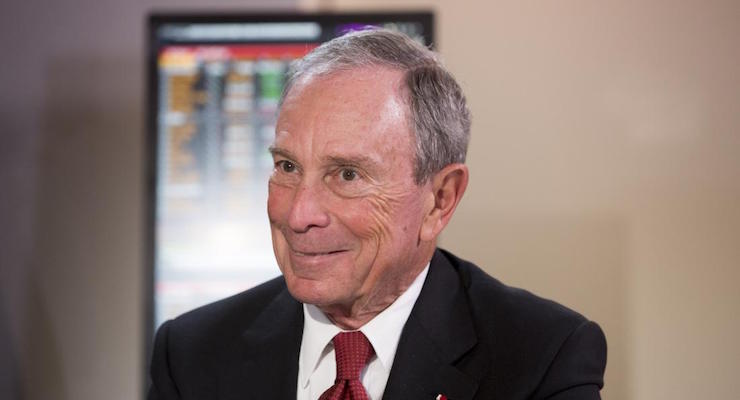
Michael Bloomberg at a news conference at the COP21 climate summit in Paris, on Dec. 4, 2015. (Photo: Christophe Morin/Bloomberg/Getty)

Former New York City Mayor Michael Bloomberg is considering a presidential run as an independent candidate, according to a new report. The New York Times reported that Bloomberg has already instructed advisers to put together a game plan in the event he decided to make an independent bid in this year’s presidential race.

His advisers and associates said he was concerned about the rise of socialist Sen. Bernie Sanders, the outcome of the FBI investigation into Hillary Clinton, and “galled” by Donald Trump’s dominance of the Republican field.

Bloomberg, 73, a billionaire Republican-turned-Democrat-turned-independent former mayor of New York City, has weighed running for the presidency on a third-party ticket in the past. But, in the end, the pragmatist has always concluded he could not successfully compete. Yet, with his braintrust studying past independent bids going back to Teddy Roosevelt, they believe the anything-but-typical 2016 election cycle may prove to be an opportunity.

However, contrary to what the report claimed, PPD’s senior political analyst Richard Baris said it’s crystal clear that a Bloomberg independent bid would hurt the Democratic nominee.

“There isn’t much enthusiasm for a gun-grabbing, nanny state menu-serving former mayor of New York City among GOP and GOP-leaning voters in the general electorate,” Baris said. “The idea that he would draw significant support from the Republican nominee in a three-way race is delusional and absurd.”

Baris said polling conducted by PPD as well as aggregate data from public polling surveys show a significant bloc of typical Democratic voters are having a hard time getting behind Mrs. Clinton. Those voters were either not going to vote, at all, or might have even crossed over to the Republican nominee if he or she has the right appeal.

“We have consistently identified a group of voters who are–to say the least–unenthusiastic about Clinton,” Baris added. “The goods news for Bloomberg is that he is likely to take the vast majority of those voters, perhaps by a margin as large as 8 in 10. The bad news for him is that there aren’t enough of them to win a general election, just enough to cost Mrs. Clinton the election.”

Bloomberg commissioned a poll in December that pits him against Trump and Clinton in a hypothetical three-way race. According to sources, he plans to conduct another round of polling after the New Hampshire Democratic primary on Feb. 9–where Clinton is now the underdog in aggregate polling–to gauge whether there is indeed an opening for him, according to two people familiar with his intentions.

Former New York City Mayor Michael Bloomberg

Kadyrov-Rally

Thousands of people gathered in Grozny in support of leader Ramzan Kadyrov. (Photo: Radio Marsho/RFE/RL)

A massive rally supporting the Kremlin-backed government led by Ramzan Kadyrov in Grozny, the capital of Chechnya, was staged on Saturday, January 22. Officials estimate that a million people were in attendance. The real figure was probably much lower, and most were probably forced to show up, but there were a lot of people in the streets.

This is the second large demonstration in recent weeks and comes on the heels of much snarling and gnashing of Kadyrov’s teeth against Russian political opposition figures on social media. Pictures of the Chechen leader holding back snarling dogs, and promising to commit Putin’s critics to psychiatric hospitals where the “injections will be increased” have been normal fare as of late.

Perhaps this activity has been spun up per the Kremlin’s request. Perhaps Kadyrov is simply doing what he does best, keeping Chechnya under control for Moscow. Intimidation has been part of the Kremlin’s tool kit for some time now. However, there seems the possibility that other driving currents are under the surface.

Could Kadyrov be unhappy with some in the Kremlin who may be advocating in favor of a more liberal tone with the West to achieve relief of sanctions; that along with the collapsing price of crude, have seriously weakened the Russian economy and, therefore, the regime’s hold on power?


Could he be sending a message to Moscow? The message being that the subsidies that Moscow pours into Chechnya should not be reduced as Moscow looks for ways to cut expenses with oil at $27?

It is interesting to note that one of the main recipients of the angry crowd’s wrath was Mikhail Khodorkovsky, whom they called a “faggot.” Khodorkovsky is a former oligarch that Putin released from prison ahead of the Sochi Olympics. It’s a given that Khodorkovsky is back on the Kremlin’s revenge list as he plots to overthrow Putin’s government from exile is Switzerland.

“We want to strongly oppose those who throw mud at the country, call for sanctions against Russia, and attempt to escalate tensions,” Husain Soltagereyev, the head of Chechnya’s Council of Trade Unions and the event’s organizer, told the state-run TASS news agency, as reported Radio Free Europe.

Several prominent Kadyrov supporters traveled from Moscow to attend the rally, including State Duma lawmaker Adam Delimkhanov, who is from Chechnya, and nationalist biker Aleksandr Zaldostanov, a staunch Putin supporter who is known as “The Surgeon.”

“A very deep bow to the leader of the Chechen Republic Ramzan Kadyrov for his honesty and straightforwardness,” Zaldostanov told the crowd. “We can only answer the enemies if we stand united, united with the Russian president.”

The presence of Putin supporters who traveled from Moscow makes it likely that the event had Kremlin support. Or, perhaps they were there to remind Kadyrov who he works for.

In any event, as the economic screws tighten on Russian government officials, it will be interesting to watch where that pressure is released. As the pie of oil money shrinks and insiders jockey for position, there will be winners and losers. It’s just a matter of time.

[mybooktable book=”currency” display=”summary” buybutton_shadowbox=”true”]

A massive rally supporting the Kremlin-backed government

MINNEAPOLIS ANTI ABORTION RALLY

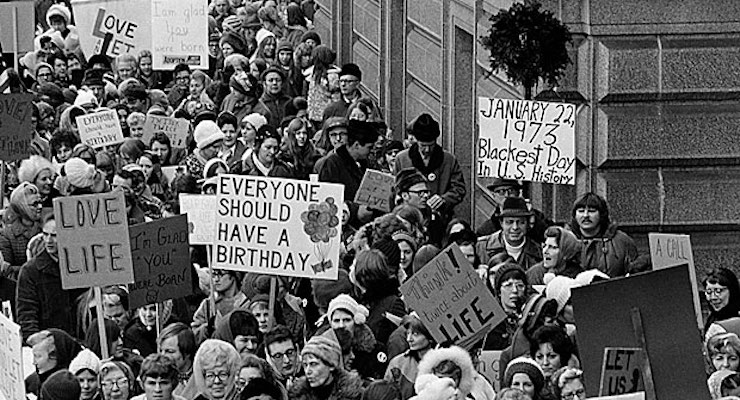
An estimated 5,000 people march around the Minnesota Capitol building protesting the U.S. Supreme Court’s Roe v. Wade decision, ruling against state laws that criminalize abortion on Jan. 22, 1973, when the Supreme Court legalized abortion with a 7-2 vote.

On the 43rd anniversary of the landmark Supreme Court decision in Roe vs Wade, which legalized abortion, public opinion on the issue has shifted significantly. As PPD has reported for years, Americans’ views on abortion are far more complicated than a simple question of whether one is pro-choice or pro-life.

According to a new poll by the Marist Institute for Public Opinion, which was sponsored by the Knights of Columbus, 81% of Americans want significant restrictions on abortion. That overwhelming number includes 66% of pro-choice supporters, which according to the poll, has a slight 51% to 44% edge over the pro-life designation. While those results run contrary to the totality of research data aggregated by PPD, the complexity of the issue underscored in the polling data is spot on.

“Contrary to the rhetoric and talking points that would have us believe that abortion restrictions are out of step with American opinion,” Patrick Kelly, Knights of Columbus vice president for public policy, said at the National Press Club in Washington, D.C. “Americans want commonsense legislation that limits abortion, and they want it by wide margins,” Patrick Kelly,Knights of Columbus vice president for public policy.”

When asked, two-thirds of those who self-identify as pro-choice still believe abortion should only be an option during the first three months of pregnancy, which doesn’t include those who said it should be allowed only in cases of rape, incest, or to save the life of the mother. Overall,  60% of Americans personally believe abortion is morally wrong, including one-third of those who self-identify as pro-choice.

Meanwhile, the Republican-controlled Congress, as a result of a presidential veto, failed to defund Planned Parenthood in light of the revelation that the organization sells the body parts of aborted fetuses. In January, the House and Senate passed the Restoring Americans’ Healthcare Freedom Reconciliation Act (H.R. 3762), which repeals ObamaCare, defunds Planned Parenthood (PPFA) and redirects the money to community healthcare centers that offer abortion and more comprehensive women’s health services.

Planned Parenthood, the nation’s largest abortion provider, continues to receive federal funds under the claim they are not allocated for abortions. However, the money is fungible and PPFA is primarily in the business of abortion, there’s no way to intellectually argue otherwise. As a testament to the PPFA’s and Democratic Party’s ability to rebrand, 68% of Americans are opposed to taxpayer funds being allocated for abortion, including 69% of women and 51% of pro-choice respondents. Yet, previous surveys show voters’ initial reaction is to support the organization.

Further, federal courts continue to strike down or temporarily suspend laws that ban abortion after 20 weeks, which new science indicates is a milestone for the nervous system. But, according to the Marist Poll, 61% of Americans support these laws, a number that is slightly lower than the average of public opinion surveys that have posed the question.

The poll reveals that there is quite a lot of common ground between the two designations. Sadly, the billions in the abortion industry also pay for a lot politicians’ votes. The vast majority of Americans (77%) think laws can exist which protect both the health and well-being of a woman and the life of the unborn, including 71% who consider themselves pro-choice.

Ultimately, it is generally believed that advances in science and availability of information is behind the shift in public opinion on abortion. Americans are not only making their views clear in polls and surveys, but also in their behavior. According to a CDC report released last November, there were 699,202 legally induced abortions that were reported from 49 reporting areas. The abortion rate for 2012 was 13.2 abortions per 1,000 women aged 15–44 years, and the abortion ratio was 210 abortions per 1,000 live births.

A gross number to be sure. However, the trend is headed in the direction of life.

Compared with 2011, the total number and ratio of reported abortions for 2012 decreased 4%, and the abortion rate decreased 5%. Additionally, from 2003 to 2012, the number, rate, and ratio of reported abortions decreased 17%, 18%, and 14%, respectively. Given the large decreases in the total number, rate, and ratio of reported abortions from 2011 to 2012, in combination with decreases that occurred during 2008–2011, all three measures reached historic lows.

Still, the vast majority of abortions are not done for the reasons the Democratic Party and Planned Parenthood would have us believe. Women in their twenties accounted for the majority of abortions in 2012 and, in fact, have throughout the entire period of analysis. According to the Department of Health and Human Services, the harsh reality is that the vast majority of abortions are done for reasons of convenience, not women’s health. In 2012, the CDC estimated that only 20.8% of all abortions were so-called medical abortions.

Again, disgusting. Since Roe vs Wade, there have been roughly 58 million abortions in America. But the good news is that, too, is headed in the direction of life.

On the 43rd anniversary of the landmark

Tahmooressi Hearing

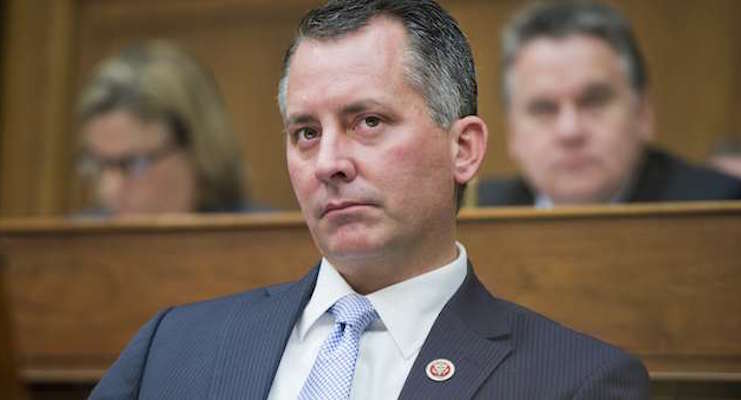
Rep. David Jolly, R-Fla., attends a House Foreign Affairs Subcommittee on the Western Hemisphere hearing in Rayburn Building, October 1, 2014. (Photo: AP/Tom Williams/CQ Roll Call)

Gainesville, FL – Rep. David Jolly, R-Fla.(13), is betting big ideas will triumph over big money and organization in the 2016 Florida Republican primary for U.S. Senate.

This week, Rep. Jolly introduced legislation that would ban members of Congress from personally asking for money in what he says is an effort to get lawmakers to spend less time fundraising and more time doing the job that they were elected to do. The bill, dubbed the “Stop Act,” would prohibit federal elected officials from directly soliciting political contributions, though they would still be allowed to attend fundraisers and personally speak to donors. Citizens would also be allowed to contribute to campaigns of their choosing.

However, under the proposed law, federal officeholders would be specifically prohibited from personally requesting money from people for their campaigns.

“We can’t have a part-time Congress in a full-time world,” Jolly said in a statement. “Americans wonder why we haven’t defeated ISIS, secured our border, provided health care for veterans, or reduced the national debt. Here’s why. Too many in Congress are more focused on raising money than solving the problems people elected them to fix.”

The Florida lawmaker put forward the bill at a time when members of Congress are more concerned about filling up their war chests than they are passing legislation. Yet within 24 hours, Rep. John Mica, R-Fla.(07), and Rep. Walter Jones, R-N.C.(03), signed on as original co-sponsors.

“I am honored to join David Jolly as a cosponsor of the Stop Act,” Rep. Jones, a tea party favorite said in a statement. “During my years in Congress, and especially during the post-Citizens United era, I have seen too many times where policy is driven by the needs of special interests, not the people. This bill would be a good first step in reducing the influence of special interests on Capitol Hill.”

Rep. Ron DeSantis, R-Fla.(06), is Jolly’s chief rival in the upcoming Republican primary. His campaign announced this week that they raised $772,000 in the fourth quarter of 2015, bringing its total contributions for 2015 to almost $3 million.

“This latest financial report proves that Congressman DeSantis has cemented himself as the frontrunner for the Republican nomination in Florida. The campaign not only enjoys the support of a majority of Florida’s major political donors but it also now includes some of the biggest Republican donors from around the country,” campaign manager Brad Herold said in a statement to PPD.

“People across the country know that Florida is ground zero in the battle for control of the U.S. Senate and it is clear that Congressman DeSantis is the only GOP candidate who can raise the resources and amass the grassroots support necessary to run a strong statewide campaign,” he added.

DeSantis, who was the previous frontrunner prior to Jolly’s momentum, enjoys the unified support of conservative groups such as The Club for Growth and Senate Conservatives Fund. Super PACs run by each group got behind the successful campaigns of now-Senators Joni Ernst, R-Iowa, and Tom Cotton, R-Ark., the latter of which seems to be the model for the DeSantis campaign. Both Republicans are Ivy League-educated veterans and, as was the case with Cotton’s campaign, DeSantis has made national security a top issue at a time when voters are increasingly concerned with the threat of terrorism.

While Jolly hasn’t ignored national security issues, he has focused more on domestic issues in what has been a slew of recent proposals. On the eve of National Law Enforcement Appreciation Day, Rep. Jolly also announced that 30 lawmakers signed on as cosponsors of his Thin Blue Line Act (H.R. 814), which would make the murder of a police officer, firefighter, or first responder an aggravating factor in death penalty cases. It would also make relevant the question of whether the victim–be them a federal, state, or local responder–was “murdered on duty, because of the performance of their duty, or because of their status as a public official.”

“This legislation simply says if you take the life of a law enforcement officer, be prepared to lose your own life,” Jolly said. “This legislation would not only assist to bring those who seek out victims based on their status to justice, but also provide support for those who put their lives on the line for their communities and its citizens.”

It’s companion bill in the Senate (S. 2034) is cosponsored by 21 senators and polling research conducted by PPD finds widespread support for the proposal both nationwide and in the Sunshine State.

Last year, Jolly, who described himself as a “governing conservative” in a conversation with PPD, introduced a bill (H.R. 457) to mandate lawmakers work in a 40-hour work week during the legislative session. Jolly said the current legislative calendar is “clearly not producing results and the American people rightfully expect their elected officials to work around the clock to tackle the nation’s problems.”

“It’s time members of Congress stop asking people for money and start doing their jobs,” he added. “Let’s close the integrity gap and the performance gap of our elected officials by eliminating their fundraising solicitations and put them back to work.”

Though the fundraising numbers give Mr. Herold reason to be optimistic, the Florida Republican primary is currently rated a Toss-Up on PPD’s Senate Election Projection Model, the only election forecast to correctly project Jolly would defeat Democrat Alex Sink in the March 2014 special election. Public polling has been scant, but PPD is shading the Sunshine State slightly red regarding the general election, with Jolly polling stronger than DeSantis against likely Democratic challengers, specifically Reps. Patrick Murphy and Alan Grayson.

Rep. David Jolly, R-Fla.(13), is betting big

Rand-Paul-Ted-Cruz

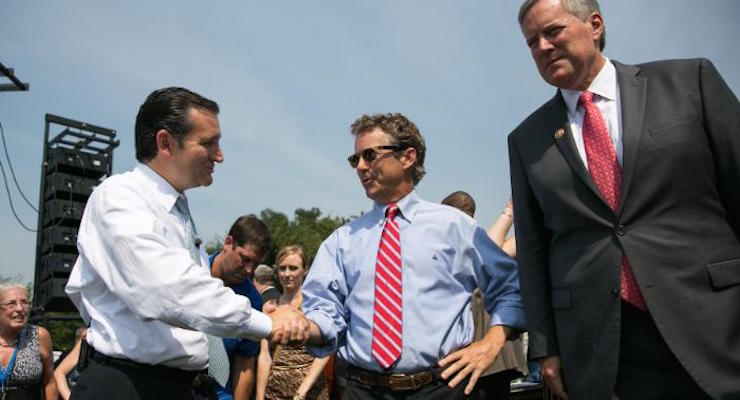
Texas Sen. Ted Cruz, left, and Kentucky Sen. Rand Paul, right, meet and attend a tea party rally in Washington, D.C.

Because I don’t like their plans for a value-added tax, some people seem to think that I am politically opposed to Rand Paul and Ted Cruz. That’s not true. Both senators are generally strong proponents of free markets and limited government, so the fact that they have one bad policy position shouldn’t a disqualifying characteristic.

But since I’m a policy wonk–and, because I work at a non-profit think tank–it’s not my role to tell people how to vote, anyhow. Instead, my niche in life is to analyze policy proposals. And if that means I say something nice about a politician who is normally bad, or something critical of a politician who is normally good, so be it.

In other words, nothing I write is because I want readers to vote for or vote against particular candidates. I write to educate and inform.

With all those caveats out of the way, let’s look at the federal government’s odious handouts for the ethanol industry, a very important issue where Rand Paul and Ted Cruz unambiguously are on the side of the angels.

My colleague Doug Bandow summarizes the issue nicely in a column for Newsweek.

Senator Ted Cruz has broken ranks to criticize farmers’ welfare. …Senator Rand Paul also rejects the conventional wisdom…the Renewable Fuel Standard, which requires blending ethanol with gasoline, operates as a huge industry subsidy. Robert Bryce of the Manhattan Institute figured the requirement cost drivers more than $10 billion since 2007. …Ethanol has only about two-thirds of the energy content of gasoline. Given the energy necessary to produce ethanol—fuel tractors, make fertilizer and distill alcohol, for instance—ethanol actually may consume more in fossil fuels than the energy it yields. The ethanol lobby claims using this inferior fuel nevertheless promotes “energy independence.” However, …the price of this energy “insurance” is wildly excessive. …”By creating an artificial energy demand for corn—40 percent of the existing supply goes for ethanol—Uncle Sam also is raising food prices. This obviously makes it harder for poor people to feed themselves, and raises costs for those seeking to help them.” Nor does ethanol welfare yield an environmental benefit, as claimed. In fact, ethanol is bad for the planet. …Ethanol is a bad deal by any standard. Whomever Iowans support for president, King Ethanol deserves a bout of regicide.

Here’s some of the Wall Street Journal’s editorial on the topic.

Mr. Cruz does deserve support in Iowa for…his…lonely opposition to the renewable fuel standard that mandates ethanol use and enriches producers in the Hawkeye State. The Senator refused to bow before King Ethanol last year, and he’s mostly held fast even though Iowa is where anti-subsidy Republicans typically go to repent. …the Texan is right that ethanol is one of America’s worst corporate-welfare cases. The mandate flows in higher profits to a handful of ethanol producers and keeps the price of corn artificially high, all other demand being equal. This raises the price of food. Al Gore and the greens once supported ethanol but gave up on it when studies showed it did nothing for the environment because of the energy expended in its production. So for those of you keeping track of this outsider feud on your establishment scorecards, mark ethanol as one for Mr. Cruz. In this case he’s standing on principle.

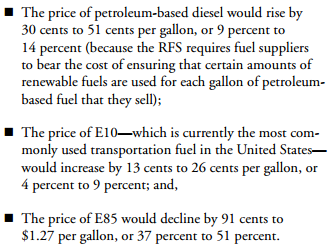
Not only does it raise the price of food, Washington’s mandate for ethanol use (the “renewable fuels standard”) means higher prices for motorists.

Here are the key findings on the topic from the Congressional Budget Office.

While Senators Cruz and Paul are fighting on the right side, Donald Trump is cravenly bowing to the special interests that want continued ethanol handouts. Jillian Kay Melchior explains for National Review.

One of the most destructive environmental subsidies in the United States has found an enthusiastic supporter in Donald Trump. “The EPA should ensure that biofuel . . . blend levels match the statutory level set by Congress,” he said yesterday in Iowa, adding that he was “there with you 100 percent” on continuing federal support for ethanol. …federal support for ethanol is a bum deal for Americans. Under the 2007 Independence and Security Act, Congress mandated that the United States use 36 billion gallons of biofuels, including corn ethanol and cellulosic biofuel, by 2022. And the federal government not only requires the use of ethanol; it also subsides it. Tax credits between 1978 and 2012 cost the Treasury as much as $40 billion. Moreover, numerous other federal programs, spanning multiple agencies, allot billions of dollars to ethanol in the form of grants, loan guarantees, tax credits, and other subsidies. …Ethanol-intensive fuel blends can wreak havoc on car, lawnmower, and boat engines. In fact, many vehicle manufacturers will no longer offer warranties when ethanol comprises 10 percent or more of fuel; engine erosion simply becomes too common. …perhaps it’s not surprising that Trump likes federal support of ethanol. After all, the real-estate mogul’s business model has historically hinged on using tax abatements and other subsidies to make his building projects profitable. …Trump’s support for ethanol belies his populist Main Street rhetoric. In reality, he’s just another rich, East Coast politician who would prop up special interests at the expense of the taxpayer.

The bottom line is that ethanol handouts are one of the most notoriously corrupt subsidies that are dispensed by Washington.

They also violate my Bleeding-Heart Rule by imposing costs on lower- and middle-income people to reward politically connected fat cats with deep pockets.

Policy makers who oppose ethanol deserve praise, especially when they are willing to say and do the right thing in a state (like Iowa) that has a lot of recipients of this execrable form of corporate welfare.

P.S. I will get really excited if a candidate goes to Iowa and explains that we should get rid of the entire Department of Agriculture.

[mybooktable book=”global-tax-revolution-the-rise-of-tax-competition-and-the-battle-to-defend-it” display=”summary” buybutton_shadowbox=”true”]

On the very important, odious handouts for

Reince-Priebus

RNC Chair Reince Priebus speaks to the debate crowd before the CNBC Republican presidential debate in Boulder, Colorado, on Oct. 29, 2015.

The Republican National Committee (RNC) has dumped the rightwing magazine National Review from an upcoming debate over an anti-Donald Trump issue. The magazine, which was started by renowned conservative William F. Buckley Jr., published a series of essays by prominent Republicans and–to a lesser extent, conservative–attacking the GOP frontrunner.

Trump actually named Buckley during last week’s Republican debate in North Charleston when Sen. Ted Cruz, R-Texas, said “not many conservatives” came from New York, an extension of his narrative alleging Trump represents “New York values”.

RNC spokesman Sean Spicer confirmed to Buzzfeed News that the magazine was dumped as a sponsor of the Feb. 25 debate in Houston, saying “a debate moderator can’t have a predisposition.”

CNN, Salem Media and Telemundo are the remaining debate sponsors and, earlier this week, the RNC announced that it had severed ties with NBC, the previously scheduled debate host, due to dissatisfaction with the way the network conducted a debate on CNBC this past October.

“We expected this was coming,” National Review publisher Jack Fowler wrote in a blog post early Friday, calling the RNC move a “small price to pay for speaking the truth about The Donald.” Trump responded at an event in Las Vegas late Thursday night, calling the magazine “a dying paper” making a pathetic grab for publicity. During the event, he announced the endorsement of “Duck Dynasty” star and conservative Willie Robertson.

“I want to be honest, I have received so many phone calls from people that you would call establishment, from people — generally speaking … conservatives, Republicans — that want to come onto our team,” Trump told reporters.

The Republican National Committee (RNC) has dumped

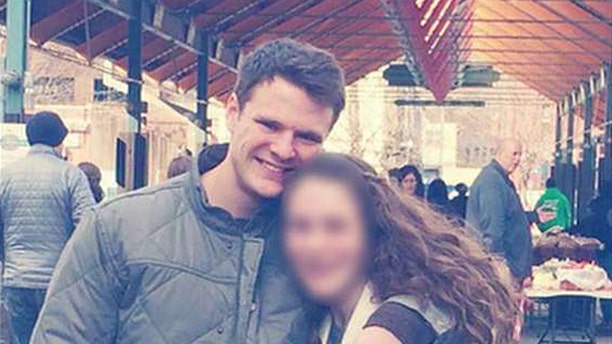
University of Virginia student Otto Frederick Warmbier arrested in North Korea

University of Virginia student Otto Frederick Warmbier, who was arrested in North Korea.

The Korean Central News Agency (KCNA), the state-run media in North Korea, claimed Friday that the regime arrested a University of Virginia college student. The agency alleged Otto Frederick Warmbier entered the North as a tourist but committed a “hostile act against the state” with “the tacit connivance of the U.S. government and under its manipulation.”

While the Korean Central News Agency (KCNA) claimed Warmbier was “arrested while perpetrating a hostile act,” it didn’t say when he was detained or explain the nature of the act he was allegedly caught perpetrating.

“We are in touch with Otto’s family, the U.S. State Department and the Embassy of Sweden in Pyongyang and doing all we can to secure his release,” said Gareth Johnson, a spokesman for China-based Young Pioneer Tours, which specializes in travel to North Korea. Regardless, issues with the U.S. consular in North Korea are handled by Sweden, which acts as a middle-man between Washington and Pyongyang due to the lack of diplomatic relations. In fact, U.S. and North Korea are technically still in a state of war, as the 1950-53 Korean War ended with an armistice, not a peace treaty.

To this day, roughly 28,500 American troops are stationed in South Korea and help defend the DMZ.

Warmbier is the third Westerner to be held by the dictatorial leftwing communist regime and, despite official travel warnings from the State Department, a few thousand continue to visit North Korea each year. Just last year, South Korean-born Canadian pastor Hyeon Soo Lim was sentenced to life in prison for alleged crimes against the state. North Korea has previously released or deported detained American citizens after high-profile figures visited the country, including Dennis Rodman.

However, James Clapper in late 2014 secured the release of two Americans during a secret mission to North Korea, which critics provided diplomatic credibility to the North.

The Korean Central News Agency (KCNA), the

People's Pundit Daily
You have %%pigeonMeterAvailable%% free %%pigeonCopyPage%% remaining this month. Get unlimited access and support reader-funded, independent data journalism.

Start a 14-day free trial now. Pay later!

Start Trial