Widget Image
Follow PPD Social Media
Tuesday, December 30, 2025
HomeStandard Blog Whole Post (Page 459)

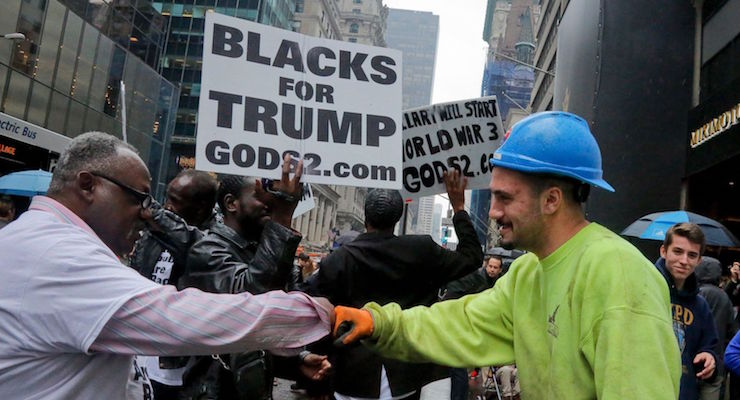
A construction worker exchanges a fist bump with pro-Trump supporters who gathered to cheer his election as President, Nov. 9, 2016, outside Trump Tower in New York. (Photo: AP/Associated Press)

A construction worker exchanges a fist bump with pro-Trump supporters who gathered to cheer his election as President, Nov. 9, 2016, outside Trump Tower in New York. (Photo: AP/Associated Press)

There are several features of President-Elect Donald Trump’s tax plan that are worthy of praise, including death tax repeal, expensing, and lower marginal tax rates on households.

But the policy that probably deserves the most attention is Trump’s embrace of a 15 percent tax rate for business. What makes this policy so attractive – and vitally important – is that the rest of the world has been in a race to reduce corporate tax burdens.

Ironically, the U.S. helped start the race by cutting the corporate tax rate as part of the 1986 Tax Reform Act. But ever since then, policy in America has stagnated while other developed nations are engaged in a virtuous contest to become more competitive.

And that race continues every day.

Most impressively, as reported by the Financial Times, Hungary will cut its corporate tax rate from 19 percent to 9 percent.

Hungary’s government is to cut its corporate tax rate to the lowest level in the EU in a sign of increasingly competitive tax practices among countries seeking to lure foreign direct investment. Prime Minister Viktor Orban said a new 9 per cent corporate tax rate would be introduced in 2017, significantly lower than Ireland’s 12.5 per cent. …The government said the new single band would apply to all businesses. “Corporation tax will be lowered to single digits next year: a rate of 9 per cent will apply equally to small and medium-sized enterprises and large corporations,” a statement said. …Gabor Bekes, senior research fellow at Hungary’s Institute of Economics…said the measure would likely provoke complaints of unfair tax competition from western capitals.

Needless to say, complaints from Paris, Rome, and Berlin would be a sign that Hungary is doing the right thing.
U.S. President-elect Donald Trump is seen speaking on a television on the floor of the New York Stock Exchange (NYSE) in New York, U.S., on Wednesday, Nov. 9, 2016. U.S. stocks fluctuated in volatile trading in the aftermath of Trump's surprise presidential election win, as speculation the Republican will pursue business-friendly policies offset some of the broader uncertainty surrounding his ascent. Photographer: Michael Nagle/Bloomberg

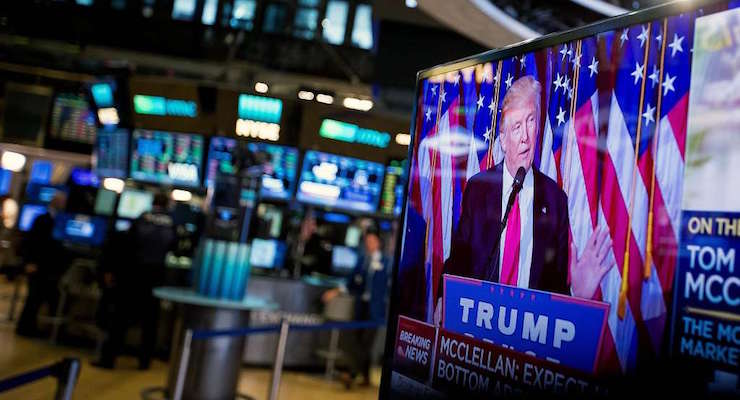
U.S. President-elect Donald Trump is seen speaking on a television on the floor of the New York Stock Exchange (NYSE) in New York, U.S., on Wednesday, Nov. 9, 2016. U.S. stocks fluctuated in volatile trading in the aftermath of Trump’s surprise presidential election win, as speculation the Republican will pursue business-friendly policies offset some of the broader uncertainty surrounding his ascent. Photographer: Michael Nagle/Bloomberg

Croatia also is moving policy in the right direction, albeit in a less aggressive fashion.

Corporate income tax will…be cut from 20 to 18 per cent for large companies and from 20 to 12 per cent for small and mid-level companies whose income is no higher than 400,000 euros annually.

Though the Croatian government also plans to lower tax rates on households.

Before the reform, people with salaries between 300 and 1,750 euros a month were taxed at 25 per cent, while now everyone earning up to 2,325 euros a month will be taxed at a 24 per cent rate. People earning more than 2,325 euros a month will have a 36 per cent tax rate, replacing a 40 per cent tax rate for anyone earning over 1,750 euros a month.

But let’s keep the focus on business taxation.

Our friends on the left don’t like Trump’s plan for a corporate tax cut, but here are there things they should know.

  1. A lower corporate tax rate won’t necessarily reduce corporate tax revenue, particularly over time as there’s more investment and job creation.
  2. A lower corporate tax rate will dramatically – if not completely – eliminate any incentive for American companies to engage in inversions.
  3. A lower corporate tax rate will boost workers wages by increasing the nation’s capital stock and thus improving productivity.

If you want more information, here’s my primer on corporate taxation. You can also watch this video.

Or, to make matters simple, we can just copy Estonia, which has the world’s best system according to the Tax Foundation.

There are several features of President-Elect Donald

Trump-Putin-AP-Reuters

New York businessman Donald J. Trump, left, and Vladimir Putin. (Photo: Andrew Harnik/AP; Reuters)

In a far-ranging interview to the Russian TV station and social media outlet Tsargrad, Mikhail Dimitriev, a leading Russian political economist expressed concerns for the future of Russia’s economy in the aftermath of Donald Trump’s election.

The three primary vulnerabilities of Russia’s economy in this context are Russia’s inability to transition from a resource-driven economy to a manufacturing-driven economy, the subsequent dependence of Russian state revenues on the prices of crude oil, and the dominant share that China has in the Russian oil export market.

In Mr. Dimitriev’s view, China’s economy is overheated simultaneously in the equity, bond, and real estate markets, leading to a perfect storm scenario in which a crash can lead to a drop in GDP of as much 25%.

Currently, China is staving off this calamity by continuously devaluing the Yuan and thus artificially underpinning its exports. However, this strategy is in danger as it flies in the face of Mr. Trump’s campaign promise to fight currency devaluation by all necessary means, including the introduction of punitive tariffs on Chinese imports to America.

The implementation of such a policy would in Mr. Dimitriev’s opinion, result in a hard crash of the Chinese economy with disastrous effects on the Russian economy due to both sharply reduced volumes of Chinese crude oil imports from Russia and a likely sharp drop in world oil prices to perhaps as low as USD25 per barrel.

The United States, with its highly developed internal markets and diversified economy is likely to be the least affected by a Chinese hard landing among all major world economies. This fact gives the US a strategically superior negotiating position vis-à-vis both China and Russia when it comes to geopolitical hotspots such as the South China Sea and Eastern Europe.

In response to the interviewer’s question on parallels to the protectionism that led to both world wars and the pause that the horrendous outcomes of these conflicts may give any responsible actors in the Trump Administration, Mr. Dimitriev opined that even when undesirable outcomes may be predicted sovereign states act in their own self-interest.

A soft landing of the overheated American equity markets while rebuilding the American domestic manufacturing base may be the primary interests of the Trump administration, even at the risk of international turmoil. In summary, it could be said that any American willingness to withdraw from the globalist playbook, is at once empowering to American interests and frightening to the Russians and the Chinese.

This article first appeared on Tsarizm.com, bringing news you need to know RIGHT NOW about Russia, the former Soviet Union and Eastern Europe.

[mybooktable book=”motherland” display=”summary” buybutton_shadowbox=”true”]

Mikhail Dimitriev, a leading Russian political economist

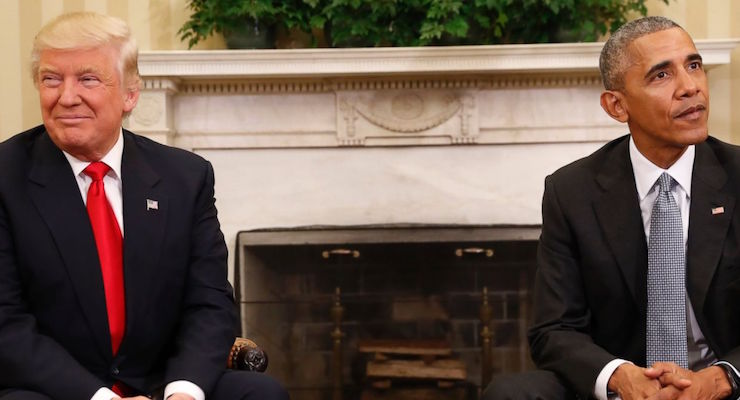
President-Elect Donald J. Trump meets with President Barack Obama in the Oval Office on November 10, 2016. (Photo: AP)

President-Elect Donald J. Trump meets with President Barack Obama in the Oval Office on November 10, 2016. (Photo: AP)

With Election 2016 giving up scores of data to pour over, we can already make a few very significant conclusions. Nearly all of them bode badly for the Democratic Party in the era of Barack Obama, while Republicans now enjoy their strongest electoral position in nearly 100 years under President-elect Donald J. Trump.

In part one of what will be a multipart series on the impact and significance of the 2016 presidential election cycle, we are going to look at the Democratic Party’s losses and why they occurred. In subsequent articles, we will examine the potential future impact these losses could have on the party, as well as the the forces at play responsible for them.

The Numbers

Let’s take a look at some of the raw results on the surface and then dig in a little deeper.

From 2008 to 2016, the Democratic Party has lost a net 9 seats in the U.S. Senate, 63 in the U.S. House of Representatives, 13 governorships, 949 state legislative seats and full control of 29 state legislatures.

Going into an election pundits proclaimed they were certain to win from top to bottom, they held full control in only 7 states. Now, they only hold only 5–California, Delaware, Oregon, Hawaii and Rhode Island–after the GOP tied it all up in the Connecticut state Senate.

President Senate House Governorships State Leg. Seats State Leg. Control
Obama (D) -9 -63 -13 -949 -29
Eisenhower (R) -12 -48 -14 -843 -21
Nixon/Ford (R) -5 -49 -19 -800 -31
Clinton (D) -7 -45 -11 -525 -18

As you can see from the table above, Democrats under President Obama underperformed their party’s candidates during Bill Clinton’s impeachment in the 1990s and their rival GOP candidates during and after the WaterGate scandal. This is significant considering everything we’ve heard about The Emerging Democratic Majority and demographic changes to the electorate.

Ironically, these losses in totality were actually blunted by having Mr. Obama at the top of the ticket in 2012. However, despite the Democratic Party gaining seats in 2012, it is clear now the Obama coalition is likely unique to the candidate, himself. Thus, they are likely to lose Senate seats in 2018.

Ticket-Splitting

The losses were exacerbated by what is at least a temporary end to split-ticket voting. Take the U.S. Senate for instance. Direct senatorial elections began following the adoption and ratification of the 17th Amendment in 1913. During that period, in only three elections–1920, 1924 and 1948–has the percentage of states voting for the same party on the presidential and senate levels reached 90% or more.

And never has it reached 100%, until 2016. In 1920, the percentage hit 97% before falling back to 91% in 1924 and 65% in 1928.

But on November 8, all 34 states voting on the Senate and White House are expected to have backed the same party’s candidates. I say expected because the U.S. Senate race in Louisiana won’t be decided until a runoff on December 10, due to the “Jungle Primary” rules.

Still, Republican state Treasurer John Kennedy is clearly the frontrunner and is expected to win.

Ticket-splitting in recent elections has generally favored Democrats, including Sens. Heidi Heitkamp in North Dakota, Joe Donnelly in Indiana and Claire McCaskill in Missouri. In 2012, their states backed Mitt Romney over Mr. Obama but voted for the Democratic candidates.

The reason ticket-splitting has favored Democrats is that there are simply more Red States than Blue States, though they are less populous. The straight-ticket vote helped vulnerable incumbent senators get across the finish line, i.e. Pat Toomey in Pennsylvania and Ron Johnson in Wisconsin.

That said, given the trend, we believe all of the aforementioned incumbent Democratic senators are extremely vulnerable in 2018. Since 1988, when it was less than 50%, straight-ticket voting has been on the rise and averaged 80% in the prior three elections. In only one period–from 1996 to 2000–did the percentage remain unchanged (flat).

The reason for this is a great place to pick up in the next column.

Election 2016: The Democratic Party has been

Obama-Abe-AP

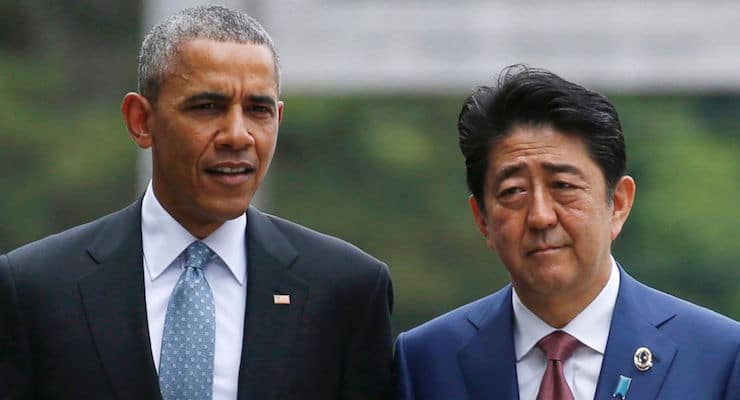
President Barack Obama and Japanese Prime Minister Shinzō Abe visit one of Japan’s holiest sites. (Photo: Toru Hanai/AP)

Japanese Prime Minister Shinzō Abe met this week with President-elect Donald J. Trump to discuss relations between the nations after the election. While most Big Media outlets focused on Mr. Trump’s criticisms of existing trade deals and protections Japan has enjoyed in the post-World War II global order, there is something else the two men very much agree on policy-wise.

Prime Minister Abe and President-elect Trump both warn about the potential and grave dangers of unfettered immigration from Muslim countries plagued by Islamic extremism. The proposed ban and “extreme vetting” outlined by President-elect Trump have been well-reported by the American media, but not too many reports have revealed it is already in effect in Japan.

The official policy of Japan is not to give citizenship to Muslims who come to Japan. In fact, permits for permanent residency are rarely given to Muslims.

According to Dr. Mordechai Kedar, who recently wrote about the policy in The Jewish Press, noted how there are only 10,000 Muslims in the entire nation of roughly 126 million people. Even though others dipute that number, which represents less than one hundredth of one percent, none put it above 100,000.

“The relations with Muslim countries are based on concerns such as oil and gas, which Japan imports from some Muslim countries,” Dr. Kedar wrote.

The fact of the matter is that it is an actual policy in Japan to discourage Muslim immigration and the culture. Their western allies in Europe and the U.S. have preached to the Japanese for years, pressuring them to take refugees in a country where woman who marry Muslim men can become outcasts. But Japanese officials privately boast that there are few if any Islamic terror attacks and the lack of assimilation is not a problem for them.

Juxtaposed to Japan, President-elect Trump’s proposals are meek. Proselytization is prohibited in Japan and there is only one imam in Tokyo, which is a city of over 13 million people.

“Japan is teaching the whole world an interesting lesson: there is a direct correlation between national heritage and permission to immigrate: a people that has a solid and clear national heritage and identity will not allow the unemployed of the world to enter its country; and a people whose cultural heritage and national identity is weak and fragile, has no defense mechanisms to prevent a foreign culture from penetrating into its country and its land,” Dr. Kedar concluded.

In other words, they put the interests of the Japanese people and the culture first. Nationalism, unlike the recent association in the U.S., is not synonymous with xenophobia or bigotry in Japan. Immigration is simply the same as any other government policy; it is designed to be sensitive to the interests and the needs of the domestic population.

Japanese Prime Minister Shinzō Abe met with

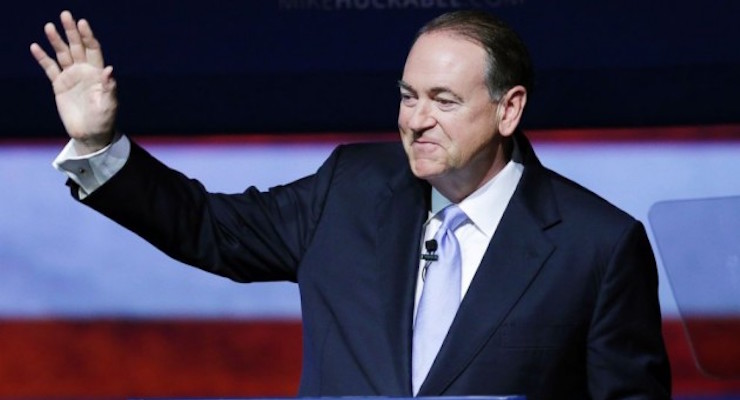
Former Arkansas Gov. Mike Huckabee waves to supporters in Hope, Ark, on May 5, 2015. (Photo: AP)

Former Arkansas Gov. Mike Huckabee waves to supporters in Hope, Ark, on May 5, 2015. (Photo: AP)

UPDATE: As we reported, the claims are false. Gov. Mike Huckabee tweeted out confirmation it was false and later appeared on Bill O’Reilly to discuss the meeting he had with President-elect Trump earlier.

Numerous reports citing a transition team official claim President-elect Donald Trump decided Mike Huckabee will be U.S. ambassador to Israel. However, People’s Pundit Daily not only cannot confirm this claim, but have not heard a word about the appointment during a day when the transition launched their national security team and announced three major posts have been filled.

The Daily Mail reported “his first order of business as the tip of Trump’s spear in the region would be moving the U.S. embassy from Tel Aviv to Jerusalem,” citing an official Friday.

If it was true, which we don’t believe it is, the appointment would make sense. The the former Fox News Channel host and governor of Arkansas has been active in Israeli-Middle East politics for decades and has a strong foundational relationship with Israeli leaders.

“That’s going to happen,” the transition official reportedly told The Daily Mail. “Governor Huckabee is going to see it through.”

Nevertheless, PPD has not been able to confirm these reports and, in fact, sources pushed back on the reports suggesting any decision had been made. Meanwhile, Pesident-elect Trump did officially offer Rep. Michael Pompeo the role of director of the Central Intelligence Agency (CIA), Lt. Gen. Michael Flynn the role of national security advisor and Alabama Sen. Jeff Sessions the post of attorney general.

All accepted.

Numerous false reports citing a transition official

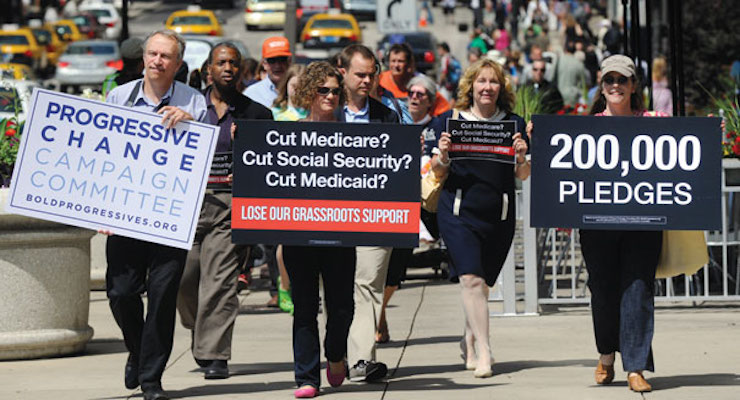
Progressive grassroots activists protest proposed Social Security, Medicaid and Medicare cuts in wake of ObamaCare passage. (Photo: AP)

Progressive grassroots activists protest proposed Social Security, Medicaid and Medicare cuts in wake of ObamaCare passage. (Photo: AP)

I’m a fiscal policy wonk, so I freely acknowledge that I sometimes look at the world through green-eyeshade-colored lenses. But I don’t think it’s an exaggeration to say that expanding entitlementschanging demographics, and increasing dependency are the main long-run threats to the American economy.

And this is why the concerns I had about a Hillary Clinton presidency aren’t that different from the concerns I have about a Donald Trump presidency.

Simply stated, he apparently doesn’t even think there’s a problem that needs to be addressed. Here’s what Trump said in an interview with the Daily Signal.

I’m not going to cut Social Security like every other Republican and I’m not going to cut Medicare or Medicaid.

Some people have told me not to get too worried about this statement because candidates make so many speeches and give so many interviews that they’re bound to make mistakes and say things they don’t really mean.

I agree that we shouldn’t get too hung up on every slip of the tongue on the campaign trail (notwithstanding this clip, for instance, Obama surely doesn’t think there are 57 states).

But the Trump people actually re-posted the Daily Signal interview on the campaign’s website, which certainly suggests (to use legal terminology) malice and forethought on the issue of entitlements.

That being said, this doesn’t mean Trump is a lost cause and that genuine entitlement reform is an impossibility.

  • First, politicians oftentimes say things they don’t mean (remember Obama’s pledge that people could keep their doctors and their health plans if Obamacare was enacted?).
  • Second, the plans to fix Social Security, Medicare, and Medicaid don’t involve any cuts. Instead, reformers are proposing changes that will slow the growth of outlays.
  • Third, if Trump is even slightly serious about pushing through his big tax cut, he’ll need to have some plan to restrain overall spending to make his agenda politically viable.

For what it’s worth, I’m particularly hopeful (or not un-hopeful, to be more accurate) that Trump will be willing to address Medicaid reform, ideally as part of an overall proposal to block-grant all means-tested programs.

One reason for my semi-optimism is that the programs is becoming even more of a mess thanks to ObamaCare and plenty of governors and state legislators would gladly accept that kind of reform simply to have more control over state budget matters.

And every serious budget person in Washington understands the program must be reformed because of spiraling costs.

The Wall Street Journal has an editorial today about out-of-control Medicaid spending.

One immediate problem is ObamaCare’s expansion of Medicaid, which has seen enrollment at least twice as high as advertised. …Governors claimed not joining would leave “free money” on the table because the feds would pick up 100% of the costs of new beneficiaries. In a new report this week for the Foundation for Government Accountability, Jonathan Ingram and Nicholas Horton tracked down the original enrollment projections by actuaries in 24 states that expanded and have since disclosed at least a year of data on the results. Some 11.5 million people now belong to ObamaCare’s new class of able-bodied enrollees, or 110% higher than the projections. Analysts in California expected only 910,000 people to sign up, but instead 3.84 million have, 322% off the projections. The situation is nearly as dire in New York, where enrollment is 276% higher than expected, and Illinois, which is up 90%. This liberal state triumvirate is particularly notable because they already ran generous welfare states long before ObamaCare.

Of course, the “free money” for states is a fiscal burden for all taxpayers. It’s just that the money from taxpayers gets cycled through Washington before going to state capitals.

But it’s also worth noting that the money soon won’t be “free.”

The state spending share of new Medicaid enrollment will rise to 5% next year and then to 10% by 2020, up from 0% today. The enrollment overruns mean these states will have less to spend than they planned for every other priority, especially the least fortunate.

I suppose this is a good opportunity to recycle my video on Medicaid reform. It was filmed more than five years ago, so some of the numbers are outdated (they’re worse today!). But the policy analysis is still right on point.

Who knows, maybe Trump actually will do the right thing and (in a phrase he took from Reagan) make America great again.

Remember, none of us expected that economic freedom would expand during Bill Clinton’s presidency, so a bit of optimism isn’t totally out-of-bounds.

The question remains if Donald Trump will

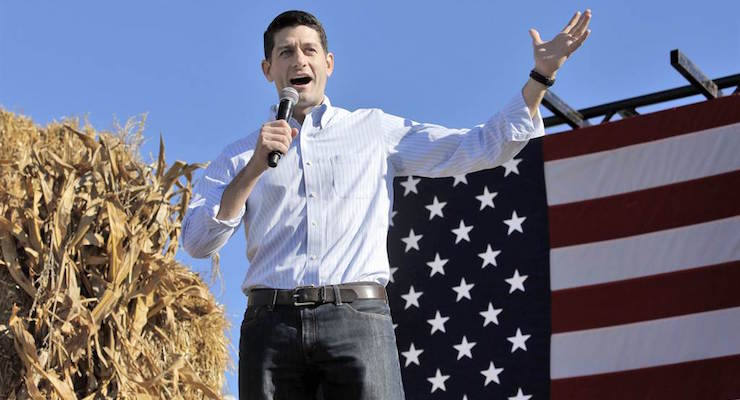
House Speaker Paul Ryan was berated and shouted down by chants of “Trump” at the Fall Fest event Saturday in Wisconsin after he abandoned the nominee amid controversy.House Speaker Paul Ryan was berated and shouted down by chants of “Trump” at the Fall Fest event Saturday in Wisconsin after he abandoned the nominee amid controversy.

House Speaker Paul Ryan at the Fall Fest event Saturday in Wisconsin.

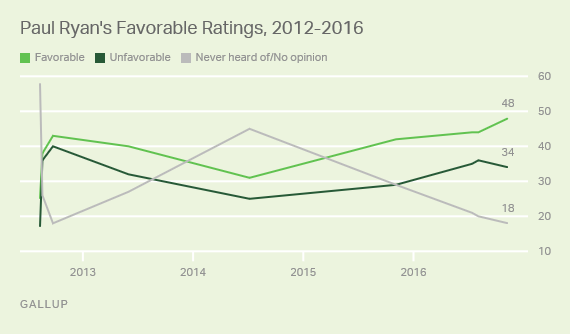
Nearly half of all Americans (48%) have a favorable opinion of House Speaker Paul Ryan, R-Wis., the highest percentage ever measured by Gallup.

According to the Gallup poll conducted from November 9-13, roughly 1 in 5 (18%) adults still remain unfamiliar with the Republican House speaker and 34% view him unfavorably, down slightly from 36% measured in August. Americans became more familiar with Speaker Ryan when he became Gov. Mitt Romney’s running mate in August 2012, when more than half of Americans (58%) didn’t even know who he was.

Paul Ryan Favorable Unfavorable Ratings Gallup

He also enjoyed his lowest favorable rating of 25% when he was relatively unknown and he did improve to 43% before the campaign ended. His favorable ratings fell to 31% by 2014.

Nearly half of all Americans (48%) have

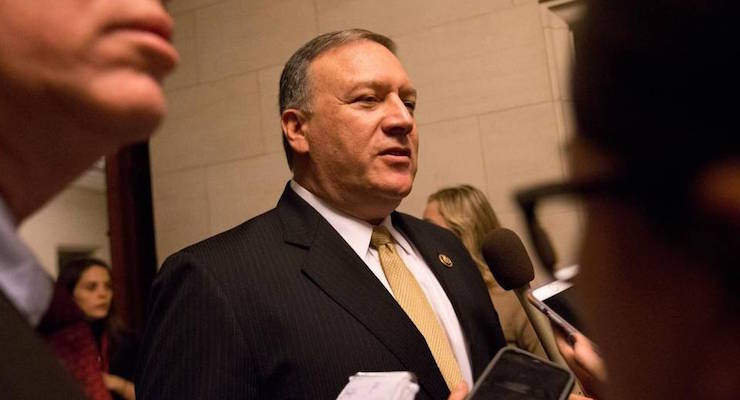
Rep. Mike Pompeo, R-Kansas, speaks to the press about the findings of the House Select Committee on Benghazi. (Photo: AP)

Rep. Mike Pompeo, R-Kansas, speaks to the press about the findings of the House Select Committee on Benghazi. (Photo: AP)

President-elect Donald J. Trump has offered Michael Pompeo the role of director of the Central Intelligence Agency (CIA), and he accepted it Friday. A transition team official confirmed Friday that Rep. Pompeo was 1 of 3 high profile national security positions–including Lt. Gen. Michael Flynn for national security advisor and Jeff Sessions for attorney general–that had been offered and accepted.

Rep. Pompeo, 52, a third-term congressman from Wichita, Kansas, came as a bit of a surprise to some politicos, despite his background on military and intelligence issues. However, he was on the House of Representatives intelligence and energy and commerce committees, as well as the House Select Committee on Benghazi that investigated the 2012 attack on the U.S. diplomatic compound in Libya.

He opposes closing the Guantánamo Bay detention camp, also known as Gitmo. Despite public opinion, President Barack Obama has sped up the release of even high-risk inmates to get the facility to a point where it cannot justify the cost to keep it operational.

“He would be a great asset to the Trump administration,” said Kansas Republican Chairman Kelly Arnold.

Education

Rep. Pompeo went to the U.S. Military Academy and majored in Mechanical Engineering. He graduated first in his class in 1986 and served in the Regular Army as an Armor Branch cavalry officer from 1986 to 1991. He received his J.D. from Harvard Law School, where he was an editor of the Harvard Law Review.

He then worked as a lawyer for Williams & Connolly before…

Professional

Mr. Pompeo founded Thayer Aerospace, which was renamed Nex-Tech Aerospace. But in 2006 he sold his interest in the company and became the President of Sentry International, an oilfield equipment company.

House of Representatives

Rep. Pompeo was elected to the U.S. House of Representatives during the 2010 Tea Party wave. He serves the 4th congressional district in Kansas. In addition to serving on the House Select Committee on the Events Surrounding the 2012 Terrorist Attack in Benghazi, he served on the Committee on Energy and Commerce, the Subcommittee on Commerce, Manufacturing and Trade and the Subcommittee on Energy and Power.

In 2013, he came under fire from the Hamas-linked Council on American-Islamic Relations (CAIR), an alleged Muslim rights activist group. In a speech on the House floor following the Boston Marathon bombings, he said Muslim leaders who fail to denounce acts of terrorism done in the name of Islam are “potentially complicit” in the attacks.

[brid video=”78951″ player=”2077″ title=”Rep. Mike Pompeo calls on imams to disavow terrorism”]

CAIR, who was named as an un-indicted co-conspirator in the Holy Land Foundation trial, called on him to withdraw or revise his statement, calling them “false and irresponsible.”

Fitting with President-Elect Trump himself, Rep. Pompeo does not suffer political correctness. After a 2013 visit to Gitmo, when prisoners were on hunger strike, Pompeo said they appeared to be doing just fine.

“It looked to me like a lot of them had put on weight,” he said.

However, his confirmation could be contentious with senators who oppose bulk collection of metadata in any form.

In March 2014, he criticized NSA whistleblower Edward Snowden being invited to the South by Southwest conference in Austin, Texas. Mr. Pompeo called for Snowden’s invitation to speak via telecast at the annual Texas event to be rescinded.

“Congress should pass a law re-establishing collection of all metadata, and combining it with publicly available financial and lifestyle information into a comprehensive, searchable database,” he said just this past year. “Legal and bureaucratic impediments to surveillance should be removed. That includes Presidential Policy Directive-28, which bestows privacy rights on foreigners and imposes burdensome requirements to justify data collection.”

On Iran, Rep. Pompeo mirrors the president-elect’s sentiment on the need to renegotiate the nuclear deal. The world’s largest state-sponsor of terrorism was given billions of dollars that cannot be taken back, but subsequent payments and arrangements are still vulnerable to future administrations.

“I look forward to rolling back this disastrous deal with the world’s largest state sponsor of terrorism.”

Meanwhile, the ranking Democrat on the House Permanent Select Committee on Intelligence, Rep. Adam Schiff, D-Calif., offered his congratulations to his colleague Friday morning.

“Mike is very bright and hard-working and will devote himself to helping the Agency develop the best possible intelligence for policy makers,” Schiff said in a statement. “While we have had our share of strong differences – principally on the politicization of the tragedy in Benghazi – I know that he is someone who is willing to listen and engage, both key qualities in a CIA Director.”

President-elect Donald J. Trump has offered Michael

Retired-Lt-Gen-Michael-Flynn-WSJ

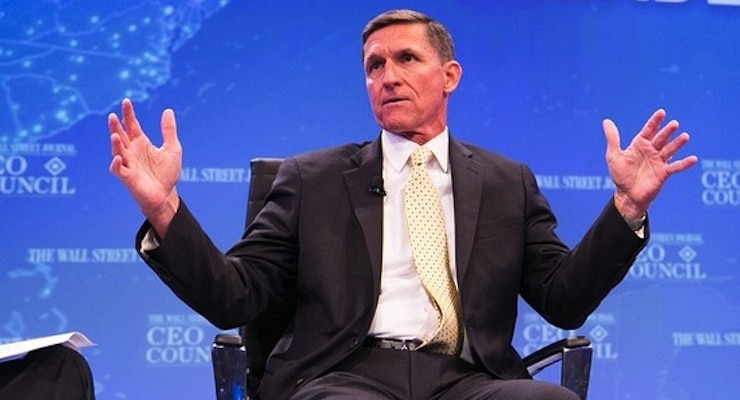
Retired Lt. Gen. Michael Flynn speaks at the Wall Street Journal CEO Council on Tuesday. (Photo: Ralph Alswang/WSJ)

President-elect Donald J. Trump has offered retired Army Lt. Gen. Michael Flynn the role of national security advisor, and he accepted it Friday. A transition team official confirmed Friday that Lt. Gen. Flynn was 1 of 3 high profile national security positions–including Mike Pompeo for CIA director and Jeff Sessions for attorney general–that had been offered and accepted.

A formal announcement is expected later Friday.

Flynn, 57, was a top adviser and support to the Trump campaign during the general election. He frequently introduced the President-elect on the stump and at rallies. He rose to national political prominence after writing a book about his tenure as the head of the Defense Intelligence Agency (DIA) under President Barack Obama.

Flynn wrote in an op-ed for the New York Post after the release of his book that he was fired for the “stand I took on radical Islamism.” Obama administration officials said Lt. Gen. Flynn was fired because of his contentious management style. However, James Clapper, the director of national intelligence who just resigned, said otherwise when he delivered the news to him.

The former DIA head said he asked Mr. Clapper if he was forced into retirement because of his leadership of the agency. The answer was “no.”

His potential appointment wouldn’t require Senate confirmation.

Lt. Gen. Flynn’s military career was largely operational, meaning combat-related in both conventional and special operations senior intelligence assignments.

Flynn served as the assistant chief of staff, G2, XVIII Airborne Corps at Fort Bragg, North Carolina, from June 2001 and Joint Task Force 180 in Afghanistan until July 2002. He commanded the 111th Military Intelligence Brigade from June 2002 to June 2004 before becoming the director of intelligence for Joint Special Operations Command from July 2004 to June 2007.

He also served as the senior intelligence officer for the Joint Special Operations Command.

President-elect Donald J. Trump has offered retired

Jeff-Session-Donald-Trump

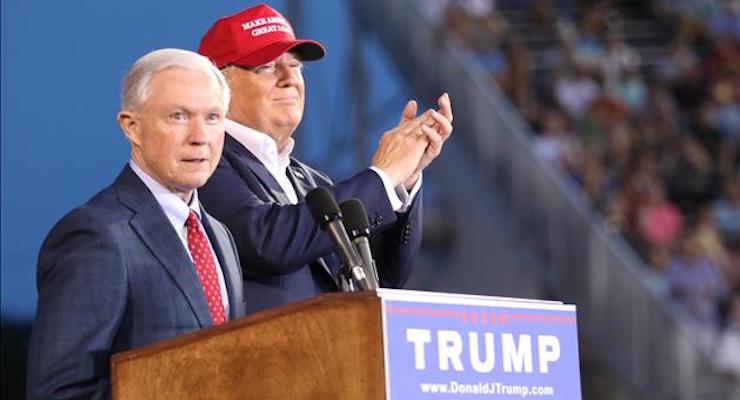
Sen. Jeff Sessions, left, with Donald Trump at a campaign event in Alabama.

President-elect Donald J. Trump has selected Alabama Sen. Jeff Sessions to be the next attorney general, following an embattled tenure by Loretta Lynch. An official close to the transition process said that the offer had been made officially and on Friday morning he had accepted the offer.

Sen. Sessions, 69, who was cited frequently by the new president’s rivals during the primary as the conservative standard-bearer on immigration, was an early supporter and first sitting senator to endorse Mr. Trump.

The transition team earlier this week released a transcribed text of his meeting with Sen. Sessions earlier this week, which also highlighted his impressive record as an attorney.

“While nothing has been finalized and he is still talking with others as he forms his cabinet, the President-elect has been unbelievably impressed with Senator Sessions and his phenomenal record as Alabama’s Attorney General and US Attorney,” the statement said.

Sen. Sessions also helped Mr. Trump with his campaign’s national security policy message, which was inline with the America First doctrine. Like Trump, Sen. Sessions is a foreign policy realist and is critical of other European countries who are not contributing enough to NATO.

Stephen Miller, a top policy adviser to the senator, joined Trump’s campaign and became an important voice on trade, immigration and corruption.

Sen. Sessions is a self-made man who worked his way through Huntingdon College in Montgomery, graduating with a Bachelor of Arts degree in 1969. before receiving a Juris Doctorate degree from the University of Alabama in 1973. He also served in the United States Army Reserve from 1973 to 1986 and earned the rank of Captain.

He was Assistant United States Attorney for the Southern District of Alabama from 1975-1977 before he was nominated by President Ronald Reagan in 1981 and confirmed by the U.S. Senate to serve as the United States Attorney for Alabama’s Southern District.

He stayed in that position for 12 years and in 1995 was elected Alabama Attorney General, serving as the state’s chief legal officer until 1997, when he successfully ran for the U.S. Senate.

President-elect Donald J. Trump has selected Alabama

People's Pundit Daily
You have %%pigeonMeterAvailable%% free %%pigeonCopyPage%% remaining this month. Get unlimited access and support reader-funded, independent data journalism.

Start a 14-day free trial now. Pay later!

Start Trial