Widget Image
Follow PPD Social Media
Friday, December 26, 2025
HomeStandard Blog Whole Post (Page 280)

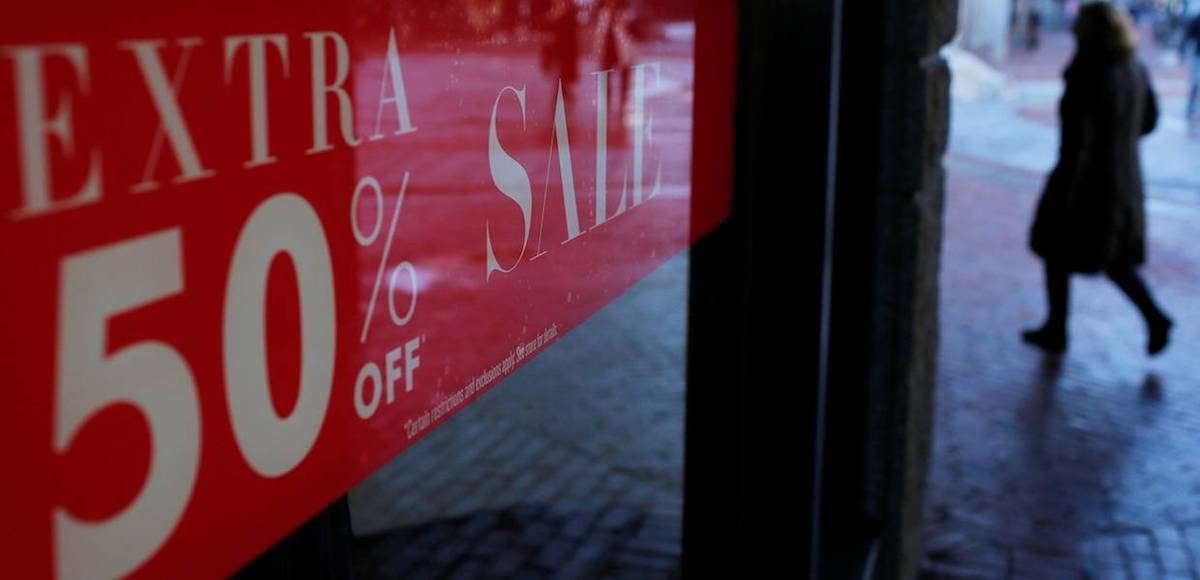
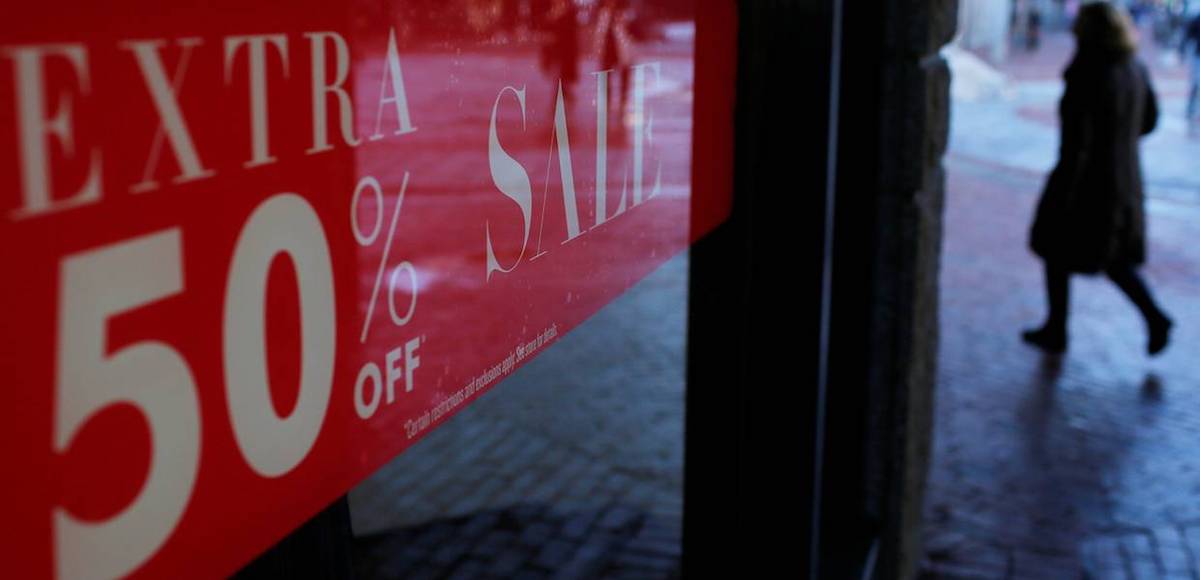
A shopper passes a ''Sale'' sign at Quincy Market in downtown in Boston, Massachusetts, U.S. January 11, 2017. (Photo: Reuters)

A shopper passes a ”Sale” sign at Quincy Market in downtown in Boston, Massachusetts, U.S. January 11, 2017. (Photo: Reuters)

The U.S. Census Bureau said the advance estimates of retail sales and food services came in at a seasonally adjusted $486.6 billion, an increase of 0.2%. That’s a 4.6% (±0.7%) gain from October 2016.

Total sales for the August 2017 through October 2017 period were 4.3% (±0.5%) higher than the same period a year ago, while the period from August 2017 to September 2017 was revised from up from 1.6% (±0.5%) to 1.9% (±0.2%). Retail trade sales were up 0.2% (±0.5%)* from September 2017, and were up 4.7% (±0.7%) from last year.

Building Materials and Garden Equipment and Supplies Dealers were up 8.8% (±2.1%) from October 2016, while Gasoline Stations were up 7.5% (±1.4%) from last year.

The U.S. Census Bureau said the advance

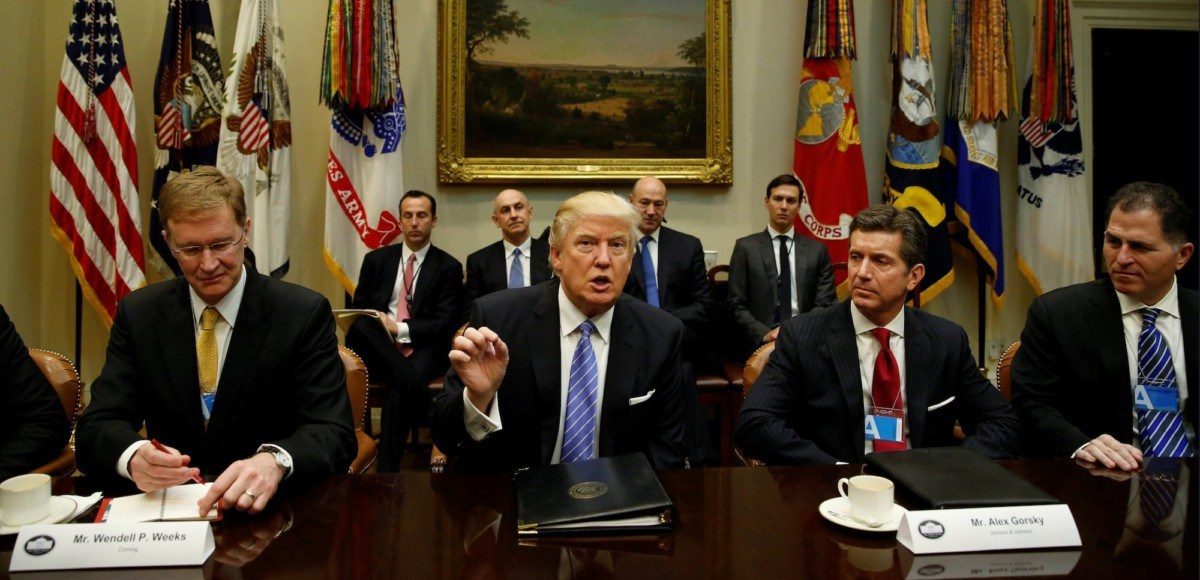
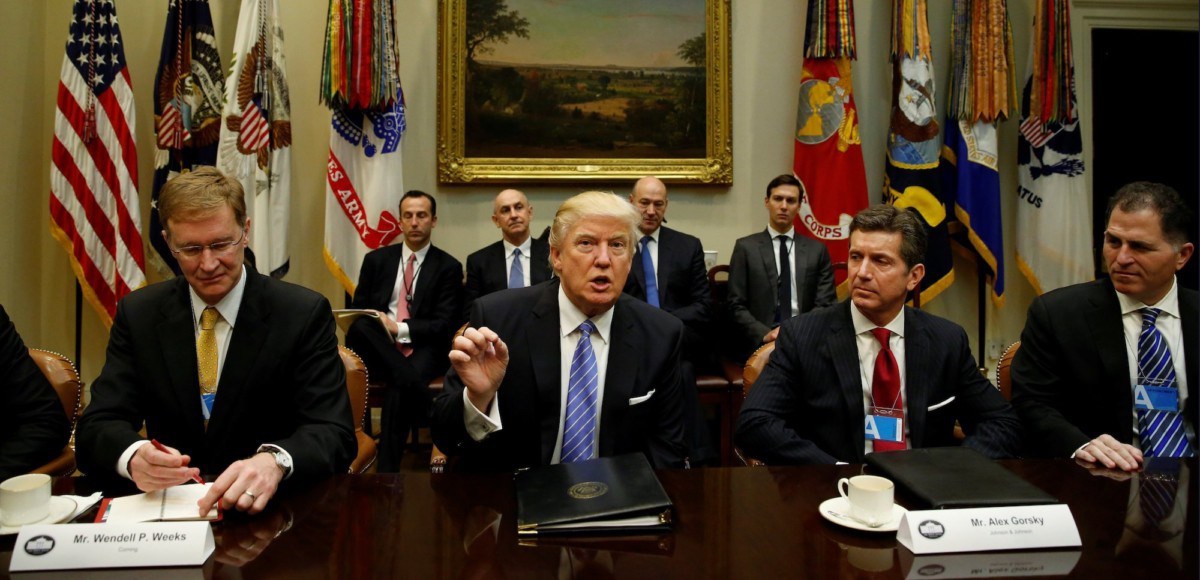
President Donald Trump hosts a meeting with business leaders in the Roosevelt Room of the White House in Washington on Monday January 23, 2017. (Photo: Reuters)

President Donald Trump hosts a meeting with business leaders in the Roosevelt Room of the White House in Washington on Monday January 23, 2017. (Photo: Reuters)

The National Federation of Independent Business (NFIB) Small Business Optimism Index continued its post-election surge in October, inching higher to 103.8. The historically elevated results and continued strong performance began during the months dating back to last November, when it skyrocketed immediately following the election of President Donald J. Trump.

“Owners became much more positive about the economic environment last month, which suggests a longer-run view,” said NFIB Chief Economist Bill Dunkelberg. “In the nearer term, they are more optimistic about real sales growth and improved business conditions through the end of the year.”

The Small Business Optimism Index retreated after Republicans in the U.S. Senate failed in their efforts to repeal ObamaCare over the summer and slightly in September. However, it’s remained at elevated levels as small businesses continue to report a stronger economy and a tighter labor market.

Four of the Index components rose last month, while five declined only slightly and one remained unchanged. Outlook for expansion and sales expectations each shot up six points and job openings rose by five points.

The already-tightening labor market continued to get tighter for small business owners in October, continuing a year-long trend since the election. However, the skills gap continues to be a challenge. Fourteen percent (14%), up 2 points from the previous month, reported increasing employment an average of 3.5 workers per firm, while 11% (down 2 points) reported reducing employment an average of 2.2 workers per firm on a seasonally-adjusted basis.

Fifty-nine percent (59%) of small business owners said they tried to hire in October, but a significant 88% of them reporting no or few qualified applicants. Thirty-five percent (35%) of all owners reported job openings they could not fill, a gain of 5 points from September and the highest reading since November 2001.

Construction firms were trying to fill high demand fueled by Hurricane Irma, resulting in strong hiring activity in Florida and Georgia.

“Consumer sentiment surged based on optimism about jobs and incomes, an encouraging development as consumers account for 70 percent of GDP,” said Dunkelberg. “We expect a pickup in auto spending as people in Texas and Florida continue to replace cars that were damaged in the hurricanes. We expect the same increase in home improvement spending, partly because of the hurricanes, but also because of the skyrocketing price of homes.”

The National Federation of Independent Business (NFIB)

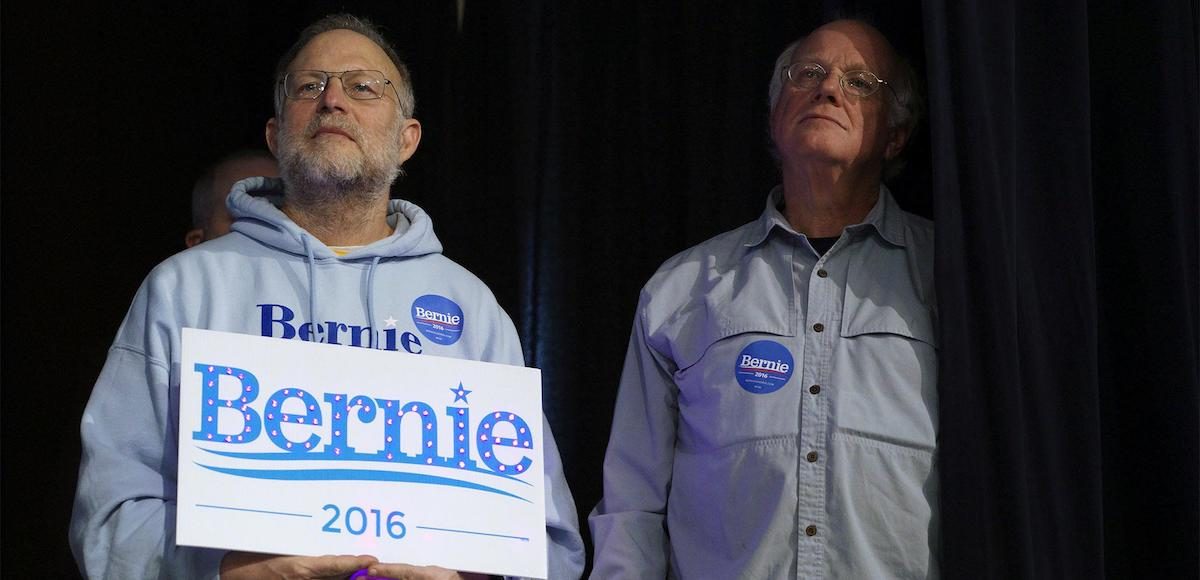
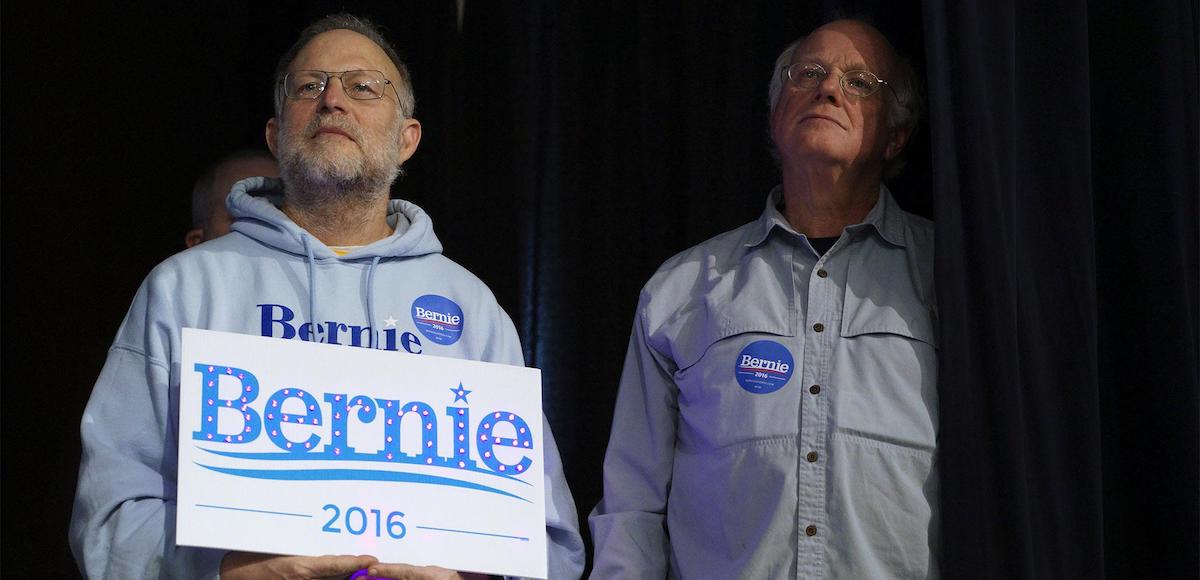
Ben Cohen, right, and Jerry Greenfield, left, at a rally for socialist Vermont Senator Bernie Sanders in Exeter, N.H., February 2016. (Photo: Reuters)

Ben Cohen, right, and Jerry Greenfield, left, at a rally for socialist Vermont Senator Bernie Sanders in Exeter, N.H., February 2016. (Photo: Reuters)

There’s an amusing ritual that takes place in Washington every time there’s a big debate about tax policy. A bunch of rich leftists will sign a letter or hold a press conference to announce that they should be paying higher taxes rather than lower taxes.

I’ve debated some of these people in the past, pointing out that they are “neurotic” and “guilt-ridden.”

But they apparently didn’t take my criticisms seriously and go into therapy, They’re now back and the Washington Post provides very favorable coverage to their latest exercise in masochism.

More than 400 American millionaires and billionaires are sending a letter to Congress this week urging Republican lawmakers not to cut their taxes. The wealthy Americans — including doctors, lawyers, entrepreneurs and chief executives — say the GOP is making a mistake by reducing taxes on the richest families… Instead of petitioning tax cuts for the wealthy, the letter tells Congress to raises taxes on rich people like them. …The letter was put together by Responsible Wealth, a group that advocates progressive causes. Signers include Ben & Jerry’s Ice Cream founders Ben Cohen and Jerry Greenfield, fashion designer Eileen Fisher, billionaire hedge fund manager George Soros… Most of the signers of the letter come from California, New York and Massachusetts.

Earlier in the month, I would have told these “limousine liberals” not to worry because I was pessimistic about the chances of a tax bill getting enacted. But then the Senate GOP unveiled a better-than-expected plan and I’m now semi-hopeful that something will make its way through the process.

That doesn’t mean, however, that these rich leftists should be despondent.

Because I’m a nice guy, today’s column is going to let them know that they don’t have to accept a tax cut. The Treasury Department has a website that they can use to voluntarily send extra money to Washington. It’s called “gifts to reduce the public debt,” and people like George Soros can have their accountants and lawyers calculate the value of any tax cut and then use this form to send that amount of money to D.C.

And if these guilt-ridden rich people take my advice and send extra money to Washington, I surely won’t object if they want to give me a modest commission.

But I don’t think I’ll get any money for the simple reason that these wealthy statists already have been exposed for being hypocrites. When given the option to pay extra to Washington, they run for the hills. In other words, they talk the talk, but won’t walk the walk.

It’s the same at the state level. Massachusetts also gives people the option to pay more to government, yet Elizabeth Warren has never volunteered to cough up extra cash.

By the way, if there was a prize for the most economically illiterate comment in the article, it would go to Bob Crandall, who apparently doesn’t realize that the money he puts in a bank is then lent to entrepreneurs and others who then invest the funds.

“I have a big income. If my income gets bigger, I’m not going to invest more. I’ll just save more,” said Crandall, who is retired.

Remarkable. I’m at a loss for words.

And I can’t resist sharing one final blurb from the article.

Former labor secretary Robert Reich…also signed the letter.

Huh, how did he become eligible to sign? He certainly never contributed to growth in the private sector, and I’m not aware that he inherited a bunch of money. Well, upon closer inspection, it turns out that fretting about inequality is a good way of becoming part of the top-1 percent.

If millionaire leftists like Elizabeth Warren, Ben

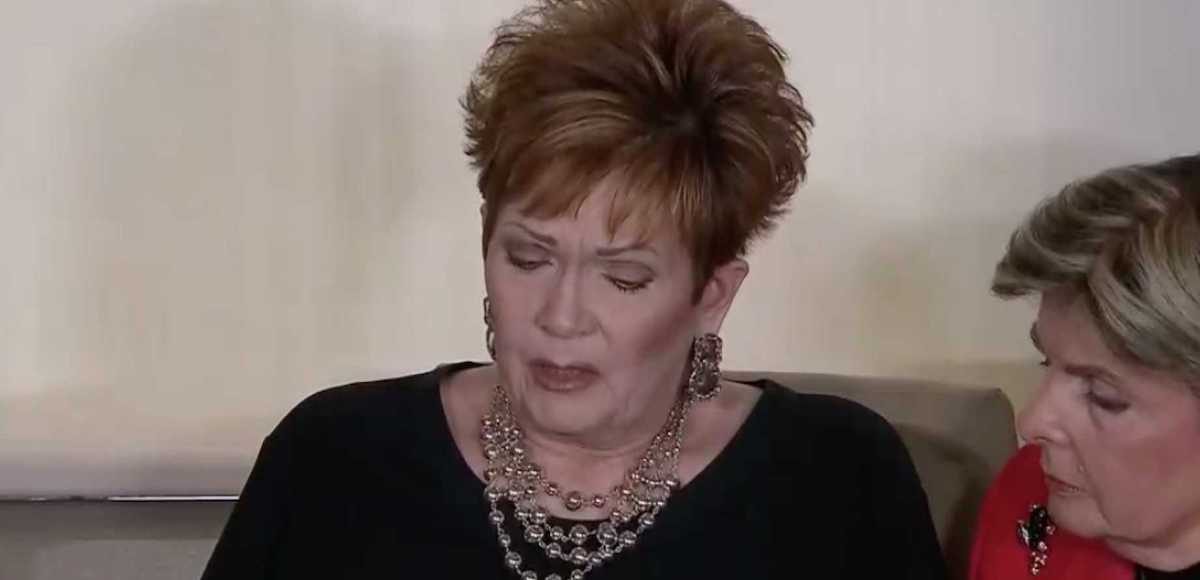
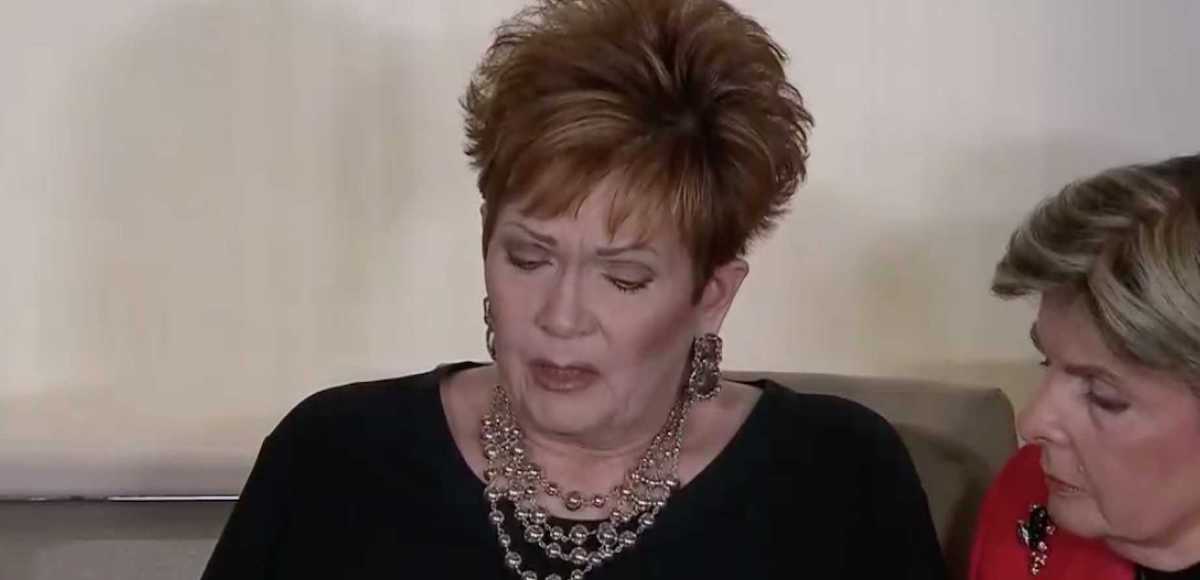
Beverly Young Nelson, left, at a press conference on Monday, November 13, 2017, with Gloria Allred. (Photo: Screenshot)

Beverly Young Nelson, left, at a press conference on Monday, November 13, 2017, with Gloria Allred. (Photo: Screenshot)

Beverly Young Nelson accused Republican candidate for U.S. Senate Judge Roy Moore of sexually assaulting her when she was a 16 year-old waitress in Alabama. Nelson, 55 (she turns 56 this week), made the allegations at a press conference on Monday with high profile attorney Gloria Allred.

She said Judge Moore was a regular at the Old Hickory House, a restaurant off of Highway 431 in Gadsden, Alabama. According to her allegation, Judge Moore had offered to give her a ride home but instead pulled the car around behind the restaurant.

She says he then locked his car doors, grabbed her, and attempted to violently force her face into his crotch. She resisted fiercely, the statement read, incurring bruises before he released her.

“I thought he was going to rape me,” Nelson said. “At some point, he gave up.”

Mrs. Nelson said Judge Moore told her, “You are just a child and I am the District Attorney of Etowah County; if you tell anyone, no one will believe you.” He then let her out of the car.

According to Ms. Allred, her client’s sister told her law firm that she told the story to her while still a teenager, that her mother heard of the alleged assault a few years ago, and her husband of 13 years discussed the matter with his wife before they were married.

She says that Moore offered to write a note in her yearbook, which she accepted. “I felt flattered and I said yes,” she stated. Moore then allegedly wrote in her yearbook a flirtatious note: “To a sweeter, more beautiful girl I could not say Merry Christmas. Christmas 1977, Love, Roy Moore, Old Hickory House.”

On Thursday, The Washington Post ran a story citing on-the-record interviews with four women who claim that when they were teenagers Judge Moore — in his 30s at the time — attempted to court or date them. Judge Moore vehemently denied the allegations and Campaign Chairman Bill Armistead released a preemptive statement in response to Mrs. Nelson.

Gloria Allred is a sensationalist leading a witch hunt, and she is only around to create a spectacle. Allred was the attorney who claims credit for giving us Roe v. Wade which has resulted in the murder of tens of millions of unborn babies.

We’ve said this before and we’ll say it again: Judge Moore is an innocent man and has never had any sexual misconduct with anyone. This is a witch hunt against a man who has had an impeccable career for over 30 years and has always been known as a man of high character.

Let it be understood: the truth will come forward, we will pursue all legal options against these false claims and Judge Moore will be vindicated.

As People’s Pundit Daily (PPD) reported, The Washington Post made an obvious effort to purify the political motivations of the initial accusers, but clearly omitted significant details about at least one of them. Deborah Wesson Gibson posted a “Doug Jones for U.S. Senate” video on her very liberal Facebook page and was clearly a Democratic activist.

The latest charges against Judge Moore increased the growing chorus of Establishment Republicans in D.C. calling on him to step aside, though the Secretary of State says his name will still appear on the ballot in December. According to the latest poll conducted by Emerson College, Alabama voters believe the stories are the result of a political hit job and still overwhelmingly back Judge Moore.

UPDATE: While accusations as serious as this cannot be outright dismissed, they should also be vetted and there does appear to be some questions surrounding the story. Mrs. Nelson claimed Judge Moore locked the doors while they were inside the vehicle, trapping her inside. While automatic door locks were technically offered in limited high-end vehicles in the 1970s, someone inside the vehicle was not locked inside. The door opened from the inside. Child locks were not available in automobiles until the 1980s.

We will continue to responsibly report these allegations.

Beverly Young Nelson accused Republican candidate for

Hillary Clinton and Bill Clinton, left, attend a meeting with President Donald J. Trump on Inauguration Day. FBI graphic, right. (Photo: AP)

Hillary Clinton and Bill Clinton, left, attend a meeting with President Donald J. Trump on Inauguration Day. FBI graphic, right. (Photo: AP)

The Department of Justice (DOJ) confirmed it received multiple referrals for criminal investigations over the past year related to Uranium One and the Clinton Foundation. Circa News reported that the referrals sent to the Justice Department have led to ongoing investigations into the controversial deal that allowed 20% of U.S. uranium resources to be placed under the control of Moscow.

The investigations also dive into allegations of pay-for-play at the Clinton Foundation.

Multiple sources, including congressional officials, tell Circa that the requests sent to the Department of Justice over the past year have led to ongoing investigations, which they say also include investigations into the alleged leaking of classified information to the media and the improper unmasking of Americans.

DOJ spokeswoman Sarah Isgur Flores told Circa, “the department takes seriously all allegations from Congress of criminal conduct in determining whether to open an investigation.” She said, “requests to open an investigation would be referred to the appropriate investigative agency, such as the FBI, for review.”

Isgur Flores said, “all allegations are reviewed in light of the principles of federal prosecution. And while some may find it frustrating at times, the Department has a policy against confirming or denying the existence of investigations in order to maintain the integrity of the process until and if charges are filed.

A bombshell report a few weeks ago revealed the FBI uncovered a massive bribery, corruption and racketeering scheme before the Obama Administration approved the deal. The latest revelation comes shortly after the Trump DOJ cleared a confidential informant for the FBI)to testify before Congress on Uranium One.

The decision lifted an unprecedented non-disclosure agreement, allowing him to testify about what he witnessed undercover surrounding Russia’s efforts to corner the global uranium market. It could also prove damning to Special Counsel Robert Mueller, who ran the FBI during what numerous experts say appears to be a scheme to coverup potential crimes resulting from the deal.

Special Counsel Robert Mueller Leaking Like A Sieve, Conduct Disturbs Legal Experts

Then-U.S. Attorney Rod Rosenstein, who is now the Deputy Attorney General and the man who appointed Mr. Mueller, oversaw the investigation.

Senator Chuck Grassley, R-Iowa, Chairman of the Senate Judiciary Committee, called for another special counsel to investigate the Obama-Clinton era deal, particularly given Mr. Mueller’s role in the investigation. While his committee has launched a probe as well, only the powers granted to a federal prosecutor can get to the bottom of what appears to be a clear cut Clinton quid pro quo.

A growing number of lawmakers in both the House and Senate have joined Chairman Grassley in that call.

FBI documents show Vadim Mikerin, the director of Rosatom’s Tenex in Moscow, was engaged in illegal activity as early as the fall of 2009.

“As part of the scheme, Mikerin, with the consent of higher level officials at TENEX and Rosatom (both Russian state-owned entities) would offer no-bid contracts to US businesses in exchange for kickbacks in the form of money payments made to some offshore banks accounts,” Agent David Gadren testified. “Mikerin apparently then shared the proceeds with other co-conspirators associated with TENEX in Russia and elsewhere.”

Mueller Probed Witnesses About Podesta Group Lobbying for Russian Interests at Clinton State Department

However, the Obama Administration still allowed him to enter the country with a L1 temporary work visa in December 2011.

At the time, the FBI had gathered substantial evidence against him and the Russian plot to corner the global uranium market. Worth noting, the Uranium One deal did not permit the exporting of the material out of the U.S., but unknown quantities have been exported to unknown nations and parties.

FBI officials did not respond to a request for comment.

The Department of Justice (DOJ) confirmed it

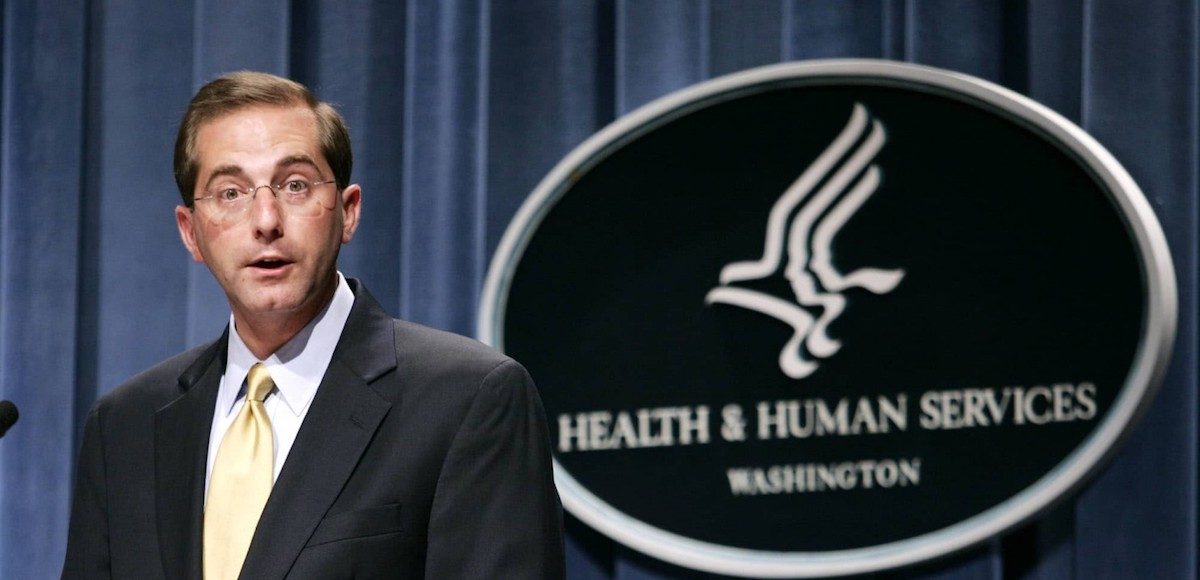
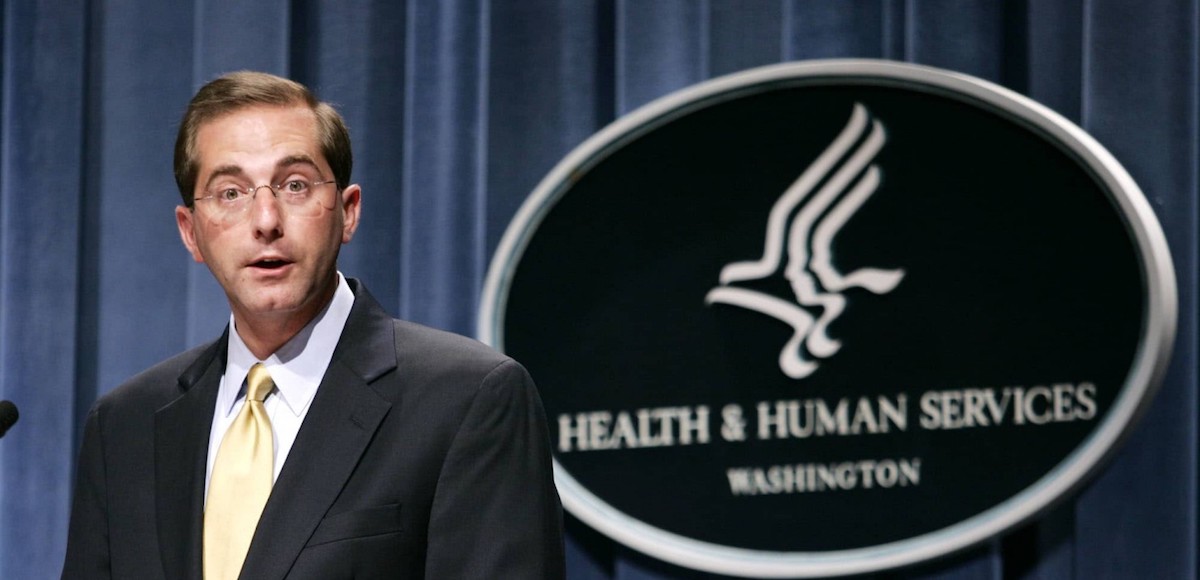
Deputy Health and Human Services Secretary Alex Azar meets reporters at the HHS Department in Washington, Thursday, June 8, 2006 to announce the approval of Gardasil, the first vaccine developed to protect women against cervical cancer. (Photo: AP)

Deputy Health and Human Services Secretary Alex Azar meets reporters at the HHS Department in Washington, Thursday, June 8, 2006 to announce the approval of Gardasil, the first vaccine developed to protect women against cervical cancer. (Photo: AP)

President Donald Trump announced the nomination of Alex Azar for Secretary of the Department of Health and Human Services (HHS). Mr. Azar, who spent most of the last 10 years with pharmaceutical giant Eli Lilly, served as the Deputy Health and Human Services Secretary under Tom Price.

“Happy to announce, I am nominating Alex Azar to be the next HHS Secretary,” President Trump tweeted. “He will be a star for better healthcare and lower drug prices!”

Azar, 50, is a lawyer and served as president of Eli Lilly’s U.S. affiliate before leaving in January to start his own consulting firm. He’s widely viewed as an expert on government health care regulation. President Trump has been a sharp critic of his industry and has made fighting the cost of prescription drugs a key administration goal.

“The drug companies, frankly, are getting away with murder,” President Trump at a Cabinet meeting this fall. Prices are “out of control” and “have gone through the roof.”

The nominee got his bachelor’s degree in government and economics from Dartmouth and once clerked for the late great conservative Supreme Court Justice Antonin Scalia. During the Clinton Administration, he served with independent counsel Kenneth Starr.

If confirmed, Azar would be Trump’s second HHS secretary after Mr. Price resigned amid criticism of his travel on charter flights that angered President Trump.

The White House is conducting a broad review of the policy and Secretary Price before he resigned opened two reviews, including an investigation by the inspector general. The House Oversight and Government Reform committee has launched a broad investigation of top political appointees.

President Donald Trump announced the nomination of Alex

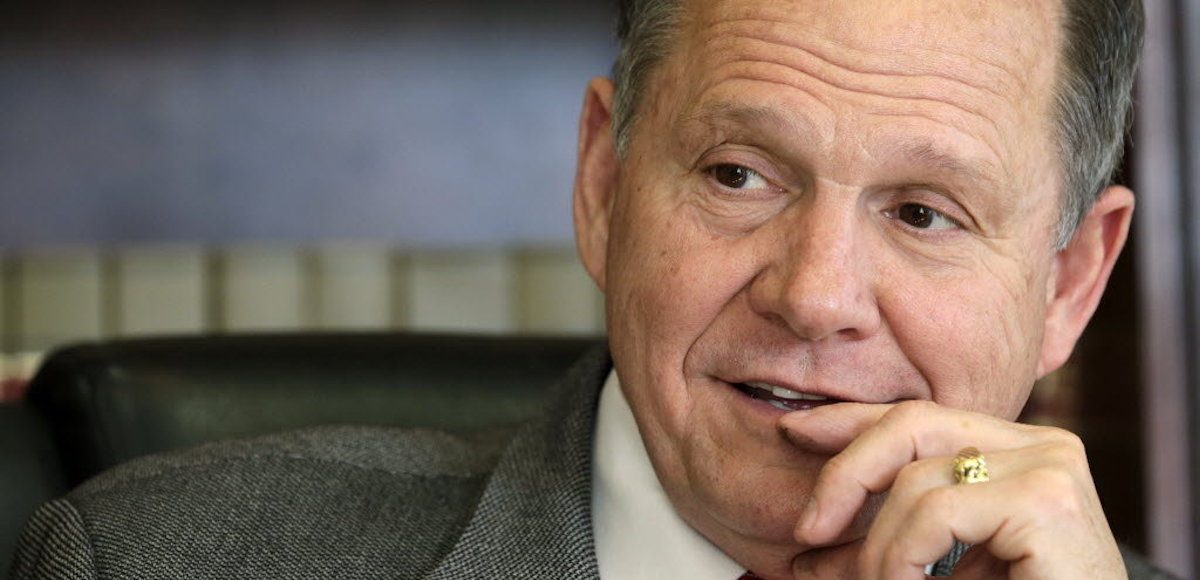
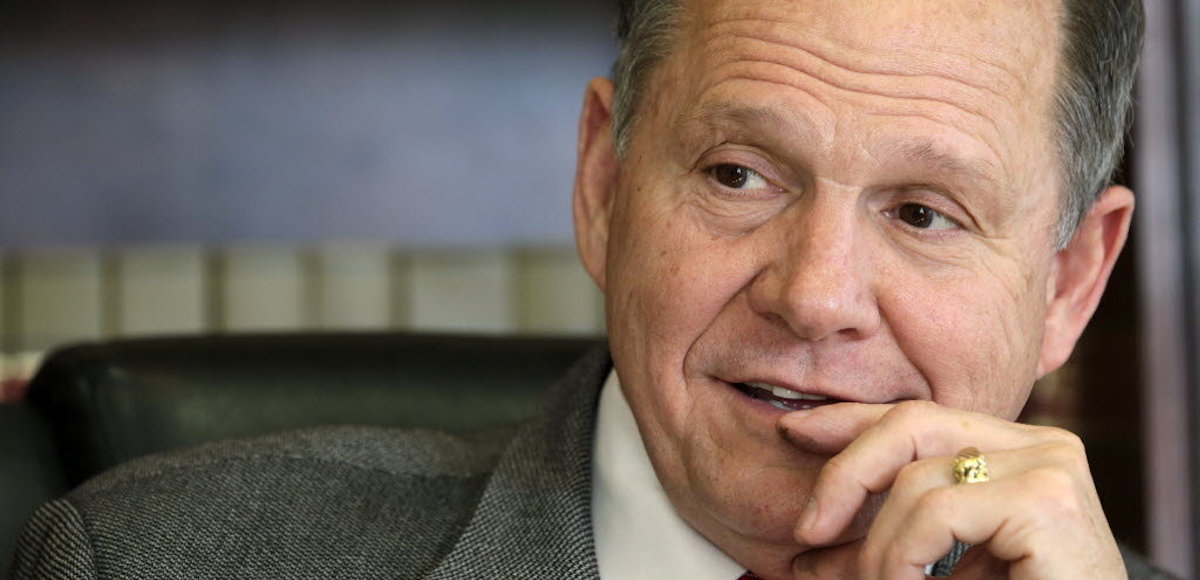
Former Alabama Chief Justice Roy Moore.

Former Alabama Chief Justice Roy Moore.

Republican Roy Moore still leads Democrat Doug Jones in the race for U.S. Senate in Alabama by 10 points, 55% to 45%, a new poll by Emerson College finds. The results do represent a closing from slightly more than 20 points since The Washington Post ran a story citing on-the-record interviews with four women who claim that when they were teenagers Judge Moore — in his 30s at the time — attempted to court or date them.

Judge Moore is vehemently denying the allegations and the campaign released a separate statement in response. Only 28% of voters said that the Post story influenced their vote, while 59% said the Post story made no difference.

Undecided voters go for Judge Moore 56% to 44% and has a 42% to 37% favorability rating juxtaposed to 31% to 40% for Mr. Jones. President Trump has a solid 58% to 36% approval rating in Alabama and, among voters with a favorable opinion of the President, Judge Moore leads Jones 85% to 15%.

Senate Majority Leader Mitch McConnell fares badly with voters in the Yellowhammer State, with a favorable/unfavorable rating of 20% to 51%. Steve Bannon, former White House strategist and Breitbart Chairman, has a 26% to 37% favorability rating among those polled.

Methodology

The Alabama Emerson College poll was conducted November 9th through November 11th, 2017, under the Supervision of Professor Spencer Kimball. The sample consisted of registered voters who indicated that they are very likely to vote, n=600, with a margin of error (MOE) of +/-3.9 percentage points. The Alabama data was weighted by gender, mode, and 2016 vote results. It is important to remember that subsets based on gender, age, party breakdown and education carry with them higher margins of error, as the sample size is reduced. Data was collected using an Interactive Voice Response (IVR) system of landlines only and an online sample

Republican Roy Moore still leads Democrat Doug

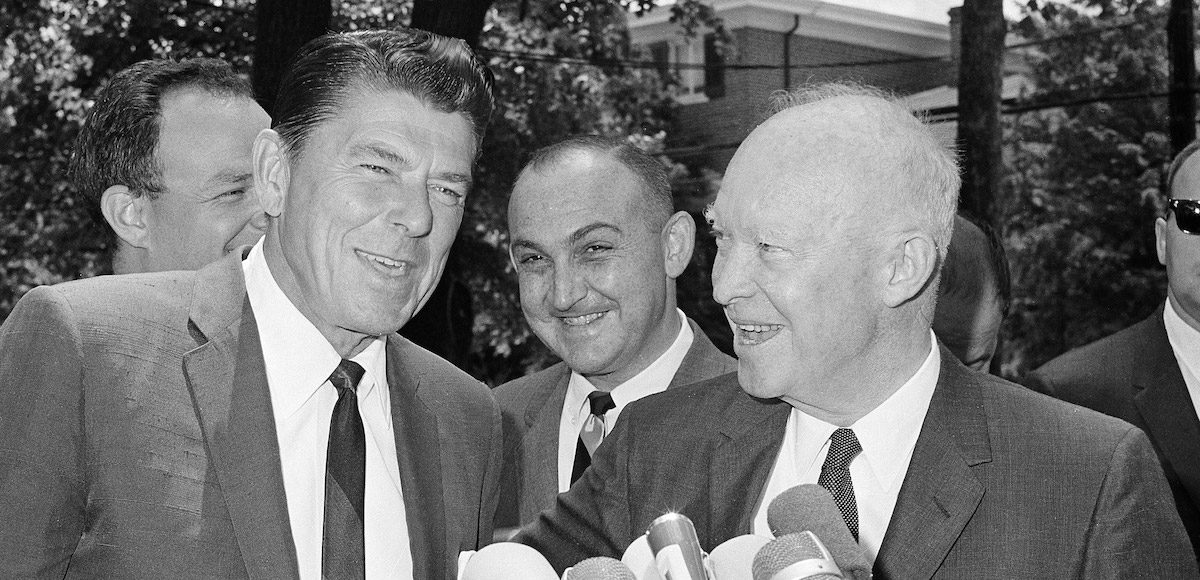
Ronald Reagan, left, Republican candidate for governor of California and former President Dwight D. Eisenhower, are all smiles as they are interviewed by newsmen outside Eisenhower's Gettysburg, Penn., office, June 15, 1966. Reagan paid a courtesy call on the former president and discussed politics. (Photo: AP)

Ronald Reagan, left, Republican candidate for governor of California and former President Dwight D. Eisenhower, are all smiles as they are interviewed by newsmen outside Eisenhower’s Gettysburg, Penn., office, June 15, 1966. Reagan paid a courtesy call on the former president and discussed politics. (Photo: AP)

In my decades of trying to educate policy makers about the downsides of class-warfare tax policy, I periodically get hit with the argument that high tax rates don’t matter since America enjoyed a golden period of prosperity in the 1950s and early 1960s when the top tax rate was more than 90 percent.

Here’s an example from Politico of what I’m talking about.

Well into the 1950s, the top marginal tax rate was above 90%. …both real GDP and real per capita GDP were growing more than twice as fast in the 1950s as in the 2000s.

This comparison grates on me in part because both George W. Bush and Barack Obama imposed bad policy, so it’s no surprise that the economy did not grow very fast when they were in office.

But I also don’t like the comparison because the 1950s were not a halcyon era, as Brian Domitrovic explains.

…you may be thinking, “But wait a minute. The 1950s, that was the greatest economic era ever. That’s when everybody had a job. Those jobs were for life. People got to live in suburbia and go on vacation and do all sorts of amazing things. It was post-war prosperity, right?” Actually, all of these things are myths. In the 1950s, the United States suffered four recessions. There was one in 1949, 1953, 1957, 1960 — four recessions in 11 years. The rate of structural unemployment kept going up, all the way up to 8% in the severe recession of 1957-58. …there wasn’t significant economic growth in the 1950s. It only averaged 2.5 percent during the presidency of Dwight D. Eisenhower.

For today’s purposes, though, I want to focus solely on tax policy. And my leftist friends are correct that the United States had a punitive top tax rate in the 1950s.

This chart from the Politico story shows the top tax rate beginning on that dark day in 1913 when the income tax was adopted. It started very low, then jumped dramatically during the horrible presidency of Woodrow Wilson, followed by a big reduction during the wonderful presidency of Calvin Coolidge.

Then, it jumped again during the awful presidencies of Herbert Hoover and Franklin Roosevelt. The rate stayed high in the 1950s before the Kennedy tax cuts and Reagan tax cuts, which were followed by some less dramatic changes under George H.W. BushBill ClintonGeorge W. Bush, and Barack Obama.

What do we know about the impact of the high tax rates put in place by Hoover and Roosevelt? We know the 1930s were an awful period for the economy, we know the 1940s were dominated by World War II, and we know the 1950s was a period of tepid growth.

But we also know that high tax rates don’t result in high revenues. I don’t think Hauser’s Law always applies, but it’s definitely worked so far in the United States.

This is because highly productive taxpayers have three ways to minimize and/or eliminate punitive taxes. First, they can simply choose to live a more relaxed life by reducing levels of work, saving, and investment. Second, they can engage in tax evasion. Third, they can practice tax avoidance, which is remarkably simple for people who have control over the timing, level, and composition of their income.

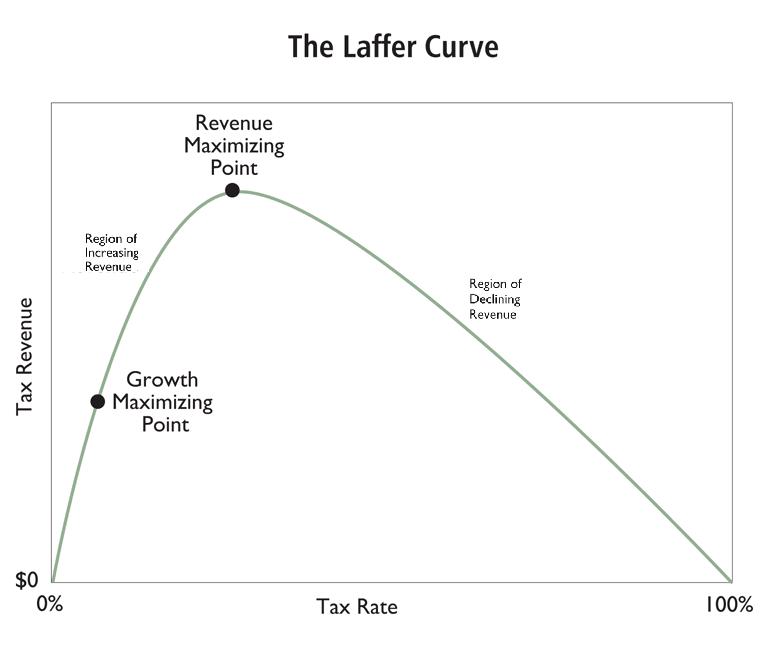
All these factors mean that there’s not a linear relationship between tax rates and tax revenue (a.k.a., the Laffer Curve).

And if you want some evidence on how high tax rates don’t work, Lawrence Lindsey, a former governor at the Federal Reserve, noted that extortionary tax rates are generally symbolic – at least from a revenue-raising perspective – since taxpayers will arrange their financial affairs to avoid the tax.

…if you go back and look at the income tax data from 1960, as a place to start, the top rate was 91 percent. There were eight — eight Americans who paid the 91 percent tax rate.

Interestingly, David Leonhardt of the New York Times inadvertently supported my argument in a recent column that was written to celebrate the era when tax rates were confiscatory.

A half-century ago, a top automobile executive named George Romney — yes, Mitt’s father — turned down several big annual bonuses. He did so, he told his company’s board, because he believed that no executive should make more than $225,000 a year (which translates into almost $2 million today). …Romney didn’t try to make every dollar he could, or anywhere close to it. The same was true among many of his corporate peers.

I gather the author wants us to think that the CEOs of the past were somehow better people than today’s versions.

But it turns out that marginal tax rates played a big role in their decisions.

The old culture of restraint had multiple causes, but one of them was the tax code. When Romney was saying no to bonuses, the top marginal tax rate was 91 percent. Even if he had accepted the bonuses, he would have kept only a sliver of them. The high tax rates, in other words, didn’t affect only the post-tax incomes of the wealthy. The tax code also affected pretax incomes. As the economist Gabriel Zucman says, “It’s not worth it to try to earn $50 million in income when 90 cents out of an extra dollar goes to the I.R.S.”

By the way, Zucman is far from a supply-sider — indeed, he’s co-written with Piketty — yet he’s basically agreeing that marginal tax rates have a huge impact on incentives.

The only difference between the two of us is that he thinks it is a good idea to discourage highly productive people from generating more income and I think it’s a bad idea.

Meanwhile, Leonhardt also acknowledges the fundamental premise of supply-side economics.

For more than 30 years now, the United States has lived with a top tax rate less than half as high as in George Romney’s day. And during those same three-plus decades, the pay of affluent Americans has soared. That’s not a coincidence.

But he goes awry by then assuming — as is the case for many statists — the economy is a fixed pie. I’m not joking. Read for yourself.

..,the most powerful members of organizations have fought to keep more money for themselves. They have usually won that fight, which has left less money for everyone else.

A market economy, however, is not a zero-sum game. It is possible for all income groups to become richer at the same time.

That’s why lower tax rates are a good idea if we want more prosperity – keeping in mind the important caveat that taxation is just one of many policies that impact economic performance.

P.S. Unbelievably, President Franklin Roosevelt actually tried to impose a 100 percent tax rate, and that’s not even the worst thing he advocated.

Did America really enjoy a golden age

South Africa's Finance Minister Malusi Gigaba looks on as he speaks during the Thomson Reuters economist of the year awards in Sandton, South Africa July 13, 2017. (Photo: Reuters)

South Africa’s Finance Minister Malusi Gigaba looks on as he speaks during the Thomson Reuters economist of the year awards in Sandton, South Africa July 13, 2017. (Photo: Reuters)

Since there’s a big debate about whether there should be tax cuts and tax reform in the United States, let’s see what we can learn from abroad.

And let’s focus specifically on whether changes in tax policy actually produce “revenue feedback” because of the Laffer Curve. In other words, if tax rates change, does that incentive people to alter how much they work, save, and invest, thus changing the amount of taxable income they earn and report?

I’ve written about how the Laffer Curve has impacted revenue in nations such as FranceRussiaIrelandCanada, and the United Kingdom.

Laffer-Curve-graphNow let’s go to Africa. In a column for BizNis Africa, Kyle Mandy of PwC explicitly warns that South Africa is at the wrong spot on the Laffer Curve.

At the time of the 2017 Budget in February, a number of commentators, including myself, warned National Treasury and Parliament that the tax increases announced in the Budget, particularly on personal income tax, would likely push tax revenues very close to the top of the Laffer curve, i.e. the point at which tax revenues are maximised and beyond which tax rate increases will actually result in a decrease in tax revenues.

Before continuing with the article, I can’t resist making an important point. The author understands that it is a bad idea to be on the downward-sloping part of the Laffer Curve. As he points out, that’s when tax rates are so punitive that “tax rate increases will actually result in a decrease in tax revenues.”

That’s correct, of course, but it’s almost as important to understand that it’s also a very bad idea to be at the “top of the Laffer Curve.” As noted in a study by economists from the Federal Reserve and the University of Chicago, that’s the point where economic damage is so great that a dollar of tax revenue can be associated with $20 of damage to the private sector.

Now that I got that off my chest, let’s look at some of the details in the article about South Africa.

The evidence…suggests that, in the current environment, South Africa has maximised the tax revenues that it can extract from its citizens and has possibly even gone past that point and is now on the downward slope of the curve. Why do I say this? The last few years have seen significant tax increases… These tax increases saw the main budget tax: GDP ratio increase from 24.5% in 2012/13 to 26% in 2015/16, primarily led by increases in personal income tax. However, since then the tax:GDP ratio has stalled at 26% in both 2016/17 and in the revised forecast for 2017/18. It is not unreasonable to expect that the tax:GDP ratio for 2017/18 may fall below 26% in the final outcome. The stalling of the tax:GDP ratio comes despite significant tax increases in each of 2016/17 and 2017/18 which were expected to deliver ZAR18 billion and ZAR28 billion of additional tax revenues respectively.

Once again, I can’t resist the temptation to interject. That final sentence should be changed to read “the stalling of the tax:GDP ratio comes because of significant tax increases.”

Mr. Mandy concludes his column by warning that the current approach is leading to bad results and noting that further tax hikes would make a bad situation even worse.

…the South African Revenue Service has acknowledged that it has seen a decline in levels of compliance. …So what does all of this mean for tax policy and fiscal policy generally? Simply put, National Treasury have been placed in an invidious position. Increasing taxes further in the current environment could be self-defeating and result in a decline in the tax:GDP ratio. This risk is particularly prevalent insofar as further tax increases in the form of personal income tax are concerned. Increasing the corporate tax rate would further dent investor confidence and economic growth.

The good news is that even South Africa’s government seems to realize there is a problem.

Here are some excerpts from a recent story.

Finance minister Malusi Gigaba has received President Jacob Zuma’s stamp of approval for an inquiry into tax administration and governance at the South African Revenue Service (Sars). According to the Medium-Term Budget Policy Statement (MTBPS), tax revenue is expected to fall almost R51 billion short of earlier estimates in the current fiscal year. …The probe also comes amid warnings that further tax hikes could be futile and may even result in a decline in the country’s tax-to-GDP ratio. …National Treasury has introduced various tax hikes over the past few years. The main budget tax-to-GDP ratio increased from 24.5% in 2012/13 to 26% in 2015/16, mainly as a result of higher effective personal income tax rates. But the tax-to-GDP ratio has subsequently stalled at 26% in 2016/17 and in the latest 2017/18 forecast and it is not inconceivable that the final outcome for the current fiscal year could fall below 26%… Gigaba seems to be aware of the dangers of additional tax hikes and warned in his MTBPS that it could be “counterproductive”.

I’m glad that there’s a recognition that higher taxes would backfire, but that’s not going to fix any problems.

The pressure for higher taxes will be relentless unless the South African government begins to control spending. The government should adopt a constitutional spending cap, which would alleviate budget pressures and create some “fiscal space” for lower tax rates.

But I’m not confident that will happen, particularly if the International Monetary Fund gets involved. Desmond Lachman, formerly of the IMF and now with the American Enterprise Institute, writes that the country is in trouble.

South Africa is in trouble. Per capita income has been in decline for several years and its economy is in recession for the second time in eight years. Unemployment remains at over 27%. Meanwhile, the rand is floundering on the foreign exchange market… In view of the favourable global economic environment, the country’s predicament is even more troubling. Interest rates have rarely been lower and capital flows to emerging markets have seldom been stronger. …If South Africa’s economy is performing poorly in this environment, it will probably struggle even more when central banks start to normalise their interest rate policies and when the global economic environment becomes more challenging.

He has the right description of the problem, but I’m worried about his proposed solution.

IMF assistance can hasten restoration of confidence. …An IMF programme would not be popular politically within South Africa but the government does not appear to have any realistic alternative.

Simply stated, the IMF has a very bad track record of pushing for higher taxes.

That doesn’t necessarily mean its bureaucrats will push for bad policy in South Africa, but past performance sometimes is a good predictor of future behavior.

For what it’s worth, the IMF is fully aware that the burden of government has been increasing. Here’s a blurb from the most recent Article IV report on South Africa.

During the past few years, the share of both revenues and expenditures continued its rising trend. The size of general government in South Africa is one of the highest among international peers at a similar level of development. Primary expenditures rose by 1.5 percentage points of GDP between 2012/13 and 2015/16, owing primarily to public enterprise-related transfers (0.8 percent of GDP, including a 0.6 percent of GDP equity injection for Eskom in 2015/2016) as well as relatively generous wage agreements combined with an increase in consolidated government employment (0.3 percent of GDP). In recent years, including the 2017 budget, higher personal income taxation has been the main tax  policy instrument to collect revenue combined with higher excise rates.

And here’s a section of the data table showing the expanding burden of both taxes and spending.

Unfortunately, the IMF never says that this growing fiscal burden is a problem. Instead, the focus is solely on the fact that spending is higher than revenue. In other words, the IMF mistakenly fixates on the symptom of red ink instead of addressing the real problem of excessive government.

So if the bureaucrats do an intervention, it almost certainly will result in bailout money for South Africa’s politicians in exchange for a “balanced” package of spending cuts and tax increases.

But the spending cuts likely will be either phony (reductions in planned increases, just like they do it in Washington) or will quickly evaporate. But the higher taxes will be real and permanent. Just like in most other nations where the IMF has intervened. Lather, rinse, repeat.

Speaking of misguided international bureaucracies, the Organization for Economic Cooperation and Development already has been pushing bad policy on South Africa. The bureaucrats even brag about their impact, as you can see from this Table in the OECD’s recent Economic Survey on South Africa.

The OECD is happy that income tax rates have increased and that there’s more double taxation on dividends, but the bureaucrats are still hoping for a new energy tax, expansion of the value-added tax, and more property taxes.

They must really hate the people of South Africa. No wonder the OECD is known as the world’s worst international bureaucracy.

I’ll close by noting that the country’s problems are not limited to fiscal policy. The country is only ranked #95 by Economic Freedom of the World. And it was as high as #46 in 2000.

Instead of pushing for higher taxes, that’s the problem the OECD and IMF should be trying to fix. But given their track record, that’s about as likely as me playing centerfield next year for the Yankees.

Tax-hiking Finance Minister Malusi Gigaba was speaking

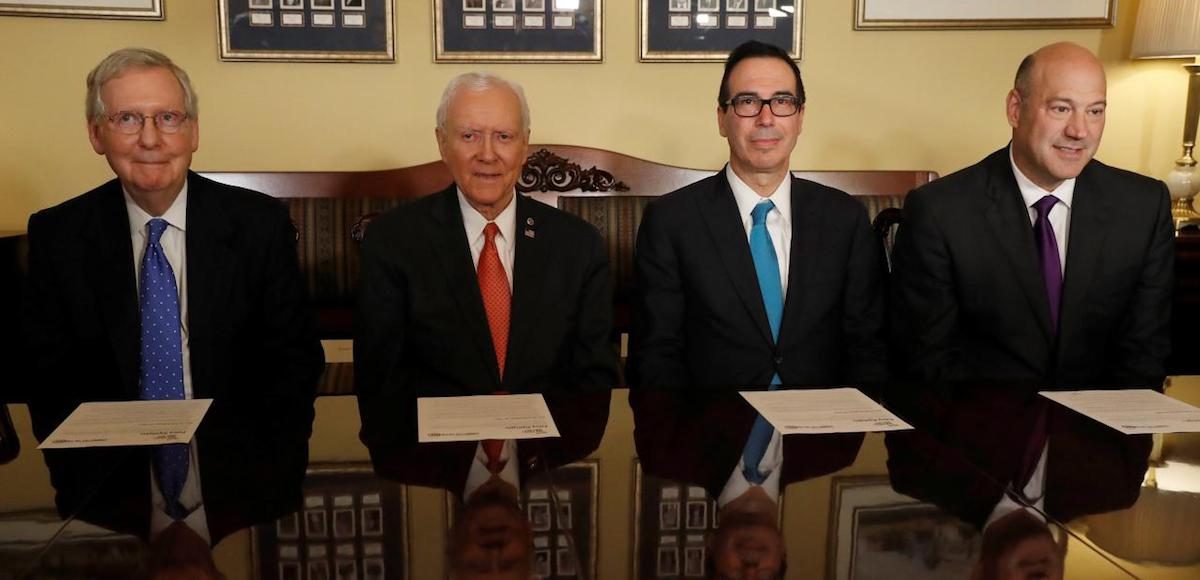
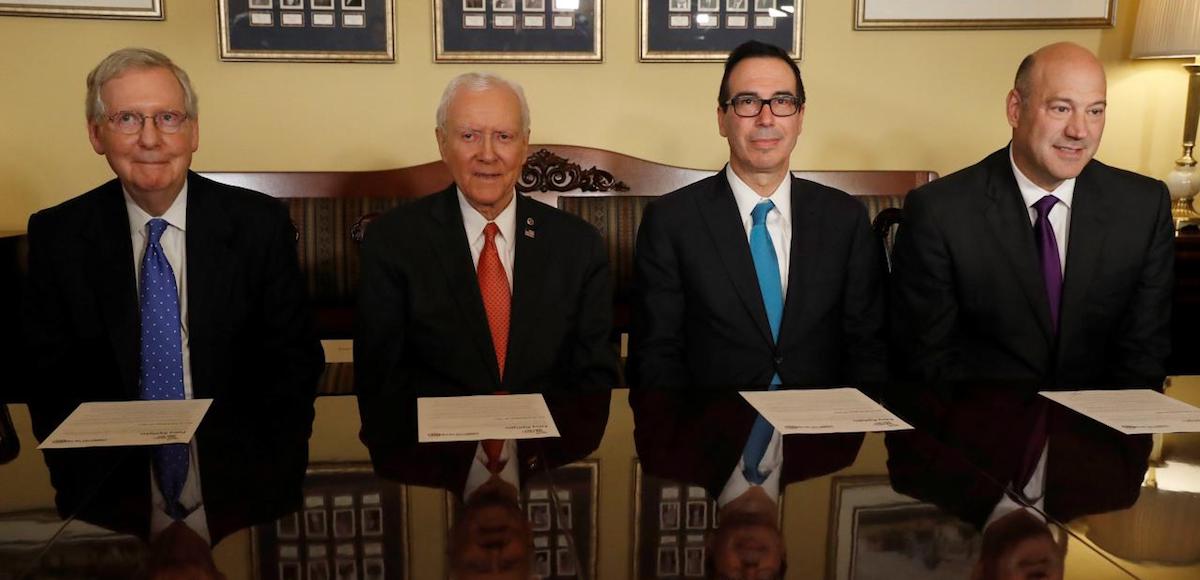
From left to right: Senate Majority Leader Mitch McConnell, R-Kty., Sen. Orrin Hatch, R-Utah, Treasury Secretary Steve Mnuchin and Director of the National Economic Council Gary Cohn introduce the Republican tax reform plan at the U.S. Capitol in Washington, U.S., November 9, 2017. (Photo: Reuters)

From left to right: Senate Majority Leader Mitch McConnell, R-Kty., Sen. Orrin Hatch, R-Utah, Treasury Secretary Steve Mnuchin and Director of the National Economic Council Gary Cohn introduce the Republican tax reform plan at the U.S. Capitol in Washington, U.S., November 9, 2017. (Photo: Reuters)

Back on November 2, I summarized the good and not-so-good features of the tax plan put forth by House Republicans. Here are the parts that made me happy.

And what was the most disappointing part of the plan?

  • Absence of spending restraint.

Regarding my disappointment, I’m not just being a curmudgeonly libertarian. The bill is filled with timid and convoluted provisions, as well as some undesirable revenue-raising provisions, precisely because of congressional rules on long-run deficit neutrality. As I’ve noted in some of my TV interviews, Republicans are pushing sub-par policy because you can’t fit a football player’s body into Pee Wee Herman’s clothes.

If Republicans were willing to impose some modest spending restraint — by contrast — that would have given them enormous flexibility for large tax cuts, while also balancing the budget.

Modest Spending Restraint Balanced Budget 3 trillion

But I’m a semi-realist about Washington. I’m not going to make the perfect the enemy of the good (or, in this case, the sort-of-decent the enemy of the I-guess-this-is-acceptable).

Now let’s look at what Senate Republicans have unveiled. In some cases, my grades are identical to the House bill because many of the major provisions are quite similar. But there are some noteworthy differences.

Lower corporate rate: A-

America’s high corporate tax rate is probably the most self-destructive feature of the current system. If the rate is permanently reduced from 35 percent to 20 percent, that will be a huge boost to competitiveness. The only downside is that the lower rate is deferred until 2019.

Lower individual rates: C+

The proposal is relatively timid on rate reductions for households. This is disappointing, but not unexpected since lower individual tax rates mean considerable revenue loss.

Ending deduction for state and local taxes: A+

Next to the lower corporate tax rate, this is the best part of the proposal. It generates revenue to use for pro-growth provisions while also eliminating a subsidy for bad policy on the part of state and local governments. Indeed, the Senate bill goes farther than the House bill since it includes property taxes. So I’ve retroactively changed my grade for the House bill from A+ to A- so I can give the Senate bill an A+.

Curtailing mortgage interest deduction: C

The deduction remains for home mortgages, but is curtailed for home equity loans. A timed improvement that will only slightly reduce the distortion that creates a bias for residential real estate compared to business investment.

Death tax repeal: C+

There’s no repeal. Just an increase in the amount of family savings that can be protected from the tax. Better than nothing, to be sure, but disappointing.

Change to consumer price index: C

It is quite likely that the consumer price index overstates inflation because it doesn’t properly capture increases in the quality of goods and service. Shifting to a different price index will lead to higher revenues because tax brackets and other provisions of the tax code won’t adjust at the same rate. That’s fine, but I’m dissatisfied with this provision since it should apply to spending programs as well as the tax code.

Reduced business interest deduction: C+

The business interest deduction is partially undone, which is a step toward equal treatment of debt and equity. It’s not the right way of achieving that goal, but it does generate revenue to finance other pro-growth changes in the legislation.

Now let’s zoom out and grade the overall plan in terms of major fiscal and economic goals.

And you’ll see that all I’ve done is repeat exactly what I wrote about the House bill.

Restraining the growth of government: F

In my fantasy world, I want a return to the very small federal government created and envisioned by the Founding Fathers. In the real world, I simply hope for a modest bit of spending restraint. This legislation doesn’t even pretend to curtail the growth of government, which is unfortunate since some fiscal prudence (federal budget growing about 2 percent per year) would have allowed a very large tax cut while also balancing the budget within 10 years.

Collecting revenue in a less-destructive manner: B

This is a positive proposal. It will mean more jobs, increased competitiveness, and higher incomes. The wonks in Washington doubtlessly will debate whether these positive effects are small or large, but I’m not overly fixated on that issue. Yes, I think the growth effects will be significant, but I also realize that many other policies also determine economic performance. The most important thing to understand, thought is that even small increases in growth make a big difference over time.

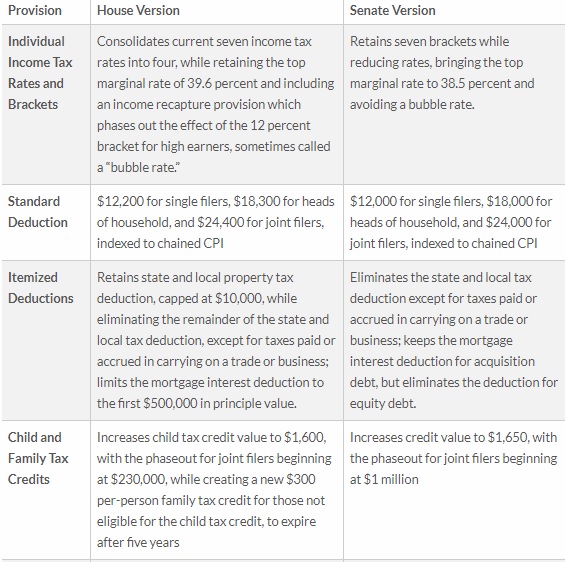
Now let’s take a closer look at how the House and Senate plans differ.

The Tax Foundation put together a very helpful comparison. I’ve broken it into three parts so I can interject some final commentary.

For this first section, since I already gave my two cents about itemized deductions, I’ll simply observe that the Senate plan is slightly better on individual income tax rates.

For this second section, I’ll merely note that the first provision is basically an attempt to give relief to small businesses that are subject to the individual income tax.

The provisions are complicated because it’s not easy to lower tax rates for “Schedule C” income in a way that doesn’t benefit taxpayers who aren’t perceived as being conventional small businesses.

For this final section, the part that’s disappointing to me is “international income.” Both the House and Senate adopt territorial taxation for businesses, which is very good.

But the congressional plans then claw back a bunch of money with OECD-style “base-erosion” policies and Obama-style global minimum taxes. It’s unclear if the net effect is modestly positive or modestly negative, but it’s not what many of us wanted when we pushed for territoriality.

I’ll close by noting that I’m actually pleasantly surprised by the two plans. Yes, I’m grading on a curve, but I had very low expectations this year. I basically hoped to get a lower corporate rate with a bit of window dressing.

And at one point we were actually forced to play defense because Republicans were looking at a very troubling proposal for a “border-adjusted tax.”

So even though I fantasize about a flat tax, I’m reasonably happy about where we are now.

The bottom line is that there’s now a good chance of getting legislation that drops the corporate rate to 20 percent while also eliminating the deduction for state and local income taxes. Those are two very good policies. And if we somehow get death tax repeal, that means three substantive, pro-growth reforms. Fingers crossed.

The Republicans Senate tax plan has been

People's Pundit Daily
You have %%pigeonMeterAvailable%% free %%pigeonCopyPage%% remaining this month. Get unlimited access and support reader-funded, independent data journalism.

Start a 14-day free trial now. Pay later!

Start Trial